Greece tours turn a country of marble temples, cliff-top monasteries and island harbours into day trips and week-long journeys that you can book one by one. Start with the tours in Greece that match your dates, then use the sections below to build the route.
This page covers the trip types and lengths, the regions and island groups, Athens, Delphi, Olympia, Meteora, Crete, Delos, Rhodes and the Ionian islands, food, wine and boat days, ferries, the seasons, the meltemi wind, getting around, practical facts and the questions travellers ask, while the Santorini pages go deeper with our Santorini tours, Santorini catamaran cruise and Santorini volcano and hot springs tour pages.
What are Greece tours, and which kinds can you book?
Greece tours are trips led by licensed experts to the country’s ancient sites, cities and islands. They come in four kinds: city tours, day trips by road, multi-day journeys and boat days.
City tours stay in one place. In Athens, a half-day tour of this kind starts with a pickup. Pickup is at the hotel door, the harbour or the airport. A licensed expert or a professional driver then shows you the city. Greece tours like this suit a short stay.
Day trips leave Athens and return the same day. The Delphi trip runs in an air-conditioned bus or car. It has a professional leader, a museum visit and a lunch stop. The drive from Athens to Delphi takes 2.5 hours. These Greece tours reach sites too far for a city walk.
Multi-day Greece tours link sites by road, with overnight stays on the way. One four-day route crosses the Peloponnese, central Greece and Thessaly. It includes a licensed expert, an air-conditioned vehicle, and breakfast and dinner each day. Island tours work differently. They start in Athens and move on to the islands by ferry.
Special-interest Greece tours follow one theme instead of one place. Popular hiking areas include Mount Olympus, the gorges of Crete and the national parks of Epirus. Religious tourism centres on Mount Athos and on Philippi, a city the Apostle Paul visited. Sailing and boat days are a kind of their own.
Whatever the kind, the pattern is the same. You choose a theme, a length and a starting point. The operator handles the road, the ferry and the entry to the site. That is why Greece tours suit first-time visitors who do not want to plan every transfer alone.
How long do Greece tours last, from half-day trips to week-long journeys?
Greece tours run from about five hours to a full week. A private half-day city tour takes about five hours. A Delphi day trip takes about ten hours. A week-long journey fills seven days.
The shortest Greece tours are city tours. One Athens half-day tour is described as a five-hour private tour. It mixes walking stops with a panoramic drive through the city, and pickup and drop-off are included.
Day trips fill a whole day because the sites lie far from Athens. One operator plans three hours of travel each way. It adds 2.5 hours at the site and ninety minutes for lunch. The group is back ten hours after pickup. Another operator lists the drive as 2.5 hours. Greece tours of this length are a full day out.
Multi-day Greece tours add overnight stays. One four-day tour runs from April to October. Day one heads south from Athens, with the first night in Olympia. Day two starts at Olympia, then the road turns north. The group sleeps in Delphi on night two and in Kalambaka on night three. It reaches Athens in the late afternoon of day four.
Week-long Greece tours come in two shapes. One links Athens with the Cyclades by ferry, so the days split between the capital and the islands. The other stays on the mainland and starts and ends in Athens. Longer plans run ten days or two weeks. One island plan spends two days in Athens, then three days each on three islands.
Which regions of the mainland and the islands do Greece tours cover?
Greece tours cover six traditional mainland regions: Thessaly, Epirus, Thrace, Macedonia, the Peloponnese and Central Greece. They also reach three island groups, which are Crete, the Ionian chain and the Aegean. Coach routes link the mainland, while boats and flights reach the islands.
The older map divides the country into nine regions: six on the mainland and three of islands. Macedonia is largest by size, Central Greece by population. Today the government counts thirteen regions, nine on the mainland and four of islands. People still use the older names in daily talk, so that map suits Greece tours well.
Central Greece holds Attica, Boeotia, Phocis and Phthiotis. The Peloponnese holds Argolis, Arcadia, Messenia and Laconia. One classical route of Greece tours starts in Athens. It crosses into the Peloponnese for a night in Nafplion and a night in Olympia. Then it returns to Central Greece for a night in Delphi.
Thessaly is home to the Meteora monasteries, Mount Olympus, the Pelion peninsula and the Olympic Riviera beaches. A two-day route of Greece tours leaves Delphi and passes Lamia and Trikala. It then crosses the Thessalian Plain and ends the day in Kalambaka, a town below the Meteora rocks.
Northern Greece joins Epirus, Macedonia and Western Thrace. Thessaloniki is the second largest city and the main city of Central Macedonia. One five-day set of Greece tours links Thessaloniki, Mount Olympus and Vergina. Mount Athos stands apart as a monastic community under Greek rule, on the easternmost of three large peninsulas.
Technically, the Peloponnese has been an island since the Corinth Canal was cut, yet it is rarely seen as one. Coaches reach it by road, as the Nafplion and Olympia route shows.
How are the Greek islands divided into groups?
Tradition sorts the Greek islands into six clusters: Ionian, Sporades, Dodecanese, North Aegean, Cyclades and Saronic. Crete and Euboea stand outside them. Greece tours work well when you pick one cluster and hop through it for a couple of days.
The groups matter because nobody agrees on the total. Estimates run from twelve hundred to six thousand islands, depending on the smallest size counted. Between 166 and 227 are inhabited. Crete is the largest island. Euboea comes second and is cut off from the mainland only by the Euripus Strait, which is 60 metres wide.
The Saronic cluster lies near Athens, and a day cruise calls at Aegina, Poros and Hydra in one day. The Cyclades are a dense collection of around 220 islands and islets, including Naxos, Paros and Milos. One small-ship cruise from Athens calls at Poros, then ten isles over seven nights, so Greece tours cross both clusters.
Lesbos, Chios, Lemnos and Samos belong to the North Aegean, a loose cluster off the west coast of Turkey. Kos, Karpathos and Symi belong to the Dodecanese, another loose cluster that sits between Crete and Turkey, in the southeast. Operators of Greece tours here say you hop between the islands by hydrofoil or ferry.
The Sporades are a small cluster beside Euboea, made up of Skiathos, Skopelos and Alonnisos. You reach them by flying into Skiathos airport or by ferry from Volos. Kefalonia, Lefkada and Ithaca are Ionian, in the sea west of the mainland. That region is the smallest in size and population, which suits short Greece tours.
What do Athens tours show of the Acropolis and the old town?
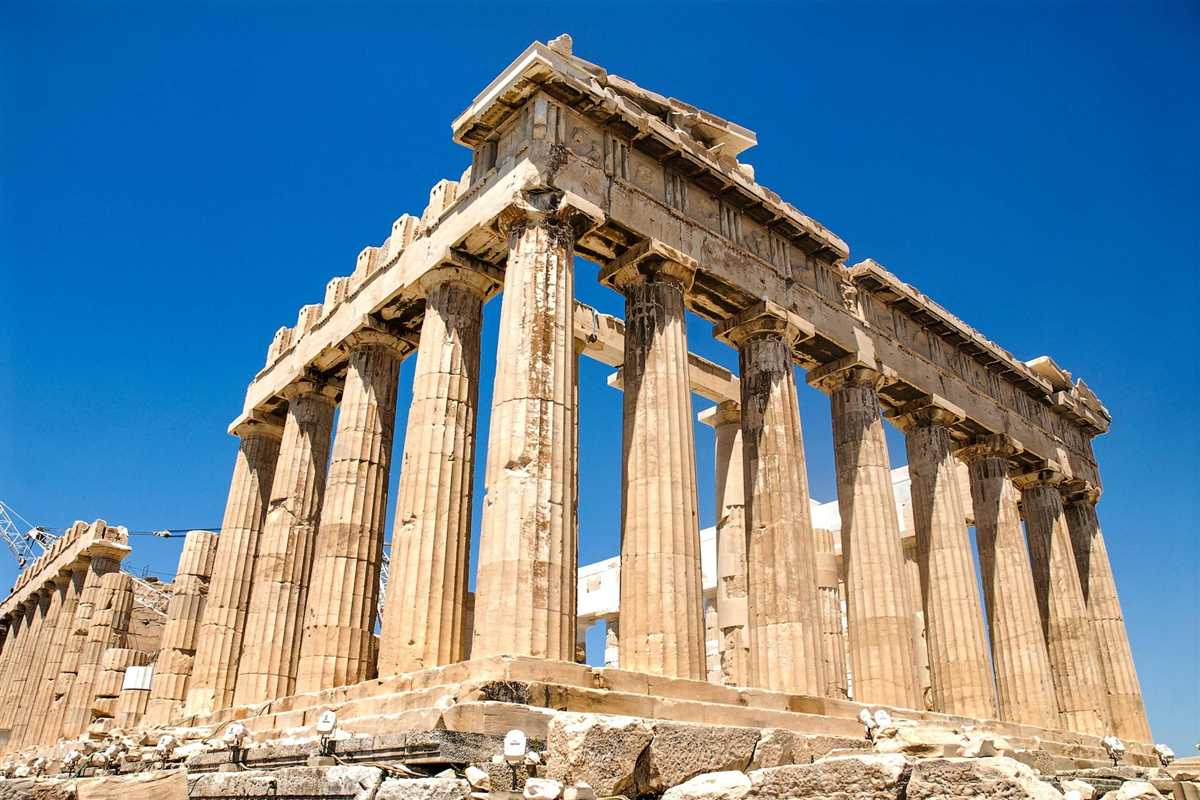
Athens days on Greece tours centre on the Acropolis, the rock with the Parthenon. Then they lead down into Plaka.
The Acropolis is a rocky hill that stands 150 metres high above the sea, right in the city. In the fifth century before the common era, Pericles coordinated work on four monuments. They are the Parthenon, the monumental gate, the Erechtheion and a small temple of Athena Nike. Greece tours pass all four.
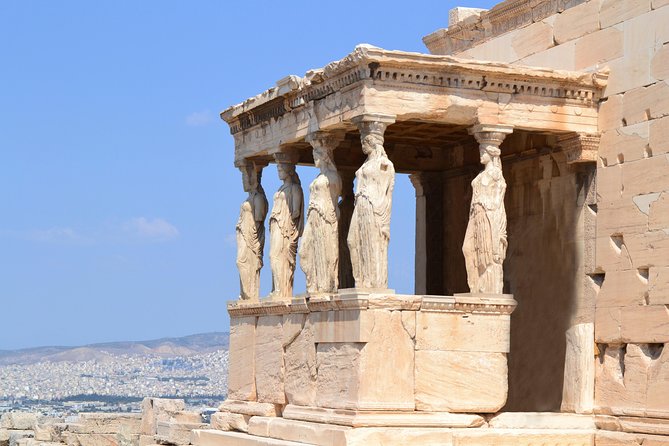
Walking tours of this type begin on the south slope, by the Theatre of Dionysus. The group climbs to the gate, then spends nearly ninety minutes up on the rock. At the Erechtheion, find the porch carried by huge female figures, the caryatids. Greece tours then walk downhill.
Plaka wraps around the Acropolis on its north and east flanks, a web of winding streets. No district of Athens is older, and homes have stood there since the Neolithic period. Adrianou Street splits it into an upper part under the rock and a lower part toward Syntagma. Greece tours follow narrow lanes between neoclassical houses.
Greece tours slip into Anafiotika, a tiny corner of Plaka that grew up in King Otto’s reign. Builders from the island of Anafi settled here. The white, cube-shaped houses feel like the Cyclades. Lanes end in steps or dead ends at terraces, and 45 houses remain.
Next come Hadrian’s Library and the Roman Forum. The Bathhouse of the Winds is the only public bath of Athens left from the first Turkish rule.
The Ancient Agora, the old market, lies northwest of the Acropolis. Its Stoa of Attalos is rebuilt as a museum. Greece tours of three to four hours end at Monastiraki Square. Operators list the Acropolis ticket as a separate item and suggest an early start to beat the crowd.
What does the Acropolis Museum hold, and how does it fit into a day in Athens?
The Acropolis Museum holds more than 4,250 objects from the Acropolis and its slopes. Greece tours give it a stop of its own.
The museum lies 280 metres from the Parthenon. Its doors open onto Dionysiou Areopagitou Street, beside the Akropoli station of the red metro line. Galleries cover 14,000 square metres of finds, from Bronze Age days through the Roman and early Christian eras. Greece tours pair it with the hill, so each visit explains the other.
The collection fills three levels. The first hall slopes upward like the path to the rock and shows finds from the hillsides. Next come archaic statues, then carvings from the gate, the small Nike temple and the Erechtheion. The route sends you to the top floor first, then downward in time order.
The top floor is the Parthenon hall. It faces the same way as the temple, with glass walls for daylight. Its 48 columns mark the outline of the ancient building. Pediments, metopes and frieze stand as they did on the Parthenon. From the north side, you see the real temple above. Greece tours of the museum begin here.
The building also stands over a lost neighbourhood. Glass floors show the dig below. Visitors can walk through the streets and houses of a district that lasted from the Classical era into Byzantine times. A café and a shop sit on the middle level.
Two operators sell an Acropolis and museum walk as one tour. Such Greece tours link the ruins on the rock to the treasures that survive from them. The café offers a rest between the two parts.
Why do Delphi tours matter, and what was the oracle?
Delphi tours matter because the site housed the Pythia, the oracle whom ancient Greeks asked before wars and new colonies. Greece tours of the mainland include it, and UNESCO lists the sacred precinct as a World Heritage Site.
The precinct clings to Mount Parnassus, on its south-western flank, in central Greece. A major temple of Apollo stood here. The Pythia sat alone in an inner room named the adyton, which means “do not enter”. Her tripod seat stood over an opening in the earth. The sources say vapours sent her into a trance. Greece tours explain this scene.
Ancient Greeks placed the middle of their world at Delphi. They labelled it the omphalos, the Greek word for navel. The Temple of Apollo you see today belongs to the fourth century BCE. An earlier temple burned down in the sixth century BCE, so Greece tours walk among rebuilt stones.
Further up the slope sit a theatre and a stadium. Seats in the theatre held about 4,500 people. The stadium took 6,500, and its running track measured 177 metres. The Pythian Games took place there. Near the temple stood the Tholos, a circular building ringed by twenty Doric columns. One carved phrase reads “know thyself”. Greece tours cover these stops.
The museum spreads over fourteen rooms on two levels. It shows the bronze Charioteer, made in the austere style of the fifth century BCE. It also holds the Sphinx of Naxos, a statue that was twelve metres high with its column.
A full-day trip from Athens takes nine to ten hours and pairs the ruins with the museum. The road runs across Boeotia, then past Mount Parnassos. Lunch falls in Arachova. Private Greece tours can cap the group at six people.
What do tours of Ancient Olympia show?
Tours of Ancient Olympia show the Peloponnese sanctuary where the Olympic Games began, with its temples, stadium and museum. Tradition dates the first games to the eighth century BCE. Greece tours reach the site on a long day trip.
Olympia sits in Elis, a district of the Peloponnese, beside the Alfeios River. The Kladeos River runs along the western edge. Greece tours enter the Altis, the sanctuary grove. Each side of it exceeded 180 metres, and olive and plane trees grew inside. The prize was a wreath of olive leaves.
Builders raised the Temple of Zeus around the mid fifth century BCE. Phidias made the gold and ivory Zeus that stood within, about thirteen metres tall. Antipater of Sidon named this statue one of seven wonders in his list. Greece tours reach the ruins of the temple that housed it.
At Hera’s temple, sunlight and a parabolic mirror kindle the Olympic flame. The stadium ran 212 metres, with a track of hard-packed clay. Visitors still see the vaulted tunnel and the starting blocks. Greece tours also visit the Bouleuterion, where the judges gathered.
Twelve rooms make up the museum. Its stars include the Nike of Paionios and a Hermes attributed to Praxiteles. Operators run twelve to thirteen hours from Athens, with about three hours on the road to the site. Greece tours pass the Corinth Canal, and free time in the modern village of Olympia allows lunch.
What are the Meteora monasteries, and how do tours reach them?
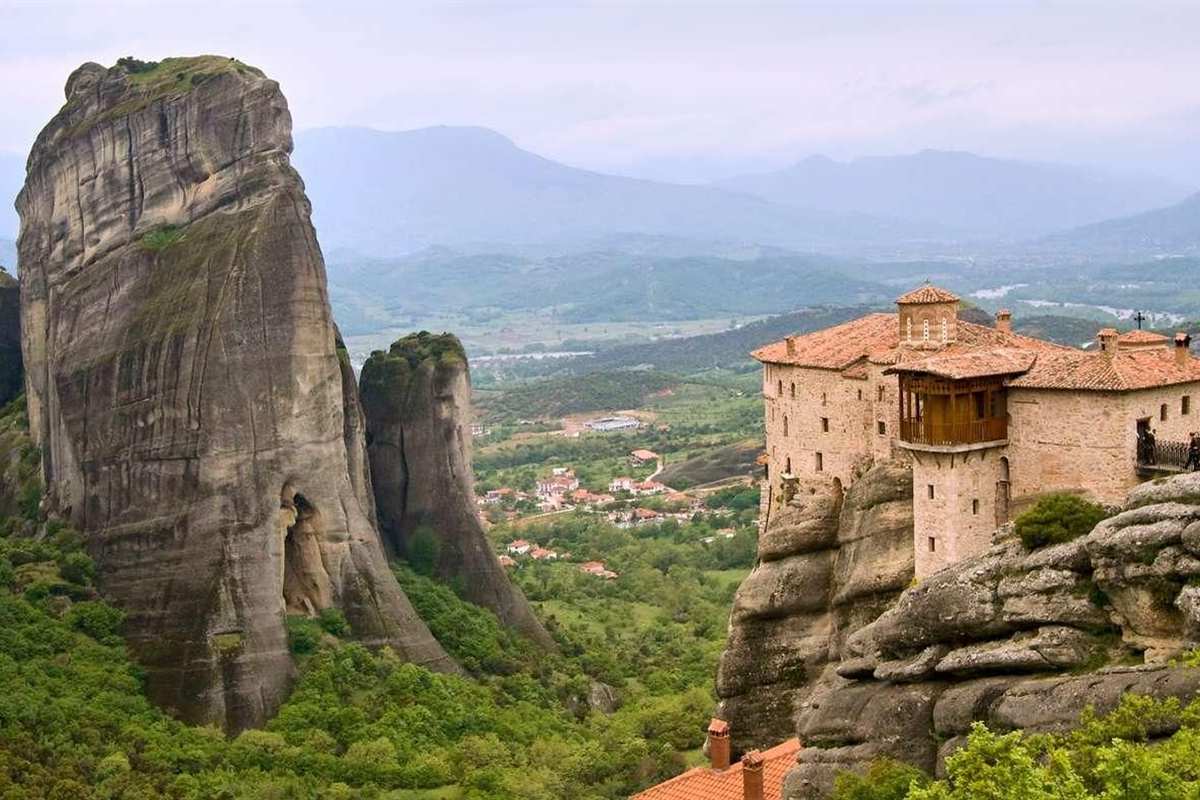
The Meteora monasteries are Orthodox retreats on tall sandstone pillars in central Greece. Greece tours reach them from Athens by coach in about four hours, or from a base in Kalambaka. Day trips are back in Athens by evening.
Monks first climbed these rock towers in the eleventh century. Twenty-four monasteries crowned them by the late fifteenth century. Meteora is Greek for suspended in the air. Sixty million years ago, rivers dropped the sediment that became these towers. Wind and rain then carved them, and they now stand over 400 metres high.
Coach Greece tours set out from Athens in the morning. The road to Kalambaka covers roughly 360 kilometres, a ride of four to five hours in each direction. Lunch is taken in a village below the rocks, and the coach reaches Athens again at night.
Each monastery closes one weekday, and the closing days are staggered. Greece tours therefore enter three or four of the open ones. Great Meteoron is both the oldest and the biggest, while Varlaam ranks second in size. These two hold the larger museums.
Climbing is part of Greece tours here. Hundreds of steep steps lead to every monastery apart from St. Stephen, which visitors enter across a small bridge. Travellers who cannot manage stairs can still enter St. Stephen. The little cable cars carry supplies, not visitors.
At the gates, for men, trousers must cover the knees. Women wear a skirt with covered shoulders, and a skirt can be borrowed at the entrance. Photos are fine outside the inner sanctuaries. Two-day Greece tours add a night near the rocks, which gives time for more monasteries and the hermit caves.
What do the Argolis tours to Mycenae, Epidaurus and Nafplio cover?
Argolis tours link three places in the eastern Peloponnese. Mycenae is a Bronze Age fortress city, Epidaurus has an ancient theatre, and Nafplio is a port town. Such Greece tours fill one long day from Athens.
The coach follows the Saronic Gulf south and pauses at the Corinth Canal for photos. Stops on these Greece tours are timed: Mycenae gets about 105 minutes, Nafplio one hour and Epidaurus 75 minutes. Counted from hotel door to hotel door, the day runs 12 to 13 hours.
Greece tours go to Mycenae because it was a Bronze Age power, a stronghold that held much of southern Greece. The Lion Gate opens the citadel, and two lionesses carved in stone flank a column. The Cyclopean walls use blocks so massive that later Greeks believed giants had built them.
The Treasury of Atreus is the biggest of the nine domed tombs around Mycenae. Within the defences, a covert tunnel descends through 99 steps and ends at a cistern 15 metres below the surface. The citadel and the town below it had a population of 30,000 at the peak.
The theatre dates to the late fourth century before the common era. It stands beside a healing sanctuary for Asklepios, god of medicine. The seats hold between 13,000 and 14,000 people. UNESCO counts it among the purest works of Greek architecture. Greece tours stop for the sound as much as the stone. Plays still run there each summer.
The old town of Nafplio fills a headland on the Argolic Gulf. Nafplio was the first capital after Greece won its independence. Its streets mix Venetian and neoclassical houses. Bourtzi castle sits on an islet in the harbour, and the Venetians built Palamidi fortress on the hill above. Greece tours see Palamidi from below as a photo stop.
Which sites do Crete tours visit?
Greece tours on Crete stop at the palaces of Knossos and Phaistos, Spinalonga, Elafonisi and the Samaria Gorge. The Heraklion museum holds the Minoan finds.
The site of Knossos is five kilometres from the historic centre of Heraklion. Arthur Evans began large-scale excavations there and gave the Minoan civilisation its name. The palace covered about twenty thousand square metres. Evans called one room the throne room of King Minos, though later scholars debate its use.
Greece tours to Knossos run as day trips with hotel pickup. One tour of this type gives the palace about two hours, with an expert speaking through earpieces. Next come the museum and free time in the city centre. The whole day lasts about ten hours.
The Heraklion Archaeological Museum holds by far the fullest collection of Minoan artefacts. The Phaistos Disc is displayed in Room III. The Snake Goddess figurine stands in Room IV. Greece tours also offer a small-group version. It takes twelve guests or fewer, has an archaeologist as leader and lasts about six hours.
Phaistos sits in south central Crete, about 62 kilometres south of Heraklion and 5.6 kilometres from the sea. Its palace covered about 8,400 square metres. Greece tours that add Phaistos to a Crete route reach a second Minoan centre. Knossos and Phaistos both belong to the UNESCO site called Minoan Palatial Centres.
Spinalonga lies off Plaka, about 750 metres across the water. Venetians fortified it, and it later held a leper colony until nineteen fifty-seven. Boats cross from Plaka in about ten minutes, from Elounda in twenty and from Agios Nikolaos in sixty.
Greece tours by boat from Elounda add a swim and barbecue stop at Kolokitha Bay. Then comes about one and a half hours on the island with a walking tour. The order can change when the island is busy.
Elafonisi lies off the south-west corner of Crete. Its sand looks pink because of tiny pigmented organisms. The island is a protected reserve, and Greece tours reach it by crossing the shallows in calm weather.
What is the Samaria Gorge, and how do walking tours handle it?
Samaria is a national park in the White Mountains of Crete, and its gorge is 16 kilometres long. Greece tours treat it as a single downhill walk from the Omalos plateau to the coast.
Greece tours finish beside the Libyan Sea, in the village of Agia Roumeli. At the Gates, the cliffs squeeze to four metres across. Inside the gorge stands the empty village of Samaria. Its last families moved out when the park was set up.
Greece tours through the gorge take between five and seven hours on foot. Springs give drinking water along the route, and rest areas and toilets stand at points on the way. The park protects the kri-kri, a wild goat found on Crete. Camping, campfires and bathing in the streams are banned.
Access can change. The authorities set the opening dates each year, and extreme weather or high fire risk can close the trail. For this reason Greece tours of the gorge depend on the day. The mountain leader handles timing and any changes to the plan.
Greece tours to the gorge from Chania run as one long day. Pickup is early in the morning, and an air-conditioned bus reaches the Omalos plateau around 7:40. The walk starts at Xyloskalo around 8:15 and follows the riverbed down to Agia Roumeli.
At Agia Roumeli the group swims and eats while the mountain leader hands out the ferry tickets, around 16:00. The ferry leaves about 17:30 for Sougia or Sfakia. A bus waits at the port and returns to Chania around 20:00 to 21:00.
Operators ask walkers to bring a hat, sunscreen, water, a swimsuit and a towel. They also ask for sturdy hiking shoes. They do not suggest the walk for people with knee or heart problems.
Which Cyclades islands do Greece tours visit?
Greece tours in the Cyclades centre on Mykonos, Naxos, Paros, Milos, Syros and Tinos, with Delos added for its ruins. About 220 islands make up this Aegean archipelago. Each of these six has a character of its own.
The name means “surrounding islands”, because the archipelago rings Delos, the sacred centre. On Mykonos, Greece tours cover Chora on the west coast. They show its windmills on a hill and Little Venice, where fishing houses hang over the water. Platys Gialos and Paradise Beach are close by. The wind there brings a nickname: the Island of the Winds.
Naxos is the biggest of all the Cyclades, covering 430 square kilometres. Its Mount Zeus tops every other peak across the archipelago. Greece tours stop at the Portara, the entrance of an Apollo temple beside Naxos Town, the island capital. Quarrying of Naxian marble began before 550 BCE.
Greece tours reach Paros through Parikia, a major hub for ferries and catamarans in the Aegean. The town holds Panagia Ekatontapiliani, the church of the hundred doors. Fine white Parian marble took its name from the island. Naoussa, in the north, has a roomy bay where boats shelter. The mountain village of Lefkes lies inland, 10 kilometres from Parikia.
Milos is volcanic, and wind and water carved the white rock of Sarakiniko. The Venus de Milo came from its ancient town site. Syros has Ermoupoli, the chief town of the group, and the biggest population. Tinos has a cathedral that is a major pilgrimage site. Greece tours link the islands by sea.


What is Delos, and how do tours from Mykonos reach it?
Delos is a sacred island of 3.43 square kilometres. Greece tours from Mykonos cross to it by boat in about 30 minutes. Myth tells that Apollo and his sister Artemis were born on this island, and UNESCO protects the site.
Delos held a position as a holy sanctuary for a thousand years. Once the Persian Wars ended, it hosted the Delian League, which began in the fifth century before the common era. An old rule kept births and burials off the island. Mount Kynthos, its high point, rises 112 metres. Today the island has no residents.
Greece tours walk the Sacred Way to the Terrace of the Lions. It first had nine to twelve marble lions, and seven remain. In one villa from the second century, a floor mosaic shows Dionysus on a panther. Another villa shows dolphins in stone. The Archaeological Museum shows sculpture from four eras: Archaic, Classical, Hellenistic and Roman.
Boats leave Mykonos town every day except Monday, because the site is closed then. A shared tour takes about four hours in all, with a two-hour walk through the ruins. Guests check in at least 30 minutes before the boat leaves. Greece tours of this type include the return boat. The walk covers the Temple of Apollo and Cleopatra’s House.
The site is open from 8:30AM to 3PM, so an early start helps. The ticket covers the museum and is checked at its door. Staying overnight on Delos is forbidden, and the island has no shade, so bring plenty of water. Strong wind can cancel a crossing, because the Cyclades are notoriously windy.
What do Rhodes tours show, from the medieval town to Lindos?
Greece tours to Rhodes show a walled medieval town built by the Knights Hospitaller and the hilltop Acropolis of Lindos. The two sites lie about 40 km apart, so one day trip can cover both.
UNESCO has listed the Medieval City of Rhodes, and a 4 km wall runs around it. The Knights Hospitaller built the whole northern high town themselves, and the lower town runs south-southwest. Walking Greece tours follow winding cobbled streets lined with historic houses and boutiques.
Greece tours of the old town stop at the Grand Master’s Palace and then stroll the Street of the Knights. A Byzantine citadel stood here from the late seventh century, and the Knights made it their headquarters. Lightning later struck a gunpowder store nearby, and Italian architects rebuilt the ruined palace in the twentieth century. It is now a museum.
At the harbour, written sources place the Colossus of Rhodes, a statue counted among the ancient world’s seven wonders. Builders finished it in 280 BC, but a quake brought it down in 226 BC. Nothing of it remains.
Lindos sits on the east coast. Greece tours climb its Acropolis to the temple of Athena Lindia, built in the Doric style about 300 BC. Greeks, Romans, Byzantines, Knights and Ottomans each fortified the rock in turn. The summit overlooks the surrounding harbours and coast.
Day trips run by bus. Hotel pickup comes in the morning, the group reaches Lindos mid-morning, and the old town fills the afternoon. A longer type of Greece tours adds Ancient Kamiros and hill villages across seven to eight hours. Wear comfortable shoes, because the walking is long and the paths are uneven.
What do the Ionian islands offer on Corfu, Paxos and Zakynthos tours?
Greece tours in the Ionian islands visit the Venetian old town of Corfu. They also reach sea caves around Paxos and a shipwreck cove on Zakynthos, and boats carry much of the sightseeing.
UNESCO lists the old town of Corfu, where Venice ruled from the late fourteenth century until the late eighteenth century. Greece tours on foot pass the Old and New Fortresses and the Liston, an arcade lined with cafes. Beside it lies the Spianada, a vast plaza with a cricket field.
South of the city stands the Achilleion, a summer palace. Elisabeth, the empress of Austria, had it built in the late nineteenth century. She named it after the hero Achilles, and his statues fill the gardens. It is now a museum.
Paxos is the smallest island of the Heptanese, which are the seven main Ionian Islands. Corfu’s southern tip lies 15 km away. Boat cruises are the main type of Greece tours here, and the day takes about nine hours. The boat leaves Corfu port in the morning and passes the Old Town fortresses.
Paxos has blue caves on its steep white west coast, and the boat enters Ipapanti and Ahai. A swim stop follows at Paradise Beach on Antipaxos, then free time in Paxos town. Weather can change the schedule.
Greece tours to Zakynthos reach Navagio, or Shipwreck Beach, a cove with high cliffs on the northwest shore. Only boats reach it. A freighter ran aground there in a storm in the late twentieth century. Its hull lies buried in the beach gravel. Landslides have closed the beach to swimmers before, while boats were still allowed to approach.
Half-island boat trips on Greece tours take about six hours. Northern trips call at Navagio, the Blue Caves near Cape Skinari and Xigia Beach, which smells of sulphur. Southern trips visit Marathonissi islet, the Keri caves and Laganas Bay, the Mediterranean’s top nesting ground for loggerhead turtles.
What are Greek food tours and cooking classes?
Food tours and cooking classes are the tasting side of Greece tours. You walk through markets and shops, or you cook beside a local host, and then you sit down to eat. A food walk in Athens lasts three hours.
Among Greece tours, the Athens food walk follows a set path. It meets opposite Syntagma metro station and starts with Greek coffee and loukoumades, which are fried dough balls with honey. Tiropita, a crisp filo cheese pie, and koulouri, a sesame bread ring, come next. Later stops serve sliced meat, cheeses, olives and olive oil. Souvlaki closes the walk.
The market is a main stop on these Greece tours. The group enters Varvakios Agora, the main meat and fish market of Athens, and smells the spices along the streets. Each walk takes no more than 10 people. Part of the route closes after lunchtime, so walks run in the morning.
Cooking classes on Greece tours start with a shopping trip too. In Athens the market visit lasts 30 minutes, and then you cook with a Greek home cook. The sample menu holds tzatziki and a pie of spinach, feta and herbs. It also lists vine leaves rolled around rice and beef, and a phyllo cake in orange and cinnamon syrup.
The classes change from place to place. In Thessaloniki you buy vegetables at Kapani market and taste cheese at Modiano market. Back in a tavern, you make dolmadakia, Greek salad and stuffed peppers and tomatoes. Greece tours of this type finish at the table, where you eat your own cooking.
Crete adds a garden to Greece tours. In the village of Kritsa you pick seasonal vegetables from a family garden and cook with the family’s olive oil. The menu has fava, dakos and loukoumades with honey. A plant-based menu is also offered.
Wheat, olive oil and wine support the Greek table. Of the three, olive oil is the oldest and defining element.
What are wine tasting tours in Greece, and which regions grow the grapes?
Wine tasting tours in Greece are day trips to two wineries, sometimes three. Each stop has a cellar visit and a tasting. Nemea in the Peloponnese and Naoussa in Macedonia are two regions where Greece tours go for wine.
Nemea is a wine stop on Greece tours and the home of Agiorgitiko, a red grape. Its wine is nicknamed the Blood of Hercules. The legend says the hero drank it after he slew the Nemean lion. A day from Nafplio starts at the archaeological site of Nemea, which holds a sanctuary for Zeus and a stadium. Two wineries follow.
At the wineries the producers explain the harvest. The tasting pairs red Agiorgitiko with white Moschofilero and Roditis, plus local cheese and bread sticks. Athens-based Greece tours reach Nemea by private bus, with a first winery at midday. The order of the visits can change with the availability of each winery.
Naoussa lies in the uplands of Imathia, on the foothills of Mount Vermion. Its grape is Xinomavro, which means sour black. Greece tours from Thessaloniki visit two family wineries and taste three to five wines at each. A full-day version tastes at least eight wines and adds a picnic in the vineyard. In winter a pairing lunch replaces the picnic.
Wine is not limited to these two places. Assyrtiko is native to an Aegean island, and Vidiano is native to Crete. Robola grows on the Ionian island of Cephalonia. The earliest evidence of Greek wine is 6,500 years old. Wineries close on national holidays, so confirm the date before you book a tasting on Greece tours.
Retsina is a Greek white wine flavoured with pine resin, which Greek makers have produced for at least 2,000 years. Attica, Boeotia and Euboea are its main production centres, and Savatiano is its traditional grape.
What are boat trips and sailing tours in Greece?
Boat trips and sailing tours are the sea side of Greece tours. A day cruise leaves a port and returns the same evening. A sailing tour lasts four to seven days with a professional skipper on board.
Day cruises from Athens sail from the Piraeus marina to the Saronic islands. One classic route calls at Agistri, Aegina and Moni. The crew picks Moni or Metopi on the day, depending on the weather. Expect long swim stops, free time on each island and a lunch prepared on board.
Greece tours on the water also run from the islands themselves. A catamaran day from Naxos takes about seven hours. The galley cooks the meal fresh, and coffee and tea come all day. The crew picks each stop that morning from the wind and swell.
Non-swimmers can stay on deck during the swim stops, and life vests are on board for everyone. If the weather is unsafe, the operator cancels the trip or moves it to another day. A boat day on Greece tours depends on the sea as much as on the timetable.
A sailing tour needs no sailing experience, because the skipper runs the boat. They cook their own meals on board. In the evening they eat on the boat or ashore at a taverna. One cruise yacht of this kind has three double cabins and takes up to six guests.
On departure day the skipper and the guests set the route from the weather forecast. Sailing Greece tours work in the Ionian Islands, the Cyclades, the Saronic Gulf, the Dodecanese and the Sporades. The Ionian Islands suit new sailors, with mild winds and short distances.
You can hire a sailing boat, a motor boat, a catamaran or a gulet. Greece tours by yacht fit beginners and trained sailors.
How do ferries link the islands, and how do they fit into Greece tours?
Ferries link the Greek islands in a hub-and-spoke system, with spokes from the port of Piraeus to each island group. Greece tours that cross the Aegean use these boats between stops, and every crossing is a stage of the trip.
Piraeus lies on the Saronic Gulf and serves Athens. The port is described as the biggest passenger port on the continent. Boats from there head to the Cyclades, Crete, the Dodecanese and the north Aegean. Inside the port, free shuttle buses serve the ships bound for Crete.
The spoke system has one catch. Boats inside one island group run frequently, but boats between groups run less frequently. The western Cyclades of Serifos, Sifnos and Milos look close to Naxos, Paros and Mykonos. Yet they sit on different spokes. On Greece tours, two islands that look close can be a long trip apart.
Crossing times show the scale. Daily ferries from Piraeus or Rafina reach Paros in about 3.5 hours. The hop from Mykonos to Paros takes about one hour. New fast ferries cut distance times in half. Rafina is a 40-minute taxi ride from Athens airport. Piraeus is 50 minutes by taxi or about 1 hour 15 minutes by the X96 bus.
Greece tours by ferry need a margin in the plan. Only the larger and slower ferries carry cars, and the car is paid for on top of the passenger ticket. Each company posts its own schedule, and so do the ticket offices in the departure ports. Boats on popular routes sell out in high season and on holiday weekends.
Weather, strikes and breakdowns can still delay a ferry. Do not plan to sail back to Athens on the day of your flight. Be in Athens at least one day before it. Greece tours that end with a flight home run smoothly when the last crossing is done a day early.
Which months suit Greece tours on the mainland and on the islands?
Greece tours enjoy pleasant weather twice a year: late spring with early summer, then September with October. The height of summer falls between mid-July and mid-August, and the midday sun then turns very strong.
Summer is the busy season. About 75% of all tourists arrive between the start of the warm season and the end of September. Tickets for archaeological sites are worth buying in advance for summer Greece tours.
The heat is real. Mean daily highs in Athens run from 13.3 °C in January to 34.3 °C in July. Greeks avoid heavy outdoor effort between one and five in the afternoon. On Greece tours of the mainland, plan open-air sites for the morning.
On spring Greece tours the daily showers become less frequent and wildflowers bloom. Short showers can last until late spring, particularly inland. The sea is still too cold for swimming at that time of year.
September brings a warm sea, clear skies and quieter beaches. By the end of October the rainy season begins. The far south, including Crete, keeps warm days and clear skies a little longer. That makes September and October a good window for island Greece tours.
From November to February, rain is at its highest, especially in the west, and snow settles on Mount Olympus. Island tourism comes to a virtual halt and ferries run on reduced timetables. Winter Greece tours therefore centre on cities and inland towns, where the Acropolis feels quiet.
What is the meltemi wind, and how does it change a boat day?
The meltemi is a dry, strong wind that sweeps the Aegean Sea from the north between late spring and mid-September. On boat days during Greece tours it roughens the sea, and afternoons bring its strongest gusts.
The Italian words “mal tempo”, bad weather, are the probable source of the Turkish and Modern Greek names. Etesian, the ancient name, is built on the Greek word etos, year. In summer the wind cools the fierce heat, yet at its peak it reaches Beaufort force 7 or 8.
Clear skies give no warning of its arrival. Skippers describe a daily clock. The wind builds after ten in the morning, peaks from two until five o’clock, and eases after sunset. In the Cyclades it is strongest in July, August and September.
On Greece tours by sea, the water changes from coast to coast. When a 25-knot north wind blows, the north side of an island has choppy seas of two to three metres. The south side, in the lee, stays flat. Skippers call this island shadowing, and swim stops are chosen at sheltered, less windy beaches.
Small boats feel the wind first. Boats to Delos from Mykonos are small and wind-sensitive, so keep a spare morning if the island matters to you. On Greece tours with small-boat days, place them in the first half of a stay so they can move.
Operators and port authorities decide whether a boat sails, so confirm with the operator on the morning of departure. A departure can be fixed only the evening before, after checking wind force and direction. Short, steep seas can keep a catamaran at the quay while a large ferry still sails.
Pack for it. A windbreaker keeps spray off on windy days. Greece tours in the cool seasons call for warm spare clothes. That means April, late spring, September and October.
How do you travel between sites in Greece by plane, bus, train and car?
Greece tours link the mainland sites by coach and the islands by plane or ferry. The Athens airport has a metro and suburban train station. A rented car opens up the countryside.
Coach trips cover the mainland in one loop, and Greece tours of this type are easy to follow. Two operator pages describe a four-day route from Athens to Olympia, Delphi and Meteora and back. The coach has air conditioning, a licensed guide rides along, and the hotel transfers are included. Private versions let you set the start time.
Public buses suit solo travellers on Greece tours. KTEL is the national network of independent bus companies and serves almost the whole country. Routes to Corfu and Cephalonia include the ferry crossing in the ticket. Rail traffic is concentrated in the Athens-Thessaloniki corridor and the suburban lines. The other three lines run one or two trains a day.
Planes save time on long hops. The Athens airport is the largest and busiest in Greece. The metro and the suburban railway both stop at its station. Olympic Air, Sky Express, Aegean Airlines and Ryanair fly domestic routes. In winter, flights from abroad reach the islands only through Athens, which matters for Greece tours that mix both.
A car lets you cover more ground and drive up to a site’s gate, even on a rough road. Drivers without an EU licence need an international driving permit. About 90% of rental cars are manual, so book an automatic ahead. Mountain roads are narrow and twisty. The newer motorways are toll roads. Self-drive Greece tours need a planned route.
What practical facts help on Greece tours: language, currency, time zone and opening hours?
For Greece tours, three basics matter first. Greek is the official language, the euro is the currency, and standard time is UTC plus two hours. Opening hours differ by season and by site.
Almost the entire population speaks Greek, an official language of the European Union. In busy tourist areas the bus timetables are posted in English. Drivers, conductors and taxi staff know enough English to answer questions. Travellers on Greece tours get by in English at stations and taxi ranks.
Greece uses the euro, which replaced the drachma. One euro holds 100 cents, called lepta in Greece. Banknotes look the same in every euro country. Cash machines are present almost everywhere. Major cards work in shops, hotels, ferry offices, airline desks and car rental agencies. Certain restaurants do not take cards, so carry a little cash on Greece tours.
Greece keeps Eastern European Time, which is UTC plus two hours. Daylight saving time begins on the final Sunday of March and ends on the final Sunday of October. During that period the clocks run at UTC plus three hours. Read the start time of your Greece tours as local time.
Outside resorts and large supermarkets, shops close for a long lunch from about 14:00 to 17:00. In summer the Acropolis gates stay open from 08:00 until 20:00. In winter the closing time follows the sunset, down to 17:00 in December. Last entry is thirty minutes earlier. Check each site before Greece tours reach it.
What else do travellers ask about Greece tours?
What is the Greek word for Greece, and what do Greeks call themselves?
Anyone who books Greece tours meets two names for the country. In Modern Greek it is Ελλάδα (Elláda). The older form in Ancient Greek is Ἑλλάς (Hellas). It gave English the name Hellas, now found in archaic or poetic writing. The official name of the state is the Hellenic Republic, Ελληνική Δημοκρατία.
Greeks call themselves Έλληνες (Éllines), written Hellenes in English. They form a nation within Greece and Cyprus, and a large diaspora lives around the world. In the old epic poems, Homer names the Hellenes as a relatively small tribe in Phthia. Learning this word before Greece tours helps with local names.
What is the count of UNESCO World Heritage Sites in Greece?
The country behind Greece tours has 21 properties on the UNESCO World Heritage List. Eighteen are cultural sites. Three entries are mixed, rated for nature and culture together: Meteora, Mount Athos plus Mount Olympus. The first place inscribed was Bassae, with its temple of Apollo Epicurius. Greece ranks seventeenth in the world by total sites.
Another 11 sites wait on the tentative list. A nomination is only accepted once a site has been placed there. That long list of protected places gives Greece tours plenty to choose from, from ancient temples to monasteries and mountains.
Which peak is the top of the country, and how tall is it?
Greece’s highest peak belongs to Mount Olympus. Its top summit, Mytikas, is named with the Greek word for “nose”. Mytikas climbs to about 2,918 metres, and Olympus stands alone, nearly 3,000 metres over the sea. Measured by prominence, Mytikas is also a leader among European summits.
Walked around its base, the mountain measures 80 kilometres, and it covers 500 square kilometres. In myth, the Twelve Olympian gods lived on a mountain called Olympus. This link to the gods gives Greece tours a mountain to point to when they tell the myths.
A chapel to Prophet Elias stands on the Profitis Ilias summit at 2,803 metres. It is the highest chapel of Orthodox Christianity. The mountain of the gods also holds a Christian place of worship.
Which airport do travellers use for Greece tours that start in Athens?
Athens’ main gateway is the airport named after Eleftherios Venizelos, with the code ATH. It is the biggest of the international airports in Greece. It serves Athens and the region of Attica from a site at Spata. Flights began on 28 March, and it took over from the old Ellinikon airport.
The home base of Aegean Airlines is here, along with smaller Greek airlines. The satellite terminal has two levels, one for arrivals and one for departures, plus ten jet bridges. Venizelos was a Greek statesman who led the national liberation movement. Greece tours that begin in the capital land here first.
Can you read road signs in Greece without the Greek alphabet?
Yes. Signs along Greek roads carry two languages side by side: Greek in Greek letters, and English in Latin letters. A Greek standard also sets how Greek letters become Latin characters on information signs. Drivers on self-drive Greece tours therefore see each place name twice.
Older signs used Katharevousa, a formal form of Greek, until Demotic Greek replaced it. The alphabet has 24 letters, ordered from alpha to omega. Greek has been written with these letters since about the ninth or eighth century before the common era. It was the first known alphabet to mark vowels along with consonants.
Knowing the 24 letters helps you match each Latin name on Greece tours to its Greek spelling.