
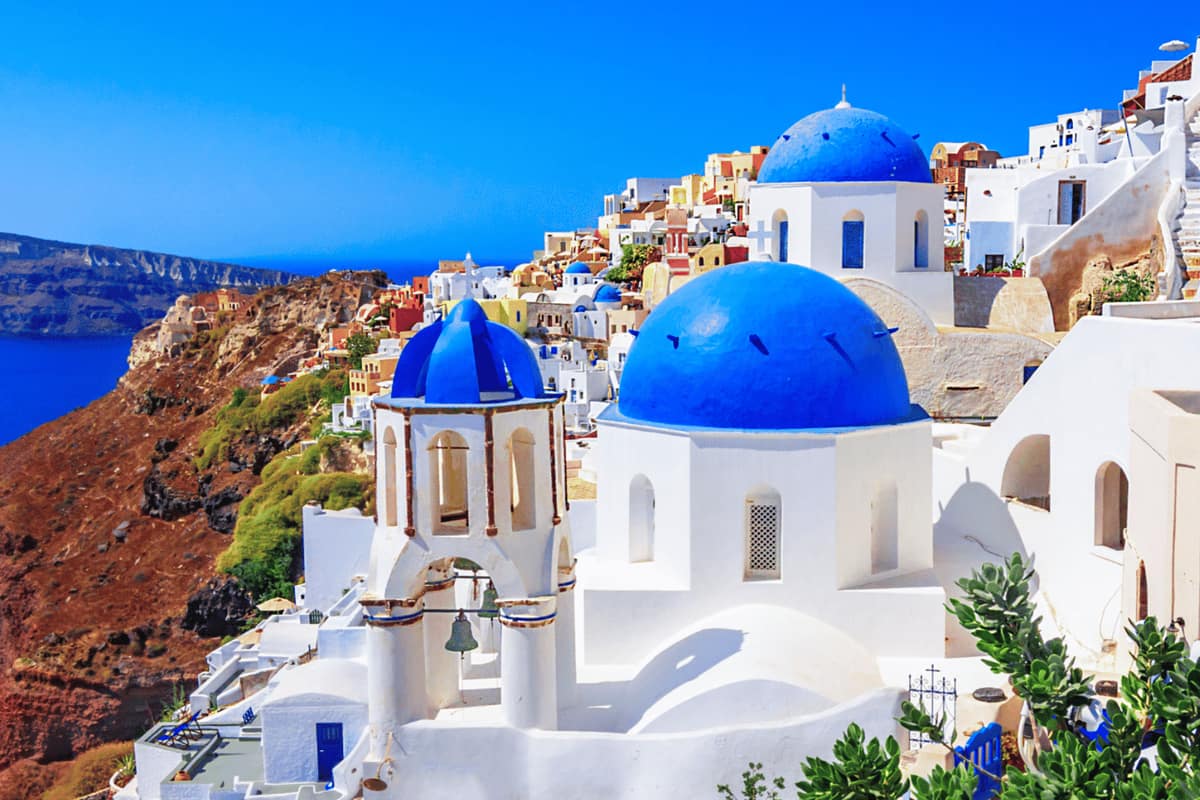
A Santorini Oia tour takes you to the village at the north tip of the island, where pale houses and cave homes step along the caldera rim high above the sea. The visit joins a walk on the paved main lane with time at the viewpoints and, on routes that allow it, a look down to Ammoudi Bay. For the days before or after the island, our tours in Greece show other places to add to your route.
The sections ahead set out the outline and timing of a Santorini Oia tour, the village’s place on the map and the story behind it, the sights along the walk and the steps down to Ammoudi Bay, the kinds of tour and the routes into Oia, the effect of local rules, seasons and crowds on a visit, and a last round of traveller questions.
What is a Santorini Oia tour, and how does it run?
Think of a Santorini Oia tour as an outing built around one village visit. It starts with a pickup or a meeting point. It then gets you walking in Oia and ends with a return that differs by format.
The start of a Santorini Oia tour depends on the format you book. Pages for small-group trips name the upper cable car station in Fira as a meeting point. Private van tours and private walks can instead collect you from your hotel. On shared departures, be on time, because the schedule will not wait indefinitely.
Bus versions of a Santorini Oia tour work with set meeting points. One listing places them at central spots in the villages, and another puts yours near your hotel. Both say your pickup details reach you after booking. Save that message, and check it again on the evening before you travel.
On a road-based Santorini Oia tour, the drive in is part of the outing, and routes differ. A winery stop sits before the village on one plan and after it on another. Other trips call at places such as Megalochori, Pyrgos, Firostefani or Imerovigli. Compare the stop lists before you choose.
The walk through the village is the heart of a Santorini Oia tour. On a guided version, a local expert takes you along the lanes. Pages for private walks say you hear about history and local traditions. Group trips can offer a guided stroll too, with whitewashed buildings along the way.
Time on your own is another common block. Operator pages describe it as a chance to explore the village, browse the shops and take photos. One plan simply leaves you to roam, while another also gives a guided walkthrough. Before you wander off, note when and where your group meets again.
A bus or van version can also put the village at the end. In this kind of Santorini Oia tour, other island places come first. Your group reaches the village later and stays for sunset. Afterwards, the vehicle takes you back to your drop-off location or starting point. The ride home therefore comes after sundown.
Not every route ends at your door. Two village trips finish in Fira, the capital of the island. One gets there after a walk along the caldera edge, the other after a winery visit. Check the final drop-off point before you book any Santorini Oia tour.
How long is a Santorini Oia tour, and when does it start?
Expect a Santorini Oia tour to take about two hours as a private village walk. Versions with other island stops run about four hours, and wider bus trips fill a full day. Start times reach from morning slots to sunset-timed afternoons.
Two operator pages put a private village walk at about two hours. A Santorini Oia tour of that length leaves room for other plans on the same day. Private walks can also come with rides to and from your hotel. Ask whether any ride sits inside the walking time or comes on top.
The longer outline lasts about four hours. A private van trip with a winery stop gives that figure, and so does a small-group village trip. Both also call at other places besides Oia, with road time between them. Only part of that Santorini Oia tour therefore happens in the village.
That is why village time deserves its own check. Two minibus trips, lasting about three and four hours, each allow roughly 75 minutes in Oia. A longer total does not always mean a longer village stop. Compare this figure for each Santorini Oia tour you consider.
Start hours follow the format. Two small-group listings let you choose between morning and afternoon starts. For private walks, one page starts in the morning and finishes around lunch time. Another recommends an afternoon ending with sunset, though an earlier visit is also possible. Pick the slot that fits the rest of your day.
On sunset-timed trips, the clock follows the evening sky. One bus listing says start times can shift with the season and sunset. A half-day listing also matches its afternoon departure to sunset. As operator pages state, hours change, so confirm your Santorini Oia tour pickup for your date.
Group size differs widely too. A half-day village trip caps its group at 18 travellers. At the larger end, a cruise excursion lists a coach with room for 49. A private walk, by contrast, is for your own party. Ask for the seat count before booking a Santorini Oia tour.
Cruise-day timing is a kind of its own. Two cruise line excursions take guests by road to Oia once ashore. Both end with the return to the ship. If you book independently, leave a wide margin, since pages warn of waits between port and town. Match any Santorini Oia tour to your ship’s timetable.
Where is the village on a Santorini Oia tour?
A Santorini Oia tour brings you to the northern tip, high on the rim of the caldera. Village homes stretch nearly two kilometres along this edge, at heights from 70 to 100 metres over sea level. Wikipedia gives both measurements.
Start with the map and the island capital. By road, 11 kilometres separate the village from Fira. A Santorini Oia tour from a Fira base is therefore a ride toward the north end. If you sleep elsewhere, measure from your own door before you compare pickup points. The 11 kilometre figure applies to that one starting place only.
The caldera is a flooded crater, and it explains the layout. Wikivoyage describes three surviving pieces of rim around the sea water, with two newer islands inside. Santorini itself forms the biggest piece, and Oia holds its northern end. On a Santorini Oia tour, the view from the edge looks into that old volcano.
Finikia is the neighbour to remember. Wikipedia, which also spells it Phinikia, places it immediately to the east. Wikivoyage lists it separately, with homes and churches carved into volcanic rock. A Santorini Oia tour centres on the larger village next door. Knowing both names helps you compare a trip plan with a map before the day begins.
Down at sea level are two old ports of the village. Ammoudi lies on its western side, and Armeni sits below the houses to the south. They are two separate places, not two names for one bay. Check which one your Santorini Oia tour plan mentions. The homes and lanes you came to see stay high above both.
Across the water lies Thirasia, also spelled Therasia. The municipal port authority of Thira places it opposite Oia, about one mile away. The official Greek tourism website says it was once part of Strongyli, a round island. A great eruption broke that apart. On a Santorini Oia tour, that facing shore helps you find your bearings.
The ground shapes the village too. Here the caldera wall drops sharply, and the houses sit right on that incline. Wikipedia describes houses set into niches on the seaward side, with narrow passageways in the village. So the walk on a Santorini Oia tour moves through a settlement that clings to a hillside above the water.
What story of the village does a Santorini Oia tour tell?
A Santorini Oia tour tells a seafaring story. Merchants and shipowners based here grew wealthy from the sea during the nineteenth century. Their mansions still share the slope with cave houses linked to ship crews. That contrast between grand and humble homes runs through the village.
The first clue is an old name. From the sixteenth century to the nineteenth, maps labelled the village Apanomeria. The words Apano Meria mean upper side, and people from here still answer to Apanomerites. The shorter name Oia arrived once the nineteenth century had passed its midpoint. Both names belong to the story a Santorini Oia tour tells.
Next come the voyages. Ships from the village traded across the Mediterranean, and its captains travelled as far as the Black Sea. Local accounts say they shipped sweet vinsanto wine abroad. One adds that the boats returned with timber, porcelain and silverware for captains’ mansions. A Santorini Oia tour gains depth once you know what travelled by sea.
Sea money produced two very different homes. Owners and merchants built the larger neoclassical mansions, known in Greek as kapetanospita. Look uphill for the two-storey captains’ houses, which Wikipedia places on the highest ground. Crews lived in simpler dwellings cut into soft volcanic rock. On a Santorini Oia tour, compare the grand fronts with these modest homes.
The dug home, called an yposkafo, is the humbler half of the story. Builders sculpted it into a layer called aspa and gave the rooms vaulted ceilings. It shows a narrow front and runs deep into the ground. Theraic earth insulates the rooms against summer heat and winter chill. Ask about that on a Santorini Oia tour.
All of this rests on volcanic ground. Roughly 3,600 years back, a vast eruption created today’s caldera. Around it, volcanic ash piled up to depths of hundreds of metres. Faith carries the sea story as well. Seafaring families founded churches here, and Wikipedia mentions restored churches built in memory of sailors. Remember that link at the chapel doors.
The age of sail faded as steamboats took over late in the nineteenth century. Midway through the twentieth century, a strong earthquake left Oia badly damaged. The village was rebuilt over the following decades and grew into a major visitor destination. That revival is the final chapter, and a Santorini Oia tour lets you see it in person.
What do you see on foot during a Santorini Oia tour?
A Santorini Oia tour shows you marble lanes and a long pedestrian street on foot. Along the way come blue church domes, a church by the square, two old windmills and a castle ruin. A naval museum adds an indoor stop.
Nikolaou Nomikou, the main pedestrian street, runs the length of the village past small shops and galleries. Gaps between the buildings open onto the caldera. Two pages mention marble paving, and another warns of uneven cobbles and steps. A Santorini Oia tour therefore suits an unhurried pace with your eyes on the ground.
By the central square stands Panagia Platsani, a large church with a blue dome and bells at its side. It first stood inside the castle walls and was later moved. One writer also notes arched windows outside and murals within. On a Santorini Oia tour, pause here to take in the dome and bells.
Two small cliff-side churches, Agios Spyridonas and the Anastasi church, give the classic blue-dome view. The view with three blue domes is hidden from the main street, one travel writer warns. A booking site places the much-pictured domes on an unnamed road. On a Santorini Oia tour, ask your tour guide about this detour, and stay on public paths.
The western part of the village holds two old windmills side by side. Islanders built them to grind grain with the strong wind. Both have since become private lodgings, so visitors admire them from outside. A footpath heading west keeps them in view, which gives a Santorini Oia tour an easy photo pause.
Close by, the ruin of Agios Nikolaos castle crowns a rocky point. Travel pages date this Venetian stronghold to the fifteenth century and say it watched for pirates. Mainly the remains of a watchtower stand today. Stairs lead to the lookout, where a Santorini Oia tour can frame cliff houses, windmills and Ammoudi below.
The Naval Maritime Museum sits close to the main street in a nineteenth-century captain’s mansion. It recalls the ships and sailors of the island. Inside, look for carved figureheads, ship models, sextants, sea chests and watercolours of old vessels. Captains’ uniforms and a small research library add a personal note to the displays.
One visitor page suggests 30 to 60 minutes inside, which is a large slice of a short visit. Published opening hours differ, and older listings show a Tuesday closure. Check the current schedule before you count on the museum during a Santorini Oia tour. A walk that skips it still covers the outdoor sights.
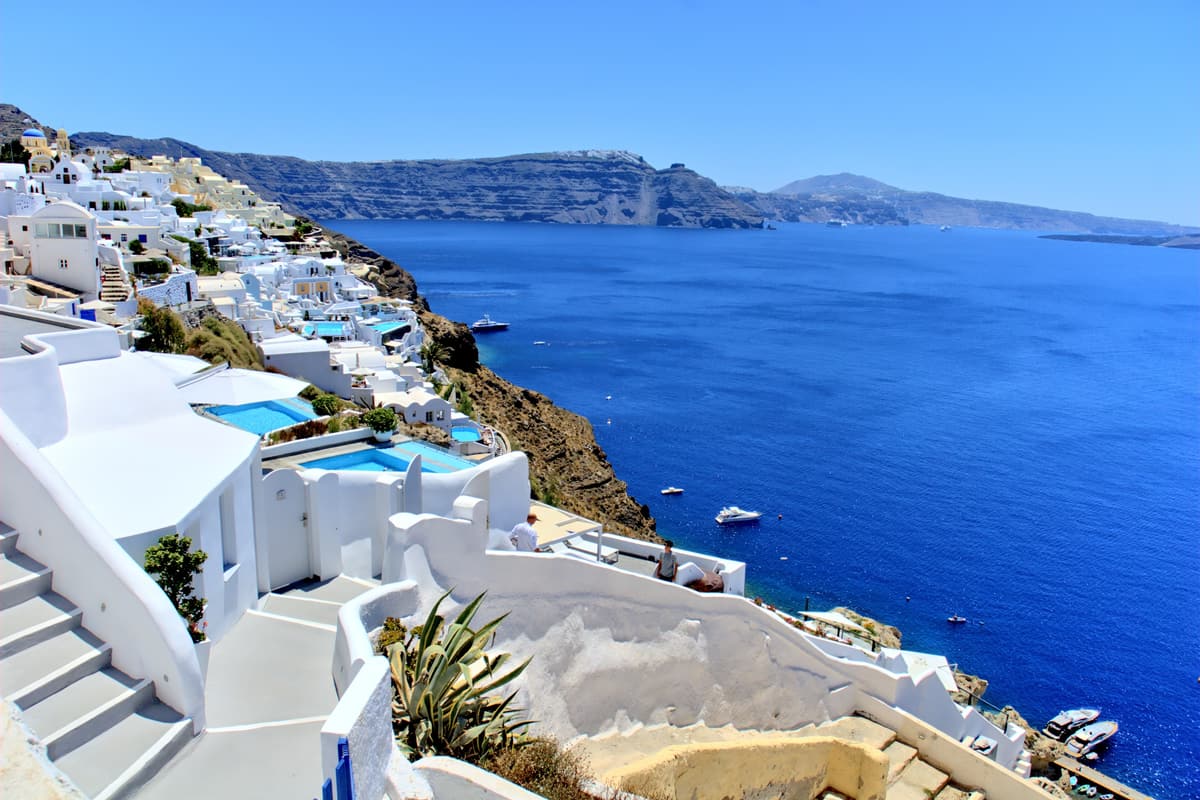
What do Ammoudi Bay and the steps add to a Santorini Oia tour?
Ammoudi Bay and the steps add a shoreline to a Santorini Oia tour. A long stairway drops to the small port of Oia beneath red volcanic cliffs. Down there you find fishing boats, waterside tavernas, a Thirasia boat link and swimming off rocks.
Do not assume the descent is part of the route. One excursion page invites guests to admire Ammoudi at the foot of the caldera, but it describes no walk down. Ask in advance whether your Santorini Oia tour leaves enough time for the stairs, the waterfront and the return climb.
Step counts disagree. Wikipedia and two travel pages give about 300, while other pages count a little over 200. One writer explains that the total depends on where you start. Wikipedia places the steep stairs north of Fort Londsa. For a Santorini Oia tour, treat each figure as a rough measure of the effort.
The rock changes the scene on the way down. These cliffs are red and volcanic, and one page describes the little harbour as dug into them. Another writer notes rock layers within arm’s reach of the path. Here a Santorini Oia tour lets you study the caldera wall up close instead of from the rim.
At the bottom, boats rest beside the fish tavernas, and Thirasia faces you across the water. Wikipedia records a ferry link to that island. A Greek travel site gives 10 to 15 minutes for the crossing and says sailings depend on the weather. Treat Thirasia as a separate outing from your village walk.
For a swim, walkers pass the last taverna and follow a dirt track towards the islet of Agios Nikolaos. The water there is reached from rocks, not from sand, and the edges are sharp in places. Water shoes and a towel help. First check that your Santorini Oia tour allows time to get wet.
Armeni is a second bay under the village, with a stone stairway of its own. Two pages give about 300 steps for that route. The shore is rocky, with no sandy beach, and two writers describe it as calmer than Ammoudi. Excursion boats leave from here too, says Wikipedia. Check which bay your Santorini Oia tour names.
The climb back takes the real effort. One writer calls the way up from Ammoudi considerably less fun in the heat. A road also reaches that port, which leaves a car or taxi as another way up. On a Santorini Oia tour with a fixed meeting time, start the return early and rest on the way.
Which kinds of Santorini Oia tour exist?
A Santorini Oia tour comes in six broad shapes. Three are guided walks, coach circuits and private days with a driver. The other three are photo walks, port-call visits and combined outings, and each one divides your time differently.
Walking versions differ in their route. One walk stretches into neighbouring Finikia, along paths past vineyards and terraced gardens. It finishes with a tasting or a lunch stop. A private art walk instead takes quieter back lanes, visits a local gallery and enters a restored captain’s house. Read the stop list of each Santorini Oia tour before choosing.
A coach circuit adds the village to a longer island loop. One bus day links the Akrotiri excavations, Emporio, Perissa beach, a winery and Profitis Ilias before Oia. Another visits the old Episkopi church and Pyrgos first. Both plans save Oia for last. On this form of Santorini Oia tour, the group timetable fixes your time there.
A private tour with a driver reserves the vehicle for your own party. One operator sends an English-speaking local who both drives and does the guiding. The route begins at Profitis Ilias, continues to Megalochori and Firostefani, and closes with time on your own in Oia. For this Santorini Oia tour, ask who walks through the village with you.
A photo walk puts the camera first. A photographer leads you through the lanes, suggests poses and frames you against the village scenery. One page lists 15 to 50 edited images in an online gallery, about one to two weeks later. It also says the session needs good weather. Confirm both points for any photo-based Santorini Oia tour.
A cruise visitor version is built around the ship. One shore excursion picks passengers up at the cruise terminal’s upper station. It takes in a volcano view from Imerovigli, then reaches Oia for guided sights and time on your own. The outing ends back at the cable car. That keeps this Santorini Oia tour next to your way down.
Combined outings pair the village with a second activity. A wine version adds a tasting to the day, while a sailing version adds an evening on the water. The extra part shares the clock with your walk, so ask which comes first. When you compare a combined Santorini Oia tour, check how much time stays in the village itself.
How do you reach the village for a Santorini Oia tour?
To start a Santorini Oia tour on your own, travel through Fira. The public bus leaves from there, and published ride times range from about 25 to 40 minutes. Taxis, rental cars and the caldera trail are the other ways in.
Fira is the hub of the KTEL bus network, so a ride from Perissa means changing there. One transport page lists summer buses to Oia every 20 to 30 minutes. Another gives 30 to 60 in peak season. Check the current timetable before your Santorini Oia tour, because those pages show that departures shift with the season.
Taxis wait at a stand near the central square of Fira, and the airport has a rank too. The island fleet is small compared with summer demand. One transfer page reports waits of 30 to 60 minutes from June to August. Arrange the ride ahead, for example through your hotel, when your Santorini Oia tour has a fixed start.
A rental car stops short of the village lanes. The main areas are for walkers only, so drivers use the parking area on the outskirts and continue on foot. One page says Oia parking fills by mid-morning in summer. Another says spaces vanish before noon in peak season. Leave a wide margin before a booked Santorini Oia tour.
You can also walk in along the caldera rim from Fira. The trail passes Firostefani and Imerovigli over about 10 kilometres. Published walking estimates start at three to four hours. With photo breaks, other estimates reach four or five. Expect paving as well as rocky ground. Count the hike as separate time before any Santorini Oia tour on foot.
Ferries dock at Athinios, about 20 kilometres from Oia by road. The airport is about 17 kilometres away. Neither has a regular direct public bus there, so riders change in Fira. At the port, bus times follow ferry arrivals. Allow for both legs before a Santorini Oia tour with a set start.
Cruise ships anchor in the caldera, and passengers come ashore by tender. From the Old Port, a cable car or zigzag footpath climbs to Fira, where road links begin. Tenders can also land at Athinios, says one cruise page, so ask your ship. When timing a Santorini Oia tour, count the climb, any queue and the road in both directions.
What are the visiting rules and the dress for a Santorini Oia tour?
On a Santorini Oia tour, treat the village as someone’s home. Keep to public paths, stay off roofs and cover up inside churches. Wear flat shoes that grip, and bring water, a hat and sunscreen with you.
Residents have put up signs in the narrow lanes, asking visitors to respect their homes. One purple sign reads, “Respect. It’s your vacation, but it’s our home.” During a Santorini Oia tour, lower your voice beside doors and open windows. Step aside for a local who is carrying bags.
Curved white rooftops can look like open viewing decks, yet they are not. They belong to homes, businesses or churches. Island roofs can carry signs such as “do not climb” or “private property”. Hotel terraces and private stairs also sit beside well-known views. On a Santorini Oia tour, walk only where access is clearly public.
Village churches are active places of worship. Cover your shoulders and knees inside, and leave beachwear for the shore. Without proper cover, you can be turned away. Speak softly, and never block a doorway or wedding party for a picture. A thin shawl in your bag helps on a Santorini Oia tour.
Choose footwear for the stones, not for your photos. One walking tour page warns that the marble paths and steps can be slippery. It also mentions plenty of stairs, so pace yourself and rest. For a Santorini Oia tour, flat soles with grip make far better sense than high heels.
Pack for open sun as well. Operator and travel pages advise water, sunscreen, a sun hat and sunglasses. Light, breathable clothes help on the climbs. A small daypack holds the shawl and keeps your hands loose on stairs. Carry your own bottle on a Santorini Oia tour, however short the visit looks.
Keep large suitcases out of the walk, because bags are awkward in the tight centre. Caldera hotels can involve plenty of steps, and one travel page suggests asking about a porter. Another advises storing bags near the bus stop or leaving them in Fira. Settle this before an arrival-day Santorini Oia tour.
Drones need a separate check. As official EU aviation pages state, drones in the open category must not fly over crowds. Their examples include shopping streets during opening hours, which matters in a village of tight shop lanes. Rules change, so read the current official version before you pack a drone.
How do the seasons and the crowds change a Santorini Oia tour?
Season and hour both reshape a Santorini Oia tour. Expect the highest heat and thickest crowds in July and August. Spring and early autumn feel calmer, winter closes plenty of doors, and morning beats the evening rush in the village.
Two travel sources point to spring and autumn. One finds thinner crowds from late April through June, then again through September and October. Wikivoyage links the shoulder months with milder weather too. It says the island season opens around April or Greek Easter. Place your Santorini Oia tour there if dates allow.
High summer asks more of your body. Climate averages put July and August daytime highs just under 30 degrees Celsius. Wikivoyage notes that trees for shade are scarce. It adds that restaurants and services can close from noon to 15:00. Slow your pace during a summer Santorini Oia tour.
Wind counts too, since Santorini feels the northerly meltemi. This dry wind arrives in spells between late spring and early autumn. Afternoons get the strongest gusts, while nights tend to be calmer. A blow can also run for days. The breeze can make the air feel cooler than it is, so keep sipping water. Secure your hat.
Winter shows a different village. Rain gathers in the months from October to March, with spells of wind. Seasonal businesses start closing late in October. By December, a large share stays shuttered until spring. Before booking a winter Santorini Oia tour, check which places on your route will open.
Cruise calls bring swings of their own. The number of ships changes from day to day, so one date can feel far calmer than another. Shore groups heading north can build up from late morning. Compare the official port schedule before you fix the day of your Santorini Oia tour.
The hours before sunset feel the tightest. One Oia page says the castle area can fill one to two hours ahead. A news agency once reported waits of more than 20 minutes at one sunset photo spot. If your Santorini Oia tour ends at dusk, agree a clear meeting point.
Morning is the gentler choice. A travel magazine feature advises exploring this village early in the day. A second travel page gives similar advice for June to August. When the main street fills, side lanes can carry less foot traffic. Keep to public ones, and let your Santorini Oia tour move at a calmer pace.
What else do travellers ask about a Santorini Oia tour?
Which kind of tour suits families, couples and older travellers?
Match your Santorini Oia tour to your pace. Families or couples with a wish list gain from a private booking. Two operator pages say guests can customise a private plan. Send your wishes before the date. Then ask which parts can change, such as the order of stops or the length of each pause.
A shared coach outing fits travellers who like a set plan. Older visitors need the walking details before choosing a Santorini Oia tour. For example, one cruise excursion page lists about half a mile of level walking, plus steps and cobbled streets. The same page leaves any extra walking during your own time up to you.
Can slow walkers, strollers or wheelchair users manage the village?
It takes careful planning. One accessibility page calls Oia not very wheelchair accessible because of steep paths, steps and slopes. A second rates the main lane as very challenging, with cobbles, steps and crowds. Name every walking limit when you book your Santorini Oia tour, and ask exactly where the vehicle stops.
Viewpoints add effort, and the second page lists the castle ruin with narrow stone steps and no ramp. Parents can use a stroller in parts of the village, yet stairs break the route. A baby carrier is far more practical. During a family Santorini Oia tour, agree on a spot where a tired walker can wait.
How can you pair a morning in Oia with the rest of the day?
Turn south for a change of subject. After a morning Santorini Oia tour, visit Fira’s Museum of Prehistoric Thera, close to the white Orthodox cathedral. Its collection includes finds from Akrotiri, where volcanic ash covered a Bronze Age settlement. Its fine wall paintings and masonry show how complex that community was.
Prefer the coast? Kamari has a beach of black sand. A neighbouring hill carries the remains of Ancient Thera, and a winding road climbs to them from Kamari. Pick one of these ideas and give it time. Check official opening hours first. Then plan your ride from the point where your Santorini Oia tour ends.
Is the photo light better in the morning or the evening?
Each gives a different picture. Two photo writers advise sunrise for pictures in the village. One of them describes a glowing morning light over the town, seen from the castle spot. A morning Santorini Oia tour therefore needs a very early start to catch it. Ask for the exact hour, because a late departure misses sunrise.
Evening adds warm colour. One writer notes a rosy glow on sky and buildings about 15 minutes before sunset. The same writer prefers the 20 to 30 minutes after sunset, when lamps switch on. A second writer also praises the blue hour. Check that your evening Santorini Oia tour allows time for it before the return.
How do you handle toilets, shade and water during the visit?
Settle these basics early. Use a toilet when you arrive, and ask your driver or tour guide where the next one is. Remember one Greek plumbing habit: used paper goes into the waste basket, which protects the pipes from clogs. Pack tissues too. Such habits keep every pause on a Santorini Oia tour simple.
For shade, take an indoor break instead of waiting beside an open wall. Water needs thought too. Desalination plants feed the island’s pipes, and visitors report a salty taste at the tap. Bottled water is the common choice for drinking. Stock up before the walking part of your Santorini Oia tour begins.