
CRETAquarium tickets admit you to the aquarium run by the Hellenic Centre for Marine Research at Gournes, near Heraklion on Crete. Find more day trips among our tours in Greece.
This page covers what the ticket gets you into, how to reach Gournes from Heraklion, the sea life in the halls, the opening hours, the visit for children and the Knossos day plan.
What are CRETAquarium tickets, and what do they get you into?
CRETAquarium tickets let you into the public aquarium at Gournes, near Heraklion. One ticket opens the gate to the whole tank route. You pass sixty-two tanks of Mediterranean sea life at your own pace.
The ticket buys a visit to a building, not a boat trip. Nobody sets a start time for you, so you walk through the halls when you like. One booking page says smartphone tickets are accepted, so a paper print is not needed.
The official site lists separate entry types. These cover children from five to seventeen, seniors over sixty-five, students and security forces. Organised groups of more than twenty people have a line too. Children up to four, people with a disability and aquarium members have their own lines. Pick the right line before you book CRETAquarium tickets for the family.
Two extras sit on top of the entry. The official site presents a virtual reality show in its renewed hall. You meet a 24-meter whale and manta rays. Audio guide devices come in nine languages, from Greek and English to Polish and Czech. Both are separate lines on the fees page, so CRETAquarium tickets do not include them.
Where is the CRETAquarium, and how do you get there from Heraklion?
CRETAquarium tickets lead to the former American base in Gournes. The official location page puts it 14 km from Heraklion city and its airport. Buses, private taxis and your own car all reach it.
Gournes lies on the northern shore of Crete, in the municipality of Hersonissos. On the former base, the aquarium and the research institutes together form the Thalassocosmos centre for marine science. So the address for your CRETAquarium tickets is the old base, not the city centre.
The official page says a dense network of bus routes joins the aquarium with Heraklion. Buses run every twenty minutes in summer and every thirty in winter. The same network reaches the wider Malia and Hersonissos area. Wikivoyage warns that traffic in Heraklion is bad and parking is worse, so the bus is a calm choice.
By car, the national road links the site, and brown signs on the Cretan road network point the way. The aquarium has a spacious car park. A taxi ride, hired privately, runs both ways between the aquarium and town. Wikivoyage lists ranks at the airport and the ferries. Keep the phone with your CRETAquarium tickets charged.
Which sea life do you see with CRETAquarium tickets?
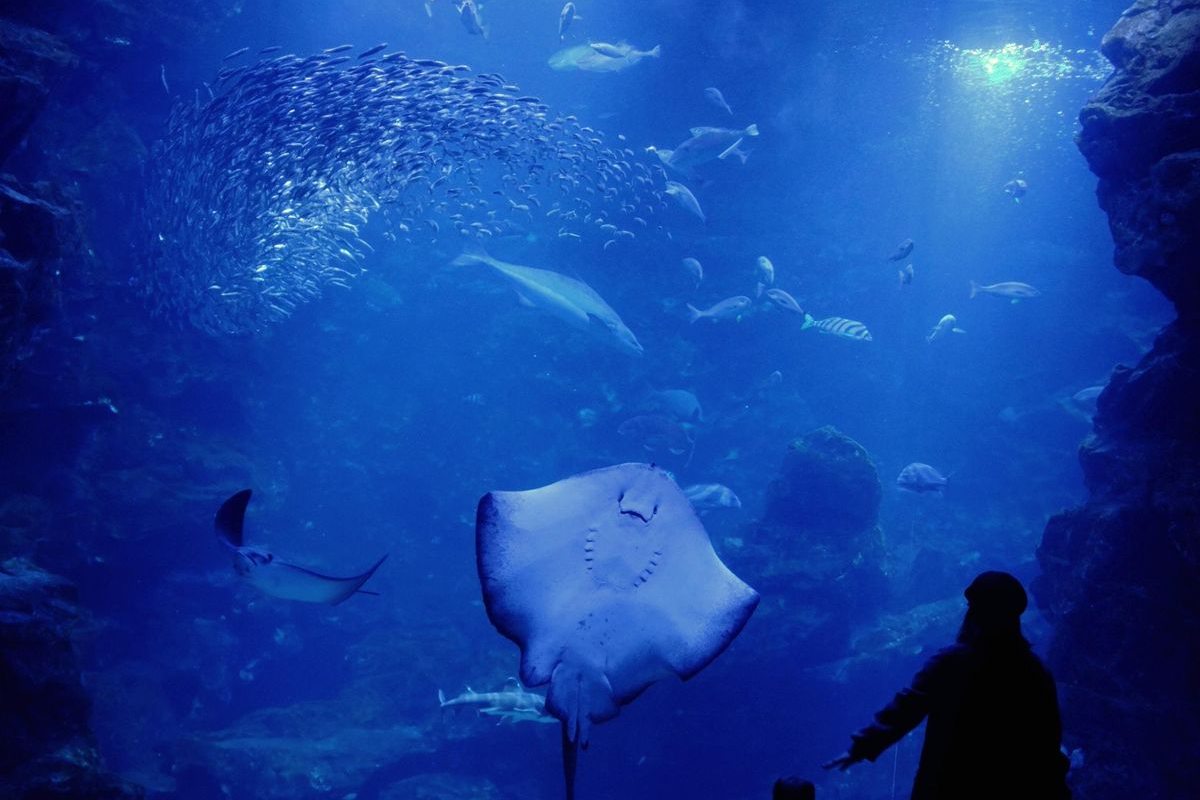
CRETAquarium tickets let you see Mediterranean sea life up close. The official site names dusky groupers, sandbar sharks, sea turtles, moon jellyfish and tropical fish, shown in themed sections.
CRETAquarium tickets first lead you into a section called Playing with Light. The official site lists dusky groupers, red corals, crayfish, gorgonians and skates there. It says a dusky grouper can reach 1.5 m in length and reach the age of 50. Next comes Open Sea, which holds greater amberjacks, European seabasses and the sandbar shark.
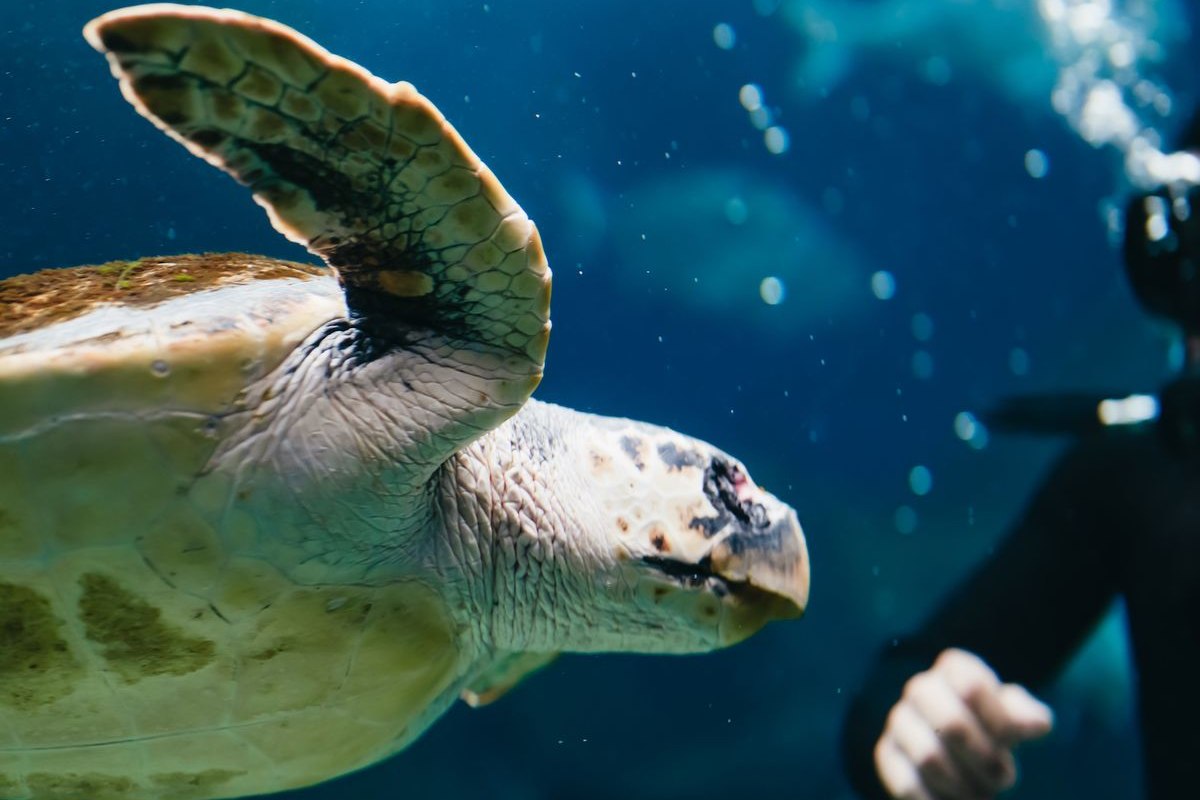
The site says the sandbar shark reaches 2.5 meters. Sea turtles also live in the Open Sea section. They arrive injured and are set free in their natural habitat once cured, says the site. Only one in a thousand baby turtles survives. In the section Beyond the Glass, moon jellyfish swim in shallow open tanks.
Your CRETAquarium tickets also take you past tanks of parrotfish, rainbow wrasses and sea anemones. The final section, Travelling to the Tropics, covers Lessepsian migrants that entered through the Suez Canal. There you find clown anemonefish, which live among anemones. The site calls the silver-cheeked toadfish extremely poisonous if eaten.
How long does a visit take, and what is the route through the halls?
A visit with CRETAquarium tickets takes about one to two hours. The Hellenic Centre for Marine Research page gives approximately one hour, and elsewhere about an hour and a half. A Heraklion city site says about two hours.
One listing of CRETAquarium tickets describes a visit where you set the speed yourself. So the time depends on how long you stay at each tank. The sources also differ on the tank count. The research centre page lists thirty-two tanks with fifty viewing points. The official aquarium pages count sixty-two tanks. Read any tank figure as a rough one.
The route for CRETAquarium tickets follows the themed sections of the official aquarium page. Playing with Light comes first and Open Sea second. The page then covers the plankton area, Coastal Areas, Beyond the Glass and Travelling to the Tropics.
In the big halls, visitors view large tanks of 600 and 400 cubic meters. The scenery is inspired by the sea bed of Matala and Vai. The official site adds that interactive screens on the route explain the marine species.
Stay longer at the big tanks and the jellyfish. The whole visit still fits into one morning or one afternoon with CRETAquarium tickets. Each section lists its own animals, so the walk brings new species at every turn.
Who runs the CRETAquarium, and what research happens there?
The state-owned Hellenic Centre for Marine Research (HCMR) runs the aquarium. CRETAquarium tickets open the door to a public attraction that is also a working research site.
The centre, known as HCMR, is a Greek public research organisation. It has three research institutes, three research vessels and a crewed submersible. Its public aquariums include the CRETAquarium, the largest public aquarium in Greece. It lies near Gournes, east of Heraklion, on the grounds of a former United States Air Force base.
One research institute, for marine biology, biotechnology and fish farming, sits on the aquarium’s own premises. Experimental scientific research is an important part of its work there. Cameras follow the animals in the tanks, so scientists can study their behaviour and life cycle. CRETAquarium tickets therefore also give a look at science in daily use.
The aquarium also cares for wounded or sick animals. It works with local agencies and environmental organisations, and recovered animals go back into the wild. The official site describes quarantine areas behind the tanks, where new animals adapt and sick animals are treated. Certain organisms also breed and grow there.
The official site also lists educational programmes and a children’s area. They link the research to what visitors see in the halls.
What are the opening hours, and when is the quietest time for CRETAquarium tickets?
As the official site lists them, CRETAquarium tickets cover daily visits. Summer hours run from 9:30 to 19:00. Winter hours run from 9:30 to 16:00.
The aquarium is open every day of the year, with no weekly closing day. The official site says this holds even during festive periods and holidays. Your CRETAquarium tickets therefore work on a rainy Sunday as well as on a weekday.
The official site counts April up to the end of October as summer. It counts November up to the end of March as winter. The winter day ends three hours earlier than the summer day, at 16:00. Plan the visit around that closing time when you travel in the colder months.
The official pages name no quiet hour and give no crowd forecast, so this page promises none. The one fixed point is the daily start at 9:30. Check the timetable on the official site before you use CRETAquarium tickets, because opening hours can change.
For questions, the customer service team answers by email at [email protected]. It also answers the phone during the aquarium’s opening hours. Anyone planning around CRETAquarium tickets can ask there about the day’s timetable.
Are CRETAquarium tickets a good choice for children, families and visitors with limited mobility?
Yes. CRETAquarium tickets open the door to a visit that works for young children, parents and wheelchair users alike. The official site offers a playful tour for small children, and two travel pages describe wheelchair access.
The official site lists a special “Little Explorers” tour for a group of small children. It takes about one hour and is playful, built around exploring the underwater world of the Mediterranean. Booking is by phone. Interactive touch screens along the route explain the species in the tanks. A virtual reality ride is open to visitors over twelve.
Families describe an easy pace. One ticket seller page calls the aquarium ideal for the whole family. Visitors quoted on the official home page call it a nice place to stay for hours with kids. One writes that a twelve-year-old loved it. CRETAquarium tickets therefore work for both toddlers and teenagers.
On mobility, one page says wheelchairs can use every area and surface that CRETAquarium tickets open up. Another says the aquarium is both wheelchair and stroller accessible. A third page lets infants travel in a pram. Ample parking is on site, and two ticket pages say service animals are allowed. For special needs, ask the aquarium first.
How does a CRETAquarium visit fit into a day around Heraklion and Knossos?
CRETAquarium tickets fit one stop in a Heraklion day. A travel reference puts the aquarium 15 km east of Heraklion on the main highway to Malia. It puts the Palace of Knossos 5 km south of the city.
That means CRETAquarium tickets and a Knossos visit point to opposite sides of Heraklion. Plan them as two separate stops, with a drive or bus ride between them. The Palace of Knossos is the large Minoan complex in the southern outskirts of Heraklion. It covered about 20,000 square metres. It is one of the busiest archaeological sites in Greece.
The two stops feel very different, so they balance each other. Knossos is an open air site. Heraklion summers are hot and dry with clear skies. The first section of the aquarium route, as the official site describes it, has low light conditions. A day with Knossos and the aquarium mixes sun, shade and sea life.
Plan the transport with care. The travel reference warns that Heraklion traffic is bad and parking is worse. It suggests the city bus for Knossos, line 2 to the end of the line. At the aquarium, a page reports ample parking on site, and another says public transport runs nearby. Planned this way, CRETAquarium tickets keep the day simple.
What else do travellers ask about CRETAquarium tickets?
Do CRETAquarium tickets work with a guided tour?
The official site lists a guided tour with a trained staff member, held in Greek or English. It lasts about one hour. Scheduled tours run at set times from the aquarium’s programme, for groups of ten people or more. A custom tour needs twenty people or more, and the group picks the day and time.
An audio tour is the other choice. Headphone devices speak nine languages: Czech, Dutch, English, French, German, Greek, Italian, Polish and Russian. Your CRETAquarium tickets cover the entry, and the tours are added to it.
How does the membership card differ from single CRETAquarium tickets?
The official site offers a membership card named KartAquarium. It gives entry for a whole calendar year, so one card stands in for repeat visits. Members also get news by email and offers in the Aquashop souvenir shop. The site adds that the card supports the aquarium’s work.
Visitors apply at the customer service desk in Gournes. They can also send a form by email, with one form for adults and one for children. A phone line takes applications from 10:00 to 16:00.
Are the halls dark, and are photos allowed once you hold CRETAquarium tickets?
Low light conditions prevail in the first section of the visit, says the official site. In the second part, darkness gives way to light, and the view opens onto large tanks. Interactive screens throughout the route give facts about the species on show.
The official pages list no rule on photos or flash. So ask at the entrance desk before you use a flash. Phone cameras need the same check.
Is there a cafe or a shop on site with CRETAquarium tickets?
Yes, both. The cafe-restaurant sits in the outdoors area. Visitors get coffee, soft drinks and snacks with a sea view, among landscaped grounds. The gift shop, named Octopus, is indoors on the ground floor.
The shop has two doors. The one in the foyer needs no ticket. The second door opens once you finish the route inside. It sells souvenirs, toys and personal care items, and the site says staff pick products from local producers. It opens during the aquarium’s own hours.
Does the weather matter for CRETAquarium tickets, and how do you show them at the gate?
Wikivoyage says Heraklion summers are hot and dry with clear skies, with stiff breezes to relieve the heat. Winters are mild with little rain. On a hot day, the outdoor cafe gives a cool break with sea views.
Smartphone CRETAquarium tickets are accepted, says one ticket page, and the booking is confirmed straight away. So a phone screen at the entrance is enough. Keep the phone charged for the gate.