
An aegean classic cruise sails out of Piraeus and calls at six ports in five days, so a new island or coast waits each time the ship ties up. For days on land as well, look through the wider choice of tours in Greece.
This page covers the season, the day-by-day route, boarding and life on board, the calls at Mykonos, Ephesus, Patmos, Rhodes, Heraklion with Knossos and Santorini, the return to Piraeus, documents, the sea, shore trips, clothes and a comparison of the six ports.
What is an aegean classic cruise, and how does the route run?
An aegean classic cruise is a five-day loop on a cruise ship. It leaves Piraeus, calls at six ports in the Aegean Sea and returns to Piraeus. The ports are Mykonos, Kusadasi, Patmos, Rhodes, Heraklion and Santorini. You sleep aboard the ship for four nights.
Wikipedia defines cruise ships as large passenger ships used mainly for vacations. It sets them apart from ocean liners, which are used for transport. Wikipedia adds that the bulk of cruise ships sail the Caribbean or the Mediterranean. The Aegean is an arm of the Mediterranean Sea. On an aegean classic cruise, the ship stays your base.
The Mediterranean has a long place in cruise history. Wikipedia describes a nineteenth-century voyage from Naples. It called at Athens, Smyrna and Constantinople, with excursions and guided tours for passengers. It adds that the cruise trade later moved its focus from the Mediterranean to the Caribbean. An aegean classic cruise keeps that pairing of sailing and shore visits.
The six ports sit on four stretches of the sea. Wikipedia and Wikivoyage place Mykonos and Santorini in the Cyclades. Wikipedia lists Rhodes and Patmos in the Dodecanese, to the south-east. Heraklion stands on Crete, the largest Greek island, and Kusadasi is a resort town on the Turkish coast. An aegean classic cruise therefore visits two countries.
The five days of an aegean classic cruise run in order. Mykonos opens the loop with an evening visit. Kusadasi fills the second morning and Patmos the afternoon and evening. Rhodes has the third day to itself. Heraklion and Santorini repeat the pattern on the fourth. The ship is back at Piraeus early on the fifth.
Here is how the rest of the page is laid out for an aegean classic cruise. Season and daily plan come first. Boarding, the ship and life on board follow. Each port then gets its own sections, from Mykonos to Santorini. Documents, the sea, shore trips, clothes, a port comparison and a FAQ close the page.
Which season suits an aegean classic cruise?
An aegean classic cruise suits the edges of the season better than July and August. Wikivoyage Santorini calls the island overcrowded with cruise ships and beach-goers in summer. That island is a port of call on day four. The weeks before and after the summer peak are the quieter ones.
Wikivoyage Santorini dates the start of the island season to around Greek Easter in April. It says seasonal businesses begin closing towards the end of October. Wikivoyage Cyclades says October brings a change of weather and the first rain. So an aegean classic cruise has a window from April to October. Spring and autumn are its edges.
Crowds follow the same curve. Wikivoyage Cyclades names July and August as high summer. It says the islands get extremely crowded then, and it calls Santorini and Mykonos very busy. Wikipedia adds that Patmos relies on summer tourism, with Christian pilgrims visiting frequently. Three ports of an aegean classic cruise therefore carry a summer crowd in July and August.
A port call can begin with a tender, a small boat that links the ship to the shore. Wikipedia adds a detail: on cruise ships the tenders double as lifeboats, carried on davits above the promenade deck. A tender of this kind carries up to 150 passengers. Tender days on an aegean classic cruise depend on the sea.
Heat differs from port to port on this route. Wikipedia records very hot, dry summers at Kusadasi. Wikivoyage calls Patmos a very hilly island, good for walking in the cooler months, with high summer temperatures. The two ports share day two of the plan. An aegean classic cruise therefore meets the summer heat twice in one day.
Winter shows the other side of the season. Wikivoyage Santorini lists hotels and guest houses among the businesses that are shuttered by December until spring. It names December to March the off-season. A traveller who picks the late edge for an aegean classic cruise asks the provider which island outings still run. A summer date meets crowds instead.
What happens on each day of an aegean classic cruise?
Five days make an aegean classic cruise, and the ports follow a set rhythm. Day one has one port and day two has two. Day three has one, day four has two, and day five returns to Piraeus. Each day gets one line in the list that follows.
- Day 1: Go aboard at Piraeus on a Monday and reach Mykonos by evening.
- Day 2: Call at Kusadasi in the morning for the ruins of Ephesus, then at Patmos in the afternoon and evening.
- Day 3: Spend one long day in port at Rhodes, the island of the Knights.
- Day 4: Call at Heraklion in the morning for Knossos, then at Santorini in the afternoon and evening.
- Day 5: Arrive at Piraeus early in the morning and leave the ship.
Patmos lies among the northern Dodecanese islands, as Wikipedia puts it, while Kusadasi sits on the Aegean coast. Wikipedia names the Sea of Crete as the southern section of the Aegean. Wikivoyage places Santorini in the southern Cyclades. Each two-port day is a morning port, then a later one. An aegean classic cruise pairs them on one day.
Four nights mean four sailings, and the ship moves while the passengers sleep. Wikipedia places Rhodes northeast of Crete, so the night after the long Rhodes day points the ship towards Heraklion. The first night runs from Mykonos to Kusadasi, and the fourth from Santorini to Piraeus. On an aegean classic cruise you wake in a new port every morning.
The ship is the hotel for the whole trip, and the calls are short. Mykonos is an evening call. Kusadasi and Heraklion are morning calls. Patmos and Santorini are afternoon and evening calls. Only Rhodes fills a day. The other five fill part of a day. A later section of this aegean classic cruise page compares the six ports.
How does boarding at Piraeus work on an aegean classic cruise?
Day one of an aegean classic cruise begins at the port of Piraeus. The cruise port runs three terminals, and Wikipedia calls Terminal A the main one. That terminal never closes, and the town centre is within walking distance. Check-in there can handle two medium-sized ships at the same moment.
Piraeus Cruise Port has eleven berths along a quay of 2,800 metres, as Wikipedia lists it. The port takes ships with a draught of up to 11 metres. Wikipedia counts roughly one in three cruise sailings there as home ported, so the voyage starts and ends in Piraeus. An aegean classic cruise follows that pattern.
Terminal B takes mega cruise ships and has room for 120 tour buses. Its amenities match those of Terminal A. Of the three, Terminal C is smallest, and it houses customs and a hall for check-in and departure. A free shuttle bus links the terminals with the exit of the port. Ask which terminal your aegean classic cruise uses.
Travellers from central Athens make use of the metro on the day an aegean classic cruise begins, as Wikivoyage reports. The Line 1 terminus was built where the first conventional train station of the port once stood. Wikivoyage places it among the oldest stations of its type in the country. The building also holds the Electric Railway Museum.
Wikivoyage tells you to reach the cruise terminal no later than two hours before the sailing. Large bags go to the porters with cruise tags attached, and a blank tag needs at least your cabin number. This is the last time you see the bags for hours. Keep your travel documents with you on an aegean classic cruise.
Boarding an aegean classic cruise starts with a security check, as at an airport. Wikivoyage adds that your passport is examined, and the cruise card works as cabin key and onboard account. Wikipedia states that a muster drill must happen within 24 hours of departure. The alarm opens with at least seven short blasts and closes with one long one.
What does the ship add to an aegean classic cruise?
On an aegean classic cruise the ship is the room, the restaurant and the road in one. Wikipedia records that thirteen cruise ships were docked at Piraeus as floating hotels for the Athens Olympic Games. The same idea carries you from Mykonos to Santorini, with the bed always in the next port.
Passengers sleep in cabins, the word seafarers use, as Wikipedia explains. First-class cabins were traditionally called staterooms, and cruise lines now prefer staterooms or suites. Cabins on older ocean liners were designed to fit in more passengers rather than for comfort. Modern cruise ships add balconies. An aegean classic cruise gives you one cabin for four nights.
Size shapes the ship. Wikivoyage puts luxury ships at 100 to 800 passengers, average ships at 2,000 to 3,500, and mega-ships at over 5,000. Smaller ships can enter smaller harbours, while mega-ships are limited to major ports. Public areas on board are shared by all passengers, whatever their cabin class, on an aegean classic cruise.
A deck is one level of the ship. Wikipedia notes that cruise ships can give a deck an invented name. The promenade deck wraps around the superstructure, with open railings or glass. The lido deck is an open area near the stern with the main outdoor pool. Ask the provider which decks the ship of your aegean classic cruise has.
Wikivoyage describes a predictable layout. Lifts and stairs sit in three shafts: front, rear and middle. A multi-level atrium in the middle is ringed by bars, lounges and shops. The buffet is high at the rear, and the main dining rooms sit low at the rear. Learn this plan on day one.
The bridge is the room from which a ship is commanded, as Wikipedia defines it. Under way, it is manned by an officer of the watch, aided by an able seaman as lookout. A commercial vessel’s bridge holds GPS, radar, a chart system and communications equipment. The ship of an aegean classic cruise is under way every night.
How does life on board work on an aegean classic cruise?
Life on board follows the ship’s day: a meal, a port or a sailing, dinner and an evening show. Wikivoyage states that everything on board runs on ship’s time, and a daily newsletter lists the activities. An aegean classic cruise keeps that rhythm for five days.
The main dining room serves seated meals with full waiter service, as Wikivoyage describes it. It opens for two to three hours around each meal time. Lunch and dinner menus change daily, with a section of dishes that stay on every day. Wikivoyage suggests reaching the table within 30 minutes of opening on an aegean classic cruise.
The buffet sits on an upper deck and serves something from early morning to late evening, as Wikivoyage describes it. Buffets tend to carry no dress code, even on formal nights. In port, the dining time and table can change when passengers eat ashore. The daily newsletter announces it on an aegean classic cruise.
Wikivoyage places the shows after dinner. A large ship holds them in a theatre, and a small ship uses a lounge with a stage. Other venues offer small bands, piano bars and dancing to live music or a disc jockey. A late call at Mykonos or Santorini moves the evening ashore on an aegean classic cruise.
The newsletter plans the day on paper. Wikivoyage lists port and shopping lectures, dance classes, kitchen tours and bingo among the activities. Careful reading of the daily bulletins, it adds, removes confusion about where you are and where you go next. Read it each evening of the aegean classic cruise to prepare for the next port.
Certain venues close in port. Wikipedia states that the casino and the shops open only while the ship is at sea. The nights of an aegean classic cruise are sailings. They run from Mykonos to Kusadasi, Patmos to Rhodes, Rhodes to Heraklion and Santorini to Piraeus. Each morning after a night at sea opens in a new port.
What does Mykonos add to an aegean classic cruise?
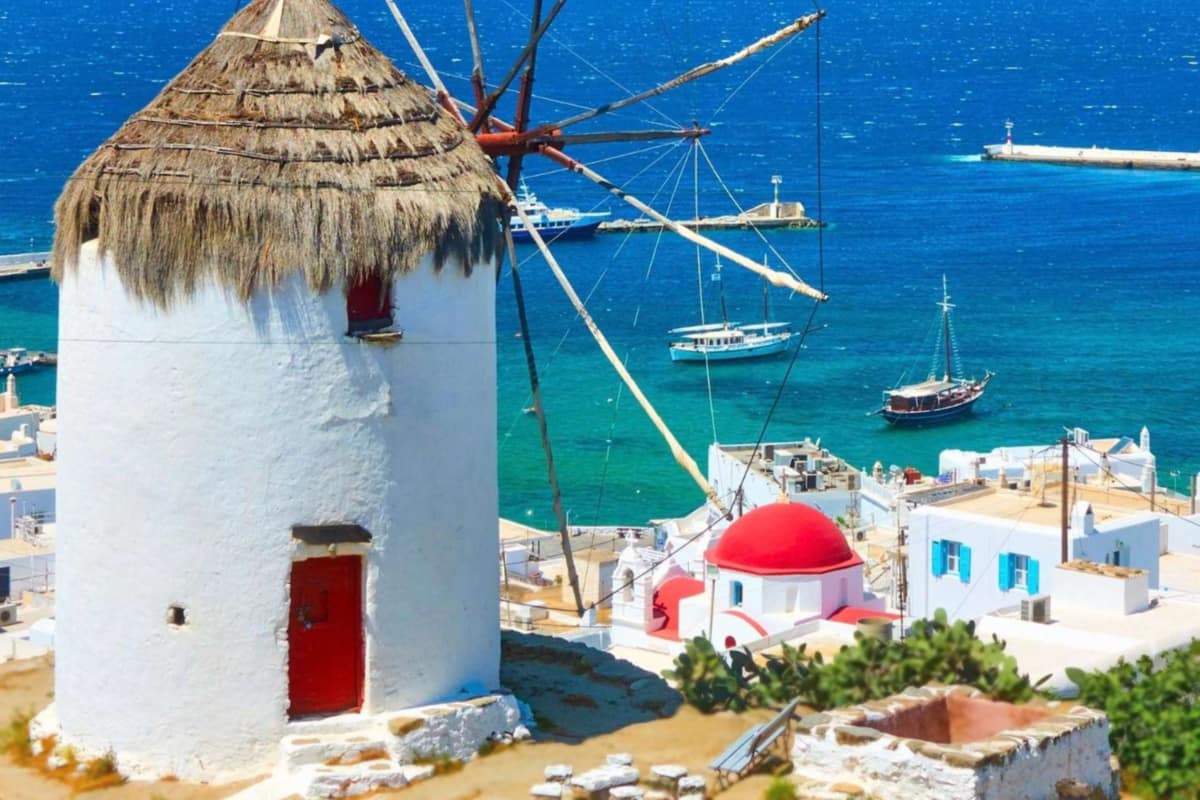
Mykonos adds a skyline of windmills to an aegean classic cruise. Wikipedia counts sixteen windmills on the island, seven of them on the hill above the main town, Chora. It calls the windmills an iconic feature of Mykonos, so the first island call has a clear landmark.
Wikipedia says that round white windmills like these stand on almost all the Cyclades islands. Wood and straw cap the row called Kato Mili. The mills face the north, to harness the strong winds. A visitor on an aegean classic cruise sees a row built to mill flour. Production stopped by the mid-twentieth century.
Wikivoyage gives Little Venice the name Alefkandra too. Its medieval houses rise two and three storeys above the sea, with colourful wooden balconies. Wikipedia adds that a windmill in Ano Myloi, the Upper Windmills above Chora, displays old tools and machinery. The mill offers views of the area, says Wikipedia, to a visitor on an aegean classic cruise.
Panagia Paraportiani on an aegean classic cruise has a plain name: Our Lady of the Side Gate. It stands in Kastro, the site of an older castle. Wikipedia dates the castle to the early thirteenth century and its destruction to the sixteenth. Wikipedia names a second church, the only Catholic one on the island: Our Lady of the Holy Rosary.
Petros the pelican is the mascot of Mykonos. Wikivoyage says a fisherman found a wounded pelican off Paranga after a storm in the nineteen fifties. Locals nursed it to health. Three pelicans live on the island now, so the Petros you meet can be a Petra. A waterfront walk on an aegean classic cruise can include one.
Wikivoyage notes a lack of Bronze Age, Archaic and Classical sites on Mykonos itself, though Delos lies close by. Later sites remain: primarily Byzantine churches from after the sixteenth century, and a castle of the thirteenth century. So the town is the sight on an aegean classic cruise. The lanes, the churches and the mills make the visit.
How does the evening call on Mykonos work on an aegean classic cruise?
An evening call on an aegean classic cruise runs from the moment passengers go ashore to the all-aboard time. Wikivoyage on cruise ships asks passengers to be on the ship at least half an hour before it sails. The walk back to the ship has to fit inside that time.
Wikivoyage advises saving the telephone number of the ship before going ashore. The cruise card can carry it. The same page says the card is scanned at every exit and return, so the crew knows who is aboard. It warns that the all-aboard notice can give ship’s time. That can differ from local time on an aegean classic cruise.
Wikivoyage lists two small museums with evening hours. The Folklore Museum, in a sea captain’s house near Paraportiani, opens from 16:30 to 20:30, Monday to Saturday. Lena’s House Museum opens from 18:30 to 21:30 on the same days. The Archaeological Museum is listed until 16:00, so an aegean classic cruise evening call misses it.
Wikivoyage says the town has no department stores, which cruise visitors sometimes look for. Little boutiques stand in their place. The same page says cash machines are found throughout the town, with a cluster near the southern bus station. An aegean classic cruise evening suits a browse more than a shopping run.
A Mykonian, George Drakopoulos, founded the Aegean Maritime Museum, says Wikipedia. Its aim is the study of the merchant ship and its past in the Aegean Sea. Wikivoyage lists the Boni Mill, a sixteenth-century windmill, as open daily from 16:00 to 20:00 between June and September. Both fill an aegean classic cruise evening.
Plan the way back before the first photo on an aegean classic cruise. Wikivoyage says buses are almost always full in the busy parts of the day. It lists the driver, a ticket machine, kiosks and mini-markets as the places to buy bus tickets. So allow time for the walk to the ship.
How do the pier and the old port work on Mykonos for a cruise visitor?
On an aegean classic cruise the ship reaches one of two ports of Mykonos. One is the old port in the town, and the other is the new port at Tourlos. Wikivoyage names Tourlos as the berth for nearly all cruise ships. The old port takes the rest.
Wikivoyage says yachts and fishing boats use the marina at Tourlos. The port also receives a share of the ferries. The small beach near it is not used much since the new port and marina were built. Agios Stefanos, 3 km north of the town, has a sandy beach next to the new harbour.
From the new port, an aegean classic cruise visitor finds a cruise shuttle bus to the town, says Wikivoyage. A trip of under ten minutes ends at a car park near the northern bus station. Wikivoyage adds that a taxi is not easy to catch when passengers arrive together. The Archaeological Museum stands near that bus station.
At the old port, Wikivoyage says no bus ride is necessary or even available. A walk of under ten minutes reaches the centre. Wikivoyage puts the ferry quay of the old port close to the northern bus station. Wikipedia adds a bus depot at the old port with service to Tourlos and Agios Stefanos.
Wikivoyage on cruise ships names two ways a ship arrives. A ship at a pier lets passengers step ashore by a ramp. Without a pier, the ship anchors offshore and boats take passengers in. Mykonos is a pier call for nearly every ship. The itinerary of an aegean classic cruise names the method for each port.
Wikipedia lists taxis, buses and boats as the ways around the island. Small boats link the beaches, and tour boats run to Delos. Wikivoyage names Manto Square, on the harbour front near a statue, as the main taxi location in the town. The queue can last for hours, so a short call needs the walk planned first.
What does Kusadasi add to an aegean classic cruise?
Kusadasi is where an aegean classic cruise meets Turkey, on the second morning of the plan. Wikipedia places the town on a gulf of the same name in the Aegean, and calls tourism its primary industry. The ship leaves in time for the afternoon call at Patmos.
The coast around Kusadasi has a long record of settlers. Wikipedia names the Leleges first, then the Aeolians and the Ionians. The Roman Empire took the coast in the second century BC. In the Christian era the area became known as Ania, adds the same page. An aegean classic cruise lands on a coast with an old story.
Wikipedia calls Kusadasi a minor port of antiquity, frequented by vessels trading along the Aegean coast. Ephesus overshadowed it until its own harbour filled with silt. Wikipedia adds that Kusadasi caters to tourists arriving by land and to cruise passengers heading for Ephesus. The aegean classic cruise plan follows that pattern on its second morning.
Wikivoyage says the castle on Pigeon Island is a restored museum, open in daylight hours. The Micro Miniature Museum fills an old turret with miniature art, viewed through microscopes. Wikipedia adds the Kaleici Mosque, built in the seventeenth century by a Grand Vizier. These small sights suit a short call on an aegean classic cruise.
Wikivoyage points to ruins beyond the town. Priene, Miletus and Didyma lie south of the Dilek Peninsula. Magnesia on the Maeander has a stadium with capacity for 30 thousand spectators. Taxi hire for about four hours is the example given. A short call on an aegean classic cruise leaves these for another trip.
Wikivoyage describes a town that sprawls along 25 kilometres of coast. It grew as a package-tour resort from the nineteen seventies. Its population doubles in summer with visitors and seasonal workers. Long Beach stretches 10 kilometres towards Guzelcamli, with multiple access points. The beaches are sandy and shallow. An aegean classic cruise sees this resort side only briefly.
What does Ephesus add to an aegean classic cruise?
Ephesus gives an aegean classic cruise its main stop on land in Turkey. Attic and Ionian Greek colonists built the city in the tenth century BC, and Rome took control in 129 BC. The ruins stand near Selcuk and are reached from Kusadasi, the port of call for the morning.
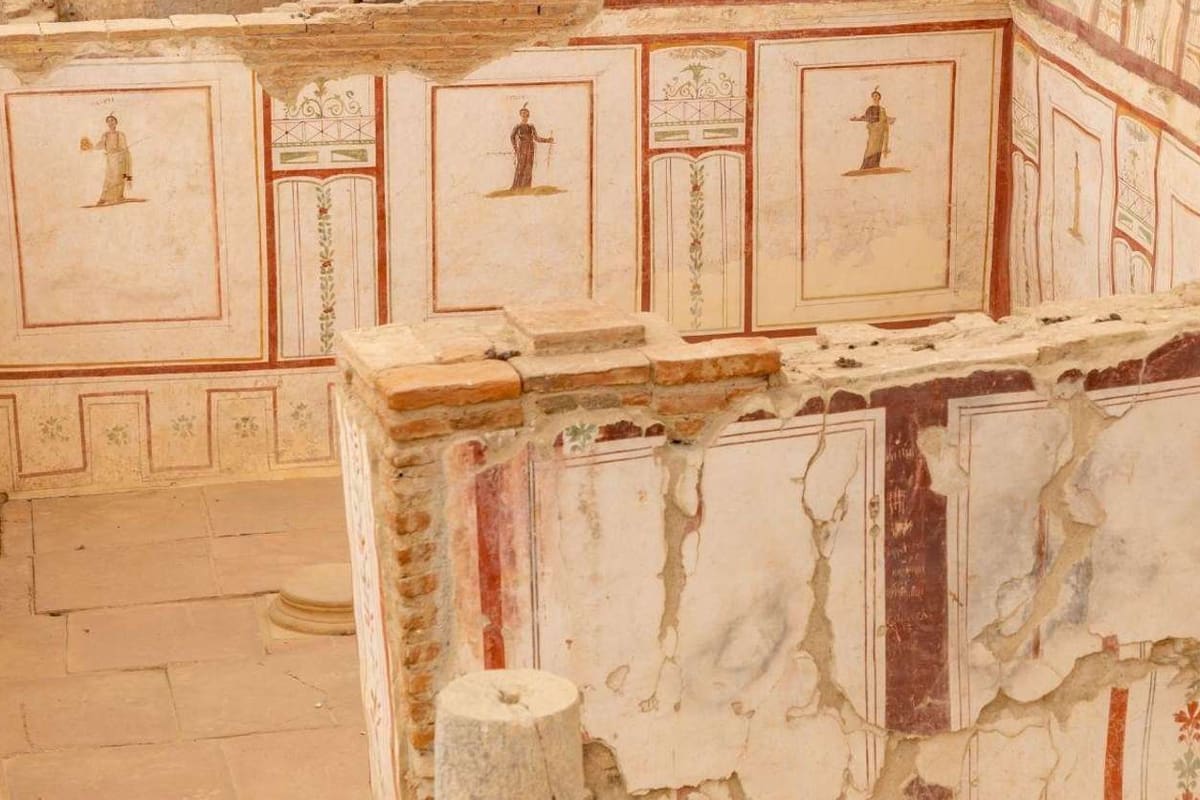
The Terrace Houses show family life in Roman Ephesus. Wikipedia describes six luxury residences with floor mosaics and wall frescos. They stand on three terraces on the lower slope of Bulbul Mountain. The houses follow the Hippodamian plan, with streets crossing at right angles. An aegean classic cruise visitor sees them under a protective roof.
Wikipedia dates the oldest structure to the first century BC. It records use of the houses until the seventh century AD. Wikivoyage says the Terrace Houses are the only part of the site with a separate entry ticket. UNESCO points to Terrace House 2, with its wall paintings, mosaics and marble panelling, as a record of upper-class life.
The Temple of Artemis is a name to know before an aegean classic cruise reaches Turkey. Wikipedia reports Pliny’s claim that the builders of the second temple chose marshy ground as a precaution against earthquakes. Arson burned that temple in 356 BC. The third temple measured 137 metres by 69 metres. UNESCO notes that little remains today.
On an aegean classic cruise, the Basilica of Saint John is a separate stop in Selcuk. Wikipedia traces the site to a mausoleum on the tomb of Saint John. A basilica rose over it in the fourth century under Theodosius I. The ruins lie beside the Isa Bey Mosque, about 3.5 kilometres from Ephesus.
Two more sights round off an aegean classic cruise visit. Wikivoyage describes the Great Theatre as a 24,000-seat theatre set into the hillside and never roofed. The Library of Celsus has a rebuilt facade, and Wikipedia adds that the rest of the building remains in ruin. UNESCO names both among the grand monuments of the Roman Imperial period.
How does the morning call in Turkey work on an aegean classic cruise?
The morning call in Turkey on an aegean classic cruise runs from the Kusadasi harbour to Ephesus and back. Wikivoyage says cruise ships bus their passengers from this harbour to Ephesus and the other antiquities. Afterwards the ship sails on to Patmos for the afternoon and evening.
Wikivoyage places Ephesus by the junction of the D550 and D515 roads, well signposted. Taxi drivers gather at the harbour and at the intercity bus station. The plate of a Kusadasi taxi must start with 09 T. A taxi gives a quick run to the south gate. On an aegean classic cruise, ship coaches or taxis cover this road.
The upper gate in the south is the entry that coach tours use, and visitors walk north, downhill. Only the lower gate in the north is served by dolmus minibuses. A taxi driver can wait there, says Wikivoyage. Both gates have taxis. A visitor on an aegean classic cruise who joins a coach tour follows the downhill route.
Wikivoyage notes that the ticketed area has no facilities, only small cafes outside both gates. Works go on all the time, so a single sight can be fenced off. The Fountain of Trajan stands on Curetes Street, and its water powered mills, including a sawmill for marble. On an aegean classic cruise, these details fill the walk down Curetes Street.
On the ministry’s museum page, the Ephesus Experience Museum follows the opening times of the ancient city. One entry ticket covers both. The page also mentions an audio guide service and gives the address as Efes Harabeleri in Selcuk. Check the official page for the current hours before an aegean classic cruise sails.
The Schengen Area covers 29 European countries that dropped border controls between themselves. Turkey is not one of them, and Wikipedia lists it among the land neighbours of the area. A call at Kusadasi is therefore a border crossing on an aegean classic cruise. For entry rules, open the official Turkish e-visa page for your passport.
What does Patmos add to an aegean classic cruise?
Patmos adds a small, quiet Greek island of pilgrimage to an aegean classic cruise. Wikipedia places it among the northernmost islands of the Dodecanese group. Skala is its only commercial port. Chora is its capital, a hill town that grew gradually around a fortified monastery.
Day two of the plan crosses from Turkey to Greece. The aegean classic cruise leaves Kusadasi after the morning and reaches Patmos in the afternoon. Wikipedia adds that Patmos sits further west than the neighbouring islands of its group. The Dodecanese page of Wikivoyage places the island north of Leros. Kalymnos is the regional unit that Wikipedia assigns to Patmos.
Wikipedia notes that ancient writers seldom mention Patmos, so little is known of its first settlers. Wikipedia dates a defensive wall with towers around the settlement to the third century BC. A Greek legend gives the island an older name, Letois, after Artemis. So the aegean classic cruise reaches an island older than its monastery.
The municipality of Patmos is larger than the island that the aegean classic cruise visits. Wikipedia counts the offshore islets Arkoi, with 44 residents, and Marathos, with 5, plus uninhabited islets. With them the land area of the municipality reaches about 45 square kilometres. The census that Wikipedia cites gives the municipality 3,047 residents.
The island economy relies largely on tourism in the summer months, according to Wikipedia. Christian pilgrims come because of the link with the apostle John and the Book of Revelation. The same page names the Patmian School as a notable seminary in Greece. That mix of faith and learning is what an aegean classic cruise meets here.
Beyond Skala and Chora, Wikipedia lists Grikou and Kampos as the other settlements. Wikivoyage adds Plaka, where the cafes and the post office stand. Wikipedia also lists ferry links with ports from Agathonissi and Lipsi to Naxos, Symi and Rhodes. Rhodes, the next port of the aegean classic cruise, is on that list.
What do the Monastery of Saint John and the Cave of the Apocalypse add to an aegean classic cruise?
The monastery and the cave share one UNESCO listing with the old town of Chora. The monastery stands at the island’s highest point, while UNESCO places the cave midway along the steep road from Skala. Together they give an aegean classic cruise its main religious stop.
The courtyard of the monastery has four sides, as UNESCO describes them. Cells for monks, with white walls, fill its northern and western edges. On the southern edge stands the Tzafara, a stone arcade with two storeys. The outer narthex of the main church closes the eastern edge. This clear plan greets an aegean classic cruise visitor at the gate.
UNESCO calls Chora well preserved and among the oldest of the Aegean chora towns. It grew gradually around the monastery. The Alloteina quarter came in the fifteenth century for refugees from Constantinople. The Kretika quarter followed in the seventeenth century for refugees from Crete. A layered town surrounds the monastery that an aegean classic cruise visitor reaches.
UNESCO adds that trade made Patmos prosper in the Ottoman period. Merchants’ houses from the late sixteenth and the seventeenth centuries still stand in Chora. The small churches there date mainly from the seventeenth and eighteenth centuries and hold mural paintings and icons. Wikivoyage also lists a small museum in the monastery.
UNESCO says the cave drew chapels, cells for monks and small churches into one architectural ensemble. Wikipedia places the Chapel of St Anne around the cave’s entrance. A mosaic above the door shows Saint John with his disciple Prochoros. Wikivoyage lists an open-air theatre at the cave site. The aegean classic cruise reaches a whole cluster, not one room.
According to tradition, UNESCO states, Saint John dictated the Book of Revelation and his Gospel to Prochoros. Wikipedia lists three features inside the cave. A lectern built to human height served his scribe. Tradition links a hollow in one wall to his rest, and a ledge to the scroll. An aegean classic cruise visitor finds a quiet place of prayer.
How does the afternoon call on Patmos work on an aegean classic cruise?
On day two the call on Patmos follows the morning at Kusadasi and runs into the evening. Wikivoyage says the detailed itinerary shows how the ship visits each port. A steep road leads up from Skala to Chora. An aegean classic cruise visitor plans the afternoon around it.
Day two begins in Turkey and ends in Greece. Wikivoyage warns that the ship’s time can differ from the local time at a port. It says time changes are announced in the daily planner. An aegean classic cruise therefore asks for one look at the ship’s clock before the walk begins. Check it again on the way back.
UNESCO says the road from Skala to Chora winds steeply uphill. Wikivoyage calls Patmos a very hilly island and lists a bus between the harbour and Chora. Other bus lines link Skala with Kampos and with Grikou. This is the practical side of an aegean classic cruise call here.
Wikipedia describes houses set along inclined streets, which give Chora an uneven look. The streets are narrow and compact. Wikivoyage names the views from almost anywhere in Chora. It also names a quiet space behind the monastery that overlooks the sea. It asks visitors to keep it so. A slow walk fits an aegean classic cruise call.
Wikivoyage names the sunset seen from the road out of Skala towards Kampos. UNESCO states that cooperation between secular and church authorities has kept the tranquillity that suits the sacred values of Patmos. The evening hours of an aegean classic cruise call suit low voices and a calm pace.
Wikivoyage stresses that all aboard means being on the ship by that time, not merely reaching the port. If you go ashore on your own, it advises a full plan for the way back and a generous window. It adds that all ferries and hydrofoils dock at Skala. Rhodes follows on the aegean classic cruise.
What does Rhodes add to an aegean classic cruise?
Rhodes adds the long day to an aegean classic cruise, and the whole stop centres on one harbour city. Wikivoyage describes the city as the capital of the island that shares its name. The ship needs no second port, because the city holds the harbour, the walls and the museums.
Rhodes has sea links to Greece and Turkey. Wikipedia lists daily ferries to nearby islands, the Cyclades and Piraeus, plus a ferry to Heraklion twice a week. It adds frequent routes to Marmaris and Fethiye, two Turkish coast towns. The city has three major ports, and the aegean classic cruise uses the one that serves cruise ships.
The sea is old business here. Wikipedia records a saying about the Rhodian navy: ten Rhodians meant ten ships. The same page notes an alliance of Rhodes and Egypt that controlled Aegean trade in the third century BC. The ship now crosses the same sea that this island once worked.
Rhodes once held land on the far shore too. Wikipedia describes the Rhodian Peraia, a strip of the coast of Caria across from the island. It ran from the area of modern Mugla in the north to Kaunos in the south, near Dalyan. Day two of the aegean classic cruise has already stopped in Turkey, at Kusadasi.
Rhodes holds an ancient city as well as a medieval one. Wikipedia dates the acropolis of the ancient city to the fifth century BC. The Temple of Pythian Apollo served as a sea mark for ancient sailors heading to Rhodes. Its re-erected columns are still visible from the harbour. An aegean classic cruise visitor can look for them on arrival.
The New Town lies north and west of the Old Town, and Wikivoyage calls it an extensive modern city. It lists a town hall, a theatre and a Government House in Italian architecture. It also lists the Aquarium of the Institute of Marine Biology. A visitor who wants the sea indoors can find it there.
What does the Old Town of Rhodes add to an aegean classic cruise?
The Old Town of Rhodes gives an aegean classic cruise a whole medieval city inside one wall. Wikipedia puts that wall at four kilometres in length. The ring is the clearest feature of the stop, because a visitor is either inside it or outside it.
Wikipedia dates the medieval walls to the middle of the fourteenth century, built on an older line. It adds that they were remade after a siege and an earthquake in the fifteenth century. Wikivoyage says the Old Town is still enclosed by its medieval wall. The aegean classic cruise stop therefore has a clear edge to walk along.
UNESCO compares the lower town with the high town and finds it nearly as dense in monuments. In the south-southeast, palaces and charitable foundations multiplied over the years. UNESCO names the Court of Commerce, the Archbishop’s Palace and the Hospice of Saint Catherine among them. The aegean classic cruise stop shows the lower town beside the high town.
Wikivoyage counts fountains, oriental motifs, mosques and Byzantine and Gothic churches among the buildings of the Old Town. UNESCO adds that building after the Knights left combined local forms with decorative elements of Ottoman origin. The aegean classic cruise therefore crosses more than one era in one walled town.
Wikivoyage names the Street of the Knights Odos Ippoton, the Avenue of the Knights. The Palace of the Grand Master, called the Kastello, stands near it. UNESCO notes that the palace and the Archaeological Museum have been upgraded, with new exhibitions and better facilities for visitors. The aegean classic cruise walk takes the street and the palace together.
UNESCO says the Grand Masters kept the ramparts in repair and reshaped them between the fourteenth and sixteenth centuries. Artillery firing posts were the last features added. UNESCO adds that the walls of Rhodes influenced the eastern Mediterranean in the late Middle Ages. The aegean classic cruise visitor walks beside walls that mattered far beyond the island.
How does the long day in Rhodes work on an aegean classic cruise?
Wikivoyage puts the berths for cruise ships at the Commercial Port, with the Old Town to its west. On an aegean classic cruise, the visitor heads west to reach the walls. The ship stays in port all day, so the day splits into a morning, a midday and an afternoon.
Wikipedia names two marinas: a municipal one at Mandraki in the centre and a private one by Akandia port. Wikivoyage calls the local dialect sing-song, with strong Turkish and Italian overtones. Mainland Greeks do not always follow it. An aegean classic cruise visitor hears the island’s layers before reaching the walls.
A morning can start at the Archaeological Museum. Wikipedia notes that the building began as a hospital for the Knights of Saint John. Wikivoyage says it has two floors, with the exhibits mainly upstairs, and gardens with statues and mosaics. The aegean classic cruise day then has a fixed first stop. The Old Town lanes fill the rest.
Midday by the harbour brings the shops. Wikivoyage warns that colourful sea shells sold around the harbour are frequently imported from Asia or the Caribbean. It adds that a number of the species are protected. Carrying them home can cause considerable difficulty. Brand-name goods in tourist shops can be fakes. An aegean classic cruise visitor can look and move on.
An afternoon can go to a beach or a bus ride. According to Wikipedia, city buses link the centre with outlying resorts and towns. Faliraki lies in the east and Ialysos in the west. The orange buses leave the centre for the east coast. A trip out on the aegean classic cruise needs a plan for the ride back.
Wikipedia notes that a taxi can be found at a rank or called by phone. Wikivoyage puts the main taxi stand close to the Old Town. A cruise ship sails round trips between ports of call, as Wikipedia describes it. The next call is Heraklion, so the aegean classic cruise saves the last stretch for the way back.
What does Heraklion add to an aegean classic cruise?
Heraklion is the only Cretan port on an aegean classic cruise. The ship calls there on the morning of day four. Crete was independent for a time before it joined Greece in nineteen thirteen, as Wikivoyage recounts. The call is short, so the choice of sights matters.
The port has a Minoan past. Wikipedia places an early port of Knossos in the Poros-Katsambas neighbourhood of today’s city. The ancient harbour, Heracleium, lay about twenty stadia from Knossos, roughly 3.7 kilometres. The ancient writer Strabo also links the two, Wikipedia adds. So an aegean classic cruise arrives where a palace once kept its harbour.
Daily ferries link the port with Piraeus, Wikipedia notes. It lists Santorini, Mykonos and Rhodes among the other places boats reach, three more stops of this route. The harbour was completed in nineteen twenty-eight, and a working industrial railway served its construction. So the ship arrives in a working ferry harbour.
Venetian walls ring the old city. Building began in the fifteenth century and took over a century. The ring is roughly triangular, and two of its four main gates still stand. The Koules guards the old port; sunken ships filled with stone form its breakwater. A short walk on an aegean classic cruise meets this ring.
The old centre mixes eras. Wikipedia names the Bembo, Priuli, Palmeti and Sagredo fountains among the Venetian ones that survive. The Dominican church of Saint Peter dates from the thirteenth century, according to Wikipedia. Wikivoyage calls the centre pedestrianised and adds a coastal promenade. On an aegean classic cruise, these sit within walking reach.
Patroklos Karantinos designed the Archaeological Museum, and it rose between nineteen thirty-seven and nineteen forty. Skylights and high windows light the halls. In the Mycenaean room, a clay sculpture shows dancers with a lyre player. The design earned a Bauhaus commendation. An aegean classic cruise can fit this building into the morning.
What does Knossos add to an aegean classic cruise?
Knossos is the Minoan palace behind the Crete call on an aegean classic cruise. It stands on Kephala hill, on the southern edge of the municipality of Heraklion. The hill rises in the Kairatos river valley. It gave the old town access to the north coast and its harbour.
The municipality of Heraklion lists two long spans of work by Arthur Evans. The first ran from nineteen hundred to nineteen thirteen, and the second ended in nineteen thirty. He uncovered virtually the whole palace, the page states. Finds included fresco fragments, sealings and thousands of Linear B tablets. A visitor on an aegean classic cruise walks the outcome.
The palace today blends excavated stone and modern work. Reconstructed columns and frescoes help show the palace, Wikipedia notes. They need careful explanation, as they do not always mark where ancient remains end. Conservation is complex, given the age of the remains, the visitor numbers and the early twentieth-century work. Visitors on an aegean classic cruise see both layers.
The frescoes show processions, animals, plants, marine life, ritual scenes and human figures. Wikipedia names the Cup-Bearer, the Dolphin Fresco and the Sacred Grove among them. Their originals are fragmentary, and published images include reconstructions. The original wall paintings sit in the museum of Heraklion, so an aegean classic cruise can pair the two.
Scholars link the word labyrinth to labrys, the double axe, though this stays debated. In the legend, Minos had Daedalus build the maze to hold the Minotaur. The courts, corridors, staircases and levels probably shaped the later image of a maze. Silver coins of Knossos carried a Labyrinth motif. An aegean classic cruise visit meets the legend in its setting.
Cemeteries such as Fortetsa and Teke show a prosperous community in the Early Iron Age. Under Roman rule the city took the name Colonia Iulia Nobilis Cnossus. An Egyptian temple list of the pharaoh Amenhotep III includes a name generally identified as Knossos. A call on an aegean classic cruise sees the palace at the heart of it.
How does the morning call on Crete work on an aegean classic cruise?
On an aegean classic cruise, the morning call on Crete runs on one rule from Wikivoyage. It advises walking for the central sights and taking the bus for Knossos. Santorini follows for the afternoon and evening call. The ship’s own hour sets the limit for time ashore.
Wikivoyage lists taxi ranks downtown and at the ferry port. It names bus 2 for Knossos and says to ride to the end of the line. The Ministry of Culture page lists the same bus. Wikivoyage calls traffic in Heraklion bad and parking worse. An aegean classic cruise visitor hardly needs a car, it adds.
The link between port and palace is old. The municipality of Heraklion says a road led from the palace’s North Entrance to the harbour of Knossos. Raised stoas flanked that entrance, and the western one carried the Bull Hunt fresco. The ancient port was named for the hero Heracles. An aegean classic cruise call joins the same two places.
Wikivoyage calls the palace site fairly compact and says thirty minutes will do it. The Ministry of Culture page opens the site at eight in the morning from the first of April. From the first of November, the site opens at half past eight. On an aegean classic cruise, that suits a morning call.
Three choices compete for one morning. The palace shows the building. Pottery, vessels, figurines and the Linear B archive from the palace sit in the museum, the municipal page states. The old town offers the walls and the harbour fortress. Wikivoyage names the museum and the palace as the main sights. An aegean classic cruise visitor picks one or two.
Wikivoyage reports a mild sea breeze anywhere near the sea front. The Ministry of Culture page is the place to confirm hours and closures for the date of the call. A visitor on an aegean classic cruise checks it before landing. The ship sails on to Santorini, so its hour ends the visit.
What does Santorini add to an aegean classic cruise?
Santorini adds a sea-filled volcanic crater to an aegean classic cruise. Wikivoyage reports that a blast tore one island apart, and the crater is what remains. On day four the ship arrives from Crete in the afternoon, stays on into the evening and sails for Piraeus.
Wikipedia explains that the old caldera formed a nearly closed ring with one entrance, between Aspronisi and Thera. The Minoan eruption destroyed two sections of that ring and cut two new channels, one on each side of Therasia. An aegean classic cruise therefore sails into a ring of islands that the Bronze Age blast reshaped.
Wikipedia reports a white layer of volcanic ash from the Minoan eruption, up to 60 m thick on Santorini. It has three fairly distinct bands, which mark phases of the eruption. The eruption itself lasted for weeks, the page adds. That blast shaped the bowl that an aegean classic cruise enters on day four.
Wikivoyage describes the inner walls of the caldera as steep, up to 300 m high, and impassable in the main. Villages still stand along the ridge. Wikipedia adds that the cliff shows layers of solidified lava, one on top of another. An aegean classic cruise sees the same cliffs from the water.
Day four has a Minoan thread. The morning call is on Crete, for Knossos. On Santorini, Wikipedia names Akrotiri, the buried town, as the Minoan site outside Crete that people know above all others. Ash from the eruption sealed its streets and squares. So one ancient culture links both halves of this aegean classic cruise day.
Akrotiri is a Cycladic settlement with a Minoan link. Wikipedia cites Linear A inscriptions and close likeness in artefacts and fresco style. Fine ash kept the shape of wooden furniture after the wood crumbled away. Plaster poured into those hollows casts beds, tables, chairs or stools. Offering tables are a common find, the page adds.
What do Fira and Oia add to an aegean classic cruise?
Fira and Oia are the two cliff towns of Santorini that an aegean classic cruise visitor can reach. Wikivoyage calls Fira the main town and cultural centre of the island of Thira. Oia has whitewashed walls sunk into the volcanic rock and blue domes above Ammoudi Bay.
Fira sits on the caldera ridge, so space is tight. Wikivoyage describes a dense layout where narrow streets take only walkers, motorbikes and donkeys. To the north, the town runs on into Firostefani, a quieter village. The page names walking the convenient way to explore, so an aegean classic cruise visitor goes on foot.
Wikivoyage lists a Folklore Museum in Fira. It shows island life, with displays on a cobbler, a blacksmith, a distillery and a winery. Cave houses and white dwellings are both covered. A visit takes about 45 minutes, which suits a short call on an aegean classic cruise.
Wikivoyage notes that the port below Fira was the island’s main link with the wider world until recent times. The town became the administrative centre of Santorini. Cruise ships come and go every day in summer, the page adds. An aegean classic cruise is one more call from the sea.
A trail of 11 km leads along the crater rim to Oia. At a moderate pace it takes about three hours, Wikivoyage reports. The climb from Fira is over 300 m, so the other direction is a bit easier. The page also warns of unprotected cliff edges. Weigh the walk against the time ashore on an aegean classic cruise.
Oia draws crowds at dusk for the sunset, Wikivoyage reports. Buses to Oia leave the Fira bus station and call at Imerovigli and Firostefani. In peak season, the page warns, buses can fill at their starting points and skip stops on the way. Plan a sunset on an aegean classic cruise around the ship’s sail-away time.
How do the tender and the cliff work on Santorini for a cruise visitor?
On an aegean classic cruise the ship drops anchor inside the caldera, off the old port. Shuttle boats carry visitors to the docks below Fira. A cable car or the Donkey Trail stairway then climbs the cliff. Wikivoyage describes each step, and Wikipedia explains the tender.
Wikivoyage reports that the ferry port of Athinios cannot always take a cruise ship, because of size limits. So the ship waits at anchor and boats carry people to the docks below Fira. On an aegean classic cruise the old port lies beneath the cliffs and has no road up to the town.
The link boat has a name: tender. Per Wikipedia, tenders join ship and shore and can keep a busy schedule while the ship is in port. Lifeboat tenders on cruise ships do double duty: they carry passengers by day and act as lifeboats in an emergency. At this anchorage, an aegean classic cruise depends on that link.
Wikipedia places lifeboat tenders on davits just above the promenade deck. Current designs favour catamarans, which are less prone to roll in calm to moderate conditions. Older passenger tenders waited at home ports and tied up beside passing liners. A second meaning of the word is a small boat carried by a larger vessel, as the article notes.
On an aegean classic cruise, three ways lead up the cliff. Wikipedia names the cable car, a walk, or a ride on a donkey or mule. The old port offers little beyond boat trips and photographs, though the trip down and back is entertaining. The Donkey Trail takes much longer, so it suits days with long cable car queues.
Wikivoyage notes that cruise passengers return to their ships by early evening, and Fira’s cafes relax. Its Santorini page calls the steep caldera cliffs a magnificent sight from a ship inside the caldera. So the sail-away of an aegean classic cruise ends the call with a view. Allow time for the tender and the climb down.
How do the last night and the return to Piraeus work on an aegean classic cruise?
The last night of an aegean classic cruise is a night sailing from Santorini to Piraeus. The ship docks early on day five. Packing starts the evening before. Large bags wait outside the cabin door, and a call for your group tells you when to leave the ship.
Wikivoyage gives a ferry eight to ten hours between Piraeus and Santorini, depending on the stops. So the final night of an aegean classic cruise is a true night at sea. The same site places the luggage tags on the second-to-last night. It calls them essential. They carry the cabin number, the sailing date, the vessel and the owner.
On the final evening, put the large packed bags outside the cabin door. Stewards collect them that night, and you claim them in the terminal next morning. Clothes, medicines and toiletries for that morning stay in a small bag. The large case is already gone before the end of an aegean classic cruise.
Wikivoyage adds one rule: do not lock the cabin safe again after the last time you open it. Listen for the call for your group, and do not miss it. You scan your cruise card for the final time as you leave the ship. Then the trip is over.
Docking and leaving the ship are two different moments. Wikivoyage warns that a ship docks early in the morning, yet passengers can wait before they step off. In the terminal you find your bags, then go on to customs and immigration if the port asks. Porters help with the bags after an aegean classic cruise.
From the Piraeus terminal, Wikivoyage lists a taxi, or a city bus toward the Metro; ask inside the terminal. Walkers on the harbour side can use a pedestrian bridge. A Metro ticket allows unlimited connections on every mode of transport within 90 minutes. Athens is then an easy trip by Metro from the end of an aegean classic cruise.
Which documents and entry rules matter on an aegean classic cruise?
The Greek ports of an aegean classic cruise lie inside the Schengen Area, while Kusadasi in Turkey lies outside it. Your own passport decides which papers you carry. The official pages for that passport give the rules, so read them before you book.
Greece has joined the Schengen Agreement, as the Wikivoyage article on the country notes. A valid identity card or passport is enough for travellers from the European Economic Area or Switzerland, with no visa. For an aegean classic cruise, that covers Piraeus, Mykonos, Patmos, Rhodes, Heraklion and Santorini.
Other passports follow other rules. For the rules of your own country, Wikivoyage points to the foreign ministry of Greece. Wikipedia describes a common visa policy across the Schengen Area. So one visa, where a traveller needs one, covers every Greek port of an aegean classic cruise.
Kusadasi is the one call outside the Schengen Area. The official page of the Turkish foreign ministry limits the e-visa to trips made for tourism or commerce. It adds that the e-visa can be obtained at any hour, anywhere with an internet connection. Check which rule fits your passport before an aegean classic cruise.
Wikivoyage puts the duty on the traveller: you must hold the right papers to enter each country. In certain countries, port officials review passengers’ passports before the ship is cleared. A cruise line can insist that a passport runs more than six months beyond the trip. Two travel pages state this six-month rule for an aegean classic cruise.
Money and phones need a short plan on an aegean classic cruise. Wikivoyage lists its Piraeus entries in euros and its Kusadasi entries in Turkish lira. The Turkish call is one currency change. The Kusadasi article adds that day visitors on cruises need to think about roaming. Exchange rates move, so none appears here.
Which sea conditions, seasickness and access needs matter on an aegean classic cruise?
The Cyclades can get notoriously choppy, says Wikivoyage, so seasickness and access are fair questions on an aegean classic cruise. Large ships carry stabilisers, and each port differs for stairs, tenders and children. Ask the provider about these points before booking.
In winter the sailings run irregularly, and Wikivoyage links their cancellations to strong wind and a rough sea. Weather cancellations in summer are rare, only a handful of days over a whole season. Seas are calmer at night, it adds. So the night sailings of an aegean classic cruise fall in the calmer hours.
Rough water also changes how a call works. The Wikipedia article on tenders names rough weather or sea as a reason not to tie up at a dock. Wikivoyage warns that tender service can be unusable and so be cancelled, especially at a tender port. Ask the provider how an aegean classic cruise handles such a day.
The Wikipedia article on seasickness traces motion sickness to a gap between actual and expected motion. Water gives the eye no fixed points, and fog makes it worse. The greatest contributor is going below decks. On an aegean classic cruise, the article lists two behavioural measures: a steady head and eyes fixed on the horizon.
Wikivoyage names a lower deck, or a spot closer to amidships, as the cabin choice that limits rolling and pitching. Large or recently built vessels carry highly effective stabilisers. Wikipedia adds that nearly everyone has motion sickness at least once, and that it generally resolves within a day. A pharmacist or physician answers medicine questions.
Access depends on the port and the ship. Wikivoyage describes cabins for disabled passengers with handrails, flat thresholds and wider doors. It says to request help with boarding in advance. At a pier you walk down a ramp. A tender needs a climb in and out, so discuss tender ports with the line before an aegean classic cruise.
Wikivoyage lists risks for children: a balcony without supervision, a fall on the stairs, a pool without a lifeguard. It says to know where younger children are at all times. It adds that on-board walkie talkies can be rented for a group. Ask the provider about children on an aegean classic cruise.
What do shore trips add to an aegean classic cruise, and how do independent walks differ?
Shore trips add a planned outing to an aegean classic cruise, and independent walks leave the hours in your hands. Wikipedia describes cruise ships as vessels on round trips to ports of call, with shore excursions open to passengers. Across six ports, you can pick one style for each call.
A guided trip is an old idea. Wikipedia says passengers on an early cruise from Naples received excursions and guided tours. The ports on that route included Athens and Constantinople. On an aegean classic cruise, a guided trip puts a set plan around the hours you have in port. Ask the provider which ports offer one.
Independent walks start at the pier, and the pier sets the pace. At Mykonos, Wikivoyage says a taxi is hard to catch at the new port. A crowd of passengers arrives at the same time. A cruise shuttle bus also serves that port. The evening call on an aegean classic cruise leaves little time for waiting.
Kusadasi shows all three styles at once on an aegean classic cruise. Wikivoyage calls the harbour a frequent port of call where cruise ships bus their passengers to Ephesus. Taxis wait near the port for the same run. The page says a taxi reaches the south gate fast and collects you at the north gate.
Patmos offers a bus, a walk and a boat. Wikivoyage lists an hourly bus between Skala and Chora. It also recommends the hike down from Chora, which passes the Cave of the Apocalypse halfway. Small boats run day trips to Psili Ammos for swimming and lunch. Check the sailing time of your aegean classic cruise before you set out.
Two ports reward a walk. Wikivoyage says the main way to travel in the Old Town of Rhodes is on foot. It counts about 200 lanes with no name. At Heraklion, Wikivoyage calls the traffic bad and says a car is hardly needed. A guided trip suits sites far from port on an aegean classic cruise.
Which clothes and bags suit the ship and the ports on an aegean classic cruise?
Clothes for an aegean classic cruise follow the ground, the sun and the church door. Firm shoes suit lanes and footpaths, and a hat suits open ruins. A light layer suits the deck, and covered shoulders and knees suit churches. One small day bag holds the rest.
Shoes come first, since Patmos and Santorini both ask for climbing. Wikivoyage calls Patmos a very hilly island and recommends its footpaths for walking. Wikipedia puts the Fira caldera edge 400 metres high, so the way up from the sea is steep. Choose shoes with a firm sole for every port of an aegean classic cruise.
A hat comes next. For hot weather, Wikivoyage names a hat and sunscreen as especially important. Its Santorini page notes little shade from trees and restaurants that close for a stretch of the afternoon in summer. Santorini and Patmos are afternoon and evening calls on an aegean classic cruise. Keep the hat in the day bag.
A light layer matters on deck. Wikivoyage names a constant wind, the meltemi, over the Cyclades in July and August, which cools the heat a little. An open deck gives no shelter from wind. A thin jacket suits the evening sail-away on an aegean classic cruise, after the first call at Mykonos.
Churches and monasteries ask for modest dress. Wikivoyage says a church dress code can ask women to cover the shoulders and everyone to cover the knees. The page adds that suitable clothing can be found at the entrance to churches and monasteries. Pack a light scarf or shirt for the shoulders on an aegean classic cruise.
Take one small day bag ashore and leave the rest in the cabin. Put water, a charged phone and a thin layer in it. Wikivoyage says day-trippers from cruise ships in Turkey need to think about phone roaming. A small bag also keeps both hands free for steps and rails on an aegean classic cruise.
On Rhodes, Wikivoyage says protected species appear among the shells sold near the harbour. Carrying them home can bring difficulty, so leave them on the stall. Wikipedia compares cruise ships to floating hotels. The cabin of an aegean classic cruise holds your spare clothes and any gifts.
How do the six ports compare in time ashore on an aegean classic cruise?
Rhodes gives the longest time ashore on an aegean classic cruise, as day three is a long day in port. The other five ports are morning, afternoon or evening calls, so each asks for a smaller plan. Six ports in five days set the rhythm of the trip.
The list follows the route from Piraeus. Each line gives the call, the landing and the main sight. Where the sources read for this page name no berth, the line shows the link into town instead. Ask the provider where the ship ties up on an aegean classic cruise.
- Mykonos, evening call: nearly all ships dock at Tourlos, and a shuttle bus runs to the lanes of town.
- Kusadasi, morning call: cruise ships bus their passengers from the harbour to Ephesus, the main sight.
- Patmos, afternoon and evening call: Skala is the only commercial port, with a bus up to Chora and the monastery.
- Rhodes, long day: the Old Town lies inside its medieval wall and works on foot.
- Heraklion, morning call: the museum and the Venetian walls lie in town; Knossos is 5 km south by bus.
- Santorini, afternoon and evening call: a ship anchors in the small harbour off Fira; a cable car climbs the cliff.
Time on site differs. Wikivoyage says Knossos is a compact site and 30 minutes will do it. For the Old Town of Rhodes, it says to plan at least a day, and two for every museum. Rhodes therefore needs a choice of sights on an aegean classic cruise.
A visitor who wants one large ancient site fits the morning calls at Kusadasi and Heraklion. Ephesus and Knossos each ask for a road trip from the port. On an aegean classic cruise, a guided trip or a bus covers that road. Rhodes suits a visitor who wants a whole day for one old town.
A visitor who prefers a town to a ruin fits Mykonos, Patmos and Santorini. Each has a short link from the port: a shuttle bus, an hourly bus or a cable car. Their calls fall in the afternoon or evening. Pick the port first, then the link, on an aegean classic cruise.
What else do travellers ask about an aegean classic cruise?
This FAQ takes five more topics. They cover the tender, the Turkish border, the Terrace Houses of Ephesus, the evening on board and the medical centre. Each answer adds facts that the earlier sections of an aegean classic cruise page leave out.
What is a tender, and how does an aegean classic cruise use one?
Wikipedia defines a tender as a boat or ship that carries people or supplies to and from the shore. It also lists a mail tender, a small craft that sped up the delivery of mail from large liners.
Wikipedia records that passenger tenders were once the main way onto an ocean liner. They stayed at their home ports, tied up with the liner and put passengers on an elevated walkway. Two tenders served two liners at Cherbourg, and one survives as a museum ship.
Santorini is the tender call of an aegean classic cruise, on day four. Wikivoyage mentions tender tickets or numbers handed out first-come-first-served. A tender landing can start on the lowest passenger deck, Wikivoyage adds. On its usual plan, that is deck four or five.
What happens at the border on the Turkish call of an aegean classic cruise?
Wikipedia has a section on cruise ship passengers in its page on the visa policy of Turkey. It describes a visitor permit that can stand in for a visa on a port call. Officers of the docked port issue it, under the authority of the city governor.
The permit covers the port city and, depending on the permit, neighbouring cities. It lasts for no longer than seventy-two hours. Ask the provider which cities the permit covers on the Kusadasi call of an aegean classic cruise.
Papers start earlier than the border. Wikivoyage says immigration authorities require personal data for every passenger well before embarkation. So the line’s website asks for passport details. Names on key papers must reflect your full name exactly. Check them against the passport.
What are the Terrace Houses of Ephesus on an aegean classic cruise?
Wikipedia places the Terrace Houses on a slope opposite the Temple of Hadrian. An Austrian research project calls Terrace House 2 a Roman block of flats in the centre of the ancient town. An aegean classic cruise reaches that town from Kusadasi.
The project dates the mosaics from the early first century to the third quarter of the third century AD. That span holds four main building phases and about 70 mosaic floors. The block held seven flats, which the project numbers one to seven.
An Austrian Academy volume describes one unit on the middle terrace. It mentions a garden painting that is unique for Ephesus. Its wall graffiti serve in part as a guestbook, and include household bills. It dates the unit’s destruction to an earthquake in AD 262.
How does the evening on board work on an aegean classic cruise?
Wikipedia describes two dinner services on a cruise ship, early and late, with a set time for the whole cruise. A newer trend lets diners come whenever they want. Wikivoyage lists the same set and free styles, and a hybrid of the two.
A late sitting can clash with a show. Wikipedia says the ship answers this with a shorter version of the event before late dinner. Wikivoyage adds that shows tend to follow dinner and include singing-and-dancing acts, comedians and magicians. On an aegean classic cruise, ask which sitting applies.
Wikivoyage describes the common pattern as a casual dress code by day and a smarter one at dinner. It adds one or two formal nights a week. Almost no line admits swimwear, bare feet or flip-flops to a main dining room.
What medical help does the ship carry on an aegean classic cruise?
Wikipedia lists an infirmary among the facilities that a modern cruise ship carries. Wikivoyage says nearly all ships have a medical centre with an accredited doctor, and places it on a lower deck. Nurses and a dentist cannot be relied on, it adds.
The usual pattern is open hours called sick call, in the morning and late afternoon, for routine ailments. Injuries and major illnesses get an on-demand response, even in the cabin. On an aegean classic cruise, ask the provider what the ship offers.
Wikivoyage says no ship has a fully stocked pharmacy. A used medicine cannot be counted on to be replaced on board. For travel abroad it also names properly labelled bottles with your name as proof that medicines belong to you.