
Athens history runs from the first settlers on the Acropolis rock to the modern capital, and this page follows it period by period. Read it alongside these tours in Greece.
The page covers the periods, the season, the places to see, the story from prehistory to the twentieth century, the museums, the visiting rules and a short FAQ.
What is athens history, and how does it divide into periods?
Athens history is the story of one city across a recorded span of over 3,400 years, as Wikipedia states. This page splits it into seven periods: prehistoric, archaic, classical, Hellenistic and Roman, Byzantine, Latin and Ottoman, and modern. Each period left something in the city that you can still visit.
Periods matter because Athens never started over from nothing. Wikipedia notes that Roman and Byzantine monuments survive in Athens, along with fewer Ottoman ones. Its historical core shows continuity across its millennia. Athens history therefore reads like layers, not like a list of separate towns. A period here means a block of time with one clear main story.
The prehistoric part of athens history opens with the first settlers on the Acropolis rock in the Neolithic age. In the Mycenaean era the rock became a fortified centre. By the eighth century BC Athens was a city-state, or polis. The seventh and sixth centuries BC brought the legal codes of Draco, Solon and Cleisthenes, which mark the archaic period.
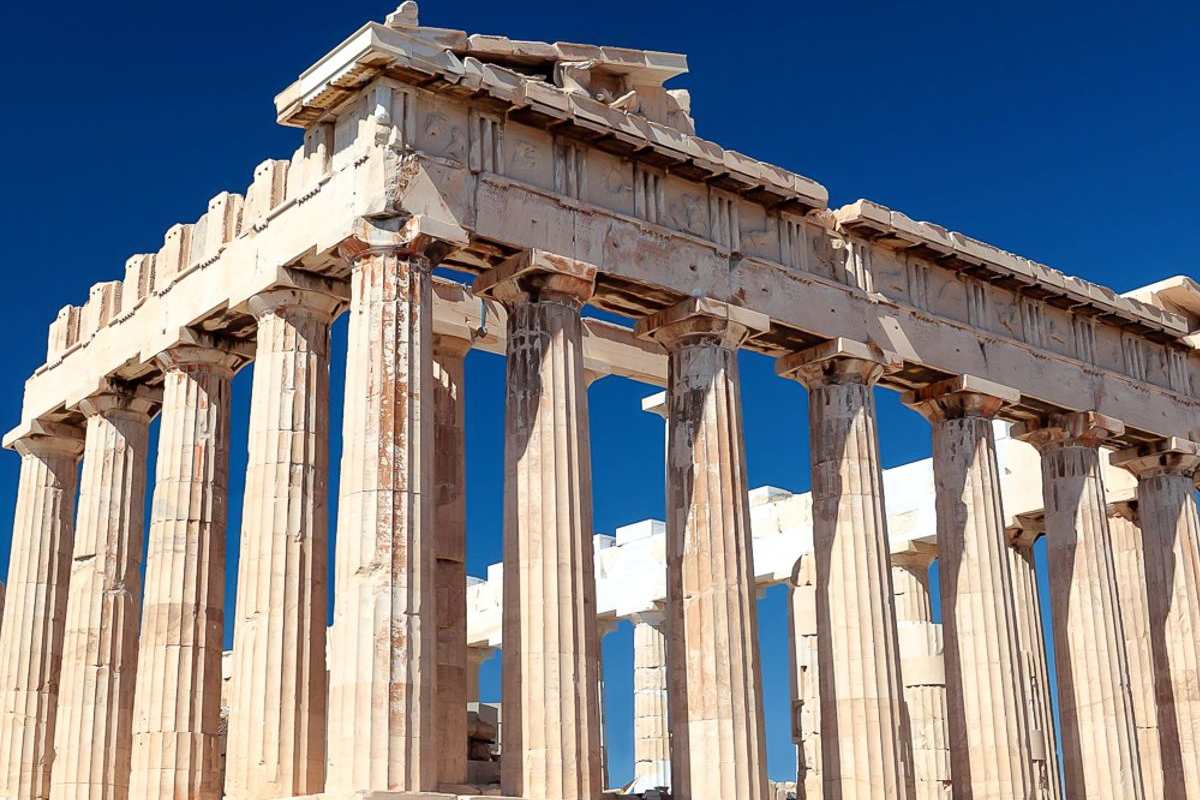
Athens history reaches its peak in the classical period, the fifth century BC. The city helped repel the Persian invasions and led the Delian League. Under Pericles it built the Parthenon, and philosophy and drama grew. Defeat by Sparta in the Peloponnesian War cut its political power. Under Hellenistic and Roman rule it stayed a centre of learning.
Medieval athens history runs from the early Middle Ages to Ottoman rule. The city declined, then recovered under the later Byzantine Empire. The twelfth and thirteenth centuries brought relative prosperity, helped by Italian trade. The Duchy of Athens followed under Latin rule. Wikipedia describes a sharp decline under the Ottoman Empire, before the nineteenth century brought a new start.
The modern period begins in the nineteenth century. Wikipedia says Athens then re-emerged as the capital of the independent Greek state. The sections that follow take these periods in order, up to the twentieth century. They then turn to the sites, the museums and the visiting rules. Together they make this athens history page one clear route.
Which season suits a visit built around athens history?
Spring and late autumn suit a visit built around athens history, as Wikivoyage states. In summer, heatwaves can bring very hot, dry days, though Wikivoyage adds that they are rare. Winter is the quiet season, with an odd rainy or snowy day. The Acropolis gives no shade, so the season shapes the whole day.
Wikipedia gives Athens a Mediterranean climate with hot summers. It adds that the city can get particularly hot in summer, owing partly to a strong urban heat island effect. Wikivoyage recommends spring and the end of autumn instead. For athens history, the Acropolis makes the point clearest. Wikivoyage calls the rock shadeless, which matters in the hottest weeks.
Rain or snow turns up now and then in winter, says Wikivoyage. The city then feels free of countless other tourists, Wikivoyage adds. Wikipedia calls snowfall relatively uncommon in the city. Days are short, and Wikivoyage says the Acropolis closing time follows sunset in winter. A winter plan for athens history therefore starts early and finishes before dusk.
Hot, dry heatwaves are the summer risk in Athens, says Wikivoyage, though it calls them rare. Its Acropolis page calls summer humidity exhausting and says the National Garden offers relief from the city’s heat and noise. At peak heat it points to the air-conditioned museum instead of the rock. Plan athens history in summer around such breaks.
The city lies in a basin with mountains on three sides. Wikivoyage says the basin traps smog, yet on sunny days the skies are azure blue. Wikipedia adds that the mountains cause a temperature inversion. Wikivoyage counts the Acropolis, the Areopagus and the Pnyx among its seven historical hills. Athens history is partly a story of high ground.
The Acropolis is where the season counts. Wikivoyage calls it the only major attraction where extreme overtourism needs extensive advance planning. It adds that other ancient sites allow a relaxed visit. It also recommends buying tickets online in advance. A plan for athens history therefore fixes the date of the rock first and fits the other places around it.
Which places show athens history in a short stay?
A short stay can show athens history through nine places, each tied to one period. Four ancient sites come first: the Acropolis, then the Ancient Agora, the Kerameikos and the Theatre of Dionysus. The rest are the Roman Agora, Hadrian’s Arch, a Byzantine church, the Panathenaic Stadium and Syntagma Square.
- Acropolis (classical): the Parthenon, the Propylaea entrance, plus the Erechtheion and the Nike shrine, rose in the fifth century BC.
- Ancient Agora (classical): the market place and meeting ground of the old city, about 400 metres north of the Acropolis.
- Kerameikos (archaic and classical): the potters’ quarter and cemetery where the Sacred Way to Eleusis began.
- Theatre of Dionysus (archaic): the south-slope theatre where the City Dionysia was held from the sixth century BC.
- Roman Agora (Roman): a market built to keep a promise that Julius Caesar had made.
- Hadrian’s Arch (Roman): a monumental gateway that spanned an ancient road from the city centre to the structures on its eastern side.
- Byzantine church ruins at Hadrian’s Library: three churches were built there, the last a twelfth-century cathedral, the city’s first.
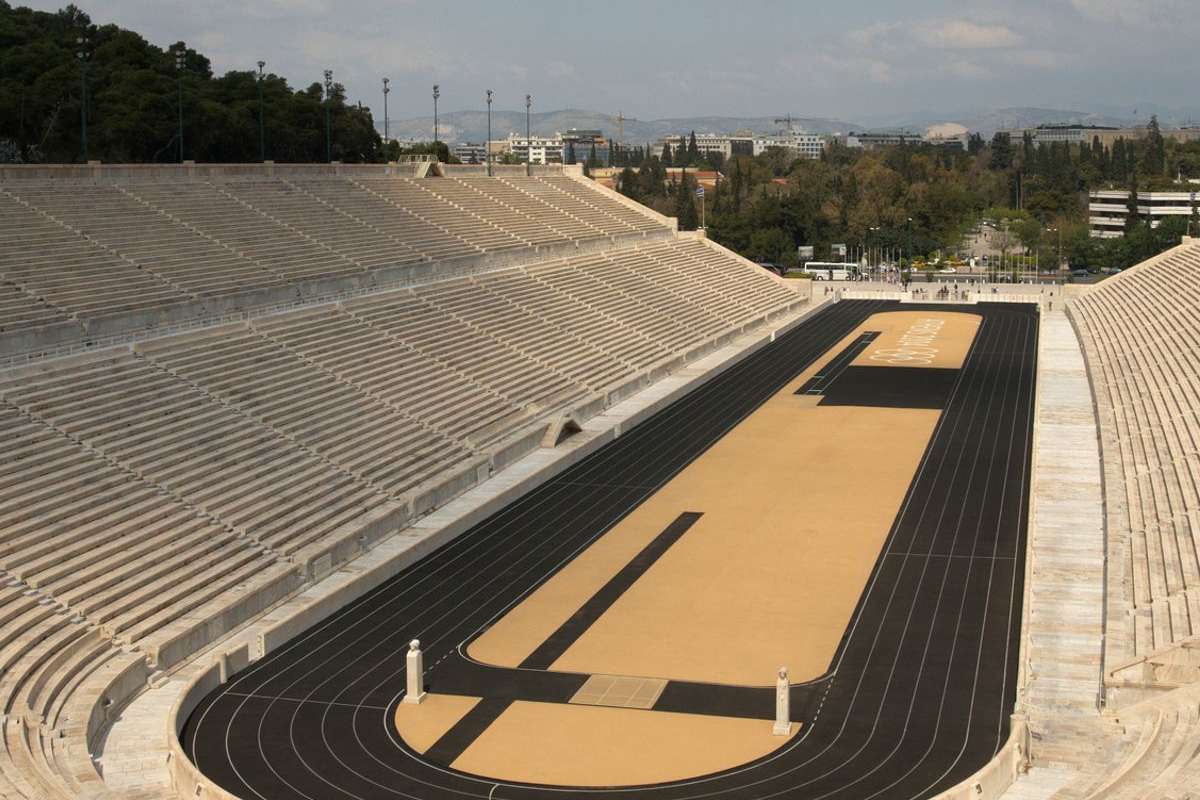
- Panathenaic Stadium (Roman and modern): Herodes Atticus rebuilt it in marble, and the first modern Games opened there.
- Syntagma Square (modern): its name means Constitution, after the charter King Otto was obliged to grant after an uprising.
The simplest plan for athens history follows time, oldest layer first and newest last. The Acropolis rock holds the earliest traces, the Mycenaean fortress, and Syntagma Square marks the modern capital. Between them the sites form classical, Roman and Byzantine groups. Each stop adds a chapter to the one before. Time order keeps the story clear.
Distance can also shape an athens history plan. Wikipedia places the Roman Agora around 100 metres east of the original agora, so those two pair easily. The Kerameikos lies north-west of the Acropolis, while the Theatre of Dionysus sits below the Acropolis, on its southern side. Group close sites into one outing and keep the far ones for another.
Syntagma works as a base for athens history. Wikipedia lists the Ancient Agora, Hadrian’s Arch, the Kerameikos and the Tower of the Winds close to the square. All are within walking distance of it. Wikivoyage adds that pedestrian streets now link the classical ruins to each other. Hours and entry rules change, so later sections cover them.
How does athens history begin in prehistory?
Athens history begins on a rock. Wikipedia says people have lived at Athens since Neolithic times, as early as the end of the fourth millennium BC. That is over five thousand years. The Acropolis, a natural stronghold, drew the first settlers. Everything later in the story grows from that high ground.
The rock suited early settlers. In the story of athens history, Wikipedia describes the site as a natural defensive position that commands the surrounding plains. It lies about twenty kilometres inland from the Saronic Gulf, in the Cephisian Plain, a fertile valley surrounded by rivers. Mount Hymettus rises to the east and Mount Pentelicus to the north.
The hill is small and flat-topped. The Acropolis rock stands 150 metres over the sea and covers about three hectares. Wikipedia says its earliest finds date to the Middle Neolithic era. Habitation in Attica itself is documented from the Early Neolithic, in the sixth millennium BC. Any account of athens history starts from these early traces.
The next layer is Mycenaean. By the fifteenth century BC, Wikipedia says, the settlement was an important centre of Mycenaean civilisation. The Acropolis held a major fortress, and sections of its Cyclopean walls identify the remains. Cuttings in the rock below the later Erechtheion mark a Mycenaean palace. This stage added a fortified citadel to athens history.
The wall shows the scale. Wikipedia gives the Cyclopean wall a length of 760 metres. It stood up to ten metres high and up to six metres thick. Its gate sat at an angle, with a tower over the right-hand side of anyone entering. Athens history leans on this wall as the main defence until the fifth century.
Water kept the citadel alive. An earthquake opened a fissure near the north-eastern edge of the rock. The fissure ran about thirty-five metres down to soft marl, and a well was sunk in that layer. An elaborate set of stairs was built, and the well gave protected drinking water during sieges. Athens history thus includes a Bronze Age water supply.
How does the myth of Athena and Poseidon fit athens history?
In athens history, the myth of Athena and Poseidon explains the city’s name. Both gods asked to be its patron, so each offered one gift. The Athenians accepted Athena’s olive tree, and the city took her name. Wikipedia presents the contest as a legend told by ancient writers.
Wikipedia’s article on athens history says Herodotus, Apollodorus, Ovid, Plutarch and Pausanias described this origin myth. It even became the theme of the sculpture on the west pediment of the Parthenon, which was her temple. Ovid, Wikipedia adds, gives Poseidon a horse as his gift, not a spring. The name itself, tied to the goddess, has Pre-Greek roots.
The tale told in athens history is simple: each god brought one gift. With his trident, Poseidon struck the ground and made a saltwater spring, a sign of naval power. Athena created the olive tree, a sign of peace and prosperity. Varro, a Roman writer, explained the fable as a vote of the citizens, and Athena won it.
The myth also had a place on the rock. Wikipedia says a sacred olive tree was still kept on the Acropolis in the second century AD. People said it was the tree the goddess created. It stood by the temple of Pandrosus, next to the Parthenon. Athens history thus held a living symbol of the contest.
That olive tree burned down in the Persian Wars, but a shoot sprang from the stump, Herodotus says. The Greeks saw this as a symbol that Athena still had her mark on the city. Plato, in the Cratylus, links the name Athena to a phrase meaning the mind of god. Athens history offers a second reading of the name.
Cecrops, the legendary first king of Athens, judges the contest in one telling. Wikipedia says Athena called on him to witness her act of taking possession. The Athenians said the contest fell on the second of Boedromion and left that day out of the calendar. Athens history thus shows a myth shaping the Athenian calendar.
How did the early kings and the Dark Age shape athens history?
Legend gives Athens early kings, and Wikipedia names Theseus as the king said to have united Attica under Athenian rule. Then the Mycenaean world ended and the Dark Age began, and Wikipedia calls the change at Athens gradual. This stretch of athens history left its traces in the graves and pots of the Kerameikos.
Athens history starts its list of rulers with kings. Wikipedia says later accounts put these kings at the head of a land-owning aristocracy called the Eupatridae, the well-born. Their Council sat on the Hill of Ares, the Areopagus, and appointed the chief officials, the archons. The Mycenaean palace implies a wanax, a king, supported by a military elite.
In athens history, Theseus is the legendary king tied to the next step. Wikipedia says that he killed the Minotaur and then united Attica under Athenian rule. That step is the synoikismos, from a Greek word meaning dwelling together. Pausanias adds that Theseus then founded a cult of Aphrodite on the southern slope of the Acropolis.
The union reached beyond the city. During the first millennium BC, Athens brought the other towns of Attica under its rule. The result, says Wikipedia, was the largest and wealthiest state on the Greek mainland. It also created a larger class of people excluded from political life by the nobility. That strain sets up the next chapter of athens history.
The Mycenaean world ended with the Bronze Age, and Wikipedia says it is unclear whether Athens was destroyed. Like other Bronze Age settlements, it then declined economically for around 150 years. Athens appears to have been a refugee centre in the Dark Age. Athens history then moves down to the slopes, where excavations found houses on the North Slope.
The Kerameikos tells athens history through graves and pots. Richly provided Iron Age burials show Athens as one of the leading centres of trade from 900 BC. It was also the potters’ quarter, with clay mud carried by the Eridanos River. The Dipylon Master, active around 760 BC, made large Geometric grave vases for the Dipylon Gate cemetery.
What did Solon change in athens history?
Solon changed athens history in 594 BC, when he became archon and met a crisis of debt and land. He cancelled debts, banned debt slavery and sorted citizens into four classes by wealth. Wikipedia credits his work with laying the foundations for Athenian democracy, and Aristotle called him the first people’s champion.
Land caused the crisis that came before Solon in athens history. Wikipedia says land was the inalienable property of a family or clan, never to be sold or mortgaged. A farmer in debt therefore offered himself and his family as security. These farmers were loosely known as hektemoroi, and they were liable to be sold into slavery.
Draco’s written code came before Solon in athens history. Wikipedia says the Areopagus appointed Draco to draft a strict new code, held to date from 621 BC. It replaced oral law and blood feud. The death penalty applied even to minor offences. Plutarch wrote that the code was written not in ink but in blood.
Solon’s term as archon, or chief magistrate, began in 594 BC, according to Diogenes Laertius. He repealed all of Draco’s laws except those on homicide. His debt relief was later celebrated in athens history as the seisachtheia, or shaking off of burdens. A debtor’s person was no longer accepted as loan security, and enslaved Athenians were released.
The four classes were a second change in athens history. Wikipedia sets the top class at 500 medimnoi of cereals a year or more. The next two stand at 300 and 200, with the thetes below. Only the top class was eligible to be archon, though a modern view adds the second. The thetes were barred from all public office.
Wikipedia credits Solon with opening the Assembly to all male citizens and forming a Heliaia court from them. It credits him with a Council of 400, though modern scholars have doubted this. Solon then travelled abroad for ten years, so that the Athenians were unable to persuade him to repeal any law. Within four years the old rifts reappeared.
How did the tyrants shape athens history?
The tyrants shaped athens history by ruling Athens from 560 to 510 BC, as the American School’s Agora timeline records. Peisistratos and his sons gave Athens roads, water works, festivals and the first public buildings of the Agora. Their rule ended in 510 BC when Hippias, son of Peisistratos, was overthrown.
The word tyrant meant something different in athens history. Tyrannos was a Greek term for a man who seized power by force, not for cruelty. Peisistratos seized the Acropolis and declared himself tyrant. He was ousted and exiled twice. Wikipedia says he returned in 546 BC by landing at Marathon and defeating the Athenian forces at Pallene.
Peisistratos also backed farmers outside the city. Wikipedia says funds helped peasants obtain land, tools and farm equipment. A tax on farm output paid for large parts of the small farmer loans. Wikipedia adds that his administration built roads and worked to improve the water supply. It says Athens became a centre of culture under him.
Water was a project of the tyrants in athens history. Wikipedia says an aqueduct was connected to the Enneakrounos fountain at the edge of the Agora. Wikipedia says the first stamped coins, with an owl, began under Peisistratos or his sons. The Solon page says Athens probably had no coinage until about 560 BC, well after Solon’s reforms.
Festivals and temples rose too in athens history. Wikipedia says the Panathenaic festival grew more visible and new festivals began, such as the greater and lesser Dionysia. Wikipedia dates a temple of Athena Polias on the Acropolis to between 570 and 550 BC. The Pisistratids built the Old Temple of Athena there between 529 and 520 BC.
Peisistratos died in 527 or 528 BC. Hippias, his eldest son, took over as tyrant. After the assassination of his brother Hipparchus, Wikipedia says, Hippias grew harsher and was increasingly disliked. Wikipedia reports that Herodotus says the exiled Alcmaeonid family bribed the Delphic oracle to urge visiting Spartans to invade Attica. A Spartan force then overthrew Hippias in 510 BC.
How did Cleisthenes and the first democracy shape athens history?
Cleisthenes shaped athens history in 508 BC by replacing four family tribes with ten tribes tied to where people lived. Wikipedia calls him the father of Athenian democracy and credits him with raising the power of the citizens’ assembly. He also cut the power of the nobility over Athenian politics.
A struggle came first in athens history. After Hippias fell, Cleomenes of Sparta backed Isagoras, who forced Cleisthenes into exile. Isagoras then tried to dissolve the Boule, the council. The council resisted, and the Athenian people declared support for it. Isagoras and his partisans fled to the Acropolis, where they stayed besieged for two days and left on the third.
Wikipedia says the ten new tribes took the names of legendary Greek heroes and had no class basis. Each tribe held three trittyes, one from the city, one from the coast and one from the inland. The trittyes held demes, which became the base of local government. Every male citizen over eighteen had to be registered in his deme.
Wikipedia says the Boule now had 500 members, 50 from each tribe, up from the 400 credited to Solon. Members were chosen by lot and swore to advise on the people’s good, according to the laws. The Boule put bills to the assembly of voters, which met about forty times a year. The assembly passed, rejected or amended them.
The early assembly of athens history gathered in the Agora, as Wikipedia’s Pnyx article states. Early in the fifth century BC the meetings shifted to the Pnyx, a hill south and west of the Acropolis. The name means tightly packed together. Debate opened when the presiding officer asked who wished to speak, and speakers used a platform called the bema.
Wikipedia ties ostracism to Cleisthenes without certainty and dates its first use in athens history to 487 BC. A vote of at least 6,000 citizens exiled a man for ten years, and he kept his property. It aimed at threats to the democracy. The Agora gained more public buildings and boundary stones after the reforms, says the American School.
How did the Persian Wars shape athens history?
The Persian Wars changed athens history from the ground up. The Athenians beat a Persian army at Marathon in 490 BC. They left their city to the invaders in 480 BC, then won at sea off Salamis. They came out of the wars as the leading naval power of Greece.
Persia came to Athens because of a revolt. Athens sent a force to help the Greek cities of Ionia, and it helped burn the Persian city of Sardis. Herodotus says King Darius had a servant repeat “Master, remember the Athenians” three times before dinner each day. That anger set the course of athens history for the next two invasions.
In 490 BC the Persians landed at Marathon. The Athenians, with a small force from Plataea, blocked both exits from the plain. They chose ground of marsh and mountain, which kept the Persian cavalry away from the foot soldiers. Miltiades strengthened his two wings, and they closed around the enemy. The Persian army broke and ran for its ships.
Sparta, asked for help, was busy with a religious festival. In athens history, Marathon showed the Greeks that Persia was beatable, even without Sparta. On the Acropolis a grand temple had been planned in limestone. After Marathon the builders switched to marble. In 485 BC work paused to save resources, as war with the new Persian king Xerxes looked close.
In 480 BC Xerxes invaded, and the Athenians left their city. Women and children went to Troezen. The Persians burned the unfinished temple and practically everything else on the Acropolis. They sought the protection of their fleet, paid for by Laurion silver at the urging of Themistocles. That fleet is why athens history went on after the sack.
At Salamis, Themistocles sent Xerxes a false message that the Greek fleet was quarrelling and planned to flee at night. In the narrow strait the larger Persian fleet got in its own way. The Athenians then went home to a burnt city. In 478 BC, at the suggestion of Themistocles, they built a new city wall.
How did the Delian League and Pericles shape athens history?
The Delian League made Athens the head of an Aegean alliance, and Pericles turned its money and power into buildings. In athens history the league’s treasury moved to the city in 454 BC. The Parthenon and the Propylaea both rose under his leadership, in the years before the Peloponnesian War.
A new chapter of athens history opened in 478 BC. Sparta stepped back from the war with Persia, so Athens led the alliance. Its congress met on the island of Delos, in the sanctuary of Apollo. That meeting place gives the league its modern name. Wikipedia counts between 150 and 330 city-states as members of this alliance of self-governing states.
Members swore an oath of loyalty and dropped iron ingots into the sea. The ingots symbolised the permanence of the alliance. Each state chose between sending ships and paying into the common treasury. Athens became the biggest source of military power, and more and more allies preferred to pay. Athens used the funds to strengthen its own navy.
Under Cimon, the league cleared the last Persian troops from the Aegean Sea. After that, Wikipedia states, Persia was no serious danger to Greece for half a century. Yet the allies grew less free, and Thasos rebelled in 465 BC. By the mid-fifth century BC the league had grown into the Athenian Empire, a peak of power in athens history.
Pericles transferred the league’s treasury from Delos to Athens in 454 BC, in what Wikipedia calls a symbolic gesture. Thucydides called him “the first citizen of Athens”. The Assembly elected him general in 445 BC, and he held that post until his death in 429 BC. Pericles was born in Athens about 495 BC, into the powerful Alcmaeonid family.
Wikipedia says his building project gave work to the people and produced the greater part of the surviving Acropolis structures. The Parthenon was begun in 447 BC at the peak of the league’s power and finished in 438 BC. The carved decoration went on until 432 BC. Mnesicles began the Propylaea gate about 437 BC, another landmark of athens history.
What did the Peloponnesian War change in athens history?
The Peloponnesian War ended the Athenian power at sea that the Persian Wars had built. From 431 to 404 BC Athens and its allies fought Sparta and its allies. Athens lost its empire and its command of the sea, and the war closed the golden age in athens history.
Thucydides wrote that the growth of Athenian power and the alarm it caused in Sparta made war inevitable. Friction began early. After the Persians left, Sparta sent envoys to persuade Athens not to rebuild its walls, and Athens refused. In 431 BC the Spartan king Archidamus II marched into Attica and began the war that reshaped athens history.
Two Long Walls ran from Athens to the harbours at Piraeus and Phaleron, about 6 km long. They gave the city a constant link to the sea and defeated sieges that came by land alone. People from the countryside crowded in behind them. In athens history, this crowding set the scene for the plague of the war’s second year.
In 431 BC Pericles gave a funeral oration at the public graveyard of the Kerameikos. In 430 BC a plague reached the city, believed to have entered through Piraeus. It returned in 429 BC and in the winter of 427 and 426 BC. Pericles succumbed to the disease in 429 BC, while Thucydides caught it and survived.
With both sides exhausted, the Peace of Nicias was signed in 421 BC. From 415 to 413 BC Athens tried to conquer Syracuse in Sicily. The expedition ended in defeat and the destruction of the greater part of its navy. Persia backed Sparta, which built a fleet and won at Aegospotami in 405 BC. Athens fell the next year.
The Long Walls were demolished as the treaty required, and the league was dissolved. Xenophon says the walls were torn down with celebration. In Athens a Spartan-style oligarchy replaced democracy: the Thirty Tyrants. In 403 BC Thrasybulus restored democracy and an amnesty was declared. Athens was devastated and never regained its pre-war prosperity, a lasting change in athens history.
How did the theatre mark athens history?
The theatre marks athens history as the place where Athenian drama grew up in the city. The Theatre of Dionysus was cut into the southern side of the Acropolis. Its earliest terrace goes back to the sixth century BC. The City Dionysia festival gave that terrace its purpose, as Wikipedia states.
The cult of Dionysus reached Attica in the Archaic period. The earliest known picture of the god dates to about 580 BC. Wikipedia says the City Dionysia began in the age of Peisistratos. The reforms of Cleisthenes later reorganised the festival, Wikipedia states. In athens history, the theatre therefore links the tyrants to the first democracy.
Wikipedia gives the Agora as the probable first home of the plays, where wooden bleachers built for the audience collapsed. By about 499 BC the plays had shifted to the precinct of the god, below the rock. The natural slope served as seating, and a round terrace of rough stone formed the first orchestra, or dancing floor.
Aeschylus flourished in the 480s to 460s BC. His Oresteia needs entrances and exits through a palace door, which points to simple scenery. Sophocles, Euripides and Aristophanes were also performed here. Wikipedia adds that a crane lifted gods through the air in plays such as Medea. That busy stage belongs to the age of Pericles in athens history.
The statesman Lycurgus controlled the finances of the state in the fourth century BC. He also served as the official in charge of the theatre. Wikipedia credits him with turning it into the stone building seen today. Narrow stairways cut its seating into thirteen wedge-shaped blocks, across seventy-eight rows. That date falls before Macedonian supremacy in athens history.
The theatre stayed in use into the Roman period, a long run in athens history. A stone stage front with fourteen columns came in the Hellenistic age. The front rows hold seats of honour in Pentelic stone, each bearing the name of a priest or official. It decayed in the Byzantine era and was excavated only in the nineteenth century.
How did philosophy and the schools mark athens history?
Philosophy marks athens history through three places: the Academy of Plato, the Lyceum of Aristotle and the Painted Stoa. Each place, near the old city, gave a school of thought its name or home, as Wikipedia describes. All three belong to the fourth century BC and the years around it.
Socrates stood trial in 399 BC on two charges, impiety and corrupting the young. Wikipedia says an Athenian jury was drawn by lottery from hundreds of male citizen volunteers. The jury then agreed a sentence of death by hemlock. A research summary adds that philosophy flourished all the same. That sets the scene for the schools in athens history.
Plato founded the Academy around 387 BC in a grove of olive trees sacred to Athena, outside the city walls. Aristotle studied there for twenty years before founding his own school. The Academy went on through the Hellenistic age and ended with the death of Philo of Larissa in 83 BC. Its long life is one thread of athens history.
Aristotle returned to Athens in 335 BC and taught at the Lyceum. This sanctuary of Apollo Lyceus lay outside and east of the city wall. Wikipedia says his followers were called Peripatetics because he walked as he taught. After Aristotle left Athens, Theophrastus led the school for thirty-six years. This school is a clear mark in athens history.
Socrates, Protagoras and Isocrates spoke at the Lyceum before Aristotle, Wikipedia states. The grounds lay between the Ilissos river and Mount Lycabettus. The Assembly met there before the Pnyx became its official home in the fifth century BC. The remains came to light in the late twentieth century and now form a park in the modern city.
The Painted Stoa was built along the northern edge of the Agora in the 460s BC. A painting of the Battle of Marathon hung inside. Philosophers taught there from the fourth century BC, and Zeno of Citium from about 300 BC. His school took the name Stoicism from the stoa, a small piece of athens history.
What do the Parthenon and the Acropolis temples say about athens history?
The Parthenon and the Acropolis temples say that athens history turned on war and recovery. After the Persians burned the rock in 480 BC, Pericles led its rebuilding in marble. The Parthenon, the Propylaea gate, the Erechtheion and the small shrine of Athena Nike each record one stage of it.
Wikipedia says the Parthenon rose in thanksgiving for victory over the Persians. The building held the city treasury, and work on its carvings ran until 432 BC. Thucydides has Pericles call the gold of the Athena statue removable, a reserve in time of war. That reserve is a plain fact of athens history in the war years.
Around 500 BC the Athenians began the Older Parthenon with limestone first meant for the Temple of Olympian Zeus. They stopped work on that temple because it was tied to the tyrant Peisistratos. The Persians burned the unfinished building in 480 BC. Its column drums were built into the north wall of the rock as a war memorial.
Pericles ordered the Propylaea, the gate of the rock. Wikipedia says it was wide enough for chariots. It stood partly on an older gate of Peisistratos, which ties it to athens history under the tyrants. Marble girders held by iron bars carried its roof beams. The Peloponnesian War suspended the work, yet the key parts of the plan came through.
Athena Nike has the smallest temple on the rock, Wikipedia states. The Persians demolished the old sanctuary in 480 to 479 BC. The new Ionic temple, built in marble, was finished between 421 and 409 BC, after the war interrupted the work. The city chose its priestess by lot, a democratic practice that fits athens history.
The Erechtheion stands on a site used since the Mycenaean age, a deep layer of athens history. Traditional dates for the building are 421 to 406 BC. Surviving accounts dated 409 to 404 BC give an unusually secure date. The architect is unknown, but the overseers Philokles and Archilochos are named. Its plan is unlike any other Greek temple.
How did Macedon and the Hellenistic age shape athens history?
Macedon ended the independence of the old city-state, and this turn opens a clear chapter of athens history. At Chaeronea in 338 BC, Philip II beat an alliance of Greek cities that included Athens and Thebes. Athens stayed a wealthy city with a brilliant cultural life, but it was no longer a leading power.
The defeat at Chaeronea pushed the Greek states into a confederation and effectively limited Athenian independence, as Wikipedia states it. Philip II led the Macedonian armies that day. In the winter of 338 and 337 BC, Macedonia, Athens and other Greek states joined the League of Corinth. From here the Macedonian chapter of athens history begins to unfold.
The conquests of Alexander the Great came next, and they changed athens history again. Wikipedia says they widened Greek horizons and made the traditional Greek city-state obsolete. The period after his death in 323 BC is known as Hellenistic Greece. His generals Antipater and Craterus then ruled Greece and Macedonia together, and Athens joined Aetolia and Thessaly to face them.
That clash is called the Lamian War, a hard test in athens history. In 322 BC Antipater dissolved the Athenian government and set up a system run by the wealthy. His son Cassander took control of Athens in 316 BC and named Demetrius of Phalerum its administrator. Demetrius stayed in power until 307 BC, when Demetrius Poliorcetes captured the city.
Athens kept its place as a centre of learning through these years. Wikipedia says the city held its status as a centre of study under Hellenistic and Roman rule. It drew students and philosophers. Kings from abroad studied there too. Athens history in this age is also a story of royal gifts to the city.
King Attalos II of Pergamon was ruler from 159 until 138 BC. His stoa is a gift in athens history. He studied in Athens under the philosopher Carneades, and the stoa thanked the city for that education. The walkway measured 115 by 20 metres. Each storey had twenty-one rooms along the west wall, and stairways stood at both ends.
How did Roman rule and Hadrian shape athens history?
Greece was divided into the Roman provinces of Macedonia and Achaea after the war of 146 BC. Athens thus came under Roman rule. Hadrian later became its patron, so his buildings are a bright part of athens history. Wikipedia says the emperor built a large number of civic buildings in the city.
In the First Mithridatic War, Athens sided with Mithridates VI against Rome. Aristion, a tyrant he installed, ruled the city. Wikipedia says Sulla, a Roman general, leveled the greater part of its fortifications and homes between 88 and 85 BC. Civic buildings and monuments were left intact in good number, so athens history carried on.
Rome then treated Athens with respect. Wikipedia says Athens won the rank of a free city thanks to its widely admired schools. The Macedonian astronomer Andronicus of Cyrrhus designed the Tower of the Winds for the Roman forum. It mostly survives. This Roman building shows how athens history took in new rulers without losing its old pride.
Hadrian ruled from AD 117 to 138. Wikipedia says that when he visited Athens in AD 124 and 125, a vast building programme began. His library stood north of the Acropolis. Shelves held rolls of papyrus, adjoining halls were reading rooms, and the corners were lecture halls. Such a gift shows athens history as a story of books.
The programme included finishing the Olympian Zeus temple, a long tale in athens history. The sons of the tyrant Peisistratus began it around 520 BC, and Hadrian finished it about 638 years later. He dedicated it in AD 132, then took the title Panhellenios. A marble-paved precinct inside a wall made the temple a central focus of the city.
The Arch of Hadrian is a monument of athens history that spanned an ancient road to the temple complex. Wikipedia calls it a monumental gateway of solid marble, built without cement or mortar and joined by clamps. It is 18 metres high. Excavation has shown the early idea that it marked the old city wall to be false.
How did late antiquity change athens history?
Late antiquity shrank and quieted the city. Raids in the third and fourth centuries broke its old fabric, and the empire turned Christian. In AD 529 the emperor Justinian banned the teaching of philosophy by pagans. Wikipedia takes that date to mark the end of the ancient chapter of athens history.
The first blow fell in AD 267, when the Herules sacked the city. Wikipedia says the raid burned all the public buildings, and the city north of the Acropolis was hastily refortified. The Heruli also burned the wooden parts of the Stoa of Attalos, whose ruins joined a fortification wall. The sack opens the late antiquity chapter of athens history.
Hadrian’s Library was badly damaged in that raid, and the prefect Herculius repaired it between AD 407 and 412. The library was later built into the Roman city walls. A tetraconch church of the fifth century stood in its courtyard. After the Visigoths under Alaric sacked Athens in AD 396, athens history was lived inside a small fortified area.
In the early fourth century the eastern empire began to be governed from Constantinople. Wikipedia says the emperors took works of art from Athens to adorn the new capital. The empire turned Christian, and Latin declined in favour of Greek alone. Citizens of Athens called themselves Rhomaioi, or Romans, a name that belongs to athens history in these years.
The change of faith greatly affected the city, as Wikipedia states it. Reverence for Athens fell, and the Parthenon, the Erechtheion and the Hephaisteion were turned into churches. Athens became a provincial town with fluctuating fortunes. The archaeological record shows no Christian items until the early fifth century, which marks a quiet step in athens history.
The schools still drew pupils, especially in Neoplatonism. Notable pupils included Gregory of Nazianzus, Basil of Caesarea and the emperor Julian. Then the emperor Justinian I banned the teaching of philosophy by pagans in AD 529. Wikipedia says the effect on the city is much debated. The date is still generally taken to close ancient athens history.
How did the Byzantine centuries shape athens history?
The Byzantine centuries turned the temples of Athens into churches. A long quiet spell followed, then a late burst of growth. Wikipedia says the Parthenon became a Christian church, and the town grew in the eleventh and twelfth centuries. Both changes mark athens history and still show in the old town.
The Parthenon shows the change clearly in athens history. Wikipedia says that in late antiquity it became the Church of the Virgin Mary, called Parthenos Maria. The main door moved to the west end, and an apse rose where the front porch had stood. Builders also walled up the gaps between the columns, though doorways still gave access.
Pilgrims followed. Wikipedia ranks the Parthenon fourth among Christian pilgrimage places of the Eastern Roman Empire, after Constantinople, Ephesos and Thessaloniki. In the early eleventh century the emperor Basil II came to Athens just to worship there. He arrived after his final victory over the First Bulgarian Empire. Medieval Greek texts call the church the Temple of Theotokos Atheniotissa.
The early Middle Ages are the quiet spell of athens history. Wikipedia says the city declined, and Saracen raids threatened it in the eighth and ninth centuries. Even so, Athens gave the empire an empress. Irene of Athens helped end the first dispute over holy images at the Second Council of Nicaea. Theophano of Athens later married the emperor Staurakios.
Growth came later, and it is the bright spot of Byzantine athens history. Archaeology shows rapid growth from the eleventh century to the end of the twelfth, as Wikipedia states. The old agora, empty since late antiquity, was built over. The town made soap and dyes, and Venetians and other Aegean traders were drawn to it.
Churches from that age still stand. The Church of the Holy Apostles beside the Agora dates to about the late tenth century. Wikipedia calls it the first significant Middle Byzantine church in Athens. The Little Metropolis by the cathedral is built of reused ancient marble, and its date is still debated. Both keep athens history in stone.
How did Frankish and Catalan rule shape athens history?
Frankish and Catalan rule put western European lords in charge of Athens between the early thirteenth century and the mid-fifteenth. Wikipedia says Latins ruled the city in three separate periods: Burgundian, Catalan and Florentine. Each period left its mark on athens history, above all on the Acropolis and its buildings.
Frankish rule enters athens history with the Fourth Crusade, which took Athens in the early thirteenth century. Wikipedia says the Franks were western Europeans of the Latin Church. Otto de la Roche, a minor Burgundian knight of that crusade, became the first ruler. He called himself Lord of Athens, and local Greeks named such rulers the Great Lord.
The dukes made the Acropolis their stronghold. Wikipedia says the dukes lived in the Propylaea, the gateway to the rock. The Burgundians added a bell tower to the Parthenon, known as the Frankish Tower. They also brought chivalry and tournaments to Athens. Walls from the de la Roche and Acciaioli periods stood on the rock until the mid-nineteenth century.
Athens did not stay the capital. Wikipedia says Thebes took over as the seat of government once it joined the duchy. Athens stayed the leading church centre and a prime fortress. The Parthenon served the Latin church for about two and a half centuries as the Church of Our Lady. That change is a clear mark in athens history.
The Catalan chapter of athens history opens in the early fourteenth century. Catalan mercenaries hired by Duke Walter of Brienne defeated him at Halmyros and took over the duchy. They held Athens until the late fourteenth century. Their official language became Catalan, and the conquerors called the city Cetines. Each town had its own governor with a three-year term.
The Florentines came next. In the late fourteenth century Nerio Acciajuoli of Florence took Athens and made himself duke, as Wikipedia states. Venice ruled the city for seven years, but the Florentines won it back. His descendants ruled Athens as their capital until the Ottoman conquest in the mid-fifteenth century. That conquest closed this chapter of athens history.
How did Ottoman rule shape athens history?
Ottoman rule left Athens a small town below the Acropolis, with the rock held as a fortress. This stage of athens history ended in the nineteenth century. Its turning point came in the late seventeenth century, when a Venetian shell hit the Parthenon. The temple served the Ottomans as a powder store.
Ottoman rule starts in athens history with the capture of the city in the mid-fifteenth century. Wikipedia says Sultan Mehmed II led the force himself and then banned looting or destroying the ancient monuments. Under Ottoman rule, though, the city lost its importance and its population fell. One scholar calls Athens a small country town.
The Acropolis became a garrison. Wikipedia says the Ottomans stored gunpowder in the Parthenon and the Propylaea. An earlier explosion at the Propylaea had already warned them of the danger. That store of powder ties athens history to the Morean War. In the late seventeenth century the war brought a Venetian force under Francesco Morosini to the city.
The Ottoman garrison withdrew to the rock, and the Venetians set up cannon on the heights around the city. On 26 September a mortar shell from the Venetian guns hit the Parthenon, and the stored powder exploded. Wikipedia says the blast severely damaged the building, giving it largely the look it has today. The garrison surrendered three days later.
The Venetians left after six months, and the small town recovered in the eighteenth century. It is a calmer spell of athens history. English visitors of the mid-eighteenth century reported about 10,000 people. A council of leading families and the bishop ran Greek community affairs. A governor served a one-year term and faced removal if he ignored the council.
Plaka held the small town of athens history. Wikipedia estimates about 400 houses at the end of Ottoman rule, mostly around the Acropolis. Plaka was also an Albanian quarter until the late nineteenth century. Later, carpenters and marble workers from the Cyclades built Anafiotika under the Acropolis. In the mid-twentieth century part of it was cleared for archaeology.
How did the War of Independence and the new capital shape athens history?
The War of Independence ended Ottoman rule in Athens, and the new Greek kingdom then made the town its capital. That choice turned a modest settlement below the Acropolis into a planned city with new public buildings. It is the turning point of athens history in the nineteenth century.
Greek insurgents took the city in the war’s second year, but the Ottomans won it back four years later. Reshid Pasha laid siege in late June, and by mid-August only the Acropolis held out under Yannis Gouras. It surrendered the next June, the last Ottoman victory of the war. The monuments suffered badly in this stage of athens history.
Ottoman forces withdrew in March, nearly six years after that surrender. Otto, a prince of Bavaria, had been proclaimed King of Greece the year before. He adopted the Greek spelling Othon. One of his first tasks was a detailed survey of Athens, given to Gustav Eduard Schaubert and Stamatios Kleanthis. It begins the new capital’s story in athens history.
The capital passed from Nafplio to Athens. Wikipedia says the reasons were historical and sentimental, not the size of the town. It held between four and five thousand people, in loose clusters of houses under the Acropolis. Once the capital was set, planners laid out a modern city plan, and a new chapter of athens history began.
Public buildings gave the new capital its face. Wikipedia lists the university and the Polytechnic, which began as the Othonian University and the Royal School of Arts. It also names the National Gardens, the National Observatory and the Old Parliament among the finest legacies of the age. These buildings are the visible mark of athens history under Otto.
Excavation began early. Soon after independence, diggers found traces of the stadium of Herodes Atticus. In the mid-nineteenth century the Archaeological Society of Athens dug in the Vrysaki district. It hoped to find the ancient assembly building but found inscriptions. The district was later shown to be the Agora. That early digging opened the recovery of athens history.
How did the first modern Olympic Games shape athens history?
The first modern Olympic Games opened in Athens in April of the late nineteenth century. They drew the largest international field of any sporting event up to that date. Seven venues were used, from the stadium in the city to the open sea. The Games are a lasting milestone in athens history.
The idea had local roots. Evangelis Zappas, a Greek businessman and benefactor, organised games under the Olympic name on three occasions in the nineteenth century. Two were held in the Panathenaic Stadium, and the earlier one drew an audience of 30,000. Wikipedia says Pierre de Coubertin took inspiration from them, which ties the modern Games to athens history.
Donors and the royal house led the effort. Wikipedia says the legacies of Evangelis Zappas and his cousin Konstantinos funded the Games in part. Crown Prince Constantine led the organising committee and appealed to the patriotism of the Greek people. A special set of postage stamps was commissioned as well. Their effort is a key step in athens history.
The venues spread the Games across the city and its coast, a new sight in athens history. Wikipedia lists the Panathenaic Stadium for athletics, the new Neo Phaliron Velodrome for cycling, and the Zappeion for fencing. Shooting took place at Kallithea. Swimming used the open sea in the Bay of Zea, where nearly 20,000 spectators lined the shore.
The marathon was the high point for the Greek public. Wikipedia says it was held for the first time in international competition, and the town of Marathon hosted the event. Spyridon Louis, a previously unrecognised water carrier, won it. He became the only Greek athletics champion and a national hero, a story that belongs to athens history.
Wikipedia says the stadium overflowed with the largest crowd ever to watch a sporting event. Prominent figures, among them King George, then asked for every later Games to be held in Athens. Paris was already planned as the next host. Apart from one special Games, the Olympics stayed away from Greece for 108 years, a long gap in athens history.
How did the twentieth century shape athens history?
The twentieth century turned Athens into a large modern capital. Refugees from Asia Minor doubled the city’s population in the early twenties. Villagers followed after the Second World War, and the early twenty-first century’s Games brought a new airport and metro. Each step is a chapter of athens history.
Wikipedia says more than a million Greek refugees from Asia Minor were resettled in Greece in the early twenties. At Lausanne, Greece and Turkey signed a convention on the exchange of their populations. Suburbs such as Nea Ionia and Nea Smyrni began as refugee settlements on the edge of Athens. The city’s population doubled, a turning point in athens history.
The Axis, mainly German soldiers, occupied Athens in the Second World War, and the later years brought hardship. Afterwards the city grew as people left villages and islands to find work. Wikivoyage adds that it spread west and that a number of neoclassical buildings made way for office blocks. Traffic and smog followed, a new strain in athens history.
Greek entry into the European Union brought a flood of new investment, Wikipedia states, but also social and environmental problems. Traffic vibration weakened foundations, and polluted air corroded marble. That was a new threat to the monuments that carry athens history. The city’s problems were the main reason Athens failed to win the Centenary Games of the middle nineties.
Underground work opened a new chapter of athens history. Builders started Lines 2 and 3 in the early nineties to ease traffic and smog. Both lines opened at the turn of the century. For six years, teams of archaeologists went in before the engineers, then worked with them. They recorded ancient streets, houses, cemeteries, wells and workshops.
The Games came home in the early twenty-first century. Wikipedia says the preparations left Athens a new airport, a tram and a suburban railway. The marathon followed the route of the first modern Games, from the battle site to the Panathenaic Stadium. Wikipedia says the new medal design showed the same stadium, a link to athens history.
Which Athens sites show athens history in order?
Ten stops show athens history in order, from the Acropolis rock to the Panathenaic Stadium. The list runs by period, not by map, so group neighbouring stops into one outing. Wikivoyage also describes a network of pedestrian streets that links the classical ruins, which keeps the walks between stops short.
- Acropolis rock: the first settlers’ hill, with the Theatre of Dionysus on its south slope.
- Kerameikos: a cemetery dug since the nineteenth century, now with its own small museum.
- Pnyx: the hill where the Assembly met, less than one kilometre west of the Acropolis.
- Ancient Agora: the civic heart, with Mycenaean tombs and an Iron Age cemetery in the same area.
- Roman Agora and Hadrian’s Library: neighbouring Roman additions, the library with gilded wooden ceilings.
- Hadrian’s Arch and the Olympian Zeus temple, where fifteen columns still stand.
- Church of the Holy Apostles: a Byzantine church in the Agora area, restored with the Stoa of Attalos.
- Plaka: the old district whose late nineteenth-century fire cleared ground for digs at the Roman Agora.
- Syntagma Square: the modern capital’s square, facing the Old Royal Palace, now the Parliament.
- Panathenaic Stadium: marble tiers in a ravine that runs between Agra hill and Ardittos hill.
This athens history list has a map as well as a calendar. Wikivoyage describes a pedestrian route that starts on Vasilisis Amalias Street. It passes the Acropolis Museum, the Acropolis and the Herodion Theatre. It then runs through Thiseio and along Ermou Street to Kerameikos. Stops one and two therefore sit on one line and suit a single walk.
Distances help you group the stops. Wikipedia puts the Pnyx about two kilometres south-west of Syntagma Square. It places the Olympian Zeus temple 500 metres south-east of the rock and 700 metres from the square. A plan for athens history can pair stops that lie close together and leave the far ones for another outing.
Plaka links the old market to the square. Wikipedia sets it on the north-eastern flank of the rock, linking the Syntagma and Monastiraki areas. Time order and map order differ, and both work. A visit built around athens history can follow the periods one by one. It can also follow the streets and tick off each period as it appears.
Which museums bring athens history together?
Five museums bring athens history together, each holding one stretch of it. The Acropolis Museum covers the sacred rock, and the National Archaeological Museum covers prehistory to late antiquity. The Agora museum covers the democracy. The Byzantine and Christian Museum covers the later centuries, and the Kerameikos museum covers burial.
The Acropolis Museum holds the athens history of the sacred rock. Wikipedia says the architect Bernard Tschumi raised the building on pillars above an excavation. That dig found classical and early Byzantine layers of small private houses and workshops beside the road. The finds then crossed from the rock to the new building in four months, with three tower cranes.
The National Archaeological Museum covers the longest stretch of athens history. Its official page calls it the largest archaeological museum in Greece. Wikipedia says its prehistoric rooms show Cycladic marble figurines from Delos and Keros, which inspired modern artists. Governor Kapodistrias founded Greece’s earliest national museum of antiquities on Aigina. The collection later reached its present building.
The museum of the Ancient Agora shows the democracy of athens history. It stands in the Stoa of Attalos. The American School of Classical Studies rebuilt that stoa in the mid-twentieth century. Wikipedia says the exhibits link to Athenian democracy. They include the kleroterion, a device for choosing juries, and an ostracon bearing the name of Cimon.
The Byzantine and Christian Museum carries athens history from the third century AD to the twentieth. Its official page lists over 25,000 artefacts, with a focus on Early Christian, Byzantine, medieval and post-Byzantine works. Wikipedia says it sits in Villa Ilissia, designed by Stamatios Kleanthis, on Vassilissis Sofias Avenue. The Evangelismos metro station serves the museum.
The Kerameikos museum holds athens history from the grave. Wikipedia calls its burial collection the broadest in Greece. It runs from marble sculpture to urns, stelae, jewellery and toys. The original grave sculptures stand inside the small neoclassical building, while plaster replicas mark their places on the site. The entrance is at the end of Ermou Street.
Which entry rules, heat and walking points matter on a visit built around athens history?
Hours, tickets and heat rules matter on a visit built around athens history. Every site sets its own, and they change. Read the Ministry of Culture and museum pages before you go. Plan for slippery marble, steps and hills, and check access first, since the Acropolis lift serves wheelchair users only.
Tickets and hours differ by site. Each site sets its own ticket rules, and the rules change between visits. The National Archaeological Museum page gives a different Tuesday schedule from other days and last admission thirty minutes before closing. The Byzantine and Christian Museum page lists Tuesday as closed. Check each page for athens history.
Heat can close open-air sites. A news report quotes the Ministry of Culture: the Acropolis closed from noon until five on one extremely hot Wednesday. Holders of pre-purchased tickets for those hours were able to visit later. The gates reopened at five and stayed open until eight. Keep a flexible plan for athens history in a heat wave.
Marble and rock ask for firm footing. Wikivoyage advises comfortable shoes with good traction on the slippery marble. Wikipedia describes the Pnyx as a small rocky hill with steps carved into its slope. Its fenced parkland can be visited at any time. For an athens history day, one travel page lists one litre of water for each person.
Access differs from site to site. Wikivoyage says the Acropolis has a purpose-built lift on its northern side, for wheelchair users only. Other visitors climb and descend on their own. The National Archaeological Museum site adds a virtual tour made for people with mobility impairments or hearing difficulty. Ask each site before an athens history visit.
The metro helps with distance and adds to athens history itself. Wikipedia names Monastiraki, Akropoli and Syntagma as stations where ancient artifacts or replicas are shown. Syntagma and Monastiraki are two of the five interchanges. Digging for the Kerameikos station uncovered a plague pit and roughly 1,000 tombs. They date from the fourth and fifth centuries BC.
What else do travellers ask about athens history?
Why is the city called Athens?
Greek myth names the goddess Athena as the source of the city’s name. Athens history keeps a second view as well, and Wikipedia reports both. It says writers in classical times debated which came first, the city or the goddess.
Modern scholars now generally accept the reverse. The city, they say, gave the goddess her name. Wikipedia gives the reason for this view. The ending -ene is common in names of places but rare in names of people. Her own name changed by dialect: Athena in Attic, Athene in Ionic and Athana in Doric.
The ancient Greek name of the city was Athenai, a plural word, like Thebai and Mykenai. In Homeric Greek it was still singular, Athene. Wikipedia lists two nicknames that belong to athens history. They are to kleinon asty, the glorious city, and to iostephes asty, the violet-crowned city.
How old is athens history, and where did it start?
Wikipedia traces the oldest known sign of people in the city to the Cave of Schist. Its date falls somewhere from the eleventh to the seventh millennium BC. That is older than the first settlement on the Acropolis, so athens history starts well before the rock was settled.
Wikipedia’s article on athens history calls Athens one of the oldest named cities in the world. It says Athens has been continuously inhabited. The Athenians always maintained that they were pure Ionians, with no Dorian element.
The past still sits under the modern city. A travel article quotes a local tour guide who says wherever builders dig in Athens, they hit something. The same tour guide says the law requires ancient relics under a new building to stay viewable. A clothing shop shows the remnants of a Roman tomb through a glass panel in its floor.
Why does athens history link democracy to Athens, and how did it differ from today?
Athens was not the first democracy and not the only one, as Wikipedia states. Other city-states adopted similar constitutions earlier. Athens is remembered because its record is the fullest. It has the only complete constitution that survives, compiled by Aristotle and his students.
The word democracy means people power, from demos and kratos. A play called The Suppliants, from about 470 BC, has a chorus sing of the people’s hand of power. Taking part was open to free adult male citizens only. Minors, resident foreigners called metics, women and slaves were left out.
The system was direct, not representative. Any adult male citizen was free to join the assembly, and the normal vote was a show of hands. Officials were largely chosen by lot. Courts had no judges and no lawyers, only citizen jurors. Athens history shows a model far from a modern parliament.
Where did the Parthenon sculptures stand, and where are they now?
The Ionic frieze, a band of low-relief carving, circled the upper part of the temple’s inner wall. Wikipedia says it was carved in place between about 443 and 438 BC. It attributes the work to Phidias, the overseer of the building projects of Pericles. The frieze was 160 metres long and one metre high, with 378 figures and 245 animals.
Wikipedia states that all of the frieze has been removed from the building. In athens history it is partly lost: of its 160 metres, 128 survive, four fifths. The rest is known only from drawings made thirteen years before the Venetian bombardment.
The surviving blocks now sit in more than one museum. The Acropolis Museum has put photographs online of the frieze blocks held by itself, the British Museum and the Louvre. For athens history in stone, that website gathers them in one place.
How big was the city in athens history compared with today?
Ancient Athens was small by modern measures. Wikipedia says the walled city measured about 1.5 km across. Late in the Peloponnesian War it held more than 10,000 houses. At twelve people to a house, that gives 120,000 inhabitants, though other writers give up to 180,000.
Wikipedia estimates the whole region of Attica at 250,000 to 300,000 people in the fourth century BC. About 30,000 were adult male citizens with a vote. Even so, Athens was huge among Greek cities. Corinth, a major power, had no more than 15,000 such citizens.
Today the municipality of Athens covers 38.96 square kilometres. Its population is 643,452. It is a small administrative unit of the whole urban area. Wikipedia ranks that urban area eighth in the European Union and puts it above 3.6 million. Athens history runs from a compact city to a metropolis.