
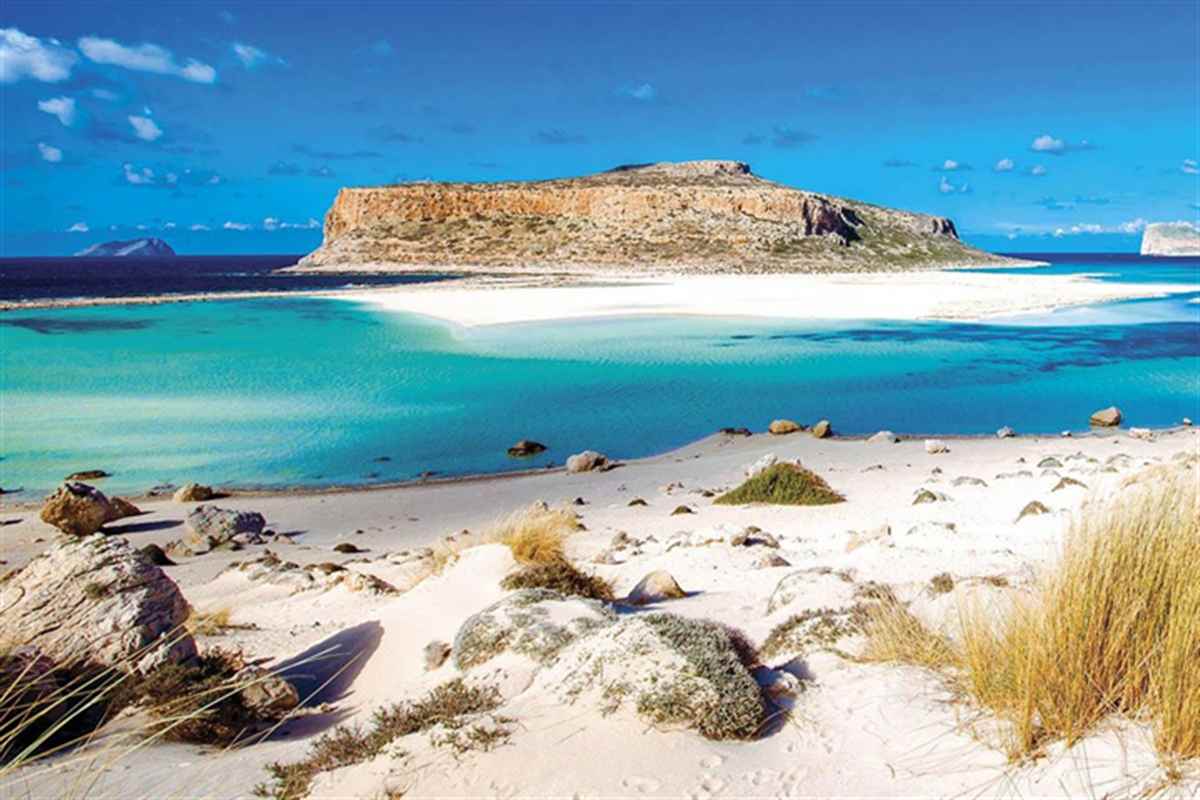
A Balos Gramvousa cruise sails from the port of Kissamos across the bay to a lagoon of shallow turquoise water and the rocky island of Gramvousa, and you can compare departures on our list of tours in Greece.
This page covers what the trip is and how long it lasts, the way to Kissamos from Chania and Rethymno, the boats that sail, Gramvousa and its Venetian fortress, the Balos lagoon and its sand, the swim stops, Cape Tigani, what is on board, and the questions travellers ask.
What is a Balos Gramvousa cruise, and how does it work?
A Balos Gramvousa cruise is a day boat trip in western Crete. The boat sails from Kissamos port to the island of Gramvousa and the Balos lagoon. Each of the two places gets time ashore for a walk and a swim.
Gramvousa names a pair of tiny, empty islands beside a long peninsula in north-western Crete. The municipality of Kissamos looks after them. The Balos lagoon lies between Gramvousa and the coast of Crete, far away from anything else. A road reaches it too, but a Balos Gramvousa cruise links both places in one day.
On the water, the sea crossing takes close to an hour. At Gramvousa, you walk up a path to the Venetian fortress or swim at the small beach. At Balos, the lagoon water is shallow and turquoise, which suits small children. In the afternoon the boat sails back to Kissamos.
Schedules differ in which place comes first on a Balos Gramvousa cruise. One trip visits Gramvousa first and the lagoon second. Another sails to the lagoon first and reaches Gramvousa at about noon. Wind and sea decide on the day, and the captain adjusts the plan.
Operators sell a Balos Gramvousa cruise in two forms. One covers the boat only, and the boat bar, open all day, serves breakfast, snacks and lunch. The other puts breakfast, lunch, drinks and a hotel transfer into one booking. A third form adds a bus transfer to the boat trip.
How long is a Balos Gramvousa cruise, and where does it start?
A Balos Gramvousa cruise from Kissamos port lasts about seven hours and starts in the morning. One schedule runs from 8:30 to 15:30 and another from 10:50 to 18:00. A six-hour version leaves the small port of Falassarna at noon.
A Balos Gramvousa cruise starts at Kissamos port, which one operator page calls Kavonisi. Kissamos, also known as Kastelli, is a port and fishing harbour in the west of Crete. A regular ferry runs there from the Peloponnese via Kythira. Another operator page puts the port about ten miles from Balos, so the sea crossing is short.
Take the early schedule first. The boat casts off from Kissamos port at 8:30. It reaches the lagoon at about ten and Gramvousa at about noon. On this schedule the lagoon swim comes before the island walk. It ties up again at 15:30, so the day lasts seven hours.
The later schedule of the Balos Gramvousa cruise sets off from Kissamos at 10:50 and reaches Gramvousa at 11:50. The boat is back in port at 18:00, so the day lasts just over seven hours. Both Kissamos schedules end where they began, at Kissamos port. The start is two hours and twenty minutes later than on the early schedule.
A Balos Gramvousa cruise can also start from Falassarna on the west coast. That trip runs from noon to six in the evening, and the sea crossing takes 45 to 60 minutes. It visits the lagoon first and the island second. The operator page lists a shorter time on the boat than the cruise from Kissamos.
How do you reach Kissamos port for a Balos Gramvousa cruise from Chania and Rethymno?
Reach Kissamos port for a Balos Gramvousa cruise by car, taxi or bus. The port is 41 kilometres away from Chania. One operator page puts the drive from Chania at 45 to 50 minutes. A coach tour from Rethymno takes two hours to reach the port.
Driving to a Balos Gramvousa cruise from Chania is simple. Wikivoyage says the national road from Chania gets you to Kissamos in under an hour. A parking lot stands in front of the port. Cars also park on the side roads close by, says the operator page. Kissamos town is also known as Kastelli.
The bus is slower than the car. Wikivoyage says a bus leaves Chania each hour or so. The line runs from 6:30 in the morning to 8:30 in the evening. One operator page names the 8:30 bus from Chania Central Station as the one that reaches the boat on time. That ride lasts about one and a half hours.
Chania sits about 70 kilometres west of Rethymno, so a Balos Gramvousa cruise from Rethymno makes a longer day. One trip page runs Rethymno pick-up from 7:30 to 8:00. Its air-conditioned bus then drives two hours. A second page has the bus reach the port at about 9:45 for the 10:30 boat.
Hotel pick-up takes the road out of a Balos Gramvousa cruise. One catamaran page lists pick-up in every area from Georgioupoli to Kissamos. The window runs from 6:30 to 7:30, depending on the area. Without a transfer, that page asks for arrival 20 minutes early, with a passport or ID for check-in. Another operator asks for 30 minutes.
What kind of boat sails on a Balos Gramvousa cruise?
The boats on a Balos Gramvousa cruise run from a two-deck ferry to a catamaran for up to 22 guests. One operator describes air-conditioned decks with couches, another sunbeds and shaded lounges. Both sail from Kissamos port.
One kind of boat on a Balos Gramvousa cruise works like a ferry. One operator page calls it a comfortable and fast ferry service from the Kissamos boat terminal. It has two air-conditioned decks with couches, and the upper deck stays open to sun and sea breeze.
A catamaran is the smaller choice for a Balos Gramvousa cruise. One operator page sets a maximum of 22 guests on its semi-private day. It lists sunbeds, shaded lounges, an on-board toilet and shower, and an English-speaking crew. The same page offers the whole boat to one party, or a place in the small group.
At Balos, guests ride a tender to a spot close to the beach, says that page. The operator also runs a larger shared catamaran on the same route. A Falassarna operator says its ship has a smaller capacity than the Kissamos cruise. It calls that more comfortable. That cruise leaves from the small port at Falassarna.
Vessel choice is wide. One agency lists five kinds of Balos Gramvousa cruise. They are a boat-only cruise, a semi-private cruise, a private cruise, a sailing-boat cruise and a luxurious catamaran cruise. It pitches the semi-private and private cruises as a way to avoid the crowd. Read the tour description first to see which vessel sails.
What is Gramvousa island, and why does a Venetian fortress stand on it?
The island on a Balos Gramvousa cruise is Imeri Gramvousa, which means Tame Gramvousa. Venice raised its fort there in the late sixteenth century as a shield against the Ottoman Turks. A treaty later gave Crete to the Ottomans, but Venice kept this fort.
One history page says the fort on a Balos Gramvousa cruise followed plans by the architect and diplomat Latino Orsini. The fort took its name from the Italian Garabuse, a word that means promontory outpost. The walls rise 137 metres over the water, with room for 3,000 men. The Venetians seem never to have fought a major battle there.
This island changed hands more than once. The treaty left Venice with three forts: Gramvousa, Souda and Spinalonga. Venice lost Gramvousa in the Morean War, because its own commander turned traitor and handed it to the Ottomans. He lived on in Constantinople and earned the nickname Captain Grambousas.
On a Balos Gramvousa cruise you step into a place shaped by the Greek War of Independence. A band of Cretans, disguised as Turks, seized the fort and used it as their base. The siege dragged on for over two years, so the insurgents turned to piracy to survive. They built a school and a church on the island.
Then British and French ships arrived and destroyed the pirate fleet. The fort came under British control. Today a Balos Gramvousa cruise reaches the remains of that story. You see the Venetian fort and the ruined buildings the Cretan insurgents left behind.
How steep is the climb to the fortress on a Balos Gramvousa cruise?
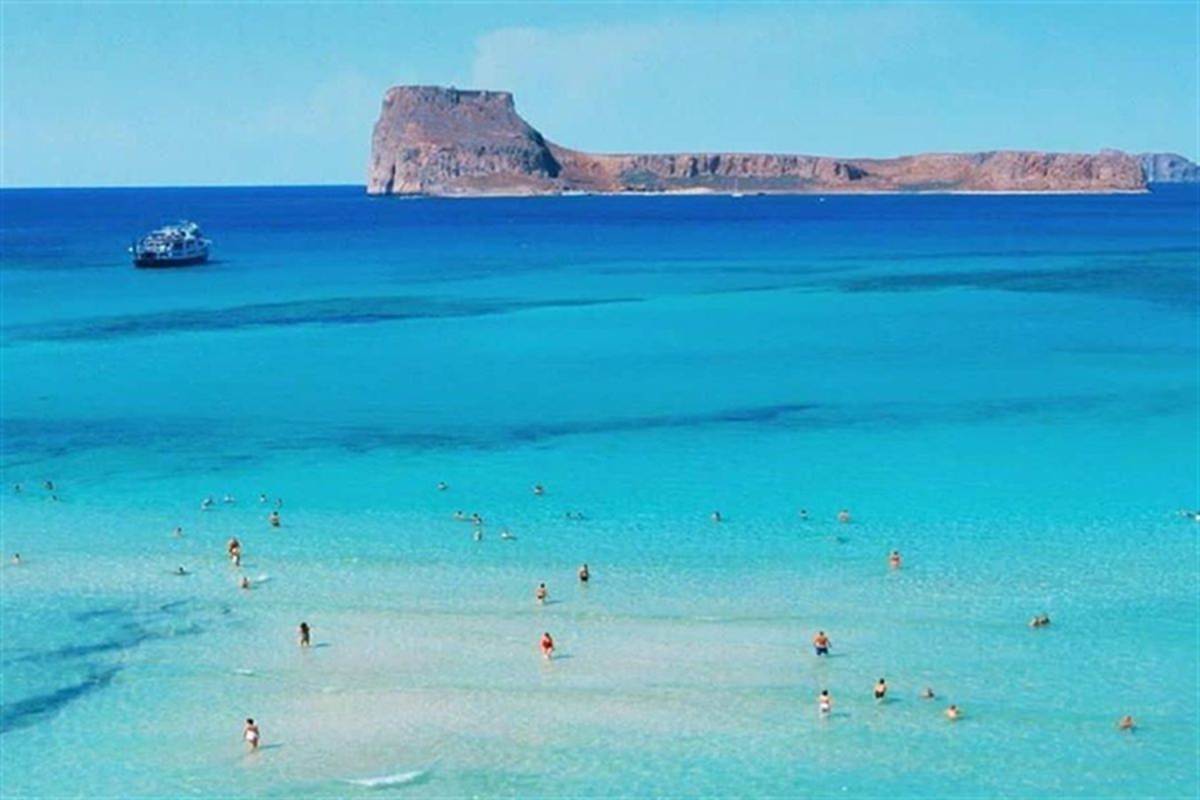
A Balos Gramvousa cruise sets a short but steep climb up to the fortress. One operator page says the path takes at least 20 minutes, over rocky ground. The climb is optional, because the small beach is the other choice for the stop.
The fortress stands 137 metres above the sea. One history page calls the way up difficult because of the rocky terrain. It adds that the fort is reachable only from the east, along a narrow winding path. A travel blog calls the same climb short but steep.
Operator pages agree on the steepness. One trip page speaks of a steep path up to the fortress. Another asks for the ability to climb steep stone steps, with loose gravel in places. Fitness advice differs. One page says the day suits every level of fitness. Another asks for average fitness. Read the page for your Balos Gramvousa cruise.
Heat makes the climb harder. The blog calls it tough in the midday heat and says the ground is rocky and exposed. Another page notes that the island has no shade. Operators ask for hiking shoes. One calls them a must. One packing list asks for them if you want to visit the fortress on a Balos Gramvousa cruise.
At the top you can walk through the fortress walls. Inside stand two large underground cisterns, a church and the foundations of the ruined barracks and command post. A photo gallery on Wikipedia shows the Balos lagoon seen from the fort. Walkers on a Balos Gramvousa cruise see the next stop from above.
What does the Balos lagoon look like on a Balos Gramvousa cruise?
On a Balos Gramvousa cruise, the lagoon looks like a wide basin of calm water. The sea is light blue near the shore, deepens to azure and turns turquoise across the shallows. The sand around it is white, and the water stays flat.
A Balos Gramvousa cruise brings you to a lagoon that lies across from Imeri Gramvousa, on the Cretan shore. One page calls it a wide, sandy basin. The lagoon sits where the Gramvousa Peninsula meets the sea. The rocky island shelters the bay and keeps the water flat. The sea stays shallow and has practically no waves.
Pages for a Balos Gramvousa cruise describe the colours in different ways. One operator promises crystal-clear, blue-green water. One traveller found clear water in shades of teal. A beach page lists colours from white through every shade of blue and green. A travel magazine compares the tidal pools to pots of blue-green ink.
Two pages for the Balos Gramvousa cruise point to different spots for the turquoise water. One trip sends swimmers to the lagoon’s north side, which faces Gramvousa island. Another trip takes guests close to the beach in a tender, into shallow water. Both pages call the water turquoise.
The shape of the lagoon changes too. A travel magazine describes strands of sand that form small creamy islets and bridges. The same magazine suggests a paddle in the warm water. One traveller notes a white sand bar on the far side. You cross through the shallows to reach it.
Why does the sand at Balos look pink, and how deep is the water?
The sand on a Balos Gramvousa cruise looks pink. It holds the shells of tiny sea animals called Benthic Foraminifera. The lagoon is shallow and warm, and deeper, colder water lies beyond the rocks at its edge.
Benthic Foraminifera are tiny sea animals with pink or red shells. When they die, the sea washes the shells ashore, and the shells blend into the sand. Plain sand comes from eroded rock, but this sand comes from eroded organisms. So the tint comes from living things, not from the rock.
A Balos Gramvousa cruise shows only a soft tint, not a solid pink beach. One page says millions of crushed shells give the sand a pinkish colour in places. One traveller found just little pockets of pink sand along the waterline. Another page adds crushed coral to the mix.
On a Balos Gramvousa cruise, one page says the pink is easiest to spot at the lagoon’s far edge. It sits near the deeper channel on the seaward side. That channel holds deeper water than the rest of the lagoon. The tint stays pale and changes from spot to spot, so look along the waterline.
On a Balos Gramvousa cruise the water stays shallow, but pages differ on the depth. One says you can wade hundreds of metres across, in water ankle to knee deep. Another describes calm, waist-deep water. A beach page rates the shallow, warm sea as ideal for young children. Beyond the rocks, the water is deeper and colder.
Where does a Balos Gramvousa cruise stop to swim and snorkel?
A Balos Gramvousa cruise makes two swim stops: the Balos lagoon and the island of Imeri Gramvousa. Snorkelling is listed at the Balos stop, while the island stop adds a short dip from a small beach.
The main swim and snorkel stop on a Balos Gramvousa cruise is the lagoon. One catamaran timetable lists swimming, snorkelling and paddleboarding in the shallow turquoise water there. A tender brings guests in near the shore, and the page says they go ashore at both places.
Another timetable gives two choices at the lagoon. You can play in the shallow water, which suits small children. Or you can swim in the turquoise water on the north side, which faces Gramvousa island. The island and the Cretan coast frame the lagoon, so the two stops sit close together.
On a Balos Gramvousa cruise the swim at Gramvousa is quick. Two operator pages call it a quick swim. One timetable names a small beach for the dip, and another says to swim off the island. Each sets the swim beside the path to the Venetian fortress. Neither of those timetables lists snorkelling at the island.
Check the gear before you book a Balos Gramvousa cruise. One catamaran page lists snorkelling gear, SUP boards and swimming jackets on board. The same page says wind and sea decide the order, and the captain makes that call. A second operator page sets its routes by the forecast and by Coast Guard instructions. Both pages put safety first.
How much time do you get at Gramvousa and at Balos?
Stop times differ by route, and the order of the two stops can change. One Balos Gramvousa cruise timetable gives one hour and forty minutes at Gramvousa and three hours at Balos. A Falassarna departure gives two and a half hours at Balos and about ninety minutes at Gramvousa.
Take the Kissamos timetable that sails to Gramvousa first. The boat lands at 11:50 and leaves the island at 13:30. It reaches Balos at 13:45, so the sail between the two stops takes about 15 minutes. The boat leaves the lagoon at 16:45, which makes Balos the longest stop on that route.
Other routes turn the order around. On a Balos Gramvousa cruise from Falassarna port, Balos comes first. It is the longest stop, at two hours and thirty minutes. The boat then sails on to Gramvousa. That stop holds a quick swim and a visit to the fortress, about an hour and a half in all.
A morning Balos Gramvousa cruise by catamaran from Kissamos also puts the lagoon first. The timetable has the boat at Balos at 9:30, sailing to Gramvousa at 12:20 and heading back at 14:00. Lunch is cooked on board before the return. The semi-private boat on that page reaches Balos around 10:00 and Gramvousa around 12:00.
Add the stops together and the Kissamos route gives four hours and forty minutes, against four hours from Falassarna. On both routes the lagoon gets more time than the island. So plan your longest swim on a Balos Gramvousa cruise for the lagoon. Keep the island for a short dip or the fortress walk.
What is Cape Tigani, and what else do you pass on a Balos Gramvousa cruise?
Cape Tigani is the small cape on one side of the Balos lagoon, facing the Gramvousa peninsula. Wikipedia says the Greek word Tigani means “frying pan”. A Balos Gramvousa cruise brings you to the lagoon waters between them.
Two Crete pages describe the cape in different ways. One calls it “a big square mass of land located right in front of Balos Beach”. The other calls it small and says a chapel of Saint George stands on it. The Greek National Tourism Organisation puts Balos “between Gramvousa and Cape Tigani”.
Other landmarks stand near the cape on a Balos Gramvousa cruise. A Wikipedia sunset photo of the lagoon, taken from the Crete shore, shows Cape Tigani in the centre. Pondikonisi, a small islet, sits to the left. The two Gramvousa islands sit to the right. Older names for the Gramvousa islands include Cavo Buso, Garabusa and Grabusa.
Agria Gramvousa, the “Wild Gramvousa”, lies due north of the island with the fort. One Crete page says the ferry gives a chance to see the wild shores of the Gramvousa peninsula. Wikipedia places the peninsula in the west part of Kissamos Bay. Cape Vouxa marks its northern end. In ancient times the peninsula was called Corycus, or Korykos.
A Balos Gramvousa cruise visits a protected area. The lagoon belongs to the European Natura network. Two pages say the monk seal and loggerhead turtle shelter there. Caves there give nests to peregrine falcons, shags and cormorants. Agnion was a small Roman city with an Apollo temple. Its ruins lie on the Korykon cape, which sits north of Balos.
What is on board a Balos Gramvousa cruise, and who suits the trip?
Seats inside and on deck, a crew, and food and drinks come with a Balos Gramvousa cruise. The trip suits families with children, swimmers, and walkers who want the path up to the Venetian fortress. Extras differ from boat to boat.
On a Balos Gramvousa cruise, the seating depends on the boat. One ferry page describes air-conditioned decks on two floors, with couches inside. Its top deck is open to the sea breeze and the sun. A catamaran page lists sunbeds and shaded lounges. Sit inside for cool air, or climb up for sun.
The same catamaran page lists an English-speaking crew, music and Wi-Fi, plus a shower and a toilet. Guests board with coffee, tea, water and soft drinks, and brunch is served on deck. Its timeline adds Cretan snacks and a lunch cooked on board. Fresh fruit, dessert, local white wine and Greek beer follow.
Plan your drinks for a Balos Gramvousa cruise. One ferry page says neither Balos nor Gramvousa has fresh drinking water, so the crew stocks the boat with fluids. That keeps everyone hydrated through the afternoon. Its bar sells soft drinks and ice cream. A small boat from Falassarna sells water, soft drinks and sandwiches.
Families have a clear place on a Balos Gramvousa cruise. One operator says the pace, food and swim stops adapt for children on request. Children’s life jackets are on board. One timetable lets you choose: climb the path to the Venetian fortress, or swim at the small beach. The decks give shade for a rest between stops.
What else do travellers ask about a Balos Gramvousa cruise?
When is the season for a Balos Gramvousa cruise, and how does the meltemi wind behave?
A Balos Gramvousa cruise runs in the summer season, from late spring to October, as one operator page puts it. The dates always depend on the weather. The meltemi is a strong, dry wind that comes from the north across the Aegean. It starts in late spring and stops by mid-September. It is the dominant influence on Aegean weather.
Over the Cretan sea the meltemi is a north-westerly. The gusts peak in the afternoon, and they can fade after dark. A spell of wind can also run on for days. On the Beaufort scale, the strongest spells reach force 7 or 8. The next answer shows what operators do in such wind.
What happens to a Balos Gramvousa cruise when the sea is rough?
One Kissamos boat operator cancels a Balos Gramvousa cruise from wind force 6 on the Beaufort scale. It also cancels when waves above 1 to 1.3 metres are forecast. The company decides one to two days before the date and judges whether the sea allows the excursion.
Other pages describe softer changes. One listing warns that the tour’s times and route can change because of weather. A booking page offers rescheduling when bad weather cancels the activity. A third page offers a different date if the minimum number of travellers is not met. Ask your operator how it handles a cancelled sailing before you choose a date.
Which clothes and gear belong in your bag for a Balos Gramvousa cruise?
Operator lists agree on the basics for a Balos Gramvousa cruise: swimwear, a towel, a hat and sunscreen. Sunglasses and a change of clothes appear on other lists. Comfortable clothing is on one list, and snacks and water are on another. One operator page lists the towel and the sunscreen twice.
Wear comfortable shoes. Three pages list them, and one ties them to the walk up to the fortress. A camera also appears on one pack list, beside the hat and the swimwear. One operator page warns that summer temperatures can be really high, so pack for the sun first. Another listing asks you to dress appropriately for the weather.
Is a Balos Gramvousa cruise suitable for children, and what about seasickness?
The age rules differ by operator. One listing states no age restrictions, and another says children as young as three can take part. One operator page treats children up to age two as a separate group. Every child needs an adult on a Balos Gramvousa cruise. One page adds that an infant has to stay on an adult’s lap.
Seasickness is the real warning. One listing says everybody is welcome. Yet that listing advises against the activity for pregnant people and for travellers prone to sea sickness. Another page says the tour does not suit anyone prone to seasickness. It adds that children need to manage the long day and the walk to the fortress.
Where do you meet the boat for a Balos Gramvousa cruise, and when do you board?
The meeting time before a Balos Gramvousa cruise differs by operator. One page asks for 15 minutes before departure, another for 20 minutes. A third wants half an hour, and a fourth wants 40 minutes at the boarding area. Check your final voucher, which holds the starting point details and specific instructions.
Find the right spot in Kissamos port. One page puts the meeting point outside the port authority building. Another names a landing stage to the right of the port entrance. One operator asks for a passport or ID at check-in. Where a hotel pick-up is included, its window opens at 6:30 and closes at 7:30, set by your area.