
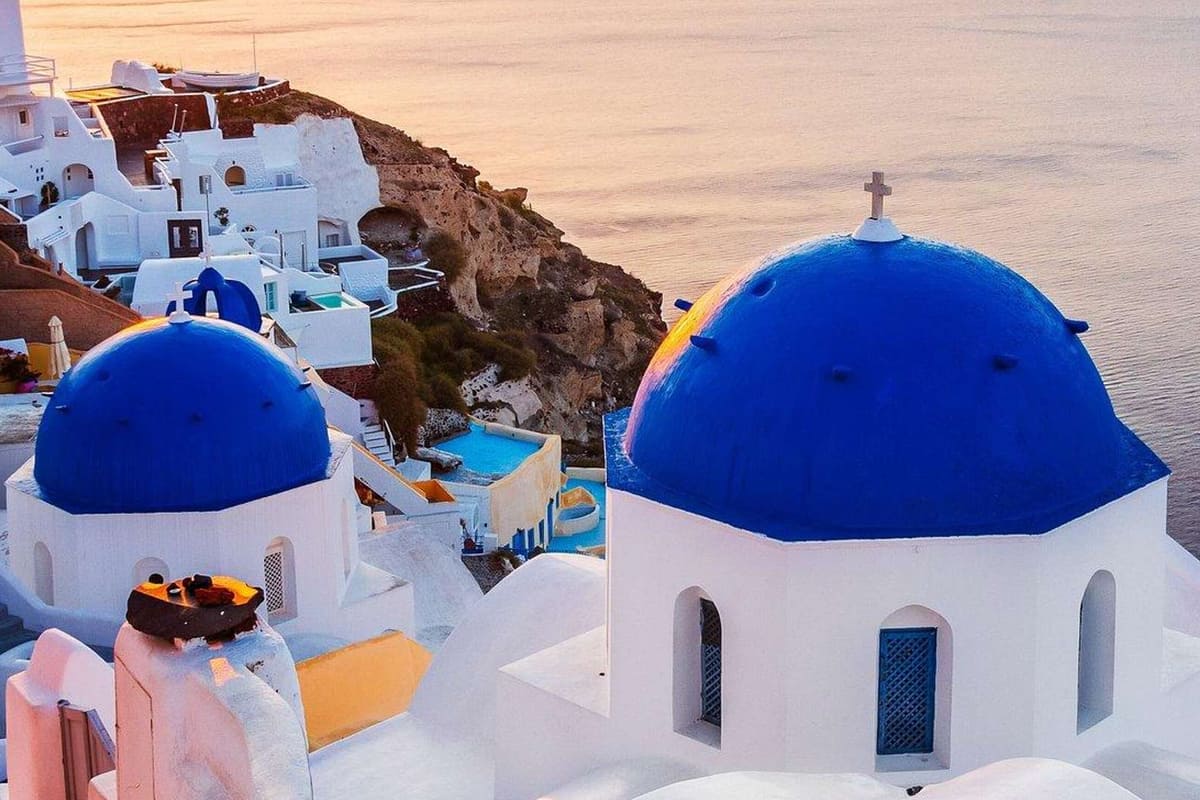
A Greece family vacation runs smoothly with one base, short transfers and the hot midday hours kept for shade and the sea. The tours in Greece on the home page fit the days around that rhythm.
This page covers the months, Athens with children, the ancient sites that keep children moving, the Cyclades, Crete, Rhodes and Corfu, the Peloponnese by car, ferries and roads, lodging, food and health. The cretaquarium tickets and greece island hopping tours pages add detail for Crete and the islands.
What makes a Greece family vacation work?
A Greece family vacation works when the days suit the children: one base, short outings and a rest after lunch. Wikivoyage’s page on travelling with children says “Take your time”. A Greek day, with lunch in the afternoon and dinner late, leaves room for it.
A Greece family vacation starts from one of three bases:
- Athens
- One island
- The mainland by car
Each base gives a Greece family vacation its own shape. Athens keeps museums, gardens and the metro within reach. One island keeps the beach close to the door. The mainland by car links ancient sites, harbours and mountain villages in one loop.
Fewer moves leave more hours for play, because each change of base eats a morning of bags and waiting. A Greece family vacation with two bases lets children learn one beach and one street. Wikivoyage lists a picnic, a nap and a small playground among the simple things that keep children in good temper.
Heat is the second pacing rule. Wikivoyage’s page on travelling with children says that keeping a child hydrated in hot weather needs special attention. A day therefore holds one pause in the summer, such as a nap or an hour of shade. A water bottle goes in every bag.
Wikivoyage Greece puts dinner between nine and eleven at night. Greeks sit down for lunch around two o’clock, though tables for visitors are set from twelve. Wikivoyage’s children page adds that a child used to an early supper can ask for the familiar evening meal. A Greece family vacation therefore leans on a full lunch and a light supper.
Wikivoyage’s children page asks parents to trade what they want to see against what the children can enjoy. Its example is a toddler at a zoo who can prefer the ants on the walkway. For a Greece family vacation, a short ruin visit followed by a swim or a playground keeps the day cheerful.
The mainland by car follows Wikivoyage’s tips for a long car trip. Break the drive into small sessions, with stops for fresh air between them. Its list adds a blanket and a sandwich to make each stop more fun. The road then becomes part of the day.
Which months suit a Greece family vacation?
Wikivoyage Greece names two pleasant spells of the year for a Greece family vacation. They are the weeks from late spring into June, and September with October. Midsummer, mid-July to mid-August, brings a very strong midday sun.
Wikivoyage describes the climate of the coasts as almost identical to much of California. A Greece family vacation there meets hot, dry summers and a rainy winter. Rain falls in larger amounts on the Ionian coast and islands, according to the same page.
Wikipedia’s climate page calls coastal heat waves quite mild, since sea air and cooler water soften them. Athens is another matter. Wikivoyage says its summer afternoons can feel uncomfortably warm because of the concrete, much like New York City. For a Greece family vacation in the capital, the afternoon rest matters more.
Between one and five o’clock in midsummer, the majority of Greeks skip heavy exertion outdoors, Wikivoyage reports. An early start puts the sights and errands in the cool of the morning, as the same page recommends. A Greece family vacation in July follows that split: mornings outside, afternoons in shade or at the beach.
Peak season stretches from late spring through September, according to Wikivoyage. The same page puts the vast majority of arrivals between April and October. The summer break of American schools falls inside that window. School dates therefore mean early bookings and crowds at the popular sites.
Spring and early autumn suit the ancient sites, which lie open to the sky. Cooler mornings let small legs cover more ground before the sun climbs. Winter, from November to February, is mild but not beach weather, Wikivoyage adds. A winter family trip therefore leans on museums and town walks.
Each summer the Aegean feels the meltemi, a dry northern wind. Its peak months are July and August, per Wikipedia’s climate page. Thanks to that wind, the same page adds, Aegean waters stay cooler than Ionian ones. On a Greece family vacation, a windy afternoon suits a museum or a walk in the old town.
Greek Easter adds a game for children. Greek Orthodox Christians knock red eggs together while swapping Easter greetings, Wikipedia’s Easter egg article notes. In Greece the game has its own name, tsougrisma. A Greece family vacation timed for Greek Easter lets a child join in.
How does Athens fit a Greece family vacation?
Athens fits a Greece family vacation because its child-sized stops sit close together. The core stops are a glass-floored museum, a garden, a guard ceremony and a park on a man-made hill. One morning and one afternoon hold two of them, with a rest in between.
A Greece family vacation can open at the Acropolis Museum, with the Parthenon only 280 metres away. Parts of its floor are glass, so children look down at the excavations below. The ruins under the glass form two layers: classical and early Byzantine. Each layer holds modest houses and workshops beside a road.
The Parthenon marbles stand on the top level, where two metopes sit on each column. Wikivoyage lists a free audio guide in an app and a view of the Acropolis from that floor. Climb the rock itself early on a Greece family vacation, since Wikivoyage calls it shadeless.
Behind the Parliament building, Wikipedia notes, lie the 15.5 hectares of the National Garden. Its designer imported over 500 plant species and animals such as peacocks, ducks and turtles. A Greece family vacation gets a pond with ducks, a Children’s Library, a botanical museum and a playground inside.
Children can hunt for ruins among the paths. Wikipedia lists column drums, Corinthian capitals, mosaics and a Roman villa with a mosaic.
Syntagma Square stages a short show for a Greece family vacation: the changing of the guard. At the Unknown Soldier’s tomb, Evzones of the Presidential Guard keep the watch. Wikivoyage lists a new pair of guards at the start of each hour. The guards wear pleated kilts and clogs with pom-poms, and they are not allowed to speak.
A funicular railway carries tired legs up Lycabettus Hill from Kolonaki, as Wikipedia states. From the summit, Wikivoyage names the port of Piraeus, plus Aegina and the Peloponnese in clear air.
The cultural centre built by the Stavros Niarchos Foundation in Kallithea sits in parkland that measures 210,000 square metres. The roofs of the library and the opera house rise from an artificial hill. A canopy over the top stands for a cloud, in the architect’s words.
The Hellenic Children’s Museum gives the hot hours an indoor stop. Wikipedia places its first home in a neoclassical building at 14 Kydathinaion Street in Plaka. It has since moved into the Athens Conservatory, where it takes the ground floor. On a Greece family vacation, it adds one stop made for children.
Which ancient sites hold children’s attention on a Greece family vacation?
On a Greece family vacation, the ancient sites that hold children are the ones with space to move. Olympia gives a stadium, Epidaurus a theatre, Mycenae a gate with lions, and Delphi a legend. Each site turns a child into a runner, a listener or an explorer.
The stadium at Ancient Olympia is basically a field. Wikipedia describes stone curbing across the field at both the starting and the finishing ends. One stadion was defined as 600 podes, the ancient Greek foot. The surviving Stadium III had a length of 192.27 metres. A Greece family vacation can pace that length out.
Athletes reached the track through a long, narrow vaulted passage. A vaulted archway linking the stadium to the sanctuary dates to around two hundred BC, as Wikipedia states. Spectators sat on sloping sides, which a rebuild around five hundred BC added. Athens held its Olympic shot put here, an event needing the least disruption at the site.
The Kladeos River bounds the site to the west, with a bridge over it to the main gate. Wikipedia notes that seeing the whole site means long walks on foot. Judas trees, low trees with pink flowers, are the main trees growing over the grounds.
Epidaurus offers a theatre still used for drama, and a Greece family vacation can sit in its rows. Roman builders added 21 rows above the first 34. Wikipedia puts the seating at 14,000 people. Greek theatres keep the view of the countryside behind the stage open, and Epidaurus follows that custom.
The theatre has a long reputation for its acoustics. Tour guides tell a story that every seat in the bowl heard each spoken word. On-site measurements soften that claim, since a voice needs good projection.
The sanctuary of Asclepius lies eight kilometres from the town. In the classical world it served as a place of healing. The enkoimeteria was a big hall where ill people slept for a night. In their sleep, the god advised a cure. Epidauros, a hero and son of Apollo, gave the place its name.
Mycenae gives a Greece family vacation a gate to study. A carved pair of lions, or lionesses, flanks a column on the gate, and its meaning is debated. Later ages credited the one-eyed Cyclopes with the walls, so the style is called Cyclopean.
For a Greece family vacation, Delphi brings a legend about two eagles. Zeus sent two eagles, one setting out from the east, the other from the west. Their paths crossed over Delphi, where the omphalos, the navel of Gaia, was found. Knossos on Crete adds the Minotaur myth, and later Greeks remembered its palace plan as the Labyrinth.
Which Cyclades islands suit a Greece family vacation?
A Greece family vacation in the Cyclades suits Naxos, Paros with its small neighbour Antiparos, and Milos. Among the Cyclades, Naxos covers the greatest area. Wikipedia gives it an area of 430 square kilometres and a population of 20,578.
On Naxos stands Mount Zeus, the highest summit of the Cyclades, 1,001 metres tall. It tends to trap clouds, which allows greater rainfall. For a Greece family vacation, the rain feeds the farms, and Wikipedia describes Naxos as fertile and self-sufficient. Local products include Arseniko Naxou cheese, potatoes and honey drawn from thyme.
Chora, the main town of Naxos, has 8,897 inhabitants. Its Bourgos district has narrow, winding lanes with dead ends. The pattern is compared to a labyrinth, and a belief holds that it was meant partly to confuse pirates. Every road in or out of Bourgos leads to the castle or the sea.
On a Greece family vacation, children can treat those lanes as a maze. The Portara, a marble gate of great size, comes from an unfinished Apollo temple of the sixth century BC.
Naxos has beaches at Agios Georgios, Agia Anna, Agios Prokopios, Plaka, Mikri Vigla, Kastraki and Aliko. The western side near Chora holds the bulk of them.
From Naxos, Paros is 8 kilometres to the west, with a narrow channel between them. Windsurfers favour Paros because a constant strong wind blows through that strait. Drios, on the east coast, has Golden Beach nearby. For a Greece family vacation that moves on, Parikia harbour has daily sailings to Piraeus, Heraklion, Naxos and other islands.
A local ferry joins Paros to the small island of Antiparos, which has 1,265 permanent residents. In the centre of Antiparos, a cave extends over different levels. From the Neolithic period onwards, the cave gave people natural shelter.
The Venetian castle of Antiparos holds houses built as one continuous block, with a single entrance in the south wing. For a Greece family vacation, the evening detail is the bats. Small bats fly around the tower on the eastern side at dusk.
Milos, a volcanic island, marks the south-western limit of the group and measures about 151 square kilometres. For a Greece family vacation, the volcano is a lesson in itself. A crater hollow forms the natural harbour. The eastern shore of that harbour has hot sulfurous springs.
At Sarakiniko, erosion has shaped the coast into white rock formations. Wikivoyage describes white sea caves and rock arches at Kleftiko, reached mainly by boat. Obsidian, a glass-like volcanic rock, was already traded from Milos 15,000 years ago.
How does Crete fit a Greece family vacation?
As the largest Greek island, Crete stretches about 260 kilometres end to end and 60 kilometres across. So a Greece family vacation here works from one base. Wikivoyage notes that nearly all visitors pick a base in a northern city and explore from there.
Wikivoyage splits Crete into four prefectures. Chania lies at the western end and Lasithi at the eastern end, with Rethymnon and Heraklion between them. Heraklion, the largest city, holds the main international airport and a ferry port. Chania, the second-largest city, has a largely intact Old Town. A Greece family vacation can start at either one.
Along the northern coast, one major highway links the island from east to west. A coastal village can have an old upper part called epano and a newer lower part called kato. Wikivoyage advises naming the part, kato or epano, when asking the way.
The Hellenic Centre for Marine Research manages Cretaquarium, 15 kilometres east of Heraklion near Gournes. Inside, 61 tanks house over 2,500 animals from roughly 250 species. For a Greece family vacation, it adds sea life to a trip of ruins and beaches.
The aquarium has five sections. The first shows cave and deep-sea life in low light, such as red scorpionfish and dusky grouper. Open Sea holds the two largest tanks, of 600,000 and 400,000 litres, with sand tiger sharks and loggerhead turtles. The last section shows clownfish.
The palace site of Knossos is roughly 5 kilometres from the old centre of Heraklion, to the south. Reinforced concrete and colour were Arthur Evans’s tools when he reconstructed parts of the palace. Unlike later Greek columns, Minoan columns can taper downward, as Wikipedia notes.
For a Greece family vacation, children can look for the Dolphin Fresco and the Bull-Leaping Fresco. A fresco that looks whole can mix ancient fragments with modern additions. A large rectangular Central Court organises the palace, which spans about 20,000 square metres.
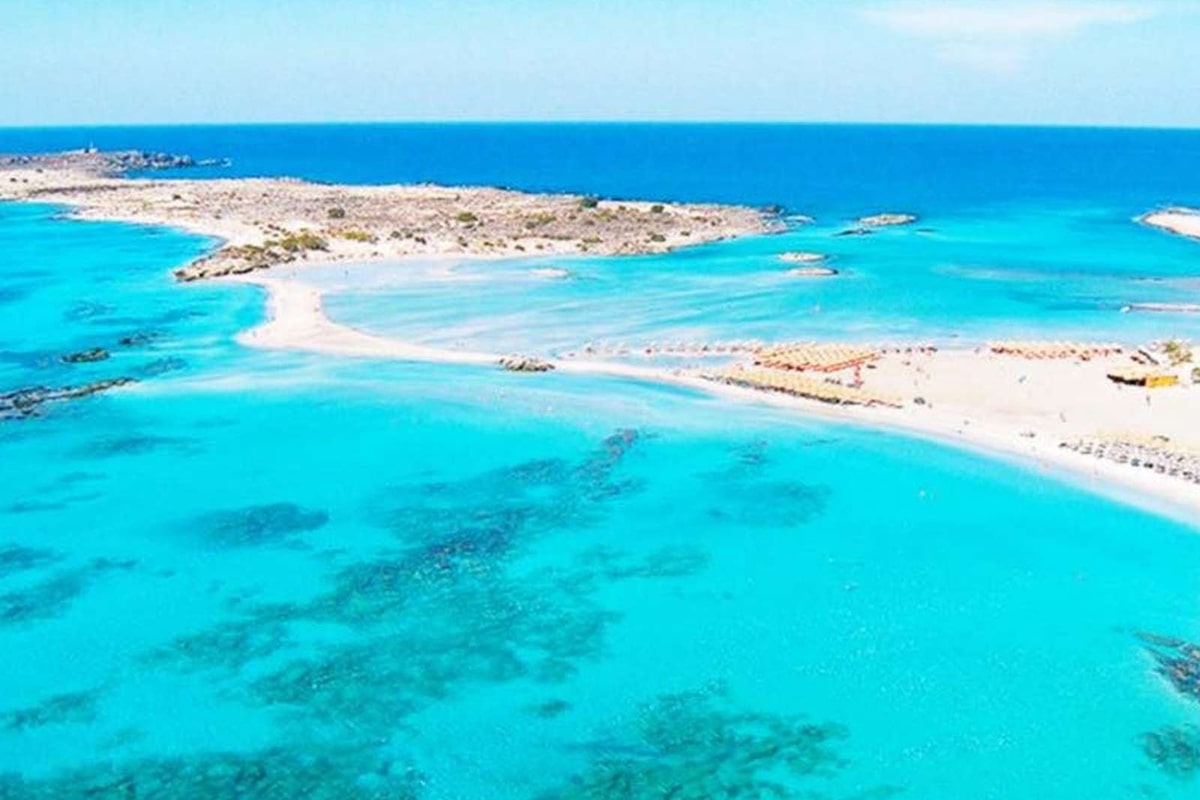
Elafonisi, whose name means Deer Island, sits close to Crete’s south-western corner. Fine weather makes wading across the shallows to the island possible. It is also a protected nature reserve. For a Greece family vacation, the pink sand is the draw. Pigmented microorganisms, living in partnership with native seaweed and spread by tides and waves, colour the sand.
Spinalonga, a rocky islet, rises from the sea 750 metres off Plaka, inside the Gulf of Elounda. Visitor boats sail from Plaka, Elounda and Agios Nikolaos. For a Greece family vacation, the name is a small language lesson. It comes from the Greek stin Elounda, meaning to Elounda, which the Venetians heard as spina longa, long thorn.
How do Rhodes and Corfu fit a Greece family vacation?
Rhodes and Corfu give children a fortress each to explore on a Greece family vacation. Rhodes keeps its Grand Master’s palace inside a ring of medieval walls. Corfu offers the Old Fortress on two peaks. The kind of beach a family wants then settles the choice between them.
The coast decides the base on Rhodes. Wikivoyage describes the east side as a run of sandy beaches, almost without a break, with calm waters. The west side brings more wind, a rougher sea and stonier beaches. Parents planning a Greece family vacation can start their search on the east coast.
Rhodes city holds the old seat of the Knights’ Grand Master, now a museum. Its origin is a Byzantine citadel, built late in the seventh century. Wikipedia adds that foundations of a temple to Helios, the sun god, lay on that exact spot.
A Greece family vacation can add Lindos, where the acropolis, a natural citadel, rises over the town. On it stand a Doric temple to Athena Lindia and the Knights’ castle, built on older Byzantine fortifications.
Thousands of Jersey tiger moths, the Rhodes subspecies, live in Petaloudes, the Valley of the Butterflies. Wikipedia states that they cover the whole landscape after the wet season in late spring. A scent from the oriental sweetgum trees draws the moths in.
Wikivoyage adds that these coloured moths need quiet. A disturbed moth flies frequently and uses up its energy, and Wikipedia notes that it has no stomach. On a Greece family vacation, the answer is slow steps and low voices.
For a Greece family vacation, the Old Fortress of Corfu offers more than walls. The public library of Corfu sits in its old British barracks. Exhibits of art and culture also fill the fortress grounds. Two peaks rise inside the citadel, and strong towers have fortified them for centuries.
About ten kilometres out of Corfu city, heading south, the village of Gastouri holds the Achilleion. Wikipedia states that its gardens on the hill give a view of the surrounding green hills and valleys. A bronze statue of Achilles by Johannes Gotz guards the gardens and faces north toward the city. The palace now operates as a museum.
On Corfu, a Greece family vacation can head west to Paleokastritsa, which lies just south of Angelokastro. Wikipedia names two draws there: great cliffs and the beaches close to the village. The monastery there holds a museum, and its history reaches back to the early thirteenth century.
Corfu splits its coasts differently, as Wikivoyage states: sandier beaches on the west side, calmer waters on the east. A family with toddlers can weigh sand against calm water when it picks the base.
How does the Peloponnese fit a Greece family vacation by car?
A Greece family vacation by car in the Peloponnese can use Nafplio as one base. Wikivoyage measures the road from Athens at 147 kilometres, a drive of between ninety minutes and two hours. Wikivoyage places every major sight within the old town, an easy area to cover on foot.
Nafplio carries a story that children can follow on a Greece family vacation. Wikivoyage tells how Nafplio became the first capital for the new Greek state under Governor Kapodistrias. Later the seat of power moved to Athens. Wikipedia sets much of the old town on a peninsula reaching into the gulf, which forms a sheltered bay.
Drivers head for the harbour, where Wikivoyage lists a large parking area. Families without a car can use the KTEL bus network. Wikipedia states that the KTEL buses serve Athens daily. The ride to Athens runs between 120 and 140 minutes, going via Corinth and Argos.
The Palamidi fortress crowns a hill of 216 metres, as Wikipedia states. The Venetians finished building it within a relatively short period. On a Greece family vacation, the climb is a choice. Wikivoyage names the legendary 999 steps, corrects the count to 857, and adds that a visitor can simply drive there.
Wikivoyage describes Karathona as a quiet sandy beach where locals swim, very near the town. Arvanitia, a second beach, lies behind the castles, about ten minutes on foot south of the town. Both beaches sit close to the old town and the castles.
In the middle of Nafplio harbour rises the Bourtzi, a castle built by the Venetians. On a Greece family vacation in Nafplio, small boats take visitors across from the port. Restoration has since turned it into a tourist attraction, as Wikipedia notes. Wikivoyage adds that a visit takes only five minutes with those boats.
A Greece family vacation by car can reach the Diros caves on the Mani Peninsula. Wikivoyage describes an underground boat route through lakes, chambers and stalactite formations. Wikipedia states that small boats and narrow passageways give access. Archaeological research places worship in the caves in two early ages, the Paleolithic and the Neolithic.
Monemvasia sits on a rock that a sandy isthmus 400 metres long joins to the mainland. Moni means single and emvasis means approach, so the name points to a single entrance. Wikipedia adds that narrow streets fit only pedestrian and donkey traffic. A Greece family vacation by car therefore turns into a walk in Monemvasia.
How do ferries and flights work on a Greece family vacation?
Every sailing on a Greece family vacation starts with a choice between a fast boat and a slow one. Hydrofoils, the fastest boats, take foot passengers only, according to Wikivoyage’s ferry page for the Mediterranean. Conventional ships are slower, take vehicles on board and run in every season. A short flight can replace the longest crossings.
Wikivoyage’s list of Athens ports has Piraeus as the main one, with Rafina and Lavrio further out. For a Greece family vacation by boat, Piraeus serves a wide choice of islands, mostly with daily sailings. Finding your ferry there is no small task, but boards at the harbour gates display each ship’s name.
A first sailing on a Greece family vacation can be one of the gulf islands near Piraeus. Wikivoyage’s page on Mediterranean ferries lists daily ferries to Spetses, Poros, Hydra, Agistri and Aegina. Each of these crossings takes little over an hour, as that page states. Children meet deck, harbour and ramp without a full day at sea.
The slow boat to Santorini from Athens takes eight hours, as Wikivoyage Greece states. Another Wikivoyage page lists a daily sailing of three and a half hours to Naxos. The same page gives Santorini a daily run of four and a half hours and Crete nine hours. Plan a Greece family vacation around those hours, not around the map.
Wikivoyage’s children page says a boat can cover ground with young children or let the family relax. Before booking a sailing for a Greece family vacation, it lists questions to ask. The list covers the railing on the main decks, a play room or children’s club, early dining and baby-sitting. Cabin balconies are on the list too.
Wikivoyage’s ferry page says the overnight ships have restaurants, bars and cabins, which gives a child a bed at sea. Aboard, its children page says to find the life vests for smaller children, which can be at a separate location. It adds one plain rule for the deck: keep children close at all times.
Flights are the other link on a Greece family vacation. Wikivoyage Greece says the larger part of the country lies an hour or less by air from Athens or Thessaloniki. A short flight swaps a long crossing for time at the destination. Wikivoyage’s children page adds that a car seat can come aboard beyond the normal allowances.
How do car seats, rentals and roads affect a Greece family vacation?
The child car-seat rule comes first on a Greece family vacation by car. The European Commission’s page on children says those under 1.35 metres need equipment suited to their size and weight. Taller children can use an adult seat belt. Seat belts are required in all vehicles under EU law.
The Commission’s page adds a rule for rear-facing child seats. Using one on the front passenger seat is against the law, unless the airbag is switched off. A baby seat on a Greece family vacation therefore rides in the back, or the airbag is deactivated.
A seat from home can travel with the family. The travelling-with-children page of Wikivoyage asks parents to check that it meets the legal requirements of the country they visit. In certain countries a seat can be rented with the car, yet parents can still need their own. Before a Greece family vacation, ask the rental desk what it supplies.
Wikivoyage Greece says drivers without an EU licence have to carry an international driver’s permit. It adds that a rental desk does not always ask for it. For a Greece family vacation, the same page advises reserving an automatic car in advance. Wikipedia’s table of traffic sides puts Greece on the right, as in the United States.
Wikivoyage Greece says a car limits flexibility on an island-hopping trip, since only the larger ferries carry cars. Rental terms can restrict taking a car on board, the same page warns. Read the rental terms before a Greece family vacation puts the car on a boat.
Wikivoyage Greece warns drivers used to North America that Greek roads can be a challenge. Mountain roads bend, and lanes in island villages narrow. On a Greece family vacation by car, two nearby dots on the map can take a whole morning. Count the hours, not the kilometres.
Without a car, a Greece family vacation can lean on the KTEL buses. Wikivoyage Greece says the bus ticket to Corfu or Cephalonia includes the ferry crossing. It adds that a taxi in Greece is not paid per person: a group travelling together pays once.
The European Commission’s accessibility page says each Athens Metro station has lifts, with level or ramped entrances. It adds that the routes and platforms suit wheelchair users and parents with pushchairs. Wikivoyage’s children page says a pushchair cannot always board a full metro, so it advises avoiding rush hour.
Which kinds of lodging suit a Greece family vacation?
The kinds of lodging that Wikivoyage describes for a Greece family vacation are family-run pensions, hotels, self-catering studios and villas. A studio holds one large room with a sink, a small refrigerator and a two-burner hot plate. Parents can prepare a simple meal there for the children.
Wikivoyage calls small, family-run pensions a way to enjoy the unhurried rhythm of local life. The owners and staff are friendly and open-minded, unlike the impersonal service of a large hotel. On a Greece family vacation, a parent with a tired child asks one person for a quiet room.
A Greece family vacation in a hotel means a simple room, as Wikivoyage describes it, even in Athens. Rooms are small, bathrooms are smaller, and a balcony or veranda is common. Rooms tend to have air conditioning nowadays, so ask before booking. Wikipedia sorts the hotels of Greece into five classes, from one star to five stars.
Wikivoyage’s page on travelling with children names the hotel problem for a Greece family vacation. A party of three or more can end up reserving an extra room or a family suite. Modern hotels tend to be planned around two guests per room, with an extra bed as an option.
A studio, as Wikivoyage describes it, is bigger than a hotel room. There is no front desk and no breakfast, and maid service can be limited to every second or third day. Studios tend to stand in quieter places than hotels, which suits a Greece family vacation with early bedtimes.
Certain island ports have a custom that Wikivoyage describes: owners of rooms for rent meet the arriving ferry. The room can stand right by the port or a mile out of town. A parent on a Greece family vacation asks where the room stands before saying yes.
Villas, Wikivoyage says, normally stand by the sea and give a household more room. For a Greece family vacation, campsites are another kind: the page on travelling with children calls them very family friendly. At the bigger sites, a family can rent a ready-built tent, caravan or cottage.
Pick one base, near a sandy beach or in an old town, so the children keep one bed. Wikivoyage names noise as the main problem of Greek hotel rooms. The quietest rooms tend to stand in the old part of a town. Reserve early, and ask for a cot or a high chair in the same message.
How do food, heat and health work on a Greece family vacation?
Food on a Greece family vacation comes from dishes that children know, such as pastitsio, souvlaki and spanakopita. Heat calls for a hat, water and shade under the strong sun. Health runs through the pharmacy and 112, the emergency number that Wikivoyage lists for Greece.
On a Greece family vacation, pastitsio is baked pasta with ground meat and white sauce, as Wikipedia states. Wikivoyage calls it a variety of lasagna. Skewered grilled meat is souvlaki, and Wikipedia adds that it is eaten with pita. Moussaka holds minced meat, eggplant, tomato and white sauce, all baked in the oven.
A bakery is the breakfast stop in Wikivoyage’s list, with tiropita, a cheese pie, and spanakopita, a spinach pie. Loukoumades end the meal as dough balls, fried, then spiced with cinnamon and drizzled in honey. Wikipedia also lists strained yogurt with honey.
Outside the resorts and big supermarkets, Wikivoyage says, shops take a long lunch break from about two to five. Kiosks on city corners sell chilled drinks, snacks and ice cream. Wikivoyage’s page on travelling with children adds that grocery stores can be closed when a family arrives. A Greece family vacation carries a snack for those hours.
Wikivoyage puts daily highs of the hottest months at about 35 to 38 degrees Celsius, or 95 to 100 Fahrenheit. Because humidity is low, Wikivoyage says, the air traps little heat and evenings cool to pleasant levels. A Greece family vacation can use those evenings for the playground and the harbour walk.
Wikivoyage advises summer visitors to wear sunglasses and a light hat and to carry water. At archaeological sites it adds umbrellas. Sunscreen is sold at pharmacies, supermarkets, grocery stores and beach shops, though high SPF can be hard to find. A parent on a Greece family vacation packs the high SPF from home.
For a Greece family vacation, the pharmacy is the first stop for a simple, common illness, as Wikivoyage describes it. It calls Greek pharmacists highly trained experts. Brand names of medicines can differ, so a parent carries the generic name of the child’s medicine. On a Sunday, a closed pharmacy posts the nearest open ones on its door.
The emergency number of Greece is 112, and Wikivoyage lists 166 for emergency medical services. Wikipedia adds that the National Center for First Aid, known as EKAB, runs the ambulance and air-ambulance services. Wikivoyage describes helicopter ambulances on the islands. They carry patients to a major hospital on the nearest island or in the nearest city.
Which other questions do parents ask about a Greece family vacation?
Parents ask four things about a Greece family vacation: free entry, the number of islands, buggies and festivals. Wikivoyage Travelling with children states that the definition of a child varies and is normally based on age. Each answer below names its source, so parents can check it before the trip.
Do children enter state sites free on a Greece family vacation?
A form on the official antiquities site for the Cyclades carries the title free or reduced admission. The form asks where you are from: Greece or another EU country, or outside the EU. It then asks for a date of birth and the day of the visit.
Wikivoyage Greece names two groups that enter certain sites free. One group is EU citizens under 25. The other is any child under 18, whatever the nationality. For a Greece family vacation, the date of birth of each child sets the answer. A toddler and a teenager fall into the same group.
The official page of the Archaeological Museum of Delphi lists dated days that are free for every visitor. The list includes European Heritage Days in September and the national holiday at the end of October. Wikivoyage Travelling with children adds that any child, a newborn included, increasingly needs their own passport.
Are two islands enough for a Greece family vacation?
Wikivoyage Greece lists eight island groups under the Greek Islands and describes the islands as countless. That list invites a parent to cross the whole sea. For a Greece family vacation, two neighbouring islands mean one move, and one island means none.
Wikivoyage Travelling with children advises an easy first destination. It names four unfamiliar things that children must get used to:
- hours seated in a vehicle
- a bed that is not their own
- strangers on every side
- unfamiliar food
A move to a new island brings all four at once, and a crossing adds a boat seat on top. Count the moves, not the islands, when you plan a Greece family vacation.
That Wikivoyage page asks parents to rest the children well before a long trip. A sailing tires a child, so the first afternoon on the new island stays free.
Do buggies work on island lanes and ancient sites on a Greece family vacation?
Wikivoyage Travelling with children notes that old towns were not built for strollers. Island towns with stone lanes and steps fit that description. On a Greece family vacation, a buggy suits quays and flat roads, while the old lanes are for walking.
A baby sling is the alternative Wikivoyage Travelling with children names where streets are in poor shape. It says slings carry children up to school age and beyond, and specialised backpacks suit bigger children. Parent and child both need to get used to the sling before the trip.
Ancient sites add rock and marble underfoot. Wikipedia states that new reinforced concrete paths were added to the Acropolis site to improve accessibility. The official page of the Archaeological Museum of Delphi lists a ramp and a lift under accessibility.
So the sling covers the lanes and the sites, and the buggy covers museums with a ramp and a lift. That split keeps a Greece family vacation moving when the surface changes.
Which festivals can children join on a Greece family vacation?
Wikipedia gives the Greek name of Clean Monday as Kathara Deftera. It dates the day 48 days before Pascha Sunday, so the Easter date sets it. For a Greece family vacation, that rule sets the week of the kites.
Wikipedia calls flying kites a widespread custom of Clean Monday. It also lists Pure Monday and Green Monday as other names for the day. The same page describes a happy, springtime atmosphere on the day.
Once it has risen, the dough of tsoureki, the Easter bread of Greece, is braided or twisted, Wikipedia says. It adds that children can give the bread to their godparents as an Easter gift. Wikivoyage Greece places Orthodox Easter one or two weeks after the western date, though the two dates sometimes match.
Wikivoyage Greece adds that towns and regions hold their own festivals for historical events, local patron saints and wine harvests. A village festival on a Greece family vacation therefore follows the calendar of that village, not the national one.