
Greece travel tips give a first-time visitor the practical facts before the trip: the season, the entry rules, the way to move between the mainland and the islands, and the habits that make a day in the heat easier. Browse the day trips in our tours in Greece once you know which area you want to see.
This page covers the season, passports and entry, money, buses, trains and ferries, Athens, the big islands, heat and safety, food and customs, beaches, museums and ruins, guided tours, packing and a short FAQ.
What are the first Greece travel tips to read before you go?
The first of the Greece travel tips is to choose less. Lonely Planet writes that nobody sees everything on a first visit, and the pressure to try ruins the trip. Pick one region, or two or three islands, and give each one time.
Wikivoyage calls Greece both mountainous and coastal, with islands across the Ionian and Aegean seas. The Peloponnese holds Olympia, Mycenae and Epidaurus, and Athens sits in Central Greece. Thessaly has the Meteora monasteries and Mount Olympus. Northern Greece is relatively untouristed. Crete is the largest island. The Dodecanese, the Cyclades and the Ionian Islands are island groups.
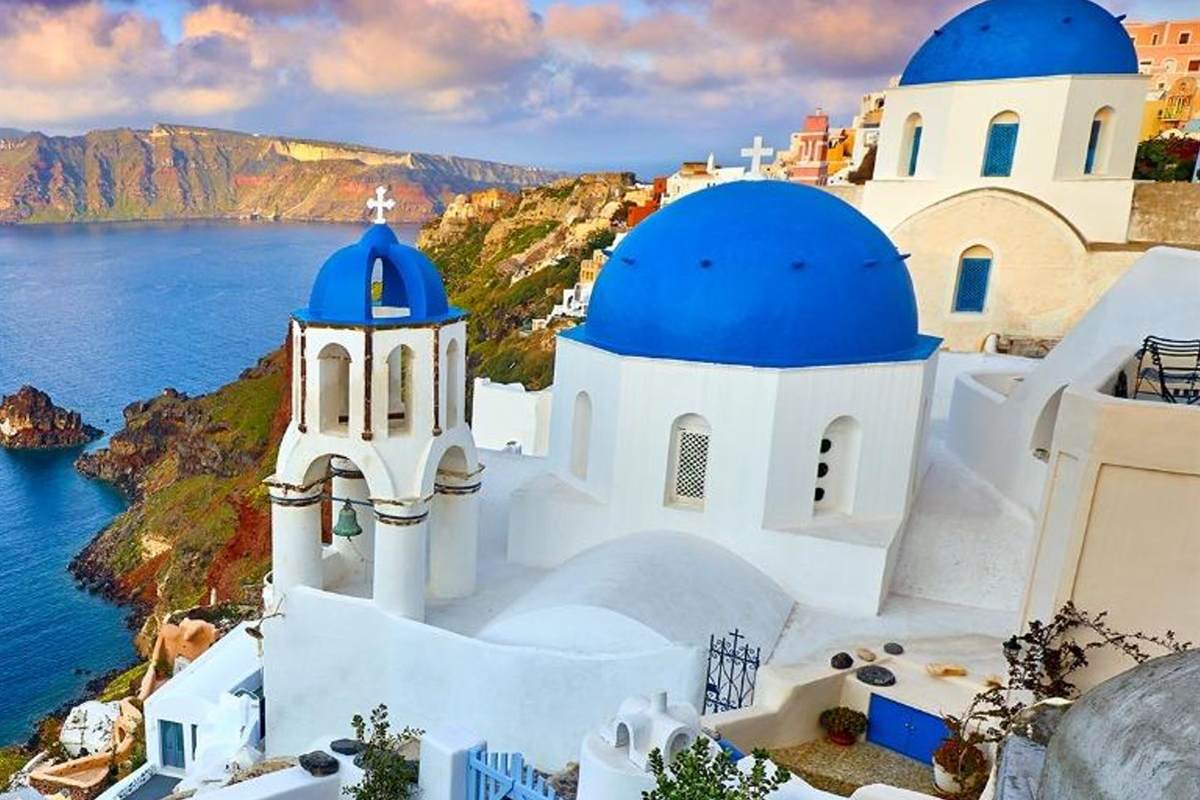
Match the picture in your head to the right region. Wikivoyage notes that whitewashed houses and blue-domed churches belong to the Cyclades alone. Architecture changes with local history. Corfu has pastel baroque homes, and Nafplion has neoclassical ones. Greece travel tips like this one keep you from booking an island that does not look like your picture.
Pace matters as much as place. One travel blog heard a woman on a ferry plan six islands in seven days. Its advice is to slow down. A trip report suggests at least three nights on each lesser-known island. Lonely Planet names quieter ones such as Amorgos and Kythira. Slowing down is one of the clearest Greece travel tips.
Use these Greece travel tips as a map. Road Scholar says Athens, Santorini and Mykonos are iconic for good reason, and each island has its own atmosphere. One travel site suggests riding north from Athens to Meteora, or west to the Ionian. The next sections cover:
- Seasons, entry rules and money.
- Buses, trains, ferries and flights.
- Athens and the big islands.
- Heat, safety, food and customs.
- Beaches, ruins, tours and packing.
Which season do Greece travel tips recommend for the sea, the cities and the hills?
Greece travel tips point to late spring, June, September and October for pleasant weather. July and August suit swimming and island days but bring heat and crowds. Winter favours the cities, the hill villages and quiet ruins, as one travel site describes it.
Wikivoyage states that summers are hot and dry, with seven months of near-constant sunshine from April to November. The height of summer runs from mid-July to mid-August, and the midday sun grows very strong. About three quarters of all visitors arrive between late spring and September. Greece travel tips for July and August therefore start with booking ahead.
For hills and cities, Greece travel tips favour spring and autumn. That travel site says the sun is out and ferries run, with hikes on Crete and wine tasting in Nemea. Winter, from November to March, slows the islands, and island hotels and ferry routes cut back. The mainland comes alive, with mountain villages, quiet ruins and cafes in Thessaloniki.
Wind changes sea trips, so Greece travel tips about weather must name the meltemi. This is the Aegean Sea’s dry north wind. It starts in the last weeks of spring and lasts until mid-September. Sailors find it dangerous, because a clear sky gives no warning before it arrives. Gusts reach Beaufort force 7 to 8.
Gusts peak in the afternoon, and the evening brings calmer air. Even so, a single spell can run on for days without stopping. In the hottest weeks it cools the country. At that strength, Wikipedia states that inter-island ferries mostly stay at the dock. Its direction follows the sea:
- Northern Aegean: from the north-east or north.
- Central Aegean: from the north.
- Southern Aegean and around Crete: from the north-west.
What do Greece travel tips say about passports, visas and entry rules?
Greece travel tips start with the passport. Greece follows Schengen rules. A visa-free visitor from a listed country can stay for 90 days, counted over a rolling 180 days. The passport needs a 3-month cushion beyond the day you plan to leave the Schengen area.
Greece travel tips depend on nationality. Wikivoyage states that EEA and Swiss citizens need no visa, only a valid ID card or passport. Lonely Planet says citizens of more than 60 countries enter visa-free for a total of 90 days, counted over 180. The Greek Ministry of Foreign Affairs holds the list. Everyone else applies for a Schengen visa.
The gov.uk page sets two passport checks for British passports. The passport must be less than 10 years old on the day you arrive. Its expiry date needs 3 months or more beyond your exit from the Schengen area. A traveller without a valid travel document is denied entry. One travel page calls six months of validity a good idea.
Greece travel tips also cover the border desk. The gov.uk page says staff can ask for a ticket out of Greece and proof of enough money. Stays elsewhere in Schengen during the past 180 days also use up your 90. Overstaying can mean a ban of up to 3 years. A longer stay means applying for a national visa.
Greece travel tips now mention the Entry/Exit System. The gov.uk page says it replaces manual passport stamps, and travellers can be asked to register fingerprints and a photo. Allow extra time. Wikivoyage adds that operators can check identity before passengers board ferries, even between Schengen countries. Get travel insurance, and check the official Greek and EU pages for current rules.
How do Greece travel tips handle cash, cards, ATMs and tipping?
Greece travel tips agree on one habit: carry cash as well as a card. Greece uses the euro, and cards work in towns and tourist places. Small villages, kiosks and beach tavernas can be cash only. Island ATMs can go offline for a day or two.
Cards and phones work well in cities. One travel page says contactless payment is common, and mobile payments work in urban areas. Do not assume every shop in a mountain village keeps up. Lonely Planet says cards are not always accepted on smaller islands. Ask a restaurant or bar in advance whether it takes them.
Lonely Planet finds ATMs in every Greek town large enough for a bank and in almost all tourist areas. An island machine can lose its connection for a day or two, even for locals. Withdraw more than you need while one works. Greece travel tips also favour ATMs of Greek banks, because stand-alone machines give bad conversion rates.
Greece travel tips are firm on currency. When a machine offers your home currency or the local one, pick the local one. The travel page above calls the conversion on offer the worst choice. Wikivoyage says cards used directly can give better rates than changing cash. A machine can also reject a 5-digit PIN, so switch to 4 digits.
Greece travel tips call tipping casual. Lonely Planet says a service charge is normally on the restaurant bill. A tip is not expected, but it is always appreciated. Taxi riders round up the bill. Wikivoyage says no tipping percentage is set, and guests leave a tip on the table by how happy they were. A quick coffee needs no tip.
What do Greece travel tips say about buses, trains, the metro and taxis?
Greece travel tips for the mainland name four tools. KTEL buses link towns across the country. Trains run from Athens to Thessaloniki and south to the Peloponnese. The Athens Metro reaches the airport, and taxis fill the gaps.
KTEL is the national bus network, a cooperation of 62 regional companies, each named for its region. Wikivoyage calls it efficient and reliable. The companies work on their own, so online information varies, though booking online works at least between major cities. Greece travel tips add a warning: at remote ruins, the bus can stop up to a mile away.
The railway is small. Wikipedia describes regular, express and Intercity trains, with seat reservations and a bar on the long-distance services. It lists Athens to Thessaloniki at about five hours. The suburban line to Corinth and Kiato is the only passenger rail from Athens to the Peloponnese. Greece travel tips add a check: buses replace trains between Larissa and Volos.
The Athens Metro has three lines, green, red and blue. The blue Line 3 runs to the airport, where metro and suburban trains share one platform. Not every train goes there; those with an airplane logo do. Wikivoyage lists metro hours from 5:30 to 00:30, later on Friday and Saturday nights. Stations such as Syntagma show finds from the digs.
Taxis are hailed on the street, and Wikivoyage says to insist on the meter. Ride-hailing apps work in Athens too. It adds that strikes by taxi drivers and public transit are common, so watch the local news. For drivers, Greece travel tips note twisting mountain roads, hard Athens traffic and rental terms that can bar ferry trips.
How do Greece travel tips explain ferries, island hopping and flights between islands?
Greece travel tips for the sea start at the three ports of Athens: Piraeus, Rafina and Lavrio. Ferries and fast boats serve the island groups, and flights from Athens reach the larger islands. Book ahead in summer, and keep slack in the plan.
Piraeus is the main port. Wikivoyage says it covers a huge area, so check your gate number and allow time in summer. Rafina, close to Athens airport, serves Andros, Tinos and Mykonos. Lavrio serves Kea and Kythnos. KTEL regional buses run to both. Greece travel tips add that leaving from Rafina can be better for Mykonos and Tinos.
Wikivoyage names two kinds of ferry, ordinary boats and speedboats. In the Cyclades it gives four to five hours to the nearest islands and eight to ten hours to Santorini. Fast boats take half the time. In summer, popular boats sell out, and the mid-August holiday fills them. A travel blog adds: arrive on time, as ferries turn around quickly.
Weather and strikes stop sailings. Wikivoyage says rough winter weather can keep boats in port for days, and the port authority decides. A travel blog tells of a strike that cancelled a ferry and left a couple eight hours at Piraeus. Greece travel tips therefore ask for slack: never plan a morning sailing and an afternoon flight home.
Flying saves long hours. Wikivoyage puts much of Greece within an hour’s flight of Athens or Thessaloniki. Flights from Athens serve Mykonos, Paros, Naxos, Santorini, Milos and Syros, mostly daily. Sometimes flying is more practical to Crete or Rhodes. Road Scholar suggests wheeled bags for airports and ferry terminals. Greece travel tips for both: pack light.
Which Greece travel tips help you plan a short stay in Athens?
Plan two to three days in Athens. One travel page says to stay at least three full days. Another says two days cover the classical heart: the Acropolis, its museum, the Agora and Plaka. These Greece travel tips start with the Acropolis, then add the museums and the old quarters near its foot.
Book the Acropolis first, because it is the one sight in Athens that needs advance planning. Timed-entry tickets are mandatory, and staff let you into the queue less than 15 minutes before your slot. Allow at least one hour on the rock, or two hours for history and photography. The Parthenon was built there in the fifth century BC.
The rock has no shade. One travel page says summer heat hits hard, especially in Athens and on the mainland. It calls early starts and midday breaks essential. These Greece travel tips point to the air-conditioned Acropolis Museum at peak heat. Wear shoes with grip. The marble is slippery, and pointed heels damage it, so sensitive sites ban them.
Use these Greece travel tips to fill the cooler hours in the old quarters at the foot of the hill. Plaka has restored nineteenth-century houses, car-free streets, shops and restaurants. Monastiraki sells antiques, crafts and souvenirs. Nearly all ancient sites lie within two kilometres of the Acropolis. A mostly car-free walk links the Acropolis, Thiseio and Kerameikos.
Greece travel tips for museums start with the National Archaeological Museum, the largest in Athens and very crowded. It holds treasures from Mycenae, wall paintings from Santorini and the Antikythera mechanism, the oldest known mechanical computer. Wikivoyage says to plan more than one visit, so do not try to see it all in one go.
Which Greece travel tips fit the big islands: Santorini, Mykonos, Crete and Rhodes?
Treat each big island as a trip of its own. Lonely Planet says every island offers something different. Each one has its own roads, buses and quiet months, so make a plan for each. These Greece travel tips take Santorini, Mykonos, Crete and Rhodes one by one, in that order.
Santorini is a crescent of cliffs around a sea-filled volcanic crater. Greece travel tips for Santorini start with the buses, which meet at Fira, so crossing the island means changing there. In peak season the buses fill at the start and skip stops. Quads and scooters are for hire. December through March counts as the off-season.
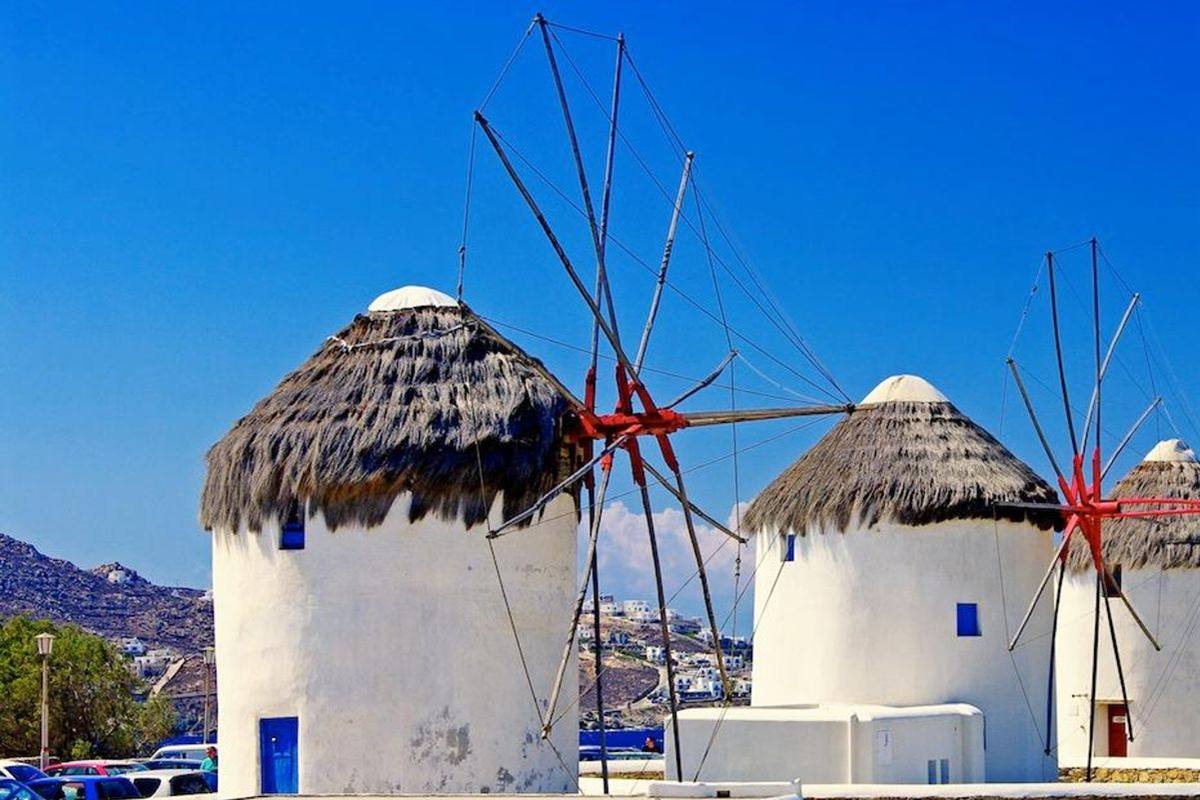
Mykonos is 12 to 15 kilometres long and ranks among the smallest Cyclades. Mykonos Town has two bus stations, 20 minutes apart on foot. About 30 taxis serve the island, and they have no meters. Cars cannot enter the town. July and August are extremely crowded. Late spring, June and September to mid-October are better times to go.
Crete tops the Greek islands by size and ranks fifth among Mediterranean islands. A main highway runs along the north coast, where the vast majority of visitors stay. Greece travel tips for Crete add that the south coast is largely undeveloped, because the terrain is rugged. The roads are challenging, so the island needs time to explore.
Rhodes keeps a walled medieval city that UNESCO has put on its World Heritage list. The east coast has nearly unbroken sand and calm water, while the windier, stonier west suits surfing. Buses run out of Rhodes town, and mopeds are popular. Use these Greece travel tips at Prasonisi: without a 4×4, think twice before driving over the sand bar.
What do Greece travel tips say about heat, sun and staying safe?
Greece travel tips on safety start with the sun and one phone number. Drink water, wear a hat, use sunscreen and rest through the midday heat. Set your phone for emergency alerts, and call 112 in any emergency, including a fire.
Heat leads the natural dangers in Greece travel tips from Wikivoyage. Athens has had periodic summer heat waves above 38 degrees Celsius, and Cyclades islands have very little shade. At archaeological sites in the hottest months, carry water and an umbrella. On hikes or walks to far beaches, wear a hat and sunscreen and skip the hottest hours.
Water needs a plan in Greece travel tips. One page says tap water is safe in Athens, Thessaloniki and the bigger islands. Smaller islands use desalinated or delivered water. Lonely Planet warns about the tap on a number of islands. Ask your hotel and carry bottled water. Pharmacies show a green cross, and pharmacists handle basic health problems.
Wildfire advice belongs in your Greece travel tips from April to October, the high-risk season on the gov.uk page. Allow emergency alerts on your phone and put cigarettes out fully. Take your litter away, because glass is known to start fires. An accidental wildfire still counts as a criminal offence here. If you see a fire, call 112.
The gov.uk page says a Global Health Insurance Card or a European Health Insurance Card unlocks medically necessary state healthcare. Neither replaces travel insurance. The same page calls thefts of passports, wallets and handbags common on the metro and in crowded places. Split your valuables between pockets and bags. Cars do not always halt at crossings.
How do Greece travel tips cover meals, eating times and local customs?
Greece travel tips for meals begin with the clock. Greeks eat lunch in the mid-afternoon and dinner late in the evening, and the meals are slow and shared. A taverna is the place to sit down, order dishes for the whole table and stay a while.
Eating times in Greece travel tips run late. Wikivoyage puts lunch at about two to three in the afternoon. Dinner runs from nine to eleven at night, though places that serve visitors open from noon. One travel page says shops can close for a midday break called mesimeri, between two and five. It calls disturbing people then impolite.
The core of Greece travel tips on ordering is sharing. A taverna is a small restaurant focused on traditional Greek cooking, and an ouzeri serves small plates. Wikivoyage says dishes are large, even the starters, and meant for sharing. It suggests one dish per person and maybe one extra for the table. Ordering only salads and sides is quite normal.
Water and bread arrive soon after you sit down. A small free dessert follows when you ask for the bill. Plates traditionally stay on the table until you leave. Greek coffee is thick, strong, black and moderately sweet unless you say otherwise, and it comes in a small cup. In summer, try a frappe, which is shaken iced coffee.
Local customs in Greece travel tips are simple. Say good morning or good evening when you enter a shop or cafe. Wikivoyage notes that Greeks wait for the newcomer to speak first, so your hello turns a quiet room friendly. Churches and roadside shrines call for modest dress and a quiet voice. Cover your shoulders and knees before going in.
What do Greece travel tips say about beaches, swimming and the sea?
Greece travel tips for the sea start with timing. From July to September the southern Aegean and the Ionian suit swimming well. The water stays warm into October. Beaches differ, so check the shore, the sea floor and the flags first.
Sea temperatures vary by area in Greece travel tips. A climate page puts the central Aegean, around Naxos and Mykonos, at 24 degrees Celsius in August. Around Crete and Corfu the water is a little warmer, and Heraklion reaches 25 degrees. A sailing page names the south-east Aegean, around Kos and Rhodes, as the warmest area all year.
The sailing page calls late August the warmest time and late February the worst for swimming. Shallow bays run up to two degrees warmer than open water. Another travel page warns of rough surf and riptides on windy islands such as Mykonos, Andros and Karpathos. Wikivoyage says beaches can shelve steeply, so ask locally if you are unsure.
Greece travel tips also cover the sea floor. One travel page says sand mixed with pebbles is common on Greek beaches, with tiny rocky coves too. Shoes made for a rocky seabed help there. Sea urchins sit on flat rocks in the shallows, and their spines hurt. Wikivoyage says jellyfish stings can be severe. Naxos has shallow beaches for families.
In these Greece travel tips, the majority of beaches are free to enter. A six-metre gap separates commercial areas so bathers reach the shore. Sun beds and umbrellas are optional extras. Lifeguards work at big resort beaches, not remote coves, so assume no flag means no lifeguard. Look for the Blue Flag, a certificate for quality, safety and services.
Which Greece travel tips apply to museums, ruins and sacred sites?
Greece travel tips for sites start with the calendar. Ministry of Culture museums open on seasonal hours, and the majority are closed on Tuesdays. Doors stop admitting visitors 20 minutes before closing time. Check the Ministry page for your site before you go, because hours change.
Hours change with the season in Greece travel tips. In winter the Ministry lists 08:30 to 15:30, or 09:00 to 16:00 for major museums, and summer hours are longer. Museums close on 25 March, 25 and 26 December, and Orthodox Easter Sunday. The Ministry website announces changes and free-entry days, including the last weekend of September. Call ahead to confirm.
Open-air ruins call for early starts in these Greece travel tips. Wikivoyage says the Delphi sanctuary fills with classes and package groups from 10:00, so arrive early. The site has no restrooms, but the museum nearby has them. Olympia lies 20 minutes on foot from its village, and you cannot shelter from hot sun or from rain.
Meteora needs its own plan in Greece travel tips. Six monasteries are open, with one weekly closing day for each in summer. Men cover their knees with trousers. Women need a skirt or sarong, and shoulders stay covered. Entrance staff lend skirts. In high season, tour groups crowd the chapels, so go early. Photos are banned inside the inner sanctuaries.
Permits and photos need a check. Mount Athos is an autonomous monastic region, and by Greek law and tradition women are prohibited from entering. Visitors first need a special permit, the diamonitirion. The approach is by boat from Ouranoupoli, the main gateway. Elsewhere, Wikivoyage says a museum can ban photography without a permit, and others ban only flash or tripods.
Which Greece travel tips help you choose a guided tour or a day trip?
Greece travel tips for tours start with the place. Choose a guided tour where the story is hard to read alone, such as Delphi or Mycenae. Choose a boat day where the sights sit on the water, such as the Santorini volcano.
Greece travel tips from Wikivoyage say a tour pays off where information is not obvious to a casual visitor. Delphi is a set of buildings raised by people grateful for the oracle’s advice. At Mycenae, the golden exhibits in the museum are copies, because the originals are in Athens.
Meteora shows how Greece travel tips handle distance. The drive from Athens takes about four hours. Tours start from Kalambaka, the nearest town, and offer hotel pick-up. Meteora has 24 monasteries, and 6 are open to visitors, each closed one day a week in summer. Check that your tour guide is licensed to enter them.
Boat days have their own Greece travel tips. On Santorini, a 20-minute ferry trip from Thira reaches the volcanic island of Nea Kameni. Steam and sulphur vents line the climb. On Milos, the sea caves of Kleftiko are reached mainly by boat. Cape Sounion is a popular day outing from Athens, with sunset a sought-after sight.
Aegina, Poros and Hydra are close to Athens, and day trippers sail to them from the port of Piraeus. Aegina is barely an hour away, so it is the easiest. Road Scholar calls advance reservations a must in summer on Santorini and Mykonos, so book boat days early.
Check the group, as these Greece travel tips advise. A motorcoach holds 45 to 55 people, so coach tours skip the smallest sites. Small groups can sometimes reach places closed to the public. Ask what the tour includes: transport, entry tickets, meals. A meeting point is where you arrive on time; a pick-up means the vehicle collects you.
What do Greece travel tips say about packing, plugs, phones and language?
Greece travel tips for packing are light layers, sturdy walking shoes, a hat, sunscreen and a plug adapter. Phones work as usual inside the European Union, English is widely understood, and four Greek words earn a warm welcome.
Greece travel tips from Road Scholar say to pack light. Bring layers: short sleeves plus a sweater or jacket for cool evenings. Lonely Planet adds quick-drying tops for summer heat, sturdy walking shoes for cobbled roads and insect repellent. Add a hat, sunscreen, a reusable bottle for water and a small backpack.
Plugs need one check. Wikivoyage lists 230 volt, 50 hertz and Europlug and Schuko sockets. Road Scholar calls 230 volts the standard across much of Europe and tells visitors to pack a travel adaptor. Read the label on each charger before you leave.
Phone tips in Greece travel tips are short. EU citizens pay no internet roaming charges, so their own SIM card works as at home. Others can buy a Greek SIM card, which needs identification, or a virtual SIM bought at home. Cafes offer free Wi-Fi, so ask for the password. Milos has places without coverage, so download offline maps.
Language takes little effort in Greece travel tips. English leads the foreign languages studied and understood in Greece, and Wikivoyage expects basic English from almost everyone in tourism. Road signs show place names in Latin letters too, but spellings differ: Heraklion, Iraklion and Heraklio are the same city.
Learn four words: kalimera for good morning, kalispera for good evening, parakalo for please and efharisto for thank you. A second travel page says a greeting is expected when you enter a shop or cafe. Wikivoyage adds that the capital letters of the Greek alphabet look much like English ones.
What else do travellers ask about Greece travel tips?
Which Greece travel tips help visitors with limited mobility?
Plan ahead, because access is uneven. Lonely Planet says the majority of Greece’s accessible sights, hotels and restaurants are in Athens. Elsewhere, stones, marble pavers, slippery cobbles and stepped alleys create barriers for people with mobility issues. Road Scholar names uneven streets, a lack of elevators and steep ramps.
Lonely Planet’s Greece travel tips add that careful planning before you leave makes a world of difference. Online resources link to local articles, resorts and tour groups that cater to travellers with physical disabilities. The gov.uk foreign travel advice page links to its own advice on disability and travel abroad.
What changes when you travel to Greece with children?
One travel site calls Greece with children surprisingly easy. Its Greece travel tips for families list castles to climb, myth-filled ruins and boat rides that double as sightseeing. Long ferry rides can test younger children, so choose shorter hops. Naxos has shallow beaches, and Nafplio has a car-free old town with a castle on a hill.
Greece travel tips for meals are relaxed: tavernas are casual, and children are welcome even late. Staff will split or adjust dishes, as there are no children’s menus. Supermarkets and pharmacies stock nappies, formula and baby food, but plan ahead in small villages. Strollers do not work on cobbles, steps or ruins, so pack a baby carrier.
Is Greece safe for solo travellers and women?
A major travel site’s Greece travel tips call the country generally very safe. They say solo travel, including for women, is common and largely hassle-free. Strangers help with directions. Smaller towns and islands feel even safer, with a slower pace, fewer crowds and a strong sense of community.
These Greece travel tips for solo visitors carry one warning from Wikivoyage: do not hike cross-country alone. Even in popular places, the countryside can be deserted. In trouble out of sight of houses and roads, it can be a long time before anyone notices you.
Lonely Planet names the tourist police, who work beside the regular police. Each tourist-police office has at least one member of staff who speaks English. The gov.uk foreign travel advice page adds links to general advice for women travellers and for solo and independent travel.
Which Greece travel tips cover the time zone, shop hours and holidays?
Wikipedia gives Greece a single time zone, named Eastern European Time and set at UTC+02:00 in winter. Daylight saving time adds one hour, from the final Sunday of March until the final Sunday of October.
Greece travel tips for shops start with Sunday, because every Sunday is a public holiday, as Wikipedia states. One travel site says Athens shops can open on Sunday. In villages, mountain towns and on the islands, bakeries, petrol stations and supermarkets close by midday or stay shut. Do not let the tank run low on Saturday night.
Easter, called Pascha, is one of the three main holidays, with Christmas and the Dormition. Its date follows the Greek Orthodox method. So it can fall one or two weeks later than Easter in Roman Catholic and Protestant churches.
How do toilets and plumbing work in Greece?
Two pages of Greece travel tips agree on one habit: used toilet paper goes in the bin, not the bowl. A travel blog writes that every bathroom has a small bin for it. Wikivoyage says the rule applies in parts of Greece, including the islands, to avoid clogging.
The blog says the bin habit feels odd for about one day and then feels normal. Wikivoyage adds a second point to its Greece travel tips. Toilets in restaurants and bars sometimes lack seats, so disposable seat covers help.