A Santorini cooking class puts you at a kitchen table with island tomatoes, fava and capers, then seats you to eat the dishes you cooked beside a glass of local wine. Browse more tours in Greece once you know how you want to spend your food day.
This page covers what a class is and what you cook, the island ingredients and dishes you meet, where a class takes place and how long it lasts, how wine and the vineyards fit in and the questions travellers ask, while the wider island plan sits on our Santorini tours page.
What is a Santorini cooking class, and what do you cook?
The Santorini cooking class is a lesson where you cook island recipes with a local chef. Then you sit down and eat your own meal. One class page puts the lesson and the meal together at about three hours.
You do not just watch a demonstration. Each guest cooks, and the chef stays with the group the whole time to give instructions. One host calls the lessons informal and relaxed, a balance of professional and home-style cooking. At the meal, another host talks about the island’s history and the traditions behind the food.
A Santorini cooking class can start before anyone lights the stove. In one home kitchen the day opens at the table with Greek coffee, homemade cookies and fresh lemonade. Then everyone rolls up their sleeves and cooks side by side. One restaurant lets guests cook with vegetables from its own garden.
The number of dishes depends on the class. One page promises four traditional dishes, and another promises five, followed by a meal at the end. Alternative main courses exist for allergies and dietary needs, so tell the host before the day.
Sample menus of a Santorini cooking class show the range. One lists a salad, fava with nuts and caramelized onions, and tomato fritters. Its dessert is loukoumades, Greek doughnuts with honey, walnuts and cinnamon. Another lists meatballs with tzatziki and pita, plus stuffed vegetables called gemista with a Greek salad.
Every Santorini cooking class also gives you something to keep. You get a copy of every recipe you cooked, and one class adds a personal certificate of attendance. You go home able to repeat the dishes in your own kitchen.
Which Santorini ingredients and dishes do you meet in a Santorini cooking class?
The menu of every Santorini cooking class rests on local crops: cherry tomatoes, fava, capers and white aubergine. Dry volcanic ground shaped each crop, and the chef turns them into salads, fritters and dips.
The cherry tomato leads the list in any Santorini cooking class. The island gets under 370 millimetres of rain yearly, so the plants live on dew and humidity near 71 percent. The fruit is dark red, firm and sweet with a sharp edge.
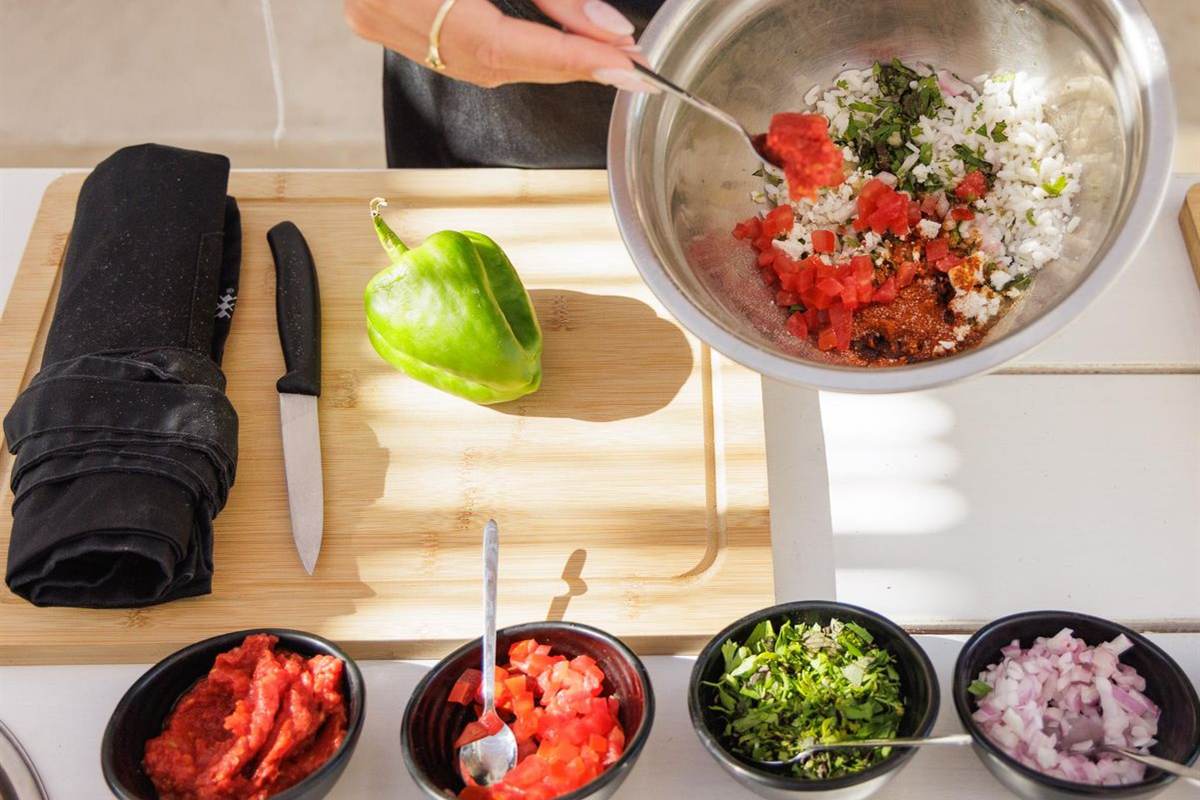
The class makes tomatokeftedes from crushed tomatoes. Cooks knead them with parsley, onion and mint into a flour dough, and fry the dough as an appetizer.
Fava is the other pillar of the menu. Families on Santorini and the nearby islands have grown its plant for 3,500 years. Jars of the seeds turned up in the ruins of Akrotiri. Cooks blend the cooked beans with chopped onion. The purée gets olive oil and lemon juice on top, and sometimes capers replace the onion.
The crop is delicate. In good weather a farmer harvests roughly 800 kilograms from each hectare. Strong winds can blow the flowers off before the plant yields any pea. A sudden heat wave or drought wrecks the crop almost instantly. Check the menu of your Santorini cooking class, because one menu says guests do not prepare the fava.
White aubergine has fewer seeds than the usual kind and a much sweeter taste. It has become a rare product on the island. Capers stay a traditional favourite, and one salad shows them off. One menu pairs them with cherry tomatoes, onions, cucumber, a local cheese and olive oil.
That cheese is chlorotyri, made from goat’s milk. A Santorini cooking class salad uses it, and locals spread it on bread as well.
Meat dishes are not part of the traditional diet, and livestock other than goats and donkeys is uncommon here. The exception is apochti, a pork loin cured with salt and brine, then dried in the summer air. Cooks rub it with pepper and cinnamon.
Sweets close the Santorini cooking class menu. Kopania are balls of powdered barley rusk with raisins, sesame seeds or nuts, rolled in roasted sesame. Melitinia is a sweet cheese pie of fresh mizithra, sugar and mastic, baked around Orthodox Easter.
Where does a Santorini cooking class take place, and how long does it last?
You find a Santorini cooking class in a village home, a restaurant kitchen or a winery. The class and the meal last three to four hours. A class with a winery tour fills about five.
Home classes run in a family house. One host teaches in a traditional dome house. Another uses a cave house in Megalochori, a village of old white churches and wineries. The Santorini cooking class there starts with a warm welcome. Guests sit down first for Greek coffee, cookies and lemonade, or for appetizers and local wine.
Restaurant classes run in two places. In Fira, one kitchen offers Cycladic cooking courses. Another kitchen belongs to a winery in Exo Gonia. There you cook with vegetables from the winery garden, then eat the meal in the restaurant. This Santorini cooking class ends at a table with the food you made.
The timing depends on the venue. One restaurant class and its dinner take about three hours and start at three in the afternoon every day. A home class lasts four hours, and the semi-private group starts at eleven in the morning. A winery class with lunch takes about three hours as well.
Before you leave, the host hands over the recipes, and one restaurant adds a certificate of attendance. So a Santorini cooking class gives you a menu to cook again at home. Ask for the exact start time when you book, because hosts change days and hours on request.


How do wine and the vineyards fit into a Santorini cooking class?
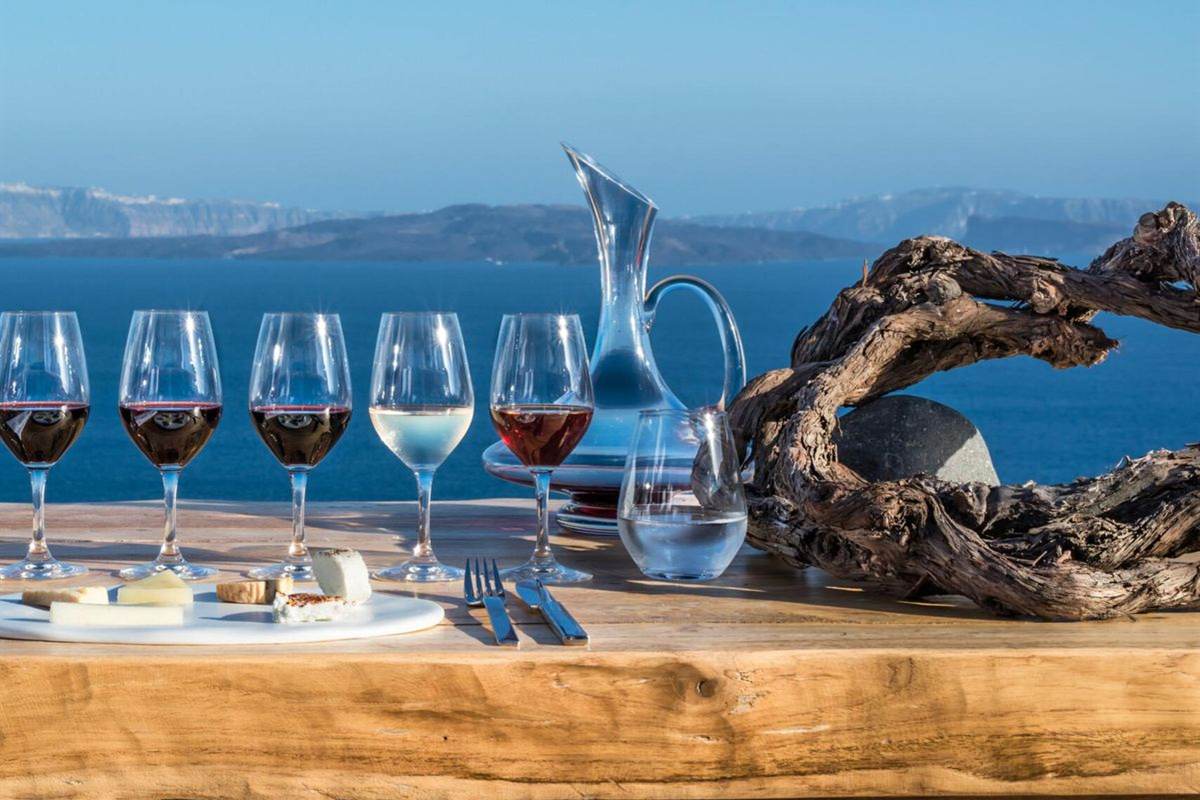
Wine joins a Santorini cooking class as a welcome drink, a glass of Assyrtiko and a pairing with lunch. Longer classes add a full tasting at a winery.
The simplest version pours one glass. A restaurant class gives each guest a glass of Assyrtiko, the white grape of the island, while the chef teaches. A home class opens with local wine and appetizers in the cave house, before anyone touches a knife.
A class at a winery goes one step further. The chef cooks in the restaurant of the estate. The lunch comes with wines from the winery’s own selection. Guests also learn about the wines made on the same land. Winemakers there build their range around Assyrtiko, so the glass in your hand matches the dish on your plate.
The longest Santorini cooking class is a tour in three steps. First comes a local winery with a guided tasting of eight wines, Assyrtiko among them. Next comes a traditional restaurant and winery, where a local chef leads a one hour class. Then you sit down to a slow lunch of the dishes you helped create, with more wine.
A driver collects you from your hotel on this five hour tour. Another version of the trip visits two wineries and still ends with a cooking lesson and a meal.
The wine villages lie close to the class venues. Megalochori and Pyrgos are the two villages where visitors tour local wineries. The wines of the island also carry a European protected label of origin. To see the vineyards themselves, pick a Santorini cooking class with a winery stop. Ask the host which wines they pour.
What else do travellers ask about a Santorini cooking class?
Can vegetarians and vegans join a Santorini cooking class?
Yes. Class menus list vegetarian options, and one operator sells a fully vegan lesson with a full meal. Another offers a vegetarian cooking menu and a vegetarian or vegan lunch on request. Every page asks you to name your diet at the time of booking, so do it in your first message.
A restaurant that runs a Santorini cooking class offers alternative main courses for guests with allergies or dietary limits. The class pages we read do not mention gluten-free cooking at all, so ask the host before you pay. A clear note early gives the chef time to plan your share of the menu.
Can children come to a Santorini cooking class?
Yes, with limits. One listing welcomes infants and toddlers in a pram or stroller. It adds that a grown-up aged over eighteen must watch the children all the time. The same listing says the class does not suit expectant mothers or wheelchair users.
Another operator keeps car seats ready on request. A third page tells parents to check the age policy before they bring kids. For a Santorini cooking class with young children, send their ages in your booking message. Wait for a written reply.
How big is the group, and can you book a private class?
Groups stay small in a Santorini cooking class. One class holds twelve guests, another stops at eight, and a third page gives a range of six to twelve. Small numbers let the chef see every pair of hands at the counter and answer each question. Group size sets how much time you get at the stove.
A private Santorini cooking class is also on sale. Two operators list private lessons, and one page gives two to four people as the private size. A home-kitchen host also cooks for events of up to twenty guests in her garden courtyard. That suits a birthday or a pre-wedding party.
Does the class include hotel pickup, and what goes in your bag?
One operator sends a free minibus to your stay or the closest spot the van can reach. Another listing includes transfers and shows the pickup points when you check dates. Not every operator offers a ride, so confirm it when you book your Santorini cooking class.
Bring a voucher on paper or on your phone. One operator also wants ID or a passport copy. The full names must match the voucher. Wear comfortable clothes, because you stand and move for hours. Eat lightly beforehand, as the lunch is large. Carry a little cash for extras or tips.
Do you take the recipes home, and how early do you book?
That depends on the host. One restaurant gives guests a copy of every recipe and a personal certificate of attendance. Another page says you leave with the recipes, printed or emailed. A third class says no recipes are provided, so take photos and notes at the counter.
Book two or three days ahead in summer. In July and August the busy operators fill up a week or more in advance. A morning Santorini cooking class is cooler in summer and leaves your afternoon free. Free cancellation runs from one to two days before the class, depending on the operator.
Ask each host to confirm the cancellation rule in writing. Written terms protect your plans if a Santorini cooking class date shifts. Keep the host email on your phone as proof. Then the booking stays easy to move or cancel.