
This turkey travel guide sets out the country for a first trip: its regions, the entry rules, the ways to get around, the seasons and the customs a visitor meets. The Greek half of a combined trip starts from the tours in Greece on the home page.
Each chapter below keeps to plain facts, from the airports, trains, buses and ferries to the UNESCO sites, mosques, food, money, time and the crossings to the Greek islands. The turkey map page shows the regions on a map, and the turkey package tours page sets out the tour plans.
What does this turkey travel guide cover?
This turkey travel guide covers a country on two continents: Anatolia in West Asia and East Thrace in Southeast Europe. Its chapters run from the seven regions to entry papers, airports and transport. They go on through seasons, UNESCO sites, customs, food, money and time, and end with the link with Greece.
Size comes first in a turkey travel guide. The country covers 783,562 square kilometres and holds over 86 million people, as the Turkey article states. Its official name is the Republic of Turkiye. Wikivoyage adds that the United Nations now writes the English name with the Turkish spelling, Turkiye.
The two continents meet at the water. The Geography of Turkey article says three waters separate East Thrace from Asia Minor, the Asian part. Three waters form that line: the Dardanelles, the Bosporus and, between them, the Sea of Marmara. The Anatolian side is the larger portion of the country, the article adds.
To Wikivoyage, the country is bi-continental and acts as a bridge between Europe and Asia. The bridge is cultural as well as geographical, it adds.
Ankara and Istanbul are the first two names to place in a turkey travel guide. Istanbul tops the list by size and acts as the economic centre. Ankara is the capital and ranks second in size. The Turkey article also names Izmir, Bursa and Antalya as other major cities.
Tourism in Turkey rests largely on historical sites and seaside resorts. The tourism article puts them on the Aegean coast and on the Mediterranean coast. At its height, the country drew around 52.6 million foreign tourists in one year. That reach is why a turkey travel guide needs a clear order.
The same article gives the big cities their own draws. It names Anitkabir, the mausoleum of Ataturk, as a landmark of Ankara. For Izmir it lists the beach areas of Cesme, Mordogan and Foca.
The chapters of this turkey travel guide follow the order of a trip:
- The seven regions and their towns
- Entry rules and the e-Visa
- The main airports
- Trains, buses and domestic flights
- Ferries and coast roads
- Seasons and climates
- UNESCO World Heritage Sites
- Mosque customs and Ramadan
- Food and drink
- Money, time and plugs
- The link with Greece
How do the seven regions shape a turkey travel guide?
Seven geographical regions give a turkey travel guide its frame. They date from the First Geography Congress, which met in Ankara in nineteen forty-one after long discussions. Four are coastal regions and three are inner regions, named for the seas and for their places in Anatolia.
The regions article says they exist for geographic, demographic and economic aims and mark no administrative division. A turkey travel guide reads them as chapters of the land. The list below gives one fact and one town for each.
- Marmara: the Sea of Marmara sits at its centre and gives the region its name. It holds the largest population of the seven, and Istanbul is its largest city.
- Aegean: olive oil matters for its economy. The seaside town of Ayvalik is known for olive oil and related products such as soap. Izmir is the largest city.
- Mediterranean: Wikivoyage describes pine woods climbing from an indented coast. Antalya leads the region by size.
- Central Anatolia: Ankara, the capital, leads by size. The region article adds Konya, Kayseri and Eskisehir to its list of large cities.
- Black Sea: its mountain plateaux offer forests, crater lakes, waterfalls and rafting, as the region article lists. Samsun is the largest city.
- Eastern Anatolia: it has the highest average altitude, 2,200 metres, and the lowest population density. Van is the province with the largest population.
- Southeastern Anatolia: Wikivoyage places the northern edge of the Fertile Crescent here, with ancient ruins, historic cities and bazaars. Urfa is a listed city.
Four seas name the four coastal regions: the Black Sea, the Aegean, the Mediterranean and the Sea of Marmara. The Aegean region’s own article gives it the longest coastline among the four. The three inner regions take their names from their place in Anatolia. That makes a turkey travel guide easy to sort.
A first trip can link four regions. Marmara offers Istanbul, the Aegean offers Ephesus, the Mediterranean offers Antalya and Central Anatolia offers Cappadocia. The Black Sea, the east and the south-east fit a later trip. That split sets the order of this turkey travel guide.
Which entry rules does a turkey travel guide list?
A turkey travel guide starts with the entry rules. A visitor who needs no visa gets a 90-day limit inside each rolling 180 days, as Wikipedia lays it out. The passport needs a margin of sixty extra days after the longest stay allowed. Both limits appear on the visa policy page.
Wikipedia sorts travellers into “visa nationals” and “non-visa nationals”. A visa national must get entry clearance before the trip, from the Turkish mission that covers the place of residence. A non-visa national can arrive as a visitor. Any turkey travel guide therefore begins with the question of which group your passport falls into.
A turkey travel guide cannot repeat the long visa-free list of Wikivoyage. Australia, Canada, Japan, New Zealand, South Korea and the United States all appear there. Each entry carries 90 days unless a shorter period is listed beside the country. Wikipedia’s table gives the shorter periods as 60 or 30 days per entry.
A turkey travel guide also notes the ID card route. Wikipedia names Belgium, Bulgaria, France, Germany, Greece, Hungary, Italy and Spain. Citizens of these countries can enter on a national ID card. A Council of Europe agreement lies behind it. Wikivoyage adds two conditions: the traveller arrives directly from home, and the card is the biometric version.
The e-Visa is the online route for short visits, and Wikipedia names the Turkish Foreign Office as its owner. A conditional e-Visa also exists, with a single entry and a stay of up to 30 days. Wikivoyage notes that work or study needs a visa from a Turkish consulate. A turkey travel guide treats the e-Visa as a short-visit tool.
A turkey travel guide ends the entry chapter at the border desk. Entry permission is required, Wikipedia notes, from every person who lacks the right of abode. Its photographs show an entry stamp and an exit stamp, both issued at Istanbul Ataturk Airport. Further visa types on the page cover conferences, cultural activity and archaeological excavation.
Which airports open a turkey travel guide?
Istanbul Airport, the largest airport of the country, opens this turkey travel guide. Wikipedia places it at Arnavutkoy, a district on Istanbul’s European side. Sabiha Gokcen is the second international airport of the city, and it lies on the Asian side.
The site of Istanbul Airport lies north of the centre, between the Black Sea towns of Yenikoy, Tayakadin and Akpinar. The inauguration fell on October the twenty-ninth. The move of all scheduled passenger flights away from Ataturk Airport came on the sixth of April, one year later. A turkey travel guide dates the working airport from that day.
The main terminal of the first stage is built for 90 million passengers a year. Wikipedia ranks that building third among airport terminals in the world. The page lists 84,513,937 total passengers in its latest full year. When every stage is finished, capacity is to reach 200 million. Metro line M11 runs to the airport station.
Sabiha Gokcen stands in Pendik, 32 km southeast of the centre, as Wikipedia measures it. It opened on the eighth day of January, two thousand and one. The name honours Sabiha Gokcen, the adoptive daughter of Ataturk. She was the first female fighter pilot in the world. Metro line M4 serves the airport station.
This turkey travel guide places three airports on the south-west coast, as Wikipedia counts them: Dalaman, Milas-Bodrum and Antalya. Dalaman has an old domestic terminal and a new international one. Its listed areas include Oludeniz, Dalyan, Kalkan and Marmaris. Milas-Bodrum Airport serves the towns of Bodrum and Milas and stands 16 km south of Milas.
Izmir Adnan Menderes ranks fifth in Turkey by passengers, after Istanbul Airport, Sabiha Gokcen, Antalya and Ankara Esenboga. Its highway continues south through Selcuk and Aydin. For Cappadocia, a turkey travel guide names two airports. The terminal at Nevsehir Kapadokya covers 3,500 square metres. Kayseri Erkilet is an air base that also takes public flights.
Domestic flights join them. Wikivoyage lists an hourly flight on the Istanbul to Ankara route. Each city has one flight a day or more, it adds. Reaching another Turkish city from abroad normally means changing planes in Istanbul. A turkey travel guide allows close to two hours for it. Ask the first airport whether the bags are checked through.
How does a turkey travel guide explain trains, buses and domestic flights?
A turkey travel guide sorts the mainline trains into three kinds, as Wikivoyage does. They are very fast and modern, slow and scenic, and suspended for rebuilding. The state railway, TCDD, is the train operator. Buses and flights then cover the gaps that the rails leave across a country this large.
The YHT, short for yuksek hizli tren, is the fast service. This turkey travel guide takes the network length from Wikipedia: 1,385 km, serving Istanbul, Ankara, Eskisehir, Izmit, Konya and Sivas. The top speed is 300 km/h, with fifteen daily trips between Ankara and Istanbul. Wikivoyage adds that the trains run by day only and serve snacks.
The Ankara line first reached Pendik, on the Asian shore of Istanbul. Later the trains passed through the Marmaray tunnel to Halkali, on the European shore. Wikivoyage puts Istanbul to Ankara or Konya at under five hours.
The slow trains run mainly overnight and are infrequent. Ankara to the eastern cities takes 24 hours. Online booking on the state railway opens only 15 to 30 days ahead. The Aegean and Mediterranean resorts have no rail link at all, Wikivoyage notes.
So a turkey travel guide turns to the bus. The network has air-conditioned coaches and reserved seats. Go to the otogar, the bus station of a big city. A bus to almost any destination leaves within half an hour, or within a couple of hours. Buses leave Istanbul from at least three stations.
This turkey travel guide explains the dolmus, a minibus on a near-fixed route. In Istanbul it carries up to seven seated passengers and leaves when full, hence the name, from dolmak, to fill. For flights, Wikivoyage says Istanbul and Ankara have a link every hour. Every city has at least one flight a day.
For cars, a turkey travel guide notes that rental desks stand at the main airports. Driving is on the right. Motorways, called otoyol, carry green signs and route numbers starting with the letter O. Brown signs lead to places of tourist interest, such as ancient sites. Tolls use an electronic sticker called HGS, sold at toll stations and post offices.
How does a turkey travel guide explain ferries and coast roads?
A turkey travel guide counts the ferry as a road on water. Wikivoyage describes fast catamaran ferries, called hizli feribot, that run at 50 to 60 km/h. They link Istanbul with the far shore of the Sea of Marmara. The same source says they can cut travel time dramatically.
From Istanbul, the same page reckons two hours to the Bursa bus station. Under an hour of that is the boat ride to Yalova. In summer every inhabited Turkish island has at least one daily sailing to the nearest mainland town. In winter, this turkey travel guide repeats, sailings are fewer and weather disrupts the schedule.
On the Bosphorus, Wikipedia names public ferries from Eminonu, Karakoy, Besiktas, Kadikoy and Uskudar for short hops across. Private ferries run only as far as one of the first two bridges. Catamaran sea buses stop at fewer piers. Both kinds also serve the Princes’ Islands. A turkey travel guide can treat the strait as a commuter route.
Farther west, Wikipedia states that passenger and vehicular ferries cross the Dardanelles daily. The Canakkale Bridge links Lapseki, on the Asian shore, to Sutluce, on the European shore. Sutluce is a village of the Gelibolu district. Wikivoyage calls it the longest suspension bridge in the world. This turkey travel guide treats bridge and ferry as two ways over one strait.
Three bridges cross the Bosphorus, and a turkey travel guide can list them from Wikipedia. The first two sit on the motorways O1 and O2. The third, the Yavuz Sultan Selim Bridge, lies between Garipce and Poyrazkoy. It carries eight lanes of the O7 and a double-track railway. About 1,400 metres of the Marmaray rail tunnel run under the strait.
On the south coast, highway D400 follows the shore from Fethiye to Antalya and on east, says Wikivoyage. Long-distance buses from Istanbul or Izmir skip Demre. A change in Fethiye gives dolmuses along the D400 to Kalkan, Kas, Demre and Finike. This turkey travel guide adds that Turkey has more coastline than any other Mediterranean country.
Which seasons and climates shape a turkey travel guide?
A turkey travel guide has to describe each climate on its own, because the country has no single weather. The south and west coasts have a Mediterranean climate, Wikipedia states. Rain falls in winter, which stays mild to cool, and summer is hot and dry. Other regions follow other rules.
Wikivoyage warns that the Mediterranean label fits the southern and western coasts, not the whole country. The Marmara shores differ again. Wikipedia describes their winters as cool, wet and sometimes snowy. Their summers are warm to hot but only moderately dry. The Black Sea, the plateau and the east each keep their own calendar.
The Black Sea coast is the wet side of the map. Wikipedia reports high rainfall spread evenly through the year, with warm, humid summers and cool, damp winters. The eastern end of that coast gets 2,500 millimetres in an average year, more than anywhere else in Turkey. A turkey travel guide packs a rain jacket for that shore.
The sea decides the swimming season. The Black Sea water stays between 8 and 20 degrees Celsius all year. The beach resorts of the Turkish Riviera sit on the south-western and southern coast. Wikivoyage adds that summer heat there reaches 35 degrees Celsius very regularly. A turkey travel guide points swimmers to the Aegean and the Mediterranean.
Inland Turkey follows a continental pattern. Central Anatolia has hot, dry summers, cold, snowy winters and the lowest annual rainfall of the seven regions. Spring and autumn sit between the heat and the cold, which suits the inland sites. Wikivoyage still names spring as thunderstorm season there, so a turkey travel guide checks the forecast.
The east has the highest temperature difference between seasons. Winter precipitation falls as snow and lies on the ground for a long time. Wikivoyage reports night temperatures below minus 18 degrees Celsius there. Winter sports follow the snow. Wikivoyage calls Uludag the major winter sports resort of the country. A ski centre also stands on Mount Erciyes.
Which UNESCO sites anchor a turkey travel guide?
Turkey has 22 World Heritage Sites on the list, 20 cultural and 2 mixed, as the Wikipedia list states. A turkey travel guide uses them as anchors, because each site fixes a place and an age on the map. Mixed means listed for both cultural and natural values.
The first entries came at the ninth session of the World Heritage Committee. They were Goreme with Cappadocia, the Great Mosque and Hospital of Divrigi, and the historic areas of Istanbul. A turkey travel guide marks four more big names in one clause each:
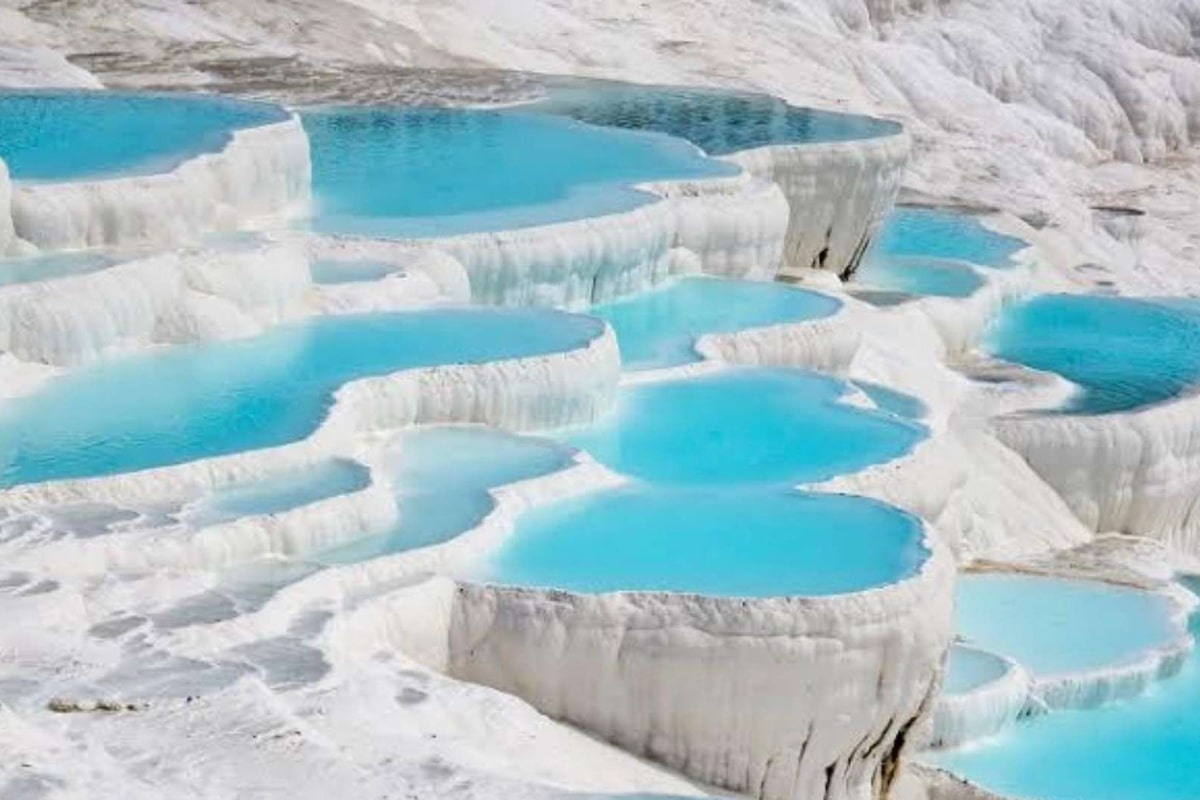
- Hierapolis-Pamukkale: petrified waterfalls and terraces, beside Hierapolis, founded as the second century BC drew to a close.
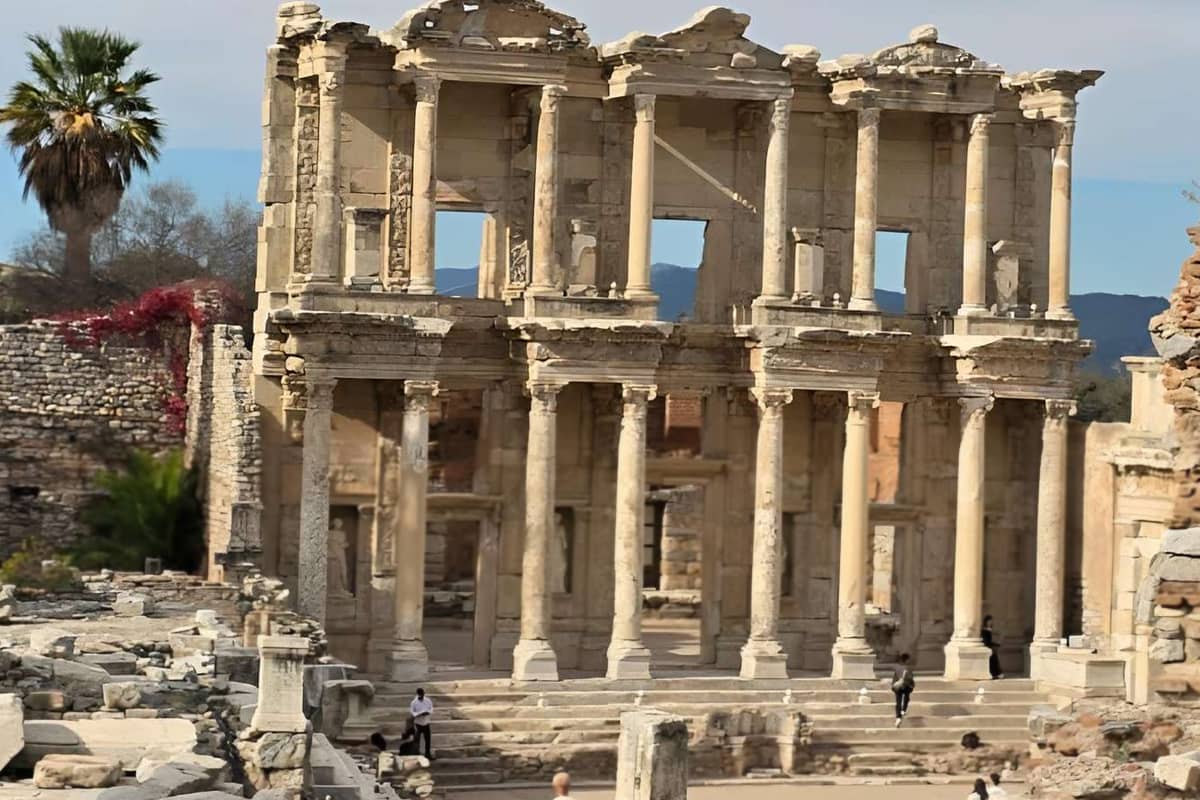
- Ephesus: the Basilica of St John drew Christian pilgrims from the fifth century on, as did the Virgin Mary’s house.
- Troy: more than four millennia old, and a key influence on Homer’s Iliad and Virgil’s Aeneid.
- Pergamon: the Attalid capital founded in the third century BC, bequeathed to the Romans in the second.
Two entries reach back to the Neolithic. Gobekli Tepe in Sanliurfa dates to the Pre-Pottery Neolithic, between the tenth and ninth millennium BC. Wikivoyage calls its stones the world’s oldest known megaliths. Catalhoyuk adds roof-access dwellings, wall paintings and reliefs. A turkey travel guide treats both as the oldest chapter of the country.
The mosque-hospital complex at Divrigi was founded in the early thirteenth century. Safranbolu flourished from the thirteenth century as a crossroads of the caravan trade. The Selimiye Mosque complex at Edirne dates to the sixteenth century. Its architect, Mimar Sinan, considered it his masterpiece. A turkey travel guide reads all three as the medieval and Ottoman chapter.
A turkey travel guide files Ani under Kars, close to the Turkey-Armenia border. Its golden age ran through the tenth and eleventh centuries, when it was the capital of Bagratid Armenia. Bursa was the first capital of the Ottoman Empire, in the fourteenth century. Nearby Cumalikizik is a village that shows the vakif system.
Wikivoyage calls Mount Nemrut a World Heritage site with ancient statues on its summit. Turkey also keeps 80 properties on its tentative list. Konya sits there as a capital of Seljuk civilization, with the Mevlana Mausoleum and Seljuk mosques. A turkey travel guide checks the current list before each trip.
Which customs at mosques and in Ramadan does a turkey travel guide explain?
A turkey travel guide begins with dress at the mosque door. The dress rule on Wikivoyage Turkey is short: everyone covers shoulders and legs, and women cover their hair. Footwear comes off before entering. These plain rules show respect for the people at prayer, and a spare scarf in the bag makes them easy.
For a missing scarf, a turkey travel guide points out that borrowing one at the entrance is possible. A full veil is not needed, since a loose wrap over the hair is enough. The same dress rule covers the shrines of Islamic holy men, except where the building is officially a museum. Careful dress also shows respect.
A turkey travel guide also asks for quiet inside. The front rows belong to the worshippers at prayer, so a visitor stays behind them and keeps silent. If a visitor is unsure, the page says to let the locals nearby help. Smoking is a strict no, and loud talk or laughter is frowned upon.
Muslims in Turkey name the holy month the Sultan of the Months, as Wikipedia notes. Sahoor is a light meal eaten before the dawn prayer. At sunset the fast ends with dates or olives, then the main course. A turkey travel guide adds that lentil soup is one of the main dishes of that evening meal.
Mosques play a part in the month, as a turkey travel guide shows. Communal dinners are held in them after the Maghrib prayer, and the minarets are decorated. Charity groups organise shared iftar meals for those in need. Quran recitation contests for children and adults award prizes. Family, friends and neighbours exchange visits, greetings and gifts.
Ramazan Bayrami is a three-day national holiday, and Wikivoyage Turkey says travel is heavy then. Kurban Bayrami runs for four days and can stretch from weekend to weekend. It falls at the time of the Hajj, so the page calls travel intense, at home and abroad. Both holidays count as busy travel days for a turkey travel guide.
Which foods and drinks belong in a turkey travel guide?
A turkey travel guide treats food as a map of the country. Turkish cuisine grew mainly from Ottoman cooking, which blended Central Asian cooking with Mediterranean and Middle Eastern influences. Each region then added its own dishes, from Black Sea fish to the kebabs and sweets of the south-east.
The Black Sea coast cooks with fish, above all the local anchovy called hamsi, and with maize. Urfa, Gaziantep, Adiyaman and Adana are the south-east towns noted for kebabs, mezes and dough sweets such as baklava. Central Anatolia adds keskek, manti and gozleme. A turkey travel guide ties each dish to its home region.
Breakfast shows the daily table. Tea is always served with it, and the platter can also hold kaymak, sucuk, pastirma and pogaca. Later in the day, eating places can specialise in certain foods: kofte, doner, kokorec, kumpir, midye tava or borek. A turkey travel guide lists such dishes by name.
Rize tea has been the main home crop since the mid-twentieth century. It comes from Rize Province on the Black Sea coast, where the climate is mild. Two towns, Kadahor and Mapavri, became Caykara and Cayeli, names that carry cay, the Turkish word for tea. The control tower of Rize-Artvin Airport is inspired by the tea glass.
Tea is part of Turkish hospitality, and hosts offer it to guests. Biscuits called kurabiye come with the glass at teatime, set from three to five in the afternoon. After the First World War coffee was at times hard to get, and tea was encouraged in its place. A turkey travel guide places tea at the centre of social gatherings.
Turkish coffee is served in small cups of about 90 millilitres, traditionally porcelain and called kahve fincani. Fortunes are sometimes told from the sediment that stays in the cup after the drink. Turkish coffee culture and tradition is inscribed on UNESCO’s Representative List of Intangible Cultural Heritage. A turkey travel guide lists the drink beside the tea.
The hamam is a steam bath that Westerners also call a Turkish bath. In a modern hammam, visitors keep a modesty garment, and staff of their own sex wash them. The Ottomans built hammams in almost every city, and early ones survive in Bursa and Edirne. A turkey travel guide ends its food chapter with the bath.
The word hamam comes from an Arabic root tied to heat, and it passed into Turkish from there. Foreign travel writers made the name Turkish bath popular in Europe. In Istanbul, the Haseki Hurrem Sultan Bathhouse was designed by Mimar Sinan in the sixteenth century. Roxelana commissioned it.
This turkey travel guide notes the order of a visit. Bathers move through rooms that grow hotter, and the heat brings on sweat. They finish by rinsing themselves with warm water. Public baths lost their daily role in the early twentieth century, when homes gained indoor plumbing.
How does a turkey travel guide handle money, time and plugs?
A turkey travel guide keeps money, time and plugs simple. Money is the Turkish lira, with the currency code TRY and the short form TL. One lira divides into one hundred kurus. The clock stays on UTC+3 all year, and the sockets are type C and F.
A turkey travel guide starts the money story in Rome. Its root is the libra, a weight that ancient Rome used for silver, as Wikipedia explains. In the nineteenth century, the Ottoman lira became the main unit of account. The Central Bank made the lira sign after a country-wide contest, Wikivoyage notes.
Wikivoyage lists three facts for the counter. The older issue marked yeni lira has lost its legal tender status, and banks cannot exchange it any more. Every city has legal exchange offices, and so does almost any town. A turkey travel guide adds that foreign coins are very hard to exchange.
Cash machines are widely available in Turkish cities, especially in central areas, as Wikivoyage lists. Any major town has at least one. Machines show a choice of English and Turkish instructions when a foreign card goes in. In this turkey travel guide, a card payment above a set amount asks for a PIN code.
Wikivoyage calls a tip not obligatory, yet a cash tip for good restaurant service is common. Where a restaurant adds a service charge, an extra tip is not needed. Taxi drivers do not expect a tip, and passengers let them keep the change. At a Turkish bath, the custom is a tip shared among all the attendants.
A turkey travel guide has one clock to explain. Wikipedia gives Turkey the zone UTC+3 all year, called Turkey Time, with no summer change. Under the old Turkish time, used until the late nineteen-twenties, clocks showed twelve o’clock at sunset. That meant adjusting them daily. Computer systems list the zone as Europe/Istanbul.
Wikipedia lists Turkish mains power as 230 volts and 50 hertz. A turkey travel guide adds that every bus has a USB socket for charging phones, as Wikivoyage notes. An official e-Government page allows a device from abroad 120 days of use before registration. Wikivoyage says the phone block applies only with a Turkish SIM card.
How does a turkey travel guide link Turkey with Greece?
A turkey travel guide links Turkey with Greece by boat across the Aegean. Wikivoyage lists the harbour pairs Bodrum and Kos, Cesme and Chios, Kusadasi and Samos, and Marmaris and Rhodes. It adds Datca with Rhodes and Symi, and marks part of the list as seasonal.
Among the four coastal regions, the Aegean one stretches along the longest shoreline, as Wikipedia states. Wikivoyage says Greek islands lie close to the Turkish Aegean coast and are linked by hydrofoil fast ferries. A turkey travel guide reads that coast as a row of harbours that face Greek islands.
Under entry by air, Wikivoyage names the island of Kos, with just a short ferry ride to Turkey. Wikipedia explains that the Turkish name of the island, Istankoy, grows out of a Greek phrase meaning “to Kos”. A turkey travel guide finds Bodrum, Cesme, Datca, Kusadasi and Marmaris among the Aegean tourism centres that Wikipedia names.
Across a strait from Chios lies Cesme, with regular ferry connections between them, Wikipedia notes. The Turkish word sakiz names both the island and the mastic resin, and Chios is the source of the resin. On the northwestern coast, Ayvalik has daily summer ferries to Mytilene on Lesbos, with reduced service in winter.
A turkey travel guide treats a port as a border post. An official government travel page says Greece lies in the Schengen Zone. Entry from Turkey by land, sea or air brings a non-EU national under the EU Entry Exit System. Wikipedia gives visa-free visitors a Schengen limit of 90 days across any 180-day span.
By land, the E90 road enters Turkey at the Ipsala border gate, east of Alexandroupolis, says Wikivoyage. For rail, it points to Edirne, with a Greek domestic train at Kastanies, 9 km southwest across the border. The same page calls Istanbul the former capital of both the Byzantine and Ottoman empires. A turkey travel guide records that plain shared past.
Which other questions do travellers ask about this turkey travel guide?
How long does a first trip to Turkey need?
A first trip to Turkey needs the days its route asks for. A turkey travel guide counts the route first. Wikivoyage notes that, next to European countries, Turkey is huge, and its mountains impede highways and railways. That sets the pace of any plan.
The Istanbul to Izmir page of Wikivoyage gives a turkey travel guide a sense of scale. Its western road route is about 700 kilometres long. The page allots three days on the road, plus whatever time a traveller wants for sightseeing on the way.
The same page adds a plain tip: never try to see all of Turkey in a single visit. A first trip picks one base and one route, and the rest waits for a later trip. Side trips to the islands add a day or two, the page says.
Do Istanbul and the coast fit in one week?
Istanbul and one coast fit in one week on a single route, as this turkey travel guide plans it. Wikivoyage sets the Istanbul to Izmir route at 500 to 700 kilometres. It says the trip takes as little as seven hours, or as long as the visa allows.
Wikivoyage names three corridors for that route. The central one crosses the Sea of Marmara by ferry. The western one passes the Troy coast and the Gallipoli Peninsula. The eastern one runs through forested hills and geothermal areas. A turkey travel guide picks one, because each corridor is a full trip in itself, the page says.
Stops need their own time. Wikivoyage says Bursa, the fourth largest city in Turkey, needs a full day to explore. The ruins of Pergamon at Bergama take hours of their own. On the eastern corridor, Iznik lies 140 kilometres from Istanbul. The lakeside town was the site of the Councils of Nicaea and still makes tiles.
One week in this turkey travel guide therefore holds Istanbul, a coast and the stops between.
Which language and alphabet does Turkey use?
Turkish is the sole official language, written in the Latin alphabet since the reforms of the nineteen-twenties. Wikipedia says the alphabet came from a personal initiative of Ataturk. That is why a turkey travel guide can send readers to signs and menus without a new script.
The alphabet article states that Ottoman Turkish used a Turkish form of the Arabic script for over 1,000 years. It also calls Turkish spelling highly regular. A turkey travel guide can trust the written word as a map of the sound.
One letter carries a surprise, as Wikivoyage explains. C sounds like J, so camii, the word for a mosque, is read “JAH-mee”. Loanwords follow the same rule: cheesecake is written cizkek, a T-shirt tisort and an elevator asansor. Wikivoyage adds that Turkish is a Turkic language, and its grammar differs from English.
Wikivoyage reports that English is gaining ground with the young. It adds that tourism training programmes taught in foreign languages produce students who are good at their chosen language. Wikivoyage still urges travellers to pick up key expressions, so a turkey travel guide keeps them in view.
What does the Museum Pass cover?
Behind the Museum Pass stands the Ministry of Culture and Tourism, which owns the museums and sites it opens. The official page lists a country card, plus regional cards for the Aegean, the Mediterranean, Cappadocia and Istanbul. A turkey travel guide picks the card by region.
As the official page states, the country card has over 350 museums and sites of the ministry on its list. The count of 15 days starts at the first museum entered. A holder enters each museum once. A turkey travel guide reads the rule simply: the longer the route, the wider the card.
In Antalya, Mersin, Adana and Denizli, the Mediterranean card opens over 40 museums and sites. The Aegean card works in Izmir, Aydin, Mugla and Denizli and likewise opens over 40. Each lasts seven days. None of the cards is valid at the night museums, the page adds.
The Istanbul card covers 13 museums of the ministry. Its page asks travellers to check whether a museum is open, closed or under restoration. A turkey travel guide repeats that check before each visit.