
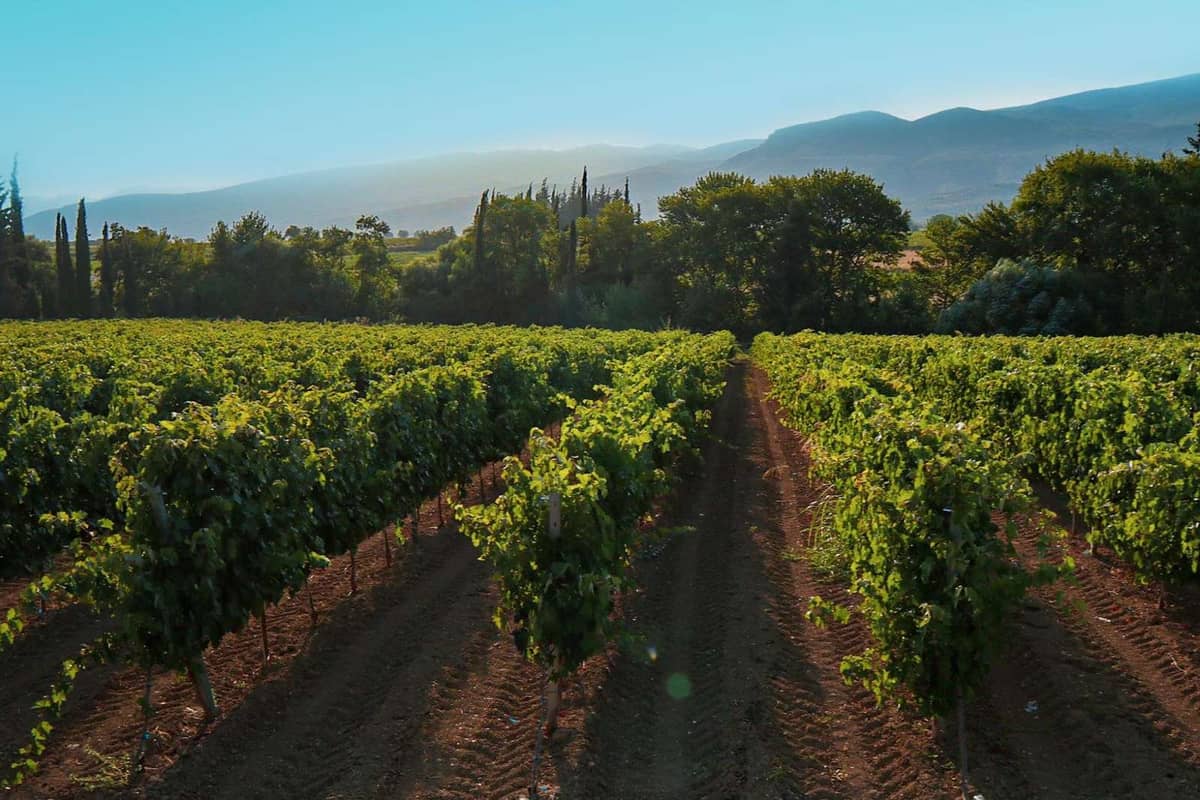
Agritourism in Greece means a stay or a day on a working farm: an olive harvest, a cheese-making morning, a vineyard walk or a cooking class with produce from the garden. The tours in Greece on the home page add the rest of a Greek trip.
This page covers the farm stays, the farm days, the produce, the regions from Crete to Macedonia, the seasons and the planning; the Chania olive oil and wine tasting tour page holds one farm day on Crete, and the bed and breakfast in Greece page covers the small stays.
What does agritourism in Greece offer?
Agritourism in Greece lets a visitor take part in the life of a working farm. The official Greek tourism page invites guests to help with the olives, the grapes, the animals and the bees. The page says the visit goes beyond the travelling experience that guests already know.
The Agritourism article defines the idea in one line. It covers any activity built on farming that brings visitors onto a farm or ranch. Agritourism in Greece applies the idea to farms that grow cereals, vegetables, olives, grapes and citrus fruits.
A journal article cited in the same entry sorts farm visits into five groups. These are direct sales, farm education, hospitality with overnight stays, recreation and entertainment. An activity can fall into one or more of them.
The Agriculture in Greece article stresses olive oil among the crops. It also describes Greek farming as small, family-owned units that are spread out. That is the setting a farm guest steps into.
The official page groups its offers under three headings: working with the land, working with animals and an educational holiday. Agritourism in Greece is therefore a trip built on taking part and learning.
The same page also asks guests to live Greek customs the rural way. It describes the farm visit as a meeting with the traditional agricultural way of living in Greece.
Ecotourism belongs to agritourism in Greece, the page says. Depending on the stay, national parks and wetlands lie near the farm. The page lists swimming, fishing, hiking, mountaineering and horse-riding as choices.
A paper by an official of the Greek Ministry of Tourism places agritourism in Greece inside rural tourism. Ecological and adventure tourism sit in the same family. The paper calls the agritourism product a mix of services, products and activities linked to the rural place.
The paper names five settings for what it calls pure agritourism. They are villages, islands and coasts, traditional settlements, protected areas and cooperative housing. The Agritourism article adds that a farm hosting visitors gains a separate stream of income. That income can come in months when no crop is in season.
This page on agritourism in Greece covers the following subjects.
- Farm stays and farm days
- The olive harvest and wine
- Cheese, honey, herbs and saffron
- The regions, one by one
- The seasons and the farm calendar
- Cooking classes and the stills
- Traditional farming, families, walkers and cyclists
- The PDO foods and planning
How did agritourism in Greece grow?
Agritourism in Greece took shape in the nineteen eighties. The Greek Ministry of Tourism paper ties that decade to Greece joining the European Economic Community. From there the paper follows the later steps: European programmes, women’s cooperatives and Greek law. The list below sets the main steps in order.
- Nineteen eighties: Greece joins the European Economic Community, the step the paper links to the start of agritourism.
- Nineteen eighty-four: a women’s agrotourism cooperative in a mountain village of Central Greece starts operating.
- The nineteen nineties: LEADER programmes and a Community Support Framework back private investment in rural tourism.
- Two thousand to two thousand six: LEADER Plus builds partnerships between local actors.
- Two thousand fourteen: a Greek law sets rules for agritourism and its forms.
- Two thousand twenty-three: a newspaper feature reports new government support through funding and legislation.
The paper explains the early aim of agritourism in Greece. The European Union first treated it as a local and regional activity. It was able to help rebuild rural areas, and it offered an alternative to people who lived only from farming.
In the nineteen nineties the effort for agritourism in Greece grew. The paper names the second Community Support Framework and the regional operational programmes. These schemes strengthened private investment in rural tourism, and so did the Objective 5b programmes of the European Union.
The LEADER programmes carried the idea to local groups. The name is an acronym meaning links among actions that develop the rural economy. The paper lists LEADER among the schemes for agritourism in Greece. Its aim is investment in less favoured areas.
The women’s cooperatives are one strand of agritourism in Greece. A study from nineteen ninety-seven names three axes for agrotourism in Greece. They are private enterprise, the traditional villages and women’s agrotourism cooperatives. It counts twelve of the cooperatives in the country.
A British newspaper feature on agritourism in Greece reports a growing farm holidays movement on the Peloponnese. Producers earn extra income from visitors, and more of them turn to agricultural and culinary tourism. The feature adds that the Greek government is backing them with funding and legislation.
Greek law now defines the field. As the paper puts it, agritourism is a form of rural tourism. It offers hosting and catering together with farm production and care of the rural landscape. The same law lists the forms agritourism in Greece takes: farms, mixed farming and livestock holdings, and cooperatives.
For scale, the Agriculture in Greece article counts 530,679 farms in the year two thousand twenty. It also states that Greek agriculture employs 615,000 farmers.
Which farm stays define agritourism in Greece?
A farm stay is any accommodation on a working farm. Agritourism in Greece spreads that idea across olive groves, mountain villages and islands. The Greek National Tourism Organisation names agrotourism units on Evia, Lesvos, Crete, Kalymnos, Paros, Kefalonia, Kalamata and Kythira. Guests live beside the work.
A journal article quoted in the Agritourism entry sorts farm visits into five kinds. The kinds are direct sales, education, hospitality, recreation and entertainment. Overnight farm stays sit in the hospitality group. This section follows that group, and the next one turns to the farm days.
The tourism board calls the accommodation simple but comfortable and matched to the local style. Its page describes the courtyard as an endless olive grove. Agritourism in Greece also overlaps with ecotourism, which the board calls part and parcel of it. National parks and wetlands join the choices, depending on the location.
The state sets its own label for these businesses. As the national registry of public services states, a Special Licence for Agrotourism goes to agrotourism businesses. Persons entered in the Register of Farmers and Agricultural Holdings set them up. That is the legal frame around a stay in agritourism in Greece.
The applicant must first complete the notification procedure for the accommodation, the same page adds. It also lets the guest rooms lie within ten kilometres of the farm. The community there has up to 5,000 inhabitants. The rooms and the fields therefore need not share one gate. Agritourism in Greece allows for that spread.
A mountain guesthouse on an organic farm shows the type clearly. One stands at nearly 1,000 metres at the foot of Mount Chelmos in the northern Peloponnese. Guests and day visitors work in the gardens and help with the farm animals. Agritourism in Greece reaches the high country this way.
A farm stay in a mountain village sits among stone houses. The tourism board’s page on Evrytania calls Fidakia a village of characteristic stone houses, declared a traditional settlement. It stands at 920 metres on Mount Helidona. Its name means small snakes in Greek, after the serpentine layout of its cobbled alleys.
Breakfast ties the stay to the farm. The tourism board pictures it in the shade of a vine, with dinner at sunset among the olive groves. The cuisine entry lists a Greek breakfast table as bread, butter, honey, jam, fresh fruit and strained yogurt. A farm stay can serve these foods from its own land.
Which farm days fill agritourism in Greece?
A farm day follows the work of the land and the herd. The Greek National Tourism Organisation lists picking, reaping, bee-keeping, milking, cheese making and cooking lessons. Agritourism in Greece asks the guest to join each task, with a tasting at the end of the day.
- Picking olives, grapes, fruits, herbs and mushrooms.
- Reaping, and a hands-on lesson in bee-keeping.
- Watching the cattle graze and be milked.
- Making yoghurt and cheese.
- Lessons in cookery and pastry.
- Pies, fresh pasta, home-made bread, jams and liqueurs.
A harvest day depends on the farm. Figs, almonds, olives and vines grow on the fertile plains of Aegina, as the island article lists them. Messenia lists olive oil, table olives, figs and black raisins. Agritourism in Greece therefore offers a different basket in each region.
Milking is a morning task the tourism board singles out. Its page says you do not see cattle grazing or being milked every day. The cuisine entry adds that breeding goats and sheep suits the Greek climate and terrain better than raising cattle. A farm day in agritourism in Greece can therefore start at the goat pen.
The milk leads to the dairy table. The tourism board calls the yoghurt and cheese making procedures a more gastronomic choice. A cheese day in agritourism in Greece is a lesson in turning milk into food. The tasting at the end shows what the morning’s work became.
The oven comes next. A report on the southern Peloponnese mentions the outdoor wood-fired ovens that walkers pass there. A farm kitchen class in that area rolls its dough by hand with a long, dowel-like pin. The pastry ends up two to three millimetres thick, and the tourism board lists home-made bread among the lessons.
A herb walk adds a quiet task. The tourism board lists picking fruits, herbs and mushrooms among the farm jobs. At a guesthouse farm in the northern Peloponnese, guided mushroom hunts are on offer. In a southern farm garden, a class picks spinach, rocket, lettuces, aubergines and aromatic herbs before it cooks.
The bee-keeping visit teaches by doing. Wikivoyage’s page on agritourism lists tending bees with picking fruit and milking cows. A hive visit in agritourism in Greece means learning by hands-on experience, as the board puts it. The guest sees the work close up and tries it.
Spoon sweets end the kitchen day. Glyko tou koutaliou means sweet of the spoon in Greek. The syrup needs hours or days to set around the whole fruit. A well-made one stays chewy. Greek coffee and cold water sit beside the spoon. The tasting closes a day of agritourism in Greece.
How does the olive harvest shape agritourism in Greece?
The olive harvest shapes agritourism in Greece by giving a guest real work in the grove. The Greek National Tourism Organisation invites visitors to help pick olives with age-old harvesting techniques. Guests also help move the olives to a traditional olive press, where the precious oil is extracted.
Greece stands among the leading olive growers of the world. The Agriculture in Greece article lists one million tons of olives. It calls the country the fifth largest producer, behind Spain, Italy, Morocco and Turkey. Agritourism in Greece lets a guest step into that trade.
The Olive article places the harvest in the autumn, from October onwards, across the Mediterranean. A newspaper report on the Peloponnese describes a five-day olive oil stay in October and November. Guests harvest olives from centuries-old trees and learn about oil varieties, pairings and organic production.
For agritourism in Greece, the Olive article describes the picking itself. Harvesters shake the whole tree or single branches. Another method has the picker stand on a ladder with a sack tied round the waist. The picker milks the olives into the sack.
One variety in the Agriculture in Greece list is wrinkled when ripe and is allowed to fall into nets. It is the only olive in that list that can be eaten straight off the tree. Nets under the trees belong to the harvest of that variety.
The tourism board’s page on agritourism in Greece speaks of age-old harvesting techniques. The Olive article names places in Greece, Italy and Croatia where machines cannot work the mountainous land. There the olives are picked by hand, so the fruit is not bruised. The article links that to a superior finished product.
Two varieties set the tone. Koroneiki, an olive cultivar of Greek origin, is grown mainly for oil. The olives are small, yet they return oil of high quality. The Kalamata is a large, dark purple table olive with a meaty texture. It cannot be harvested green, and it must be hand-picked to avoid bruising.
Ripeness shapes the oil that a harvest in agritourism in Greece yields. The Olive article sorts table olives by that ripeness. Unripe fruit of full size is green, and fruit left until full maturity is purple, brown or black. Table olives are more delicate to pick, because damaged fruit becomes bitter.
After the picking comes the press. A newspaper report describes a half-day visit to an olive press, with an olive oil tasting afterwards. The Olive oil article states that ancient presses still stand in the eastern Mediterranean. Ones from the Roman period are still used today. That visit closes the olive harvest day in agritourism in Greece.
Extra virgin is a grade of olive oil. Cold mechanical extraction, with neither solvents nor refining, gives that grade, the Olive oil article says. The same article notes that olive trees give a larger crop in alternate years. One harvest in agritourism in Greece can therefore differ from the next.
How does wine shape agritourism in Greece?
Wine shapes agritourism in Greece through the grape harvest. The Greek National Tourism Organisation invites guests to help harvest grapes to make wine or tsipouro. The Greek wine article counts approximately 200 vine varieties in Greece. Four of them are listed here with a plain fact each.
- Assyrtiko, a white grape of Santorini, does not lose its acidity when very ripe.
- Xinomavro is the principal red grape of Macedonia, with high tannin and medium-high acidity.
- Agiorgitiko, a red grape of the Peloponnese, gives a wine that is soft and fruity.
- Moschofilero comes from Mantineia in Arcadia, and its wines are crisp and floral.
The Greek wine article calls Greece one of the oldest regions in the world for making wine. Crushed grapes found in Greece are the world’s earliest evidence of that step, and they date to 6,500 years ago. Agritourism in Greece lets a guest take part in that old step.
A newspaper report describes the grape harvest of August and September on one farm in Laconia. Guests join in and stomp, pressing the grapes to music, and they learn to make wine. The report says the experiences on that farm vary with the seasons.
On a mountain farm in the northern Peloponnese, guests join the grape harvest and the pressing each October. The harvest month differs between the two farms in the report. A guest in agritourism in Greece checks the dates with the host.
The Greek wine article lists eight main wine growing regions. They are the Aegean Islands, Crete, Epirus, the Ionian Islands, Macedonia, Central Greece, the Peloponnese and Thessaly. For agritourism in Greece, the article draws the vineyard map of the country this way. Vine growing and wine making are a traditional occupation of the monks of Mount Athos, it adds.
A Wine Institute was founded by the Ministry of Agriculture in nineteen thirty-seven. Legislation on appellations followed in nineteen seventy-one and nineteen seventy-two. The system tells buyers where a wine comes from. Retsina is a Greek white wine, made by adding small pieces of Aleppo pine resin to the must during fermentation.
The official page says wineries initiate guests into the secrets of wine: varieties, aromas, colours and tastes. A vineyard walk puts those words next to the vines. It gives agritourism in Greece a calm end after the work of the harvest day.
How do cheese and dairy shape agritourism in Greece?
Feta is a Greek white cheese that matures in brine and holds PDO status in the European Union. Its milk is sheep’s milk alone, or a blend holding up to thirty parts in a hundred of goat’s milk. Cheese and dairy shape agritourism in Greece because that milk starts on the farm.
A cheese day in agritourism in Greece follows the steps the feta article lists. Rennet goes into the milk and the curd sets. The curd is chopped and placed in a mould or a cloth bag. The whey drains away for hours, until the curd is firm enough to cut and salt.
The salted curd then rests in brine, in wooden barrels or metal vessels. The article notes that the more traditional barrel ageing is said to give a unique flavour. Ageing lasts weeks at room temperature, then two months at the least in a chilled, humid room.
The feta specification names the land itself. The article says the land’s biodiversity and the breeds of sheep and goats shape its aroma and flavour. A pasture walk and a tasting therefore sit well together in agritourism in Greece.
Kasseri adds a second method to agritourism in Greece. It is a pale yellow cheese of sheep’s milk and up to twenty parts in a hundred of goat’s milk. The sliced curd goes into hot water and is kneaded until it spins a thread at least a metre long. The protected name belongs to Thessaly, Macedonia, Lesbos and Xanthi.
The hard cheese called graviera is made in wheels. Its rind carries the crisscross pattern of the draining cloth. The article names Crete, Lesbos, Naxos and Amfilochia as the main areas. Three of them hold protected status, named Naxou, Agrafon and Kritis.
Mizithra is the whey cheese of the farm kitchen. Milk comes to a slow boil. Rennet, lemon juice, vinegar or whey kept from an earlier batch then curdles it. The curd hangs in a cheesecloth bag to drain, and the dripping whey can curdle the next batch. Days of draining leave a soft, sweet mass shaped like the bag.
Yogurt and three more cheeses complete the dairy table. Strained yogurt, the base of the tzatziki dip, comes from sheep’s milk in the Greek tradition. Kalathaki comes from Limnos, and ladotyri is glossed as cheese with olive oil. Katiki Domokou is creamy and suited to spreads. That is the dairy side of agritourism in Greece.
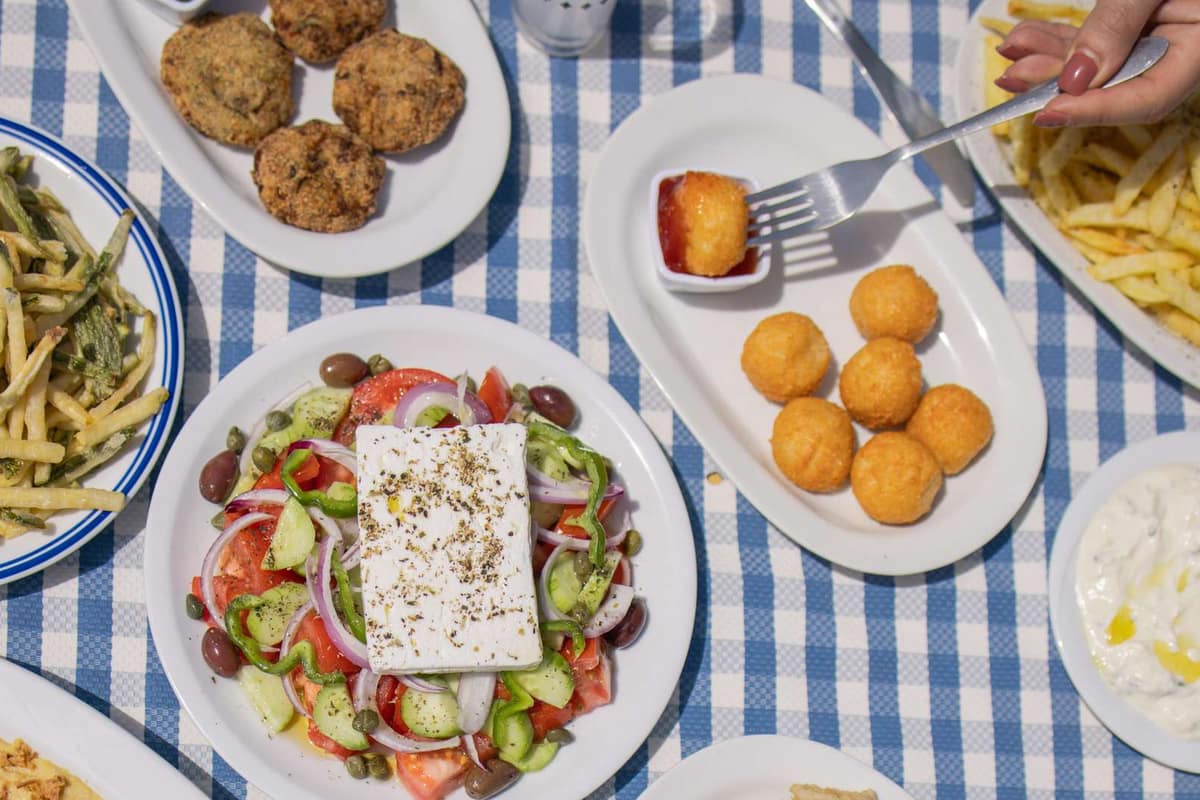
How do honey, herbs and saffron shape agritourism in Greece?
The Greek National Tourism Organisation states that 12,000 tonnes of honey are produced in Greece each year. The same page calls honey the first sweetener Greeks had. Honey, herbs and saffron shape agritourism in Greece because each is gathered from the hive, the hill or the field.
- Forest honeys: pine, fir and oak.
- Flower honeys: thyme, orange, heather, chestnut and cotton.
- Herbs: mountain tea, wild oregano, wild lavender and sage.
- Saffron: the red threads of the crocus near Kozani.
Forest honey is a Greek speciality of its own. The tourism board names pine, fir and oak honey and says they do not crystallise. Pine honey comes from bees that collect honeydew, the sugary secretion of a scale insect living on pine sap. It is dark amber with a resinous scent. Tasting it belongs to agritourism in Greece.
Flower honey tells a different story. The tourism board lists thyme, orange, heather, chestnut and cotton honey among the unmixed kinds. It adds that wild oregano, wild lavender and sage give flower honeys too. The page credits the rich wild flora of Greece for the range. Flower honey adds a second kind to agritourism in Greece.
Honey reaches the table in more than one way. The page names loukoumades, baklava and honey pies as sweets found all over Greece. It says cakes sweetened with honey appear on the islands, especially at Easter. Honey also flavours stews such as stifado and the kapama of Corfu. On Crete it marinates and tenderises lamb.
Mountain tea is the herb of the high slopes. The Sideritis article also calls it ironwort and shepherd’s tea. The plant grows high on the mountains in thin soil and is gathered in July, in full bloom, then dried. Flowers, leaves and stems go into a pot of water for the tea, which comes with honey and lemon.
Oregano is the herb of the kitchen. Wikipedia says Greek oregano is a subspecies called hirtum and that its leaves taste more intense dried than fresh. A Greek salad takes dried oregano, and so does the sauce of lemon and olive oil served with grills. A herb walk in agritourism in Greece ends at that table.
Saffron gives agritourism in Greece its autumn crop near Kozani. Krokos is a town in Western Macedonia, five kilometres south of Kozani. The saffron of Krokos Kozanis is PDO protected. The Minoans grew saffron on Crete. The crop then disappeared from Greece until the seventeenth century. Greek merchants carried the plant in from Austria to the Kozani region.
The tourism board says visitors in October and November have the chance to walk the fields at harvest. The picking is manual. The flowers open at dawn and wilt as the day passes. About 150,000 flowers make one kilogram, and forty hours of labour pick that number. That is the autumn work of agritourism in Greece.
How does Crete shape agritourism in Greece?
Agritourism in Greece on Crete rests on olive groves and vineyards. As Wikipedia states, the island counts olive groves and viticulture as significant. Oranges, citrons, avocadoes and bananas are also grown there. Dairy products matter to the local economy, and specialty cheeses include mizithra, anthotyros and kefalotyri.
Wikivoyage describes Crete as an island covered with olive trees, and almost every family keeps trees of its own. Agritourism in Greece on Crete therefore begins among trees that families already tend. The westernmost quarter of the island has farms in its north and centre and mountains in its south.
Bananas grow on Crete too. Wikivoyage names four banana villages: Arvi and Malia in Heraklion, Ierapetra in Lasithi and Sfakaki in Rethymno. In the north the plants grow mainly in greenhouses, and in the hotter south they grow outdoors. That crop gives agritourism in Greece a tropical corner.
The mountains give the island fertile ground. The island article lists Lasithi, Omalos and Nidha as fertile plateaus. It also names the Amari valley, which is fertile land at the foot of Mount Ida and Mount Kedros.
The Lasithi plateau, in the centre of Lasithi, stands at 840 metres. Wikivoyage calls it a large fertile plateau. The plateau once held up to 10,000 windmills with white sails. Diesel and electric irrigation pumps have largely replaced them, but old stone windmills still stand along the passes above it.
Dakos puts the island on one plate. A barley rusk named paximadi is dipped in water or olive oil. Chopped tomatoes go on it, and feta or mizithra is crumbled over the top. Olive oil and dried oregano finish the dish. Olives of the Koroneiki, Lianes or Tsounates kind are a common choice.
The Cretan cuisine article says people ate seasonal produce from the surrounding area, with little or no processing. That style of cooking lasted on Crete until the nineteen sixties. Stamnagathi, a salad of a local Cichorium plant, is one of its appetizers. It is the plain food side of agritourism in Greece on Crete.
Pies carry local names. The twisted shape of sarikopita, a cheese pie, recalls the sariki, a traditional Cretan headwear. Mizithropita wraps mizithra in a flatbread. Western Crete gives kreatotourta, a pie of meat, and Messara gives tzoulamas, a traditional pie with meat. Each pie adds a place name to agritourism in Greece.
Crete makes graviera from sheep’s milk, and the wheels ripen for five months or longer. Burnt caramel marks its flavour, which is only slightly sweet. The Cretan cuisine article names other cheeses too: Amarino, Seliano, Tirozouli and Tiromalama. These names give agritourism in Greece on Crete its cheese vocabulary.
The village stills run for two to three weeks from late October into early November, as the tsikoudia article states. Pomace, what remains of the pressed grapes, is the base of the brandy.
How does the Peloponnese fit agritourism in Greece?
Agritourism in Greece on the Peloponnese follows three crops across the map. Wikivoyage lists local olives, grapes and oranges. It names the southwest for the olives and the northeast for the grapes and oranges. The list below names six places on the peninsula, each with its farm angle.
- Messenia in the southwest: the Kalamata olive.
- Nemea in the northeast: the Agiorgitiko vineyards.
- Argolis in the east: oranges and olives.
- Arcadia: potato farms, olive groves and pasture.
- Kalavryta: a mountain town in Achaea.
- The Mani in the south: olives, oranges and wild greens.
Messenia lies in the southwestern Peloponnese, and its capital is Kalamata. Kalamata olives were first grown in the region around the city. The fruit is large and plump, with a dark purple colour and a meaty texture. It cannot be harvested green and must be hand-picked to avoid bruising. That makes it a hands-on crop for agritourism in Greece.
Curing follows the picking. The short method debitters the olives in water or weak brine, changed daily for around a week. The long method slits the olives and keeps them for up to three months in strong brine. Beyond the groves, the Messenia article adds a small amount of stockbreeding products: beef, milk, sfela cheese and honey.
Nemea stands in the northeast. The Greek wine article calls Agiorgitiko a variety native to Nemea that grows mainly in the Peloponnese. The vines are generally planted in dry, infertile soil and ripen after mid-September. Vineyards on the Asprokampos plateau around Nemea reach up to 900 metres. That gives agritourism in Greece a vineyard base.
Argolis occupies the east of the peninsula, and Nafplio is its seat. The Argolis article names oranges and olives as its primary agricultural resources. Its arable land lies chiefly in the central part. That puts citrus groves on the farm map of agritourism in Greece.
Arcadia is a rural, mountainous regional unit, and it is the largest on the peninsula. Potato farms dominate its central and north-central parts. Mixed farming, olive groves and pasture dominate the plains around Megalopolis and between Tripoli and Levidi. Dimitsana is one of the historic villages of the Lousios river valley in the northwest.
Kalavryta is a mountain town in Achaea. The municipality holds Mount Erymanthos in the west and Aroania, also called Chelmos, in the southeast. A rack railway from Diakopto ends there. Wikivoyage says the town combines alpine scenery and outdoor activities, which gives agritourism in Greece a mountain setting.
Three peninsulas point south from the Peloponnese, and the Mani is the middle one. It ends at Cape Matapan. The Messenian, or Outer, Mani receives more rainfall than the Laconian side, so the article calls it more agriculturally productive. Locals call it aposkiaderi, meaning shady, and the Laconian side prosiliaki, meaning sunny.
Traditional Maniot cooking rests on olive oil and olives, oranges, wild greens called horta, lentils and sfela cheese. Agritourism in Greece in the Mani therefore tastes of the south.
How do Pelion and Thessaly fit agritourism in Greece?
Agritourism in Greece reaches Mount Pelion, a mountain in southeastern Thessaly. Two waters frame its hook-shaped peninsula: the Aegean Sea on one flank, the Pagasetic Gulf on the other. Its highest summit, Pourianos Stavros, stands at 1,624 metres. Forests, orchards and stone villages fill the slopes below that summit.
The Pelion article describes a thickly forested mountain. Beech, oak, maple and chestnut are the main trees of the woods. Olive, apple and pear trees and plane tree groves surround the places with water. Agritourism in Greece on Pelion therefore puts forest and orchard on one slope.
The article calls Pelion an amply watered mountain, with gorges, streams and rivulets. In places, carved stone beds carry stream water to the village orchards. Walkers find springs, coves and beaches along the stone paths and hiking trails. From the higher ground, a panorama takes in the plain of Thessaly, Mount Olympus and the northern Sporades islands.
Pride of place among the fruit of Pelion goes to the firiki, an apple variety of Egyptian origin. The apples are very small and oval, with a strong fragrance, a crisp bite and a slightly tart taste. They store well without refrigeration. Agritourism in Greece among these orchards also meets plums, especially mirabelles and greengages.
Pelian cuisine specialises in charcuterie. Spentzofai is a hearty stew that starts with sliced pork sausage, cooked on its own. Green and red peppers, mild or hot, and shallots or small onions join the pan later. Aubergine or tomatoes go in when in season. Agritourism in Greece on Pelion thus reaches the table.
The stone houses are made of carved local slate and red clay. The slate comes in grey, blue and green. Fireplace chimneys run through the walls and warm the upper levels. The article names chestnut timber, stained dark brown, for the interior. Mansions of the larger kind, the arkhontika, have in places been converted into hotels and hostels.
Agritourism in Greece moves from the terraces of Pelion to the plain of Thessaly. Alluvial soils from the Pineios Basin and its tributaries enrich the region. It is a vital agricultural area, particularly for grain, cattle and sheep. The Thessaly article places the region first in Greece for raising cattle.
The fertility of the Trikala and Larissa lowlands grows with the summer rains. So Thessaly is occasionally called the breadbasket of Greece. Nuts have increased in the last decades: almonds, pistachios and walnuts, especially near Almyros. Agritourism in Greece in Thessaly sits near the Meteora monasteries, which Wikivoyage lists in the same region.
How do Zagori and Epirus fit agritourism in Greece?
Agritourism in Greece reaches the Pindus mountains of Epirus through Zagori. This region of stone villages was linked by mountain roads and arched stone bridges. The Epirus article calls sheep and goat pastoralism an important activity of the region. The list below sets out how the villages are built.
- Houses are built of local stone, with roofs of stone tiles held in place by their own weight.
- In every village, a central square, the mesochori, holds the main church, a fountain and a plane tree.
- Footpaths and cobbled streets join the rest of the village.
- The stone roofs need continual upkeep because of heavy winter snow.
Agritourism in Greece in Zagori crosses old stone bridges. Merchants who had left the region paid for the stone arched bridges in the eighteenth century. The new bridges replaced older wooden ones. The article counts over 160 arched bridges across the wider area. Bridges of one to three arches, called kamares, are the rule.
The Vikos Gorge lies inside the Vikos-Aoos National Park and supplied the herbs for a healing tradition of its own. The gorge gave the herbal healers called Vikos doctors the plants for their preparations. The Zagori article calls the area a major centre of folk medicine.
Flocks shaped these hills too. Late in the eighteenth century, Greek nomadic Sarakatsani came to Zagori. They first served as shepherds for the flocks of the native villagers. From the mid-nineteenth century they kept flocks of their own. This shepherding past belongs to agritourism in Greece in the Pindus.
The Metsovo article says agriculture and tourism dominate the town’s economy. Metsovo had a class of travelling sheepherders, the algi, whose work was large-scale sheepherding, livestock breeding and woodcarving. The Transhumance article names the Greek Sarakatsani and the Aromanians. Traditionally, their year split in two: summer months in the mountains, winter months on the lower plains.
The Epirotic cuisine article names Metsovone, Foumarino, Boukovela and Metsovela as cheeses from Metsovo. The Metsovo article adds winemaking to the trades of the town. Agritourism in Greece at Metsovo can therefore pair a local cheese with a local wine.
The Epirotic cuisine article also lists the pies of the region. They include pepeki, kasiata, blatsaria and kothropita. It names stegnopita as a dry pie. Agritourism in Greece in Epirus brings these pites, as Greeks call the pies, to the table.
The Greek cuisine article links the pie tradition to a wider area. It says north-western and central Greece, meaning Epirus, Thessaly and Roumeli, have a strong tradition of filo-based dishes. Hortopita is a pie of greens, and kolokythopita a zucchini pie. Agritourism in Greece thus joins Thessaly and Epirus on one table.
How does Macedonia fit agritourism in Greece?
Macedonia fits agritourism in Greece through orchards, vineyards, peppers and saffron in the north. Naousa lies 22 kilometres north of Veria and 90 kilometres west of Thessaloniki, on the foothills of the Vermio Mountains. Farm days here follow fruit, grapes and market stalls.
The slopes around Naousa carry orchards of peaches, apples and cherries, as the town article states. Wine comes next. The Naousa protected designation of origin dates from nineteen seventy-one and requires Xinomavro grapes alone. Agritourism in Greece around Naousa therefore pairs orchard fruit with one red grape.
Xinomavro means sour black in Greek. The grape also grows around Amyntaio, Goumenissa, Rapsani, Siatista and Velventos. In Goumenissa it is blended with Negoska. A wine lover on a northern route meets one grape under different village names. Tsipouro, a brandy from grape pomace, comes from Thessaly, Epirus and Macedonia.
Below the mountains, the plain of Imathia follows the lower Aliakmonas river. The regional article calls it Kampania or Roumlouki, a vast agricultural plain known for peaches and strawberries. Veria and Alexandreia stand on it. Agritourism in Greece in Macedonia spans this fruit plain and the Vermio Mountains, which reach 2,052 metres near Naousa.
The village angle on saffron belongs to Krokos, a small town 5 kilometres south of Kozani. Its population is 2,687. The town is the base of a cooperative of saffron producers with 2,000 members spread over 40 small villages. Greek red saffron comes from this one region of the country.
The ancient Minoans grew saffron on Crete in the Late Bronze Age. The crop then disappeared from Greece until the seventeenth century. Greek merchants carried the plant out of Austria into the Kozani area. Output ranges from six to twelve tons a year, depending on weather. Agritourism in Greece here follows a crop with a long break.
Florina adds the red pepper. The Florina pepper has the shape of a cow’s horn. It is green at first and ripens to deep red after the fifteenth of August. Its seed came from Brazil, and only Florina made the crop succeed. For agritourism in Greece, the pepper harvest spans up to eighteen weeks.
In the last days of August, the village of Aetos holds a feast of peppers, with music and cooked recipes. The red peppers are roasted and stuffed with rice, meat, shrimps or feta. Florina also holds an important weekly market, and farmers from the villages arrive on market days to sell their produce.
Florina opens the way to the Prespa Lakes. The lakes lie 853 metres above sea level, on the border with North Macedonia and Albania. Giant white beans, fasolia gigantes, grow under protective law in Florina. A register of protected food names lists the giant beans of Prespes with a protected geographical indication.
How do the Aegean islands fit agritourism in Greece?
Agritourism in Greece reaches the Aegean islands through one crop per island. Chios grows mastic, Lesbos olives, Santorini vines and fava, Naxos potatoes and cheese, and Aegina pistachios. The island articles tie each place to that crop, and a farm day follows it.
- Chios: mastic from the mastic villages
- Lesbos: olive groves and ouzo
- Santorini: Assyrtiko vines and fava
- Naxos: potatoes, cheese and thyme honey
- Aegina: pistachio orchards
Among the Greek islands, Chios ranks fifth in size, and its nickname is the Mastic Island. The mastic harvest, called kentos, lasts from early July until early October. Agritourism in Greece on Chios follows this slow cycle. Twenty-four mastic villages grow the crop, as the mastic article counts them.
Every four to five days, growers make five to ten cuts per tree. The resin hardens and falls in about fifteen to twenty days, as tears. Farmers wash the pieces and spend much of the winter cleaning them by hand. Agritourism in Greece in the south meets a crop with work in every season.
UNESCO has inscribed mastic growing on Chios as living heritage, under the title Know-how of cultivating mastic. The Committee calls it a family occupation that needs laborious care all year, by men and women of all ages. The island also grows olives, figs, mandarins and cherries.
Among the Greek islands, Lesbos ranks third in size. Its economy is essentially agricultural, and olive oil brings the main income. Eleven million olive trees grow there. Olive and pine forests cover the east and the centre. Agritourism in Greece on Lesbos is olive country, and Plomari, home of ouzo, has an ouzo museum.
Santorini vines stand far apart, and the island article names dew as their chief moisture. The old vines resisted phylloxera and needed no replacement in the late nineteenth century. Fava comes from Lathyrus clymenum, grown there for 3,500 years. The European Union lists its protected origin name. Agritourism in Greece on Santorini sits on volcanic ash soil.
A good water supply is rare in the Cyclades, yet Naxos has one. Mount Zeus, 1,001 metres high, catches the clouds, so more rain falls. That water supports vegetables, fruit and cattle breeding. In Greece, the island is known for Kitron, potatoes, thyme honey and Arseniko Naxou cheese. Agritourism in Greece on Naxos starts from this water.
Aegina is a Saronic island, 27 kilometres away from Athens. By nineteen fifty, pistachio growing had displaced the other farming, partly because phylloxera threatened the vineyards. An estimate puts output at 2,700 tons a year, and a pistachio festival takes place in mid-September. Agritourism in Greece on Aegina centres on the pistachio.
How do the Ionian Islands fit agritourism in Greece?
Agritourism in Greece reaches the Ionian Islands. Wikivoyage Greece says they receive more rain each year than the rest of the country. The Zakynthos article links plentiful winter rainfall to dense vegetation. Four crops lead the farm list of that island: grapes, olive oil, citrus fruit and currants.
On area, its article ranks the Ionian Islands Region below every other region of Greece. The units are Zakynthos, Kefalonia, Corfu, Lefkada and Ithaca, five in all. Agritourism in Greece therefore starts here with a choice of island. Corfu and Kefalonia come first below, then Zakynthos.
The Corfu article calls the island a land of olive groves and vineyards. It names the kumquat, the loquat and the prickly pear among the fruit trees that thrive there. The article also notes a considerable trade in olive oil. Those are the crops a farm walk on Corfu meets.
Modern times brought specialist crops to Corfu, helped by the mild climate, the article says. Spoon sweets and liqueurs on the island are made from the kumquat and the bergamot orange. This is where agritourism in Greece reaches the pantry shelf, with fruit turned into jars and bottles.
The main farm jobs on Kefalonia are animal breeding and olive growing, the island article states. Grain and vegetables make up the rest. Vegetables grow on the plains, which cover a small part of the island. The rugged mountains suit only goats. Agritourism in Greece here means groves, goats and plains.
The article counts more than one million olive trees on Kefalonia. Koroneiki and theiako are the two main varieties, followed by ntopia and matolia. The oil is green in tone and low in acidity, according to the article. Thirteen oil presses work on the island today.
Agritourism in Greece on Kefalonia also meets wine, because wine has long been made on the island. Its white grape is Robola, an early ripening vine that the Robola article ties mainly to Kefalonia. The wines are dry, with a note of lemon.
The word currant comes from the Anglo-French raisins de Corinthe and from Zakynthos, called Zante, the Zante currant article states. Zakynthos was at one time the major producer and exporter of the raisin. The grape behind it, Black Corinth, has a first written record from seventy-five AD.
A photo on the Agriculture in Greece page shows Zante currant drying in the sun on Zakynthos. The Zakynthos article calls the grape small, sweet and seedless, and native to the island. For agritourism in Greece, Zakynthos offers a grape with a long written record.
Which seasons suit agritourism in Greece?
The seasons of agritourism in Greece follow the dry and the rainy months. Wikivoyage Greece puts near-constant sunshine from April until November. It sets the rainy period between about November and the end of March or the start of April. The farm tasks below sit inside those two spells.
- Spring: the dry spell begins in April, and Wikivoyage Greece lists late spring and June among the pleasant months.
- Summer: the warmest weeks fall between the middle of July and the middle of August, and the Dormition is a major summer festival.
- Autumn: grapes come in, the village stills run, and the olive harvest begins in October.
- Winter: the olive harvest runs on through January, and the rains arrive.
Wikivoyage Greece says the warmest time of year starts in the middle of July. The annual meltemi, a wind from the north, then cools the country in mid-August. The page adds that Greeks skip heavy outdoor effort from one o’clock until five. A summer farm day in agritourism in Greece starts early.
Pleasant weather, the page says, arrives in late spring and June, and returns in September and October. The Greek National Tourism Organisation page lists picking fruit, herbs and mushrooms, reaping and bee-keeping. It ties none of these tasks to a month. A guest therefore asks the host which task is on that week.
The Winemaking article gives the northern hemisphere a grape harvest that begins in early September and closes in early November. Wikivoyage Crete starts it earlier, at the beginning of August, and ends it in October, depending on variety and altitude. A grape week in agritourism in Greece follows the vine and not the calendar.
The Tsikoudia article says village distilling on Crete runs without a break for two or three weeks. That spell runs from late October into early November. A rakazani celebrates the season’s first raki in October or November, Wikivoyage Crete adds. It is held at a distillery. Wikivoyage Greece notes festivals for wine harvests and local patron saints.
Olive picking runs from October through January on Crete, as Wikivoyage Crete states. The Olive article dates the Mediterranean harvest to autumn, with picking from October on. Another section of the Crete page says the whole family joins the olive picking. Winter in agritourism in Greece therefore means olive work.
Wikivoyage Greece describes the winter months, November to February, as mild though not beach weather. The Kefalonia article states that a winter day there averages fourteen to fifteen degrees Celsius. The winter night averages eight to nine. A winter visit to a farm there meets those temperatures.
Choose the season by the task. August to October suits the vine and the still. October to January suits the grove. April to November suits the walk between farms. A split stay shows two jobs in one trip to agritourism in Greece.
How do cooking classes fit agritourism in Greece?
Cooking classes fit agritourism in Greece as the step from the field to the table. The official tourism page lists lessons in cookery and pastry. They teach old-school recipes: jams, stewed fruits, spoon sweets, home-made bread, fresh pasta, pies and liqueurs. The lessons run in agritourism cooperatives around the country.
A class in agritourism in Greece ends at a table, not at a desk. A newspaper feature on a Peloponnese farm describes guests at a long outdoor table. They eat their own dishes, with wine from the farm. Lunch there runs on until the evening sun reaches the olive grove.
The same class turns out spinach pies and a dip called fava, made from yellow split peas. It adds a roasted aubergine dish and moustalevria. That pudding holds olive oil, walnuts, flour, sesame seeds and must, the juice of the farm’s grapes.
The Greek cuisine article lists lathera among home-cooked meals. Agritourism in Greece suits these dishes. Olive oil, herbs and tomato sauce stew the vegetables of the season in them. The article names cauliflower, spinach and leeks among the vegetables for lathera.
Pies come next. The Greek cuisine article names kotopita, a chicken pie, and kimadopita, a pie of ground meat. The second is also called kreatopita. Filo wraps each pie as a small triangle or as a large sheet.
Stuffed vegetables make a second lesson in agritourism in Greece. The dolma article says gemista, or tsounidis, is a common dish of Greek cooking. It describes peppers hollowed out and filled with rice, herbs, onions and currants. Stuffed vine leaves are called dolmades in Greece.
Wikivoyage describes meat in the oven on Crete. It is lamb, pork or chicken cooked slowly in a wood oven with potatoes or onions. Wikivoyage also names horiatiko psomi, a crusty village bread that is a household staple. In agritourism in Greece, a wood-fired oven serves both the roast and the loaf.
A class can finish on meze. The Greek cuisine article lists pikilia, a variety of small meze foods, beside patatokeftedes, potato fritters, and tirokroketes, cheese fritters.
The Representative List of UNESCO carries the Mediterranean diet, inscribed in two thousand thirteen. Greece is among the countries named. The text ranges from crops and the harvest to cooking, and it stresses eating together. It says women pass the skills on and respect the seasonal rhythms.
How do the stills and the spirits fit agritourism in Greece?
The stills bring agritourism in Greece to the grape pomace left after pressing. The official tourism page says tsipouro and tsikoudia are distilled from those skins. Its farm page invites guests to harvest grapes to make wine or tsipouro. The spirit follows the vintage.
- Careful selection of the grape varieties.
- Controlled fermentation of the pomace.
- Slow distillation in the still.
The list gives the three steps named on the official drinks page. The page adds that vine growers took up the use of winemaking by-products. The spirit became known as the drink of the vine grower.
Tsipouro is a brandy from Greece that is not aged, and Thessaly, Epirus and Macedonia in particular make it. Agritourism in Greece meets it where the grapes grow. The Tsipouro article credits Greek Orthodox monks of the fourteenth century with the first batch, by tradition.
The method starts with ripe dark grapes that pass through a crusher and destemmer. The mass rests until fermentation begins. Next it goes to the distillation unit. Two cuts are set aside: the first, called the head, and the last, called the tail. Only the middle cut, the heart, becomes tsipouro.
Agritourism in Greece pairs the spirit with small plates. The Tsipouro article names olives, cheese, nuts, seafood, halva and paximadi rusk as the meze. It names shot glasses as the serving. The official page says the spirit is enjoyed lightly chilled, or with a small amount of ice.
Thessaly, Macedonia and Thrace add an anise style to agritourism in Greece. Aniseed and fennel go into the still, the official page states. Water turns the drink milky white. The Tsipouro article calls the anise style a newer variation, introduced in the nineteen hundreds.
Tsikoudia is the Cretan counterpart, a pomace brandy of a single distillation with no added flavourings. In agritourism in Greece on Crete, the pomace spends about six weeks fermenting inside a sealed barrel before the still. Eastern Crete informally calls the spirit raki.
Licensed residents of the Cretan villages run the stills. The Tsikoudia article says the run lasts two to three weeks, spanning late October and early November. It describes the spirit served chilled from the freezer at the end of a meal, beside fruit and sweets.
Wikivoyage names the village event of October or November, the rakazani. It takes place at a raki distillery to mark the first raki of the year, with music and a barbecue. A visitor invited to it is lucky, the page says. That is how agritourism in Greece meets the stills.
Ouzo is the anise spirit, and its path differs. The Ouzo article says it is made from rectified spirit that is distilled and flavoured. A method with copper stills, developed in nineteen thirty-two, is now the standard. Water or ice turns the drink cloudy white.
The official drinks page says the ouzos of Mytilini and Plomari on Lesvos carry PGI labels. For agritourism in Greece on Lesbos, that is the spirit to taste. The Ouzo article adds that the European Union protects ouzo, tsipouro and tsikoudia with a protected Geographical Indication.
Chios adds mastic liqueur to agritourism in Greece. The official drinks page states that the resin of the local mastic tree, a PDO product, is mixed with alcohol. The distillation takes place in large traditional copper stills, and sugar is the only other ingredient allowed.
How does traditional farming fit agritourism in Greece?
Agritourism in Greece shows traditional farming in its stonework, its flocks and its stored seed. The art of dry stone construction is on the UNESCO list, and Greece is named in the entry. The craft builds with stone and no binding material, so each stone is chosen and placed with care.
A terrace is a flat surface cut into a hill or mountain for crops, the Terrace article says. Terraces reduce erosion and surface runoff. The article adds that drier-climate terrace farming is common across the Mediterranean Basin, used for vineyards and olive trees. Hill farms in agritourism in Greece sit in that same setting.
UNESCO lists the structures built this way: houses, bridges, paths, sheds, vaulted cellars and beehive huts. Communities build, maintain and restore the structures together and pass the techniques on to future generations. UNESCO’s page on the Zagori Cultural Landscape names drystone walling, transhumance and sacred forests as traditions tied to the landscape.
The Threshing floor article describes a flattened outdoor surface where farmers separated grain from the stalks. Pairs of donkeys or oxen walked round and round, dragging a heavy threshing board. Tossed into the air, the grain fell and the wind took the chaff. One photo in the article shows a threshing floor on Santorini, an island of agritourism in Greece.
Windmills with white sails once numbered up to 10,000 on the Lasithi Plateau of Crete, Wikivoyage says. Diesel and electric irrigation pumps have largely replaced them. Old stone windmills still stand along the passes above the plateau. The page calls the plateau large and fertile, at an altitude of 840 metres.
UNESCO also lists transhumance, the seasonal droving of livestock, and the entry names Greece among its countries. Each spring and autumn, herders organise the move of thousands of animals along pastoral paths, on foot or horseback. Agritourism in Greece shares its countryside with that tradition.
The Sarakatsani article calls this people traditionally transhumant shepherds, historically centred on the Pindus mountains. It names the Aromanians, also called Vlachs, as the other major transhumant group in Greece. The Sarakatsani honour Saint George and Saint Demetrius with feast days just before their seasonal moves. The vast majority now live permanently in villages.
The Agriculture in Greece article lists 12,588 farms certified organic or under conversion, counted in two thousand twenty. It says the area certified as organic grew between two thousand nine and two thousand twenty. These farms belong to the rural base of agritourism in Greece.
ELGO-DIMITRA, the Hellenic Agricultural Organisation, runs a conservation project backed by the national ministry for rural development and food. It aims to protect plant genetic resources, especially traditional and rare varieties. The Greek Gene Bank and the variety collections keep them outside their natural environment. A farm kitchen is where local varieties reach the plate in agritourism in Greece.
How do families fit agritourism in Greece?
Agritourism in Greece gives a family jobs to share on a working farm. The Agritourism article lists picking fruit, feeding animals and visiting farm stands among the ways visitors spend their time. Wikivoyage describes a farm stay as one where guests help feed the animals and harvest the crops.
- Horseback riding, which the Agritourism article counts as recreation.
- A school visit to a farm, the article’s example of agricultural education.
- Hayrides and harvest dinners, the article’s examples of entertainment.
Farm families teach by doing. The Sarakatsani article says boys old enough for the flocks join their fathers, and girls learn by helping their mothers. UNESCO says families pass transhumance on through observation and practice. Agritourism in Greece lets a child join in on a small scale.
In a newspaper feature on the Peloponnese, a class works in the garden with the host and her young son. The same feature lists an annual summer camp for children and teenagers at a guesthouse in the northern Peloponnese. Agritourism in Greece therefore has a place for children of different ages.
Wikivoyage’s page on Crete says donkeys carrying vegetables can be seen in traditional villages, led past cars and scooters. The Agriculture in Greece article pictures a herd of goats on the Greek highlands and buffalo breeding at Lake Kerkini.
UNESCO adds that communities along the transhumance routes celebrate herd crossings and organise festivals. Festivities mark the beginning and end of a season, the entry says. A family that joins one has something to watch together.
Fruit picking is a job of the right size for a child. It has a clear start, a basket and a tasty end. Agritourism in Greece lists fruit picking among its farm jobs.
Bread and pies suit small hands too. Dough is rolled, filled and folded, and the family eats the result at lunch. A farm kitchen turns the morning’s harvest into a shared meal.
Short drives between farms keep the day calm. A family can spend the morning in an orchard and the afternoon in a village. Agritourism in Greece suits that unhurried pace.
A farm day can include grandparents, parents and children. Each takes a job of the right size: one picks, one carries and one waits for the tasting. The day ends together at the table.
How do walkers and cyclists fit agritourism in Greece?
Walkers and cyclists meet agritourism in Greece on the old village paths between farms and fields. The kalderimi, a cobbled mule track, once reached sheepfolds and chapels as well as almost every village. The Menalon Trail in Arcadia and the viewpoints of the Vikos Gorge carry that idea on.
In the Kalderimi article, the word names a road of cobblestones made for animals with hooves. It is sometimes described as a paved mule track. The word itself is Turkish, meaning pavement. A popular reading ties it to the Greek words for a good road.
Agritourism in Greece follows these tracks because they join the farm land of the villages. The article says the network connected to the fields of the villagers. A walker on a kalderimi therefore passes land that people worked. The article calls the date of the first tracks unclear.
Switchbacks ease the steep climbs of a kalderimi, and parapets run beside the steep slopes. Steps appear where the ground needs them. On flat stretches the track can be unpaved. Where it meets a stream, the article mentions paved fords. One photo shows a kalderimi crossing the Aradena gorge on Crete.
Modern roads join neighbouring villages at one height, the article says. The old tracks climbed and dropped with the slope. In the Epirus village of Vradeto, the Skala of Vradeto gives a way into the Vikos Gorge. The Zagori article says paths and small roads once joined its villages into one working whole.
Initiatives now map and restore kalderimia for walking tourism, the article says. For agritourism in Greece, that opens a route from a farm stay to the next village on the old stones.
The Menalon Trail in the Peloponnese puts these old ways on one route. The official Greek tourism page places it among the Lousios River Gorge, the valley of Mainalos and Mount Mainalo. Its villages include Zygovitsi, Elati, Vytina, Nymfasia, Magouliana and Valtetsiniko. The page says its design follows European hiking standards.
The same page says trails of this kind predate antiquity and carried goods and residents. A guest of agritourism in Greece who walks it follows that old traffic. The page lists mountain biking through the forests and rafting and kayaking on the Lousios River. It adds local delicacies and traditional guesthouses.
Zagori gives agritourism in Greece a high view of the gorge. Oxia has a natural platform that looks into the deepest stretch of the gorge, as Wikipedia describes it. The road from Monodendri to Oxia is 8 kilometres long. Beloi is a second viewpoint, set on the east side, and the village of Vradeto gives access to it.
On Lesbos, Wikivoyage says the island offers hiking routes between the villages, and the tourist offices hold the maps. Country roads join farms and villages, so a ride can link two farm stops in a day. A farm stop in agritourism in Greece can offer water, bread or cheese from the farm’s own land.
How do the PDO foods fit agritourism in Greece?
The PDO foods fit agritourism in Greece because each label names the place where a food is made. The European Commission says PDO names have the strongest links to their home place. More than one hundred Greek products are registered as PDO, from wines and cheeses to olive oils and fruit.
- Mastic: the trees grow only on the southern part of Chios.
- Santorini fava: a variety of yellow split peas grown on Santorini.
- Zagora apples: the red apple called mila Zagoras Piliou, from Zagora village on Mount Pelion.
- San Michali: a yellow cheese made on Syros.
- Avgotaracho Messolongiou: the salted, sun-dried roe of lagoon mullet, sealed in beeswax.
- Kalamata olives: the name is protected for the region around Kalamata.
In agritourism in Greece, the PDO label belongs to a European scheme. Wikipedia says the designation was created in nineteen ninety-two. Its main purpose, the article says, is to mark foods produced, processed and developed within one geographical area. Local ingredients and the know-how of local producers stand behind the name.
In agritourism in Greece, the Commission page sets PDO beside two more labels. A PGI emphasises the relationship between a region and the name of the product. A traditional speciality guaranteed highlights how a product is made and is not tied to an area.
The Commission page makes the PDO logo mandatory for food and agricultural products and optional for wine. The PGI logo follows the same rule on that page. The protected names sit in a register kept by the Commission.
The Greek National Tourism Organisation counts the Greek PDO products by group. Its page lists 33 wines, 20 cheeses, 19 olive oils, 26 vegetables, fruit and pulses, and two honeys. Each group starts on a farm, which is why agritourism in Greece meets them all.
In agritourism in Greece, a name can also mark a border. Inside the EU, Wikipedia says, the name Kalamata is kept for olives and olive oil of the Kalamata region. In the EU, olives of that variety from other regions go to market as Kalamon. Cephalonia also makes feta, yet the island was left out of the PDO definition.
At a farm shop in agritourism in Greece, a PDO logo on a jar points to a named place. Wikipedia says the logo tells buyers that a product meets the conditions of production and origin of its name. The guest can match the label to the groves seen on the farm days.
How do you plan agritourism in Greece?
Planning agritourism in Greece starts with the road to the farm. Wikivoyage says the main gain from a car is extra distance per day. That holds in the countryside and on the big islands. In an isolated village the bus can run just once or twice a day. Choose the farm days first.
The official list comes first. The agritourism pages of the Greek National Tourism Organisation list the work on offer. It runs from the groves to the animals and the cooking lessons. Read them before you pick a region, because agritourism in Greece spreads from mountain villages to the islands.
Next comes the way in. Wikivoyage names Athens International Airport as the hub, with direct flights through the year. The island airports of Crete, Corfu and Zakynthos add direct flights in the summer season. In winter, Wikivoyage adds, the islands link only through Athens. A plan for agritourism in Greece on an island starts from that calendar.
Piraeus is the hub of the Greek ferry system, and each spoke serves one island group. On the Peloponnese, the port of Patras takes ferries from Italy and the Ionian Islands. From Kyllini, ferries serve Kefalonia and Zakynthos. Check the sailing days before you fix a farm day.
The mountain roads shape the plan. Wikivoyage describes narrow roads with twists and turns in the mountain regions, and village roads that are surprisingly narrow. Custom asks one driver to find a spot and let the other car pass. For agritourism in Greece in a hill village, allow extra time between farms.
Rental terms matter too. An automatic car needs an early reservation, as Wikivoyage advises. Rental terms can also limit taking a car onto a ferry. Read them before a stay that spans two islands. Agritourism in Greece rewards a plan that treats each island as its own trip.
The length of the stay shapes the plan. A newspaper feature describes a farm in Laconia. Its experiences change with the seasons, and its olive oil programme lasts five days. Short stays suit a single farm task. Longer ones let a guest join the harvest, a class and a tasting.
Book ahead for set programmes and for the boats. In August the ferries fill because of the holiday on the fifteenth, so Wikivoyage urges travellers to plan ahead. A boat to a popular island can sell out in the high season. Ask the host early about harvest weeks, and agritourism in Greece falls into place.
The packing list follows the work. Wikivoyage says a rural visit can include mud and manure, so it advises boots or old sneakers. Winter snow occurs in the mountain areas of the Peloponnese, as Wikivoyage states. Bring a warm layer for the hills. A hat suits the field in summer.
Respect for the work ends the plan. Wikivoyage says the tourism on a farm is secondary to the primary farming operation. It asks visitors to treat animals with respect and to feed them only the food the farm provides. It adds one rule: enter no area and touch nothing without clear permission from the staff.
How does agritourism in Greece compare with a beach stay?
Agritourism in Greece and a beach stay can share one island. Wikipedia describes Zakynthos as a mountainous plateau in the west. The east is a fertile plain, where the long sandy beaches lie. A traveller can lean to the plain or to the hills.
- The village: a farm village against a resort town.
- The table: food from the farm against the hotel buffet.
- The calendar: the farm year against the beach season.
- The day: a morning of farm work against a day on the sand.
- The split stay: a week by the sea and three nights on a farm.
Lesbos shows the village against the resort. Skala Eressou is mostly a summer resort, as Wikivoyage describes it, beside a sandy beach. The same page names Mandamados in the northeast for ceramic art, locally produced dairy products and a monastery. A farm village keeps its trades. Agritourism in Greece sits in places like that.
Crete adds a picture of village life. Wikivoyage describes sleepy traditional villages. It is not uncommon there to see a donkey with vegetables led past cars and scooters. A stay in agritourism in Greece puts you in that kind of street, among people who work the land. A resort strip is built around the sea.
The sea can still appear from a farm village. The Pelion article states that the villages are built on terraces on the slopes. They offer vistas of the surrounding slopes and the sea. Agritourism in Greece and a view of the water are not opposites.
The table differs too. Wikivoyage says bread and wine are always served at the dinner table in Greece. It calls the crusty village loaf, horiatiko psomi, a household staple. On a farm that bread sits beside produce from the garden and the dairy. A hotel buffet is set up by the kitchen.
The calendar differs. Wikivoyage says the months from November to February bring mild temperatures but no beach weather. It adds that Crete has towns serving only tourism that virtually close down in winter. A farm in Laconia runs cooking classes all year, the feature reports. Agritourism in Greece has its own calendar.
The day of agritourism in Greece can blend both. Wikivoyage advises waking early and keeping the cool morning hours for sightseeing and errands. The afternoon belongs to the shade or the beach. A farm visit can take the morning slot and the beach the afternoon.
The split stay needs a base. For the Peloponnese, Wikivoyage suggests staying in Nafplio and driving out one destination a day. The same pattern suits a farm visit from a seaside base. A week by the sea and three nights on a farm give the traveller both.
Which questions do readers raise on agritourism in Greece?
Readers ask four things about agritourism in Greece. They ask whether a farm stay needs Greek and what vegetarians eat. They also ask which farm foods travel home and how a stay helps a village. Each answer rests on Wikivoyage, Wikipedia articles, a newspaper feature or the Your Europe pages.
Does a farm stay need Greek?
A farm stay runs on manners more than grammar. Wikivoyage says Greeks rate politeness by a person’s behaviour and not by their words. In the countryside, it adds, total strangers greet you, and you greet them back in kind. Agritourism in Greece starts with that small exchange.
Three Greek words suit a farm table. The Wikivoyage phrasebook gives psomi for bread. Tyri is cheese, as tyri saganaki, fried cheese, shows on the Peloponnese page. A newspaper feature names filoxenia, or hospitality, beside traditions built on food that is fresh, local and in season.
Wikivoyage calls Greeks hospitable, ready to go to any length to make you feel comfortable. It calls personal questions about family life and work normal. Greeks prize transparency and loyalty, it adds, so skip a promised next time that you do not mean. That is the manner of agritourism in Greece.
Village life offers a place to practise. Wikivoyage says kafeneia, meaning coffee houses, stand in even the smallest village. Everyone is welcome there, Greek or foreigner, and visitors are treated courteously. That is the village side of agritourism in Greece.
What do vegetarians eat on a farm stay?
A vegetarian on agritourism in Greece can ask whether a dish is nistisimo. Wikivoyage ties that word to food that suits people who keep a religious fast. Honey or seafood can still appear in a dish with that label, so confirm the ingredients. The page points out that Greek cuisine has vegan and vegetarian dishes of its own.
The Greek cuisine article names the dishes. Fakes is lentil soup. Fasolada is a bean soup made with olive oil, vegetables and dry white beans. Revithosoupa is chickpea soup, also called revithada. Gigantes plaki bakes Gigantes beans in tomato sauce with herbs, and the article counts it as a main course.
Vegetable dishes cooked in olive oil form the group called ladera, a word that means oily. Fasolakia simmers green beans in olive oil with other vegetables. Briam, also called tourlou, belongs to ladera too. Lahanorizo is rice with cabbage, onions and fresh herbs.
Spanakorizo is spinach and rice. These are the plates a vegetarian looks for in agritourism in Greece.
Fasting shapes part of this food. The Christian dietary laws entry says strict Greek Orthodox Christians cook all Lent meals without animal products. Lent lasts forty days.
Which farm foods travel home?
The Souvenirs section of Wikivoyage lists olive oil, feta cheese and local breads and sweets. The Greek cuisine article adds pasteli, a baked sesame-honey bar with roots in ancient Greece.
The official page on agritourism in Greece also names pottery workshops. Guests build handcraft skills there or make the presents they carry home. The Greek cuisine article names mint, dill, cumin and bay laurel among the flavourings of Greek cooking. Fennel seed, basil and thyme complete its list of common herbs and spices.
Food from agritourism in Greece can travel to another EU country. The Your Europe page covers such trips. You can carry meat or dairy products with you if they are for your own personal consumption. Fruit and vegetables pass under the same rule. They must be grown in an EU country and be free from pests.
The rule also covers items you order online or have sent by post. The page counts the twenty-seven EU countries plus Andorra, Iceland, Liechtenstein, Norway, San Marino and Switzerland. It sets separate rules for a traveller who arrives from a non-EU country. Another Your Europe page tells anyone flying to learn what hand luggage and checked-in luggage allow.
How does a farm stay help a village?
The Agritourism entry names two approaches. Direct approaches have providers working in both farming and tourism, through farm stays, winery visits and harvest festivals. Indirect approaches sell farm products to tourist facilities, as farmers’ markets do. Farm stays belong to the direct kind, and agritourism in Greece offers them.
Wikivoyage defines the idea as bringing urban residents to rural areas for leisure travel. It calls agritourism low-impact and empowering to local communities, both socially and economically. The Agritourism entry notes studies that link such operations to a benefit for surrounding communities. The visits draw tourists to the area.
The Agriculture in Greece article calls farming the main source of occupation for the majority of rural areas. That is the setting where agritourism in Greece places a guest. A British newspaper feature describes food tours built on support for farmers and food artisans, particularly rural women.
In that feature, a travel-trade founder calls agritourism in Greece a way to know a more sustainable side of Greece. Visitors also help support Greek agriculture, the founder says.