
The best time to visit Greece turns on three things: the warmth of the sea, the heat at the ancient sites and the size of the summer crowds. The tours in Greece on the home page run across the whole year.
This page covers the weather by month, the islands and beaches, the sites and walking, the festivals and holidays and the crowds; the greece in winter page holds December to February.
What is the best time to visit Greece?
Wikivoyage Greece names two pleasant weather windows: late spring running into early summer, and September running into October. Those two windows give the short answer to the best time to visit Greece. The rest of this page adds the detail for each month and each purpose of a trip.
The year breaks into six windows, and each window carries its own kind of trip.
- Spring: March, April and late spring
- Early summer: June
- High summer: July and August
- Early autumn: September and October
- Late autumn: November
- Winter: December, January and February
Three purposes move the answer. The sea asks for warm water, and the old sites ask for cool air. The narrow lanes of a town ask for room. A week built for one purpose picks other dates than a week built for another. The best time to visit Greece for each purpose gets its own section below.
For the islands, Wikivoyage reports that the great bulk of visitors arrive between April and October. The island trade gathers on Crete, in the Dodecanese and the Cyclades, and on the western isles. An island trip ties the best time to visit Greece to that span.
Wikivoyage places the peak season from late spring to September. The two pleasant windows sit at the two ends of that peak. A plan for the best time to visit Greece can use either end. Between the ends, the warmest weeks of the year run from mid-July to mid-August, as Wikivoyage states it.
Winter sits outside both windows. Wikivoyage treats November to February as the off season. It calls that spell a rewarding time for visitors from more northerly climates. The days are mild but not made for the beach. A page on Greece in winter holds the full story, so this page keeps to one clause.
How does the weather shape the best time to visit Greece?
Wikipedia describes Greece as having a mainly Mediterranean climate. That pattern sets the best time to visit Greece: summers are sunny and dry, and winters are wet. Local variations are wide, so the north, the mountains and the south each add a twist.
Wikivoyage describes sunny weather that holds almost without a break for seven months, generally April into November. The wet and cold spell begins in November and ends between late March and early April. Summer rain, when it falls, arrives as a short shower. For the best time to visit Greece, that gives one dry half-year and one wet half-year.
Place changes the pattern. Wikivoyage ties the wetter side of the country to the Ionian coast and its islands. The driest places are on the islands of the south Aegean and along a stretch of the south-east mainland. A week on an Ionian island and a week in the southern Aegean meet different weather.
Height and latitude pull the numbers apart. Wikipedia gives a yearly average of about 4 degrees Celsius at Kaimaktsalan. At Lindos, on Rhodes in the Dodecanese, the same page gives about 22. Greece tops out on Mount Olympus, whose summit measures 2,918 metres. Wikivoyage adds a continental climate in the north-central and north-eastern interior, with very cold winters.
Downtown Athens gives a clean table to read. Its thirty-year table lists a mean daily high of 13.3 degrees Celsius in January and 21.1 in April. June reads 31.6, September 30.6 and October 24.4. Those numbers frame the best time to visit Greece for a city stay.
The same table lists rain in millimetres. June records 11.6, January 55.6, November 70.8 and December 76.3. Those wet months fall in the colder part of the year. That fits the span Wikivoyage gives for the rainy period.
On the coast, a high-summer heatwave is quite mild, as Wikipedia states. Cooler water offshore and the breeze that comes off it temper the heat. That matters for the best time to visit Greece by the shore. East of the Pindus range, the same page says summers run drier and windier than in the west.
Sunshine varies by place too. The Hellenic National Meteorological Service atlas gives under 1,600 hours a year in the mountains of Epirus. In the south of Crete it gives over 3,250. For the best time to visit Greece in the south, Crete sits at the sunny end of that range.
Ancient writers set a calm spell inside winter itself. These were the halcyon days, fourteen days around the shortest day of the year, seven on either side. Wikipedia traces the term to Ovid and Hyginus and ties it to calm seas.
When is the best time to visit Greece for islands and beaches?
For islands and beaches, the best time to visit Greece falls between June and October, while the sea stays warm. In the Wikipedia table for Rhodes, the sea averages 23.4 degrees Celsius in June and 23.8 in October. August is warmer, at 27.2.
Heraklion, on Crete’s north coast, has its own table. Its sea reads 19.5 degrees in late spring and 23.0 in June. July and September both read 25.4, so an early autumn swim is as warm as a midsummer one.
Swimmers can read the Rhodes table both ways when they choose the best time to visit Greece. November water, at 20.9 degrees, is a shade warmer than the 20.1 of late spring.
The wind decides beach days as much as the sea does. Wikipedia gives the Aegean a north wind of its own, the meltemi. Its season runs from late spring on, until the middle of September. The article adds that similar winds blow over the Ionian regions.
The wind also bears on the best time to visit Greece along the coast. The afternoon brings the strongest wind, and nights can calm it. A single spell can last for days on end. The Climate of Greece article lists July and August as the months of top frequency.
In Beaufort terms, the wind can climb to force seven or eight at its peak. At that force, the meltemi article states, the bulk of island ferries cannot put to sea.
The Heraklion table lists 14.8 hours of daylight on an average June day. July gives 14.5 and September 12.4. June adds the longest daylight to the best time to visit Greece at the seaside.
Boats follow the same calendar. Wikivoyage Greek Islands states that routes and sailing frequency depend on the time of year. A summer plan meets the full timetable, and a plan from late autumn to early spring meets a reduced one.
Island rooms close with the season. Wikivoyage Santorini says the businesses of the season begin closing late in October. By December the bulk are shut until spring, hotels and guest houses among them. That marks the late edge of the best time to visit Greece for an island stay.
When is the best time to visit Greece for ancient sites and walking?
For ancient sites and walking, the best time to visit Greece starts in April. The Ministry of Culture page on the sanctuary at Epidaurus lists opening at eight in the morning. Closing is at seven in April, at eight from late spring and at five in winter.
The Mycenae page opens the winter day at half past eight and ends it at half past three. In summer the gate opens at eight again. Closing time then steps down through September and October, to six in the evening for the last half of October.
Planning ancient sites around the best time to visit Greece adds one more line from the Olympia page. Visitors are admitted until twenty minutes before the site closes. The page also names free entry for the first and third Sundays between November and March.
Midday in high summer narrows the best time to visit Greece. Wikivoyage Greece calls the sun very strong then. The bulk of Greeks avoid heavy effort outside from one until five o’clock. The same page recommends waking early and finishing the sightseeing before the afternoon.
The Samaria Gorge sets its own season for walkers. Wikipedia allows visits as soon as late spring begins, and until October ends. The park opens at seven in the morning and closes at three in the afternoon. Inside the gorge, the best time to visit Greece is a morning start.
After three o’clock a visitor can walk only two kilometres into the park, from Xyloskalo or Agia Roumeli. Inside the park the route covers 13 kilometres, and two more lead on to the village. Wikipedia notes that a walk of five to seven hours can turn strenuous, above all in midsummer.
The northern entrance stands at 1,250 metres. The Gates close in to four metres wide, and the cliffs there rise to almost 300 metres. The lower end of the path meets the Libyan Sea at Agia Roumeli. Wikipedia lists boats from the village at half past five, bound for Chora Sfakion and for Sougia.
Spring brings a second kind of walk. Wikivoyage Santorini finds the air pleasant and the rain chance low in April and late spring. That suits the Fira to Oia path. Wild flowers colour the barren islands then, and summer scorches them to dry grass.
In autumn the air cools again from September, the same page states. The chance of rain climbs towards the end of the year. Walkers who pick the best time to visit Greece find September and October pair cooler air with long site hours. Epidaurus and Mycenae close at six or later until the end of October.
Which festivals and holidays shape the best time to visit Greece?
Greek Orthodox Easter has no fixed date. Its date comes first when planning the best time to visit Greece. Wikipedia gives a Gregorian range for Orthodox Easter. It opens on the fourth day of April and closes on the eighth day of the next month.
The Council of Nicaea tied Easter to the moon and the equinox. It is the Sunday after the first full moon of spring. Orthodox churches count the twenty-first of March on the Julian calendar. Their date can match the Western date or fall later.
Holy Week then fills the calendar. Wikivoyage counts Holy Friday, the Sunday of Pascha and the Monday after it among the national public holidays. It describes religious processions on Holy Friday, and again on the Saturday evening that follows. Anyone choosing the best time to visit Greece around Easter plans for that Saturday night.
On Saturday night the church stands dark until midnight. Then the priest lights a candle. A procession circles the church three times, once for each day in the tomb. Wikivoyage adds fireworks at midnight. The traditional Easter meal in Greece is mageiritsa, a stew of lamb liver and wild greens.
On the fifteenth of August, the Dormition feast recalls the falling asleep of Mary. Wikivoyage Greece calls it a major summer festival for towns and islands. The feast has one day of forefeast and eight days of afterfeast. On Tinos, a yearly pilgrimage on that date leads to the church of Panagia Evangelistria, 800 metres from the wharf.
The Athens Epidaurus Festival runs weekends at Epidaurus: Fridays and Saturdays, July and August. The ancient theatre has 34 original rows, and 21 more came in Roman times. Athens keeps its main venue at the Odeon of Herodes Atticus, with seats and stage restored in Pentelic marble. Anyone shaping the best time to visit Greece around theatre checks the venue.
Clean Monday opens Great Lent, which lasts 40 continuous days. The Clean Monday article says Forgiveness Vespers on the Sunday night begins it. In the article’s photo, kite-flyers are out on Philopappos Hill in Athens. Carnival comes first and belongs to the page about Greece in winter.
Ohi Day, on the twenty-eighth of October, is an official public holiday. Pupils march in Athens and in other municipalities. Buildings, public and private, fly the Greek flag, and Thessaloniki holds the military parade. For the best time to visit Greece in late autumn, that date brings parades and church services.
How do crowds change the best time to visit Greece?
The bulk of visitors arrive in the height of summer, which Wikivoyage Greece places from mid-July to mid-August. Wikivoyage Mykonos describes July and August on its island as extremely crowded. So the best time to visit Greece for quiet lanes falls before or after those weeks.
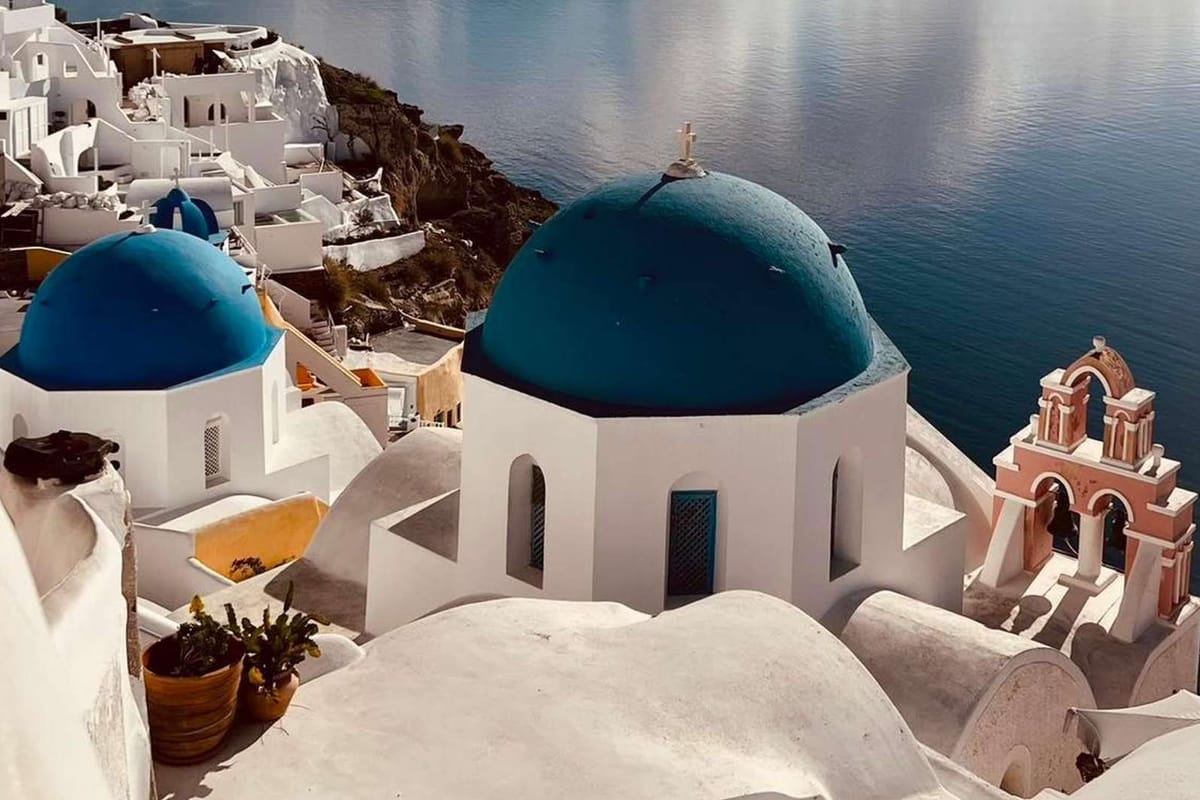
Wikivoyage Santorini calls the summer hot, and crowded with cruise ships as well as beach-goers. It adds that Oia fills with visitors at sunset. For the best time to visit Greece on that island, ship days set the size of the town crowd.
Mykonos meets the same pattern. Wikivoyage describes Mykonos Town as cosmopolitan and crowded. Catching a taxi is not easy when cruise passengers arrive together, as the Mykonos page notes.
Naxos differs. Wikivoyage Naxos states that the port of Chora, the main town, is too small for cruise ships. It adds that non-Greek visitors stay in the beach towns near Chora. The rural centre is easy to enjoy without them.
The fifteenth of August sets the Greek holiday crowd. The Agios Nikolaos article places Greek tourism in mid-August. Wikivoyage Greece says ferries in August fill up on the national holiday, so travellers plan ahead. Around that date, the best time to visit Greece calls for boats and rooms booked early.
Wikivoyage Santorini points to two shoulder seasons: spring from April through June, and autumn from September through October. Both bring milder weather and smaller crowds. The shoulder months are the best time to visit Greece for space.
In March and April, Wikivoyage Mykonos finds easier movement without crowds. It adds that the bulk of the shops and restaurants are shut for renovation until late spring.
At the big sites, an early start meets a thinner crowd in any month. Wikivoyage Greece finds tourism concentrated on Crete and the island groups. It adds the Peloponnese and Halkidiki to a lesser extent. The best time to visit Greece therefore depends on the place chosen as much as on the date.
What else comes up when weighing the best time to visit Greece?
Heat, rain and snow each keep their own calendar in Greece. Downtown Athens records a July night low of 24.2 degrees Celsius. Lindos on Rhodes records no rain at all in August. Four answers below add fresh numbers to the best time to visit Greece.
How hot does Athens get in July and August?
In downtown Athens, the Wikipedia table puts July and August level at 34.3 degrees Celsius for the mean daily maximum. Those two months set the hottest days for the best time to visit Greece in a city. The August mean low of 24.4 shows warm nights as well.
Rain is close to absent in the city. The table gives 10.7 millimetres for July and 5.4 for August. Records sit far above the means: 42.8 in July and 43.9 in August. Its highest reading of the whole year is 44.8, set in June. A hot spell pushes the best time to visit Greece for sightseeing toward early morning.
The Piraeus table covers an older span. There the July mean daily maximum reads 32.8 and August reads 32.9, with lows of 24.8 and 25.0. Anyone fitting the best time to visit Greece around July walks the open-air sites early or late.
Does it rain in autumn on the islands?
Rain returns in small steps, which shapes the best time to visit Greece in autumn. Lindos on Rhodes has no rain at all in August. September brings 5.8 millimetres there, and October brings 22.8. Downtown Athens records more in the same months: 25.8 in September and 38.6 in October.
Warmth lingers while the rain returns. Lindos has a mean daily high of 31.6 degrees Celsius in September and 26.6 in October.
The driest ground in Greece is island ground. Wikipedia cites the Hellenic National Meteorological Service for a hot semi-arid class that covers Kasos, Nisyros, Karpathos and Gavdos. Inside that class, Schoinoussa ranks as the driest area in the country.
From October to November the Lindos figure more than triples, from 22.8 to 73.0 millimetres. December brings 123.9. For the best time to visit Greece on an island in autumn, September is the lighter month. The wet turn begins after October.
Does snow fall in Greece?
Snow depends on height, so the best time to visit Greece for snow differs by place. Wikipedia calls the winters of the Pindus and Rhodope mountains harsh, with abundant snowfall. The higher mountains of Crete fall in the same class.
Locally the winter average falls below minus 3.0 degrees Celsius in the mountains and stays over 15.0 in the Dodecanese.
The cold records show the range. Ptolemaida holds the national low of minus 27.8, and a sinkhole at Kechroti read minus 35.3. Downtown Athens has a record low of minus 6.5, set in January, against a January mean daily low of 7.1.
The Kaimaktsalan ski centre stands at 2,090 metres and has its own climate table on Wikipedia. The page about Greece in winter covers snow and ski villages in full. Anyone weighing the best time to visit Greece for the coast can read the high mountains as a separate case.
What length of stay suits a first trip to Greece?
Count the days by the moves, not by the sights. Athens takes its own days, each crossing takes part of a day, and an island then needs its own days. A trip with a second island group adds one more crossing.
Naxos shows the scale. Wikivoyage Naxos states that regular ferries from Piraeus reach the island in roughly five and a half hours. The fast boats need three hours twenty-five minutes or three hours fifty-five minutes. It calls Naxos a central hub with connections in all directions. For the best time to visit Greece, that first crossing already fills a morning.
A first trip is a short chain: Athens, one crossing, one island, one crossing back. Give the crossing day its own place in the calendar, once in each direction. Every extra island repeats the crossing. Whichever month suits the best time to visit Greece for you, a longer wish list needs a longer calendar.