
Cyprus vs Greece sets one island country in the eastern Mediterranean against a mainland country with thousands of islands; both speak Greek, both use the euro and both sit in the European Union. The tours in Greece on the home page cover the Greek side of the choice.
This page compares the map, the beaches, the islands, the ancient sites, the mountains, the food, the language, the weather, the travel links and the entry rules; the Cyprus island page holds the full story of Cyprus.
What sets Cyprus vs Greece apart for a trip?
Cyprus vs Greece begins with one plain fact about the map. Cyprus is a single island country in the eastern Mediterranean. Greece sits largely on the Balkan peninsula of south-east Europe and adds thousands of islands around it. A trip to each is built in a different way.
Start with the name on the map. Cyprus lies off the coast of the Levant, south of Turkey. The article on Cyprus calls it an island country. It is a nation in its own right and not one of the Greek islands. In Cyprus vs Greece, that point clears up a common mix-up.
The article on the geography of Cyprus places the island in West Asia. In political geography, it adds, Cyprus counts as a European country. The article on Greece places the country largely in south-east Europe, with islands next to West Asia. Wikivoyage files both under one region, Eastern Mediterranean Europe.
Both countries belong to the European Union. Greece was the tenth member to join what is today the Union, in nineteen eighty-one. Cyprus joined in two thousand and four, together with nine other countries. For Cyprus vs Greece, that shared membership is the point of overlap.
The island of Cyprus has been divided since nineteen seventy-four. The Republic of Cyprus governs the south, the southern two-thirds of the island. In the north, the Turkish Republic of Northern Cyprus, a self-declared state that only Turkey recognises, runs the territory. A United Nations buffer zone, the Green Line, lies between them.
This page sets Cyprus vs Greece side by side on eleven subjects, in this order:
- Size and map
- Beaches
- Islands
- Ancient sites
- Mountains
- Food and drink
- Language and culture
- Weather and months
- Who each trip suits
- Flights, ferries and roads
- Money, plugs and entry rules
A one-island trip and an island-hopping trip use different tools. In Cyprus, one island allows a single base or a road trip from coast to coast. In Greece, the islands lie in groups, so a traveller links them one after another. The sections below show how Cyprus vs Greece plays out on each subject.
How do size and map compare in Cyprus vs Greece?
The gap in size is the first thing Cyprus vs Greece shows. Cyprus covers 9,251 square kilometres, as the article on the geography of Cyprus states. Greece covers 131,957 square kilometres, as the article on the geography of Greece states. That makes Greece more than fourteen times the area of Cyprus.
- Capital: Nicosia lies inland on the central plain of Cyprus. Athens lies in Attica on the Greek mainland.
- Latitude: Cyprus lies between 34 and 36 degrees north. Greece ranges from 35 to 42 degrees north.
- Land neighbours: Cyprus is an island and has none. Greece borders Albania, North Macedonia, Bulgaria and Turkey.
- Clock: both countries keep Eastern European Time.
A long coast is where Cyprus vs Greece parts ways. The Greek coastline measures 13,676 kilometres, and the article ranks it as the longest on the Mediterranean basin. The coast of Cyprus measures 648 kilometres, so the Greek shore is more than twenty times longer.
Greece divides into a mainland part and an island part. The mainland is largely mountainous, and smaller peninsulas such as Chalkidiki and the Peloponnese reach out from it. The island territory of Greece covers 21,461 square kilometres, which is more than twice the area of Cyprus.
Counting islands is harder than counting one. The article on the geography of Greece gives a range of 1,200 to 6,000 islands. A figure from the Greek Tourism Organization is 6,000 islands, with 227 of them inhabited. In Cyprus vs Greece, the count for Cyprus is a single island.
Cyprus faces a different set of neighbours. Turkey is the closest neighbour the article on the geography of Cyprus lists, 75 kilometres to the north. Lebanon sits 105 kilometres off, with Syria at 108, both to the northeast. Israel stands 200 kilometres away to the southeast, and Egypt 380 kilometres away.
The same article gives three Greek points to the west. Kastellorizo is 280 kilometres away, Rhodes 400 kilometres and the Greek mainland 800 kilometres. On this map, Cyprus vs Greece means a wide stretch of sea, and Turkey is the closer coast.
The size of Cyprus shapes the trip in plain ways. Its length from end to end is 240 kilometres, and its width tops out at 100 kilometres. A driver can cross it from one coast to the other without a ferry. On size, Cyprus vs Greece comes down to one compact island against a country of mainland and sea.
How do the beaches compare in Cyprus vs Greece?
On beaches, Cyprus vs Greece starts with a ratio. The article on tourism in Cyprus cites a report that ranks the island first globally for Blue Flag beaches. The measure is beaches per kilometre of coastline and per head of population. The east holds the larger part of them.
Greece also receives Blue Flag awards each year, as the article on tourism in Greece states. That article lists the long coastline, the islands and the beaches among the reasons visitors come. In Cyprus vs Greece, the Cypriot figure is a ratio, while the Greek coast is simply a long one.
Fig Tree Bay lies at Protaras. Its Wikipedia article lists a Blue Flag for the beach, which is 500 metres long. A seventeenth-century fig tree stands on the shore and gave the bay its name. Green turtles use the sandy beaches of Cyprus as habitat, as the tourism article adds.
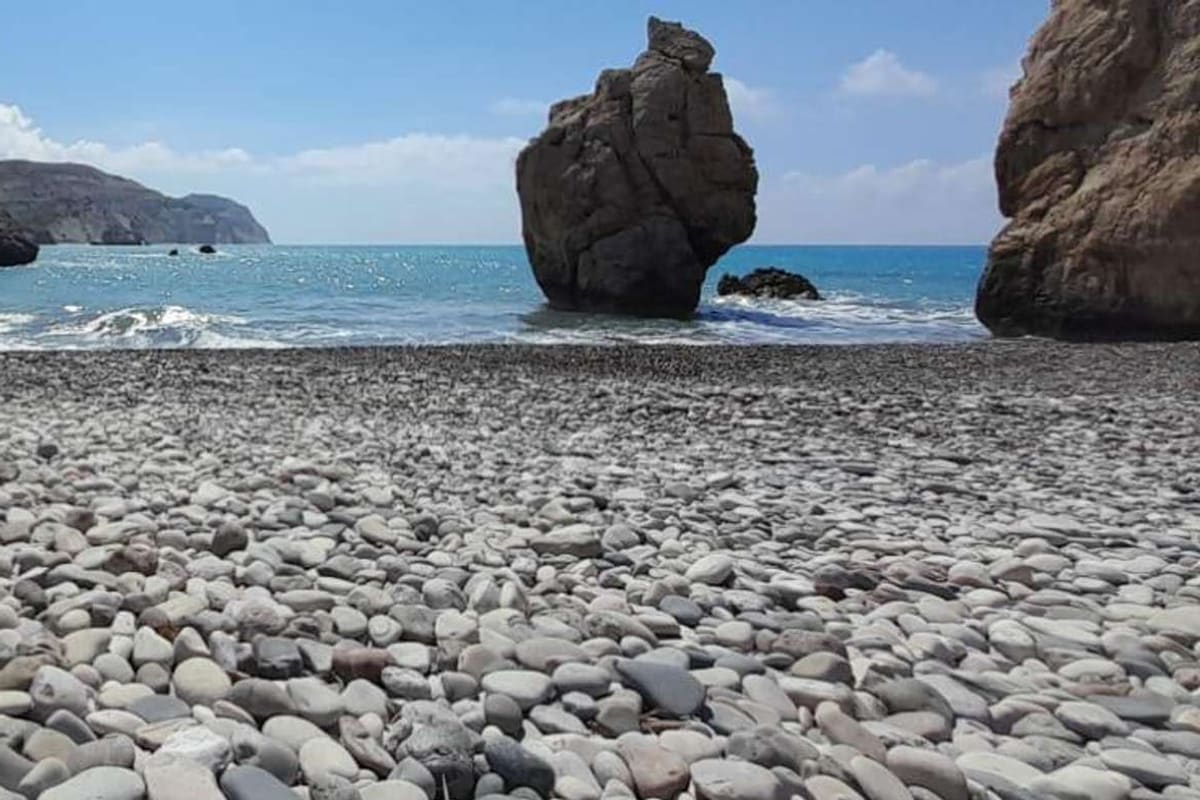
Petra tou Romiou, literally Rock of the Greek, bears a name that legend ties to the hero Basil. This sea stack stands off Kouklia, between Paphos and Limassol. Another legend links the nearby beach called Achni to the Achaeans. The tale has them landing on the way home from Troy. For Cyprus vs Greece, the name itself is the link.
Wikivoyage pictures the Cyclades as rocky islands with white villages and beaches along the shore. It calls the Ionian islands known for sandy beaches and clear water. The Crete article names Vai, a palm beach. It calls the forest behind it the largest of its kind in Europe. For beaches, Cyprus vs Greece changes by island group.
The sea sets the swimming season. The Aegean article puts the summer surface layer between 19 and 24 degrees Celsius. In winter the same layer cools: 8 degrees in the north, 13 in the south. These figures cover the Aegean only, not the Ionian coast.
The Cyprus climate article puts the sea around the island at 21 to 22 degrees on average across the year. A yearly average and a summer range are not like for like. Before Cyprus vs Greece can be read in degrees, both sides need the same measure.
How do the islands compare in Cyprus vs Greece?
For islands, Cyprus vs Greece sets one island against the six groups Wikipedia lists for Greece. The Cyclades sit in the central Aegean, the Dodecanese in the south-east and the Ionian Islands west of the mainland. The Saronic Islands, the Sporades and the North Aegean islands make up the rest.
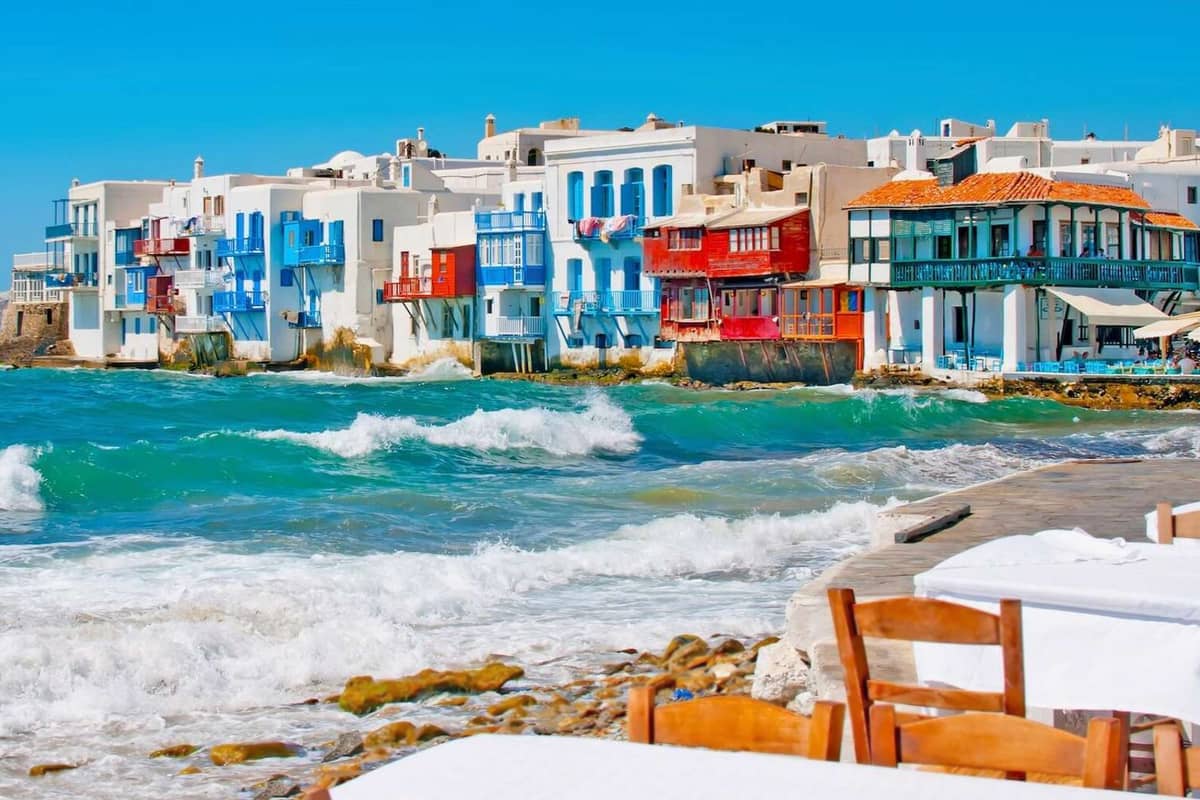
- Cyclades: the name comes from the circle the islands draw around Delos.
- Dodecanese: Rhodes comes first by size, and Kos comes third.
- Ionian Islands: the Seven Islands, six off the west coast and one off the Peloponnese.
- Sporades: a small, tight group off the coast of Euboea.
- North Aegean: Thasos, Samothraki, Limnos and Agios Efstratios lie in this loose grouping.
- Crete: Wikivoyage gives it a region of its own because of its size and importance.
In Cyprus vs Greece, the first split is shape. By area, the Geography of Cyprus article puts the island third among Mediterranean islands, behind Sicily and Sardinia. The same article says coastal lowlands surround the island. A coast road can link the towns around that rim, so one island means one coast to learn.
Crete is the island of Greece that comes nearest to Cyprus in size. The Crete article gives it 8,336 square kilometres. It ranks Crete fifth in the Mediterranean, behind Sicily, Sardinia, Cyprus and Corsica. For islands, Cyprus vs Greece therefore meets at one point: the largest Greek island is smaller than Cyprus.
The Greek islands article ranks Euboea second by area, Lesbos third and Rhodes fourth. It adds that the islands after Rhodes never reach beyond two-thirds of its area. Crete and Euboea stay outside the six groups. In Cyprus vs Greece, one large island meets four large Greek islands and a long tail of smaller ones.
Wikivoyage states that a ferry reaches every island, though the routes and how frequently they run change by season. A trip across two groups, such as the Cyclades and the Dodecanese, means more than one crossing. Cyprus vs Greece on islands is one base against a string of ports.
The groups differ in look and in past. Wikivoyage calls the Ionian islands green, unlike the Cyclades, and points to the rarity of rain. It adds that every island of the group has a character of its own. Venetian rule kept the group outside Ottoman control. The group joined modern Greece in eighteen sixty-four.
How do ancient sites compare in Cyprus vs Greece?
On ancient sites, Cyprus vs Greece starts with a count. The Wikipedia lists give Cyprus three UNESCO World Heritage properties, all cultural, and Greece twenty-one: eighteen cultural and three mixed. Both countries still reach back to the Neolithic age, as Choirokoitia and Knossos show.
The Cypriot listings came in three steps. Paphos entered in nineteen eighty, the painted churches of the Troodos in nineteen eighty-five, and Choirokoitia in nineteen ninety-eight. In the Cyprus vs Greece count, each Cypriot listing has its own age. They are Ptolemaic and Roman Paphos, Byzantine churches and a Neolithic village.
Three places make up the Paphos listing. They are the ruins of Nea Paphos, the necropolis called the Tombs of the Kings, and old Palaepaphos in Kouklia. The tombs are cut from solid rock and span the fourth century BC to the third century AD. At times the builders shaped a tomb like a house of the living.
On prehistory, Cyprus vs Greece meets early. Radiocarbon dating put Choirokoitia at about seven thousand BC, after its first excavator had guessed about four thousand BC. Around 20 similar settlements of that age lie across the island. The ten painted Troodos churches and monasteries are Byzantine, nine listed first and one added in two thousand and one.
Delphi and the Acropolis of Athens joined the Greek list in nineteen eighty-seven. On the Greek side of Cyprus vs Greece, the Acropolis sits on a rock 150 metres above the sea. The fifth century BC building programme was coordinated by Pericles. It brought the Parthenon, a gate called the Propylaea, the Erechtheion, and Athena Nike’s little Ionic temple.
For sanctuaries, Cyprus vs Greece brings Delphi, which occupies a south-western slope of Mount Parnassus. Ancient Greeks placed the middle of the world there. The Omphalos stone marked the point. At Olympia in the Peloponnese, the ancient games ran every four years. They began in the eighth century BC and ended in the fourth century AD.
Knossos stands on Kephala hill, and the historic centre of Heraklion lies about 5 kilometres to its north. Settlement there began around seven thousand BC, the same date as Choirokoitia. The first palace followed about nineteen hundred BC. In twenty twenty-five, Knossos entered the Minoan Palatial Centres listing. Kydonia, Zominthos, Zakros, Malia and Phaistos sit in it too.
How do the mountains compare in Cyprus vs Greece?
For mountains, Cyprus vs Greece shares a name before it shares a height. Olympus in Cyprus, also called Chionistra, stands at 1,952 metres in the Troodos range. Olympus in Greece rises to 2,918 metres at its peak, Mytikas. Each one is the highest point of its country.
- Troodos range, centre of Cyprus: Olympus, also called Chionistra, at 1,952 metres.
- Kyrenia Range, north coast of Cyprus: a narrow limestone ridge.
- Pindus range, spine of mainland Greece: up to 2,637 metres.
- Psiloritis, on the island of Crete: 2,456 metres.
The Troodos range sits near the centre of Cyprus. The rock beneath it is an ophiolite, a slice of old sea floor lifted when two tectonic plates collided. That slow process also formed the island. In Cyprus vs Greece, the Troodos is a range whose stone records how Cyprus came to exist.
In Cyprus vs Greece, the second Cypriot chain is the Kyrenia Range on the north coast. Seen from the plain, it is a thin wall of limestone that climbs abruptly. Its eastern end turns into the foothills of the Karpas Peninsula. Its tallest summits climb to a little over half the height of Olympus.
Olympus in Greece rises near the Thermaic Gulf, where Thessaly meets Macedonia. Counting its peaks gives 52, with deep gorges between them. The sea lies only 18 kilometres from Litochoro, so the mountain reads as an isolated tower of almost 3,000 metres. In nineteen thirty-eight, Greece named it its first national park.
The two peaks share a name, and the sources tie both to ancient worship. The geographer Strabo wrote that one promontory of the Cypriot mountain carried a temple. It honoured Aphrodite Acraea, which means Aphrodite of the Heights. For mountains, Cyprus vs Greece therefore holds two Olympus peaks, each with a sacred past.
For mainland ranges, Cyprus vs Greece sets the Pindus against the Troodos. The Pindus cuts across the middle of Greece, running north-west to south-east. Branches of it reach the Peloponnese and continue below the Aegean as islands, Crete among them. Crete, second in size to Cyprus in the eastern Mediterranean, reaches 2,456 metres on Psiloritis.
On wildlife, Cyprus vs Greece starts with the Cyprus mouflon. This wild sheep lives only in the Paphos District mountains. It is the national animal of the island. Snow marks a second split. The climate page for Cyprus puts snow on the Troodos alone. The Greek page names the Pindus, the Rhodope and the high mountains of Crete.
How do food and drink compare in Cyprus vs Greece?
Cypriot cooking draws on Turkey, Greece and the Levant, while Greek kitchens are built on wine, wheat and olive oil. For food and drink, Cyprus vs Greece shares grilled pork, olives, meze and ouzo. Halloumi, zivania and Commandaria are protected Cypriot names under European Union rules.
Halloumi shows how food and language meet. The English name comes from Modern Greek, via Cypriot Maronite Arabic, which borrowed the word from Egyptian Arabic. The Turkish name, hellim, has the same root. Within the European Union, only cheese made in parts of Cyprus can carry the name. On cheese, Cyprus vs Greece has a clear line.
Greek cooking has its own cheeses. The cuisine article names feta, kasseri, kefalotyri, graviera, manouri and mizithra. It adds that climate and terrain favour goats and sheep over cattle. Cyprus has halitzia, a slightly sour, feta-like cheese of goat or sheep milk. Villages of the Tylliria area make it, and salads use it.
The souvlaki article names pork as the main meat of both countries. Athens uses souvlaki for any pita wrap, and meat on a skewer is kalamaki. In Cyprus, souvlaki names both the chunks of meat and the dish, served in a large pocket pita. So for grilled meat, Cyprus vs Greece shares the pork and changes the wording.
The Meze article lists Cyprus beside Lebanon and Syria, where a meze spread serves as the meal. For Greece, the same article names a plate of snacks served with ouzo or tsipouro. Cypriot tzatziki, called talattouri, gives the Greek recipe a stronger mint flavour and lemon juice. On meze, Cyprus vs Greece shares the dip and changes the seasoning.
Ouzo is an anise-flavoured aperitif drunk widely in Cyprus and Greece. Within Europe, European Union rules reserve the name for makers in Greece and Cyprus. Zivania is a Cypriot pomace brandy, and its name comes from zivana, the Cypriot Greek word for pomace. Its traditional stills resemble those for tsikoudia in Crete, so for spirits, Cyprus vs Greece overlaps.
Commandaria is the sweet wine of Cyprus. Law limits it to fourteen villages on south-facing Troodos slopes, between five hundred and nine hundred metres up. It ages at least two years in oak. Greece holds an old wine style of its own. Retsina, flavoured with pine resin, goes back to ancient Greece, as the Greek cuisine article states.
How do language and culture compare in Cyprus vs Greece?
Greek is an official language in both countries, and Cyprus names Turkish as its second. Cypriot Greek differs from the standard form in sounds, words and grammar. For language and culture, Cyprus vs Greece shares an alphabet and a church family, yet each keeps its own voice.
- The word for “what” is ti in standard Greek and inta in Cypriot Greek.
- The future particle is tha in standard Greek and enna in Cypriot Greek.
- Cypriot Greek has double consonants that standard Greek lacks.
Cypriot Greek has no established spelling. It entered education in the late nineteen seventies. Online, people commonly type it in Latin letters, with sh for a sound that standard Greek lacks. Its vocabulary carries loanwords from Old French, Italian, Occitan and, increasingly, English. For “I look”, Cypriot Greek says thoro where standard Greek says vlepo.
Linguists place Cypriot Greek in the southeastern group of Modern Greek varieties, beside the dialects of the Dodecanese and Chios. Greece holds its own pockets of difference. Tsakonian, a language derived from Doric Greek, is still spoken in villages of the southeastern Peloponnese. On dialects, Cyprus vs Greece shows variety on both sides.
Turkish is the second official language of Cyprus, and Cypriot Turkish is the everyday speech of the Turkish Cypriot community. Armenian and Cypriot Maronite Arabic count as recognised minority languages. English works as the island’s bridge language, a role tied to its colonial past and to tourism.
Britain took over the administration of Cyprus in eighteen seventy-eight, under a lease. Independence followed in nineteen sixty. Greece emerged as a modern state in eighteen thirty, after a war of independence that began in eighteen twenty-one. For culture, Cyprus vs Greece therefore reflects two different modern histories, one with a British chapter.
Each country has its own self-governing Orthodox church. The Church of Cyprus is based at the Archbishop’s Palace in Nicosia and counts 67 monasteries. The Church of Greece is based in Athens and counts 541. Its territory, the article states, leaves out Crete, the Dodecanese and Mount Athos. In faith, Cyprus vs Greece shares Orthodoxy but not administration.
How do the weather and the months compare in Cyprus vs Greece?
For the weather, Cyprus vs Greece sets a small island against a country with eleven climate types. Cyprus is subtropical Mediterranean, and April to November makes up its warm season, about eight months in all. Greece is very mountainous, so its climate classification finds eleven types, from island coasts to snowy peaks.
Cyprus has a Mediterranean and semi-arid climate, as the climate article states. Winters near the sea are very mild. Dry heat holds from late spring to mid-September. Rain arrives between November and mid-March, with brief spring and autumn seasons in between.
For summer heat inland, Cyprus vs Greece starts in Nicosia, which stands at 162 metres. The climate table gives a July daytime high of 37.2 degrees Celsius there, and 15.5 in January. Inland, temperatures vary more than on the coast, where large swings are rare.
In February the sea near Cyprus holds 17 degrees Celsius, and in August it reaches 27 to 28. Between late spring and November, the sea holds above 20 degrees on average. Winter sunlight on Cyprus lasts five to six hours a day, against about six on Greece. On winter light, Cyprus vs Greece stays close.
Greece is predominantly Mediterranean, but the mainland is very mountainous. The Pindus range splits the mainland. Ground to its west is wetter. Ground to its east turns drier in summer, with more wind. Northern Greece blends continental, Mediterranean and humid subtropical types. Yearly averages run from 4 degrees Celsius at Kaimaktsalan to 22 at Lindos.
On the islands, Cyprus vs Greece looks alike in summer, with sunny, dry weather in both. The Cyclades add very windy days. Winters in the Greek islands are wet, and any snowfall melts quickly, above all on slopes that face south. In the Dodecanese the winter average passes 15 degrees Celsius in places.
On rain, Cyprus vs Greece shows wide gaps inside each country. The Mesaoria plain of Cyprus receives 300 to 400 millimetres a year. Nearly 1,100 millimetres fall at the top of the Troodos massif. In Greece, Xerokampos records 219 millimetres a year, while Theodoriana records 2,529. A rain figure needs a place name before it means anything.
On high ground, Cyprus vs Greece shares one pattern, a cold winter above a mild coast. The climate article gives the Cypriot mountains a cooler, wetter pattern, with frost and snow early in the calendar year. In Greece, the Pindus and high Crete form an alpine Mediterranean zone, with harsh winters and abundant snow.
Which travellers fit Cyprus vs Greece?
Cyprus vs Greece sorts travellers by the kind of trip they want. A beach week from one base fits Cyprus, and island hopping fits the Greek islands. History, walking and winter sun work in both countries. Each type below gets a plain place fact from the sources.
- The beach week from one base points to Cyprus.
- The island hopper points to the Greek islands.
- The history trip works in both countries.
- The walker finds trails in both countries.
- The winter sun trip looks south in both.
- Families fit both with a plan for the transfers.
For a beach week from one base, Cyprus vs Greece points to the island. Ayia Napa and Protaras, in the east and south-east, depend almost entirely on tourism. The bulk of their visitors arrive between March and November. One island means one base and short day drives.
Island hopping belongs to Greece. The Dodecanese, lying between Crete and Turkey, are a loose group among the traditional island clusters. Cyprus is a single island, so a moving trip there is a loop by road from town to town.
For a history trip, Cyprus vs Greece offers a sea cliff on one side and rock pillars on the other. Kourion, a coastal city-state of south-western Cyprus, took in Greek settlers from Argos in the twelfth century BCE. In Greece, Meteora crowns pillars of sandstone and conglomerate with monasteries, and UNESCO lists the six that remain.
For walkers, Cyprus vs Greece offers trails. Nature trails start at Platres. The Kalidonia trail runs by the Caledonia Waterfalls, and the Millomeris trail ends at the Millomeris Waterfall. The northern entrance of the Samaria Gorge on Crete lies at 1,250 metres. Inside the park the walk covers 13 kilometres.
Wikivoyage names Samos, Sifnos, Kefallonia, Koufonisi and Tilos as Greek islands good for walking. It adds Andros, Iraklia and Skopelos. For Cyprus, its page points to hiking trails through cedar forests. The Troodos article places the Cyprus cedar on the highest peaks. So a Greek walk starts from an island, and a Cypriot walk from a range.
For winter sun, Cyprus vs Greece points south in both countries. In Limassol, the daily maximum in January and February averages 18 to 20 degrees Celsius, as the climate article states. Limassol and Paphos keep tourism running through the winter, as the Tourism in Cyprus article states. Northern Greece is colder in winter. The south and the islands stay milder.
For families, Cyprus vs Greece is a question of moves. One island means one transfer and one base. Greece offers a choice of islands, each with its own transfer by air or sea. A family that wants fewer moves reads the map before the weather table.
How do flights, ferries and roads compare in Cyprus vs Greece?
Cyprus vs Greece splits first on the side of the road. Cyprus keeps left and Greece keeps right, as Wikipedia’s article on left- and right-hand traffic states. Flights, ferries and buses then follow a map of one island against a mainland country with islands in two seas.
For flights, Cyprus vs Greece begins with the number of gateways. Larnaca International Airport is the island’s main gateway, set four kilometres to the southwest of its town. Paphos International Airport, on the southwestern coast, is the second. Wikivoyage adds that Paphos takes charter flights.
Athens holds the largest international airport of Greece. The airport lies east of central Athens: about twenty kilometres away, and thirty by road because hills intervene. Its list of domestic routes includes Heraklion, Santorini, Rhodes, Mykonos and Corfu.
On the islands, Cyprus vs Greece differs in the count of airports. Wikivoyage’s page on the Greek islands lists thirteen islands with international airports, among them Corfu, Rhodes, Kos, Mykonos and Santorini. It adds ten islands with domestic flights only. In winter, the page on Greece says, the islands are reached by domestic flights through Athens.
Ferries carry the traffic between Greek islands. Wikivoyage describes a hub and spoke system, with Piraeus at the centre and routes running out to each island group. Athens has three ports: Piraeus, Rafina and Lavrio. Ferries reach every island, the Greek islands page states, though routes and frequencies change with the season.
For the sea link, Cyprus vs Greece comes down to a short list of routes. Wikivoyage states that regular passenger ferries between Piraeus and Limassol returned in twenty twenty-two after a twenty-year break. It gives one or two crossings a week in summer and one every second week outside it.
Cyprus is one of four European countries that keep left, and all four are islands. The others are the United Kingdom, Ireland and Malta. Every part of Cyprus keeps left, including the north, the buffer zone and the British base areas. Greece kept left unofficially after independence; its traffic code made the right official in nineteen twenty-six.
On land, Cyprus vs Greece shows two bus pictures. Wikivoyage says bus routes cover all of Cyprus. Intercity buses run every hour or two from six in the morning until nine in the evening. The island has no railways. In Greece, independent bus businesses join in a national network that covers almost the entire country.
How do money, plugs and entry rules compare in Cyprus vs Greece?
On money, Cyprus vs Greece shares the euro but not the year each joined the eurozone. Greece joined in two thousand and one, a year before euro notes and coins appeared. Cyprus joined in two thousand and eight, as the Wikipedia article on the eurozone states.
- Money: the euro in Greece and in the south of Cyprus, the Turkish lira in the north.
- Plugs: Type C and Type F in Greece, Type G in Cyprus.
- Entry: Greece inside the Schengen Area, Cyprus not yet.
- Emergency number: 112 in both.
In cash terms, Cyprus vs Greece has one extra case, the north of Cyprus. Wikivoyage’s entry on Cyprus names the Turkish lira as the money there. It adds that euros are generally taken in the tourist centres of the north. The south of Cyprus and the whole of Greece use the euro.
On plugs, Cyprus vs Greece does not match. The mains electricity table of Wikipedia gives Greece Type C and Type F sockets at 230 volts. For Cyprus it gives Type G sockets at 240 volts. The plug article lists Cyprus among the European countries that do not use the Type F plug at all.
For borders, Cyprus vs Greece differs on the Schengen Area. Wikipedia lists Greece as a member, with full application from the year two thousand. Cyprus is an EU member, committed by treaty to join; the page lists it outside the area. Wikivoyage adds that travel to or from Cyprus brings normal immigration checks.
Wikivoyage lists the papers. In Cyprus, citizens of the EU, the EEA and Switzerland carry a passport or ID card valid for the stay. In Greece, the entry names a stay of up to ninety days without a visa for EEA and Swiss citizens. Each entry sends readers to that country’s foreign ministry for the full rules.
For help, Cyprus vs Greece shares one number, 112, which Wikivoyage gives as an emergency number for both. Crossing points over the United Nations buffer zone link the south of Cyprus with the north. The Wikipedia page on the zone lists crossings at Ledra Palace and at Ledra Street, both in Nicosia. It notes no motor vehicles at either.
What else comes up when readers weigh Cyprus vs Greece?
These four answers settle what readers ask next in Cyprus vs Greece. One trip can take in both by air. Late autumn days are warmer on the Cyprus coast than in Athens. English works in both, and Aphrodite links the two. Each answer rests on a plain source fact.
Can one trip take in both countries when weighing Cyprus vs Greece?
Yes, and the air link is the plain way to join them. For Cyprus vs Greece on one trip, the Wikipedia article on Larnaca airport names Athens as a key destination. London sits beside it, and each drew around 1.4 million passengers in the year the article reports.
The same article lists Greece among five markets highlighted for Cyprus, beside the UK, Israel, Poland and Germany. Plan one base in each country rather than a daily shuffle. A stay on one stretch of the Cyprus coast can be followed by Athens or by one island group.
Island hopping and an island road trip are different trips, so each needs its own days. One detail is easy. The two country articles name one zone for both, Eastern European Time. It sits two hours later than UTC in winter, and summer time adds another hour.
In Cyprus vs Greece, which is warmer in late autumn?
For Cyprus vs Greece in November, the island runs warmer by day. The climate tables on Wikipedia give the Larnaca airport station a mean daily maximum of 22.6 degrees Celsius. The Limassol station gives 23.5 degrees. Downtown Athens shows 18.9 degrees, and Thessaloniki in the north shows 16.6 degrees.
Nights differ less. Larnaca airport shows a mean daily minimum of 12.5 degrees, close to the 12.2 degrees of downtown Athens. Inland Nicosia, at 162 metres above sea level, is cooler at night, with 10.4 degrees. Larnaca airport also logs 216 hours of sunshine in November.
A corner of Crete comes close to the island. Xerokampos, at 8 metres above sea level, shows 21.6 degrees by day and 17.4 degrees by night in November. For Cyprus vs Greece, the Greek answer depends on which base the trip uses.
Is English enough for a trip in Cyprus vs Greece?
For Cyprus vs Greece, English carries a visitor a long way in both, for different reasons. On the island, Wikipedia states that English has no official status. It still features widely on road signs, in public notices and in advertisements. Greek and Turkish hold official status there.
The background is British rule. English was the sole official language during the colonial years, and the lingua franca until nineteen sixty. Courts of law kept using it in practice until nineteen eighty-nine, and legislation until nineteen ninety-six.
Place names follow the same mix. Wikivoyage notes that city names take Greek, Turkish or English spellings by context. Limassol is Lemesos in Greek, and Paphos is Pafos.
Greece shows a different picture. Wikivoyage places English first among the foreign languages studied and understood there, ahead of French, Italian and German. Almost everyone who works in tourism and public transport is expected to know basic English, Wikivoyage adds. On newer roads, certain signs are translated into English outright.
Which sights share a myth in Cyprus vs Greece?
One story joins a Cypriot shore with a Greek island. For Cyprus vs Greece, tradition names a sea stack, Petra tou Romiou, as the birthplace of the goddess Aphrodite. In Hesiod’s Theogony, the goddess rises from the foam of the sea. A local tradition has the waves carry her to Kythera before they bring her to Cyprus.
Petra tou Romiou lies at Kouklia, the site of ancient Palaepaphos. The Sanctuary of Aphrodite Paphia there was founded in the twelfth century BC. In the local tradition, Aphrodite then went to the assembly of the gods from Cyprus.
Two islands share her. Kythera, also spelled Kythira, is an island in Greece off the Peloponnese peninsula. Its article states that ancient Greek mythology considered the island Aphrodite’s own. It names Cyprus as another island devoted to her. The old acropolis has a temple of Aphrodite Ourania.
The gods have a mountain on the Greek mainland. Greek myth sets their home on Mount Olympus. The summit called Mytikas carries a name that translates as nose. Next to it, the peak Stefani is also called the Throne of Zeus. Religious pilgrims or priests made the first ascent in antiquity.