Greece travel resources are the official pages a traveller checks before and during a trip: the tourism body, the entry rules, the health card, the emergency numbers, the forecasts, the port and airport notices, the opening hours of sites and the public holidays. The home page lists the tours in Greece that these sources help you plan.
This page names each public body and what it publishes; the greece travel tips page turns that into practical advice, and the greece map page shows where each region lies.
What are greece travel resources, and which ones does a trip use?
Greece travel resources are the pages that public bodies publish for visitors. They hold rules, forecasts, timetables, opening hours and alerts. A trip uses them in four steps: planning, travelling, visiting and special interests. Each source is read for the body that owns the fact it holds.
An official source comes from the public body that makes a rule or runs a service. A travel blog comes from one writer and one trip. The blog tells a story about the rule. Official greece travel resources hold the rule in the words of the body that wrote it. Rules change, so the date on the page matters.
This page follows the order of a trip, and the groups of greece travel resources on it are these:
- Tourism and trip planning
- Entry rules and EU border systems
- Health cover and emergency numbers
- Weather, sea state and civil protection alerts
- Ports, airports, rail, coaches, Athens transport and driving
- Opening hours, tickets, UNESCO sites, holidays, language, phones and time
- Trails, beaches, access, maps, festivals, foods and embassies
Tourism gives greece travel resources a large audience. Wikipedia’s Tourism in Greece article calls tourism a key element of the economic activity of the country. By its account, the modern tourist boom began in the sixties and ran through the seventies. The Bank of Greece figure it cites counts 40.7 million visitors from abroad in the latest year shown.
A trip reads these sources at two moments. The planning pages, such as tourism and entry rules, are read before the trip. Weather and alerts are read on the day. Each later section of greece travel resources names the public body that publishes its facts.
Read three things on every page: the name of the body, the date, and the place or period it covers. A page that names its body and its date lets a traveller judge it. Every one of the greece travel resources below passes through this simple test.
Which public body publishes the tourism side of greece travel resources?
The Greek National Tourism Organisation publishes the tourism side of greece travel resources. It is the governmental board for the promotion of tourism in Greece. The Ministry of Tourism oversees its work. Its Greek name is Ethnikos Organismos Tourismou, and its short forms are GNTO and EOT.
The body was founded in nineteen twenty-nine and re-established in nineteen fifty. Its article calls it a public entity. Its headquarters stand on Tsoha Street in Athens. Both dates come from its article and show a long record. The article also lists it as a member of the UNWTO and the ETC.
Its stated mission is to develop and promote the Greek tourism product. It does this through promotional campaigns in Greece and abroad. The article lists slogans from past campaigns. Three of them are Live your Myth in Greece, Always in Season and All you want is Greece.
The mission text speaks of an extensive network of overseas offices. The article names an office in London, which also serves Ireland, and an office in New York City. Among greece travel resources, the tourism body is therefore a source with a presence abroad as well as in Athens.
The Ministry of Tourism is the government department in charge of tourism in Greece. It was established in nineteen eighty-nine. Its article says it was restored as a distinct ministry on the fifth of November, two thousand sixteen. The ministry runs an official website in Greek and English, so its greece travel resources come in two languages.
The national tourism website holds the visitor pages. Its home page shows a live weather box. A section named Visit Greece Suggests lists thematic routes, such as Meteora, Climbing Mount Olympus and the lakes of Greece. A separate section covers the off-season. The article’s references cite this site for the campaigns and the overseas offices.
These tourism pages are the part of greece travel resources a traveller opens for ideas. The later sections move from ideas to the rules and services behind a trip. Entry rules come next, because they decide whether a trip can start at all.
Where do greece travel resources set out entry rules and visas?
Greece travel resources name the Greek authorities as the body that sets and enforces entry rules. The UK government’s page for Greece states this in its opening lines. The European Commission explains the Schengen Area behind them. Each traveller’s home government writes advice for its own citizens.
Among greece travel resources, the Commission’s Schengen page gives a plain count. It lists 29 countries: 25 EU member states and four non-EU countries, namely Iceland, Norway, Switzerland and Liechtenstein. The same page says the Schengen project began on a vessel on the River Moselle. Luxembourg, Germany and France share that territory.
A trip that links Greece with Cyprus adds one line to greece travel resources from the EU. The Commission page says Cyprus takes part in Schengen cooperation. The Council has not yet abolished its internal border controls. Wikipedia adds that the visa-free time limit for Cyprus is counted separately from the one for the Schengen Area.
Greece travel resources also show who needs a visa at all. The EU keeps two lists, one for nationals who need a visa and one for nationals who do not. Wikipedia names the Greek foreign ministry’s page on this subject among its sources. It adds that a visa is requested at the embassy or consulate of the main destination.
Transit has its own rule in greece travel resources. Wikipedia states that a passenger who changes planes at one Schengen airport does not need a visa in general. The passenger must stay airside in the international transit area for less than one day. Nationals of twelve listed countries must still hold an airport transit visa.
The UK page for Greece is one example of home-country advice. It is written for people travelling on a full British citizen passport. It names the visa-free purposes: family visits, business meetings, cultural or sports events and short-term studies. It tells unsure readers to contact the Greek Embassy in the UK.
How do greece travel resources explain the new EU border systems?
Greece travel resources describe the Entry/Exit System as an automated EU system. Each crossing of an outer Schengen border by a non-EU short-stay visitor is recorded by it. The Commission page says the system stores the name, travel document data, fingerprints and facial images. The record also keeps when and where the traveller came in and left.
Not every traveller is registered, and greece travel resources list the exceptions. Wikipedia names EU citizens with a passport or national identity card. It also names holders of a residence card from an EU or Schengen country. An EU dual citizen is told to carry both passports and to enter on the European one.
Greece travel resources split the process into a first crossing and later ones. At the first, a traveller gives personal details. An officer photographs the face, scans fingerprints, or does both. Later crossings need only an identity check. Self-service kiosks at certain border points serve travellers registered less than three years before who hold biometric passports.
Among greece travel resources, the UK page adds four details for its readers. Children aged 11 or younger have no fingerprints scanned, but a photo can be required. Registration is free. A digital record is valid for three years. A wrong record is corrected by asking the border officials at the next crossing.
ETIAS is the second system. The Commission page states its status directly: ETIAS is currently not in operation and no applications are collected. The Union will announce the start date months before the launch. Once the system goes live, applicants will use an official website or a mobile app. The EU agency eu-LISA develops the system.
ETIAS covers visa-exempt visitors, whose short stays are capped at 90 days in any 180. Greece travel resources add that it covers 30 states, and Wikipedia’s list includes Greece. Wikipedia says the authorisation is not a visa. It is valid for three years or until the passport expires, whichever comes first. Final admission rests with national border officers.
Which greece travel resources cover health cover and medical care?
Greece travel resources on health start with the European Health Insurance Card (EHIC). Wikipedia says it is issued free of charge to people insured in the European Economic Area or Switzerland. It gives the holder treatment on the same terms as residents of the country visited, if care becomes necessary.
The card is for care that becomes necessary during a visit, such as after an illness or an accident. It is not for a trip made to obtain medical care. It does not cover non-urgent care, such as dental care, that can wait until the holder is home. Greece travel resources list these limits beside the card.
In the EU, the right to care follows the country where a person legally lives, not citizenship. A passport alone is therefore not enough proof. The card holds no photo, so staff can ask for a photo ID as well. For UK travellers, greece travel resources name the Global Health Insurance Card in that role.
The UK page on Greece sets two checks before a trip, for readers of greece travel resources. One asks whether the destination can provide the healthcare a traveller needs. The second is a travel policy covering treatment in Greece and an unplanned medical evacuation. The page asks travellers to contact the insurer quickly after a referral to a medical facility.
Greece travel resources describe care inside Greece. Wikivoyage says hotels and tourist agencies can advise where to go when you are ill. Helicopter ambulances serve the islands. They fly a patient who needs urgent attention to a major hospital on another island or in a city. The UK page adds that island facilities can be limited.
Wikivoyage notes that pharmacies closed on a Sunday post a sign on the door naming the nearest open ones. Greece travel resources add a tip: know a medicine’s generic name, because brand names can differ. The UK page asks for a doctor’s letter that states the quantity needed. It names the Greek National Organisation of Medicines for questions.
Where do greece travel resources list the emergency numbers?
Greece travel resources give 112 as the number for every emergency. The European Union sets the rule that everyone can contact the emergency services on 112 free of charge. Wikipedia lists the ambulance, fire and rescue, and the police as the services it reaches.
A GSM handset can dial 112 even when it is locked. Two different digits lower the risk of accidental calls. Children, vibrations and faulty keys repeat one key far more than they press a set sequence. A European body of postal and telecommunications administrations first set 112 as the pan-European number.
EU rules require every member state to give people with disabilities equal access to 112. The Advanced Mobile Location technology lets the emergency services retrieve the caller’s accurate position. European 112 Day falls on the eleventh of February, because that date reads 11/2. These EU rules stand behind the 112 line in greece travel resources.
Greece travel resources keep the national numbers beside 112. The list below draws on Wikivoyage, the article on 112 and the article on the Hellenic Police.
- 112: every emergency, with the ambulance, fire service and police.
- 100: the police, through the dispatch centre of the regional unit, where a shift supervisor handles text messages sent to 100.
- 166: the ambulance and emergency medical services.
- 199: the fire service.
- 108: the coast guard.
- One five seven one: the dispatch centre of the Tourist Police.
Greece travel resources explain who answers a call to 100. The Hellenic Police article names Immediate Response departments in ten places, among them Attica, Thessaloniki, Patras, Heraklion and Chania. These departments send out car and motorcycle patrols. Local precincts carry out the patrols in the rest of the country.
Two more lines in greece travel resources come from the UK page. A UK mobile that dials 999 in Greece is connected to the Greek emergency services automatically. The same page tells a hiker who has an accident or is lost to call 112. Reverse 112, which sends warning messages to phones, is covered in the civil protection section.
Which greece travel resources report the weather and the sea state?
For forecasts on land and at sea, greece travel resources point to one public body: the Hellenic National Meteorological Service. Wikipedia calls it the government agency responsible for weather forecasts and observations in Greece. The service was founded in nineteen thirty-one, and its portal carries forecasts, warnings and marine bulletins.
The service works from Elliniko in Athens, at the former airport, under the Hellenic Air Force. Its staff are military and civilian, about 565 people in the main building and in branches. The weather network covers almost the entire country. It was first built on the network that the National Observatory of Athens set up.
The official portal is a set of greece travel resources in itself. Its menu lists current weather, forecasts, warnings, marine, aviation, climate data, a climate atlas and seasonal forecasts. Its page of questions says that a warning in force shows at the top of every page. Marine and aviation pages hold the detail by sector.
For the sea, the marine page posts a bulletin for the Mediterranean and the Black Sea, labelled METAREA 3. Wind strength appears in Beaufort numbers, while the sea state is shown as significant wave height. Greece travel resources on that page name sea areas too. Three are the northeast Aegean, the southeast Aegean and the sea of Kastellorizo.
The Beaufort scale is the key to those winds in greece travel resources. It honours Francis Beaufort, a Royal Navy hydrographer, as its article explains. Each step ties a wind speed to what an observer sees at sea or on land. In the northern Aegean, the meltemi blows from the northeast to the north, as the etesian article states.
Greece travel resources on warnings follow the European MeteoAlarm system, which EUMETNET developed and Greece has joined. It has four colours: green, yellow, orange and red. The Greek warnings page has a colour key with the texts be informed, be prepared and take preventive measures. It lists the emergency weather bulletin, EDEK, and states whether one is in force.
How do greece travel resources send civil protection alerts?
Greece travel resources send civil protection alerts to phones through the 112 service. The national registry lists, as the competent body, a ministry whose title pairs the climate crisis with civil protection. The EU-Alert article calls GR-Alert the national variant for Greece. Alerts go to phones in a defined area.
Greece travel resources on alerts rest on a European code, adopted on the eleventh of December, two thousand and eighteen. Under it, every member state must build a warning system for citizens and visitors in an area. The EU-Alert article adds that a dedicated sound plays even when the phone is on silent.
Among greece travel resources, the UK advice page for Greece tells visitors to enable emergency alerts on their phones. It gives the menu path for three kinds of phone. The alerts come from the Emergency Communication Service of the Greek government. They reach a phone by its location, so the page asks travellers to keep the phone with them.
The national registry lists a second service among greece travel resources: the Registered Citizens Notification Service 112 GR-Alert. Registration is digital and free of charge, and takes about one minute. A person picks up to three places of interest. Alerts for each place come by text message, email or voice call. The service runs in Greek and English.
In the fire season, a Fire Risk Prediction Map appears daily from the General Secretariat of Civil Protection. A regional government page lists it among greece travel resources, and the map has five categories. Category three is high and category four is very high. The Hellenic Fire Service, part of the ministry, took over forest fires after nineteen ninety-eight.
On a wildfire alert, the UK page asks travellers to follow the official 112 account for updates. For earthquakes, it links greece travel resources to a map of assembly points across Greece, with text in Greek. A regional page names two response plans: IOLAOS 2 for forest fires and ENGLADOS for earthquakes.
Which greece travel resources cover ports and sailing bans?
Among greece travel resources for ports, the Hellenic Coast Guard comes first. Wikipedia calls it the national coast guard of Greece, founded by an Act of Parliament in nineteen nineteen. Port operations are one of its listed duties. When rough weather holds boats in port, the port authority decides.
Wikipedia writes the Greek name as Limeniko Soma, Elliniki Aktofylaki, which reads Harbour Corps – Hellenic Coast Guard. Its parent ministry is the one for Maritime Affairs and Insular Policy. The article on that ministry states that it manages the ports and harbours of Greece. These greece travel resources link the coast guard and its ministry to the ports.
Greece travel resources can read the duties of the Coast Guard from Wikipedia. They include port operations, apart from the pilot service, and search and rescue. For search and rescue, it works side by side with the navy and the air force of Greece. A photo shows the flag of the body outside its office in Rethymno Harbour.
The article names two central sites of the body. Piraeus holds the Maritime Rescue Coordination Center, while Aspropyrgos holds an emergency radio station. A vessel traffic service watches the busy sea lanes around Piraeus, Elefsis, Lavrion and Rafina. In greece travel resources on the sea, these four names mark the ports under watch.
Rough sea changes a sailing day. Wikivoyage states that from January to March the Aegean can turn extremely rough. In that case a ship can wait at the quay for days. It names the port authority, not the ferry companies, as the body that decides. Greece travel resources on ferries point to the port authority for delays.
Greece travel resources on ferries meet a gap: Wikivoyage finds no single source for every ferry schedule. Ticket offices at each departure port also put up their own, it adds. Wikipedia lists 108 as the Coastguard number, next to 112. Boats under a non-EU flag need a transit log stamped by the port police in every harbour.
Where do greece travel resources cover airports and flights?
For airports, greece travel resources name the Hellenic Civil Aviation Authority. Wikipedia calls it a department of the Greek government that covers air traffic control and airport operations. Its first day of service came in late March of two thousand and one, on the twenty-eighth. A railway station stands beside its terminal.
The authority works under the Ministry of Infrastructure, Transport and Networks, as Wikipedia names it. Its tasks also include licensing of civil air operators and certification of personnel. The headquarters stand at Glyfada, near the old Ellinikon Airport. Greece travel resources for flights name the body for its air traffic control.
Wikipedia lists the radar sites of the authority. A primary radar stands at Ymittos, near Athens. Approach radars stand at Athens International Airport, on the Kamara and Merenta hills, and at Thessaloniki near Peraia. One system, PALLAS, joins the stations. The authority also uses remotely operated VHF radio stations for civil aviation communications. A small flying unit checks navigation aids.
The article on transport in Greece counts sixteen international airports, eleven military airports and twenty-six airports of mixed use. By passenger numbers, the top two are Athens and Thessaloniki. Wikipedia’s list of Greek airports links each airport code to a page at the authority. Greece travel resources can follow the same path to the airport of a flight.
It is the biggest international airport in the country, as Wikipedia states. The site sits about twenty kilometres east of the city centre; hills stretch the drive to about thirty. Its codes are ATH in the IATA system and LGAV in the ICAO system. Greece travel resources on this page leave flight times to the airport and the airline.
The terminal connects to its own railway station by a raised walkway. That station is a stop on metro line 3 and on the suburban railway. Airport buses depart from the arrivals level, between exit four and exit five. Regional buses link the airport to Rafina, Lavrion and Keratea. By road, the Attiki Odos serves it from central Athens.
Which greece travel resources cover the railways and long-distance coaches?
Greece travel resources on trains begin with the Hellenic Railways Organisation. Wikipedia calls it the national railway company, which owned and maintained all railway infrastructure except the Athens rapid transit lines. In August of twenty twenty-five, a new state-owned body named Greek Railways was confirmed to take over those duties.
In greece travel resources on rail, the short form OSE comes from the Greek name, Organismos Sidirodromon Ellados. The body began on the first of January in nineteen seventy-one. It took over from the Hellenic State Railways, which dated from nineteen twenty. The Greek state owned it in full. Its headquarters stood on Karolou Street in Athens.
Among greece travel resources, the article on the organisation gives 2,293 kilometres as the active length of the network. That is the latest count it states. About 1,800 kilometres run in permanent operation. Sections such as the Peloponnese metre-gauge network run only in the tourist seasons. The longest tunnel, Kallidromo, measures 9.6 kilometres.
The article on Greek rail calls the Piraeus-Platy railway the busiest passenger and freight line in the country. It is electrified and double-tracked, and it serves Larissa, Katerini and Thessaloniki. The full Athens to Thessaloniki run measures 506 kilometres. Greece travel resources from Wikivoyage place the rail traffic in that corridor and on the suburban lines of both cities.
Greece travel resources describe the Athens Suburban Railway as a service on the organisation’s lines. Transport for Athens coordinates it. The article on Greek transport lists three Athens routes: to the airport, to Kiato and to Chalcis. Athens Central Station, also called Larissa Station, sits on the red metro line. Trains to the north and the Peloponnese leave from it.
In greece travel resources, long-distance coaches form a separate national network. Wikivoyage describes independent businesses that cooperate, with government support. The routes cover almost the whole country, including near islands such as Corfu and Cephalonia. The coach ticket already includes the ferry crossing. Athens has two coach stations, Kifissos and Liossion, and the transport authority lists both.
How do greece travel resources explain public transport in Athens?
Greece travel resources point to OASA, the Athens Urban Transport Organisation, which runs public transport across the capital. Its subsidiary companies operate the metro, the tram, the trolleybuses and the buses of the wider Athens area, Wikipedia says. The Greek government owns it in full.
The authority was founded in December of nineteen ninety-three. Greece travel resources show a two-part structure below it. One company, whose Greek name means Road Transit, runs the buses and trolleybuses. Another, whose name means Fixed Transit, runs the metro and the tram. A Greek law of March, twenty eleven, merged the old metro and tram companies into it.
Greece travel resources describe the metro as three lines with 66 stations on 91.7 kilometres in all. Line 1, the green line, runs 25.7 kilometres and has 24 stations. The red Line 2 covers 18.7 kilometres with 20 stations. Line 3, the blue line, runs 47.3 kilometres and has 24 stations.
Line 1 opened in the nineteenth century as a steam railway and was electrified in the early twentieth. It ran from Piraeus to Thiseio at first. Until late January in the year two thousand, it was the only rapid transit line in Athens. In greece travel resources, five interchange stations join the lines: Attiki, Monastiraki, Omonia, Piraeus and Syntagma.
No other tramway runs in Greece today, and the Athens line opened just before the summer Olympic Games. The bus network runs combustion buses, trolleybuses and battery electric buses. Each metro line meets the tram and the suburban railway at least once. The metro article adds that it also connects with buses and trolleys.
In greece travel resources, the paper ticket gave way to an electronic ticket and card. Every mode of transport takes contactless bank cards and phone payments. Buses and trams use a tap reader; the metro and suburban trains have turnstiles. The authority’s home page lists a network map of Attica and a real-time app for buses and trolleybuses.
Where do greece travel resources set out the rules for driving?
Greece travel resources set out the rules for driving on the Your Europe page for Greece. The national authorities provide its content, as the notice on the page states. The page sends readers to national websites for the rules on road tolls, emission stickers and time-based charges.
The page opens with a menu of nine rule headings. This layout lets a reader of greece travel resources go straight to one rule. Where a rule carries sanctions, the page puts them under the rule.
- Alcohol limits, forbidden lane and influence of drugs
- Mobile telephone, safety helmet and seat belts
- Speed limits, traffic lights and other specific rules
These greece travel resources give a standard speed limit for each vehicle class. The list runs from passenger cars, vans and lorries to buses, mopeds and motorcycles. Light personal electric vehicles have their own entry. Electric scooters, roller skates and skateboards are not permitted on roads where the limit is above 50 kilometres an hour.
The traffic light section explains the flashing red light. Your Europe says it means stop, under the same rules as a red light. The page limits it to level crossings, swing bridges and ferry landing stages. It also covers fire-fighting vehicles entering the road and aircraft crossing it at low altitude. These greece travel resources name each case.
Wikipedia explains the road names on a map. A motorway number starts with the letter A, and a national road number starts with EO. The A1 runs for about 550 kilometres. These greece travel resources also name toll-free stretches, such as the A52 branch to Lefkada and the A24 to Chalkidiki.
The UK government adds a home-country view of greece travel resources on driving. Its road travel section asks drivers to check whether the car needs a UK sticker. For quad bikes and mopeds, a provisional licence has no validity in Greece, it warns. A moped needs at least category A1, and the UK category P is not valid there.
Which greece travel resources list the opening hours of sites and museums?
Greece travel resources list the opening hours of sites and museums on the pages of the Ministry of Culture. A site page carries the hours, a telephone number and dated notices. A museum page carries the hours with the weekly closed day, the address and the services of the museum.
Wikipedia says the Ministry of Culture is the government department that preserves the cultural heritage and promotes the arts. It began in August of nineteen seventy-one as the Ministry of Culture and Sciences. The article lists the Acropolis Museum and the National Gallery among its bodies. For hours, greece travel resources start from this department.
The Ministry page for the Acropolis of Athens shows how a site page is built. Under administrative information, the page lists telephone numbers and names the antiquities ephorate for the city of Athens. Below come the hours, the visitor rules and the museum shop. These greece travel resources keep the hours and the telephone number on one page.
The portal for archaeological museums belongs to the Directorate of Archaeological Museums, Exhibitions and Educational Programs. It covers national, regional and local museums across the country. A museum page lists services: shop, parking, ramp, lift, toilet for disabled visitors and a map. It then gives the address and the hours, with the closed day beside them.
A shared note on the museum page names the closing days. On Good Friday and Holy Saturday the opening hours differ. The note asks visitors to call the museum before the visit. A traveller checks the date against this list of greece travel resources. Museums close on these days:
- The first of January and the twenty-fifth of March
- Greek Orthodox Easter Sunday and Labour Day
- December the twenty-fifth and December the twenty-sixth
The Acropolis page gives the hours of the museum shop apart from the hours of the site. In summer and in winter alike, the shop’s doors open at eight. It closes at half past seven in the evening in summer and at five in the afternoon in winter. These greece travel resources keep the two sets of hours apart.
How do greece travel resources explain entry tickets and free entry days?
The Ministry of Culture sets out entry tickets and free entry days in its own greece travel resources. It runs an official online ticket service with the body named ODAP. Its site pages list the free days of State sites and museums. A traveller reads both before choosing a day.
The Ministry of Culture and ODAP run the ticket service, which describes itself as the official one. It lets visitors book online for museums and cultural sites of Greece. It offers a search by region and a search near the visitor. Among greece travel resources, it is the page that issues official tickets.
A regional office shows how greece travel resources look on a site page. Island by island, the Cyclades ephorate of antiquities sets out its museums and sites. Entries such as Delos carry an e-ticket link beside the directions link. The page also holds a checker for free or reduced entry.
The ministry portal page for a State site lists the days of free entry. Greece travel resources of this kind give them for sites and museums that the State owns and the ministry runs:
- The sixth of March: Melina Mercouri Memorial Day
- The eighteenth of April: International Monuments Day
- The eighteenth, in late spring: International Museum Day
- The twenty-eighth of October: National Day
- Every first and every third Sunday of the cooler half-year, November through March
The same portal page names the groups who enter free on showing papers. Visitors from EU states aged twenty-five or under show a passport or identity card. Children up to eighteen from other countries show a passport. Adults over twenty-five in evening or vocational schools in the EU or EEA show a certificate of attendance.
The Cyclades checker in these greece travel resources asks for a country, a date of birth and a visit date. It adds school or student groups on an educational visit, and a person with a disability from any country. One companion also enters free where the level of disability it sets is met.
For Athens, Wikivoyage states that combined tickets no longer exist, so each site sells its own. One Acropolis ticket also opens the Dionysus theatre and the Herodes Atticus odeon. The Acropolis Museum lies outside the security perimeter and needs a separate timed-entry ticket. Greece travel resources on Athens give these rules site by site.
Where do greece travel resources list the UNESCO sites of Greece?
UNESCO keeps the World Heritage List. Its page for Greece anchors greece travel resources on the subject. The page shows twenty-one properties on the list and eleven sites on the tentative list. Wikipedia adds a short note on each property.
Greece ratified the World Heritage Convention on the seventeenth of July, nineteen eighty-one. Mount Athos, Meteora and Mount Olympus form the three mixed ones; the Wikipedia list counts eighteen cultural properties beside them. The first Greek inscription was the Bassae temple, built for Apollo Epicurius. Delphi and the Acropolis followed in the next year.
Here is a choice of entries that greece travel resources point to:
- Acropolis of Athens: a fortification on a steep hill that grew into a sanctuary of the goddess Athena.
- Bassae temple of Apollo Epicurius: the oldest monument to combine the Doric, Ionic and Corinthian orders.
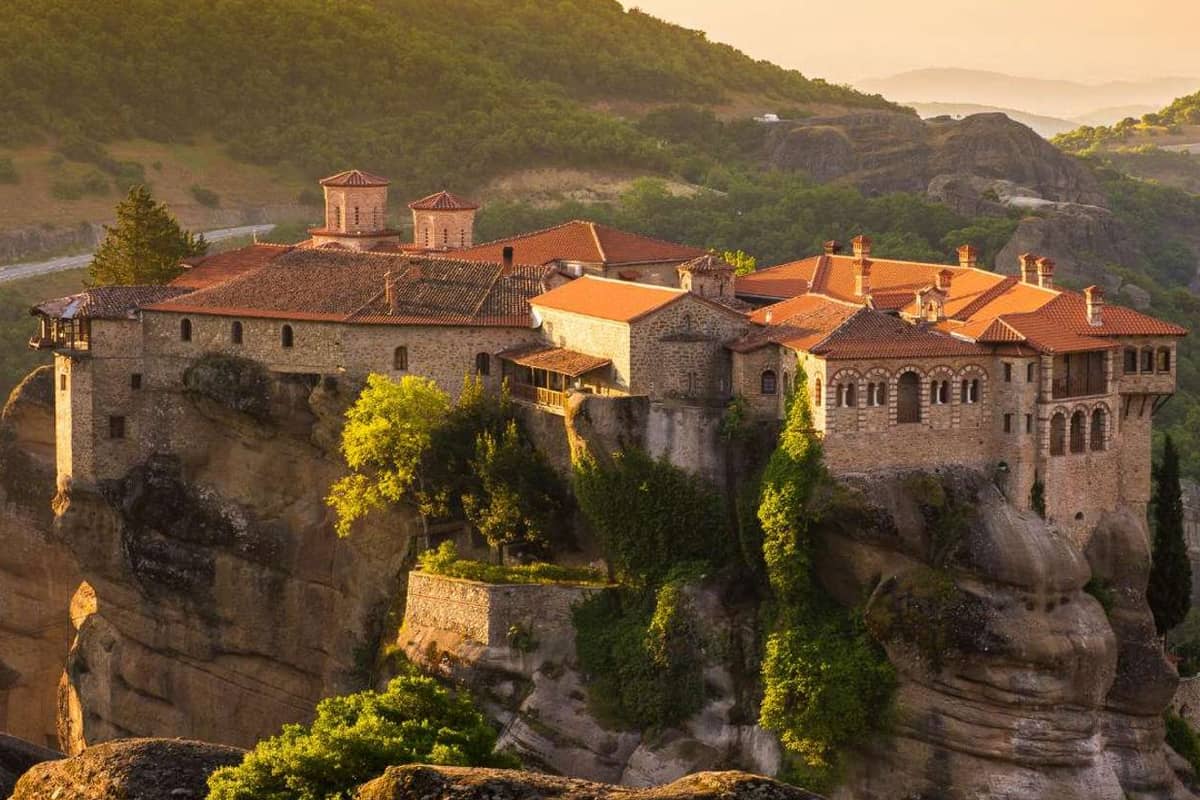
- Meteora: sandstone peaks with Orthodox monasteries, decorated with frescoes of the sixteenth century.
- Mount Athos: a narrow peninsula and a centre of Orthodox faith from the tenth century onward.
- Aigai (today’s Vergina): the earliest royal seat of Macedon, with over three hundred burial mounds.
- Zagori Cultural Landscape: forty-five stone-built villages joined by cobblestone paths and stone bridges.
- Minoan Palatial Centres: six centres, among them Knossos, Phaestos, Malia and Zakros.
- Mount Olympus and the land around it: at 2,918 metres, no peak in Greece rises higher.
UNESCO lists sites under ten criteria, and each entry meets at least one. Criteria one to six are cultural, and seven to ten are natural. A mixed property such as Meteora meets both kinds. Greece travel resources also name the eleven tentative sites, among them the Petrified Forest of Lesvos and the Prespes Lakes.
The UNESCO page shows a year beside each name, so greece travel resources of this kind date their facts. Its latest addition is the wider area of Mount Olympus. A new entry changes the count, so a traveller checks the page itself for the current number.
Which greece travel resources list public holidays and closures?
Greece travel resources name twelve national holidays, and the list has not changed in recent decades. Eight fall on fixed dates, and four are moveable. The Ministry of Labour announces the mandatory days each year, so a traveller checks the list first.
The fixed days in these greece travel resources run through the year in this order.
- First of January: New Year’s Day
- Sixth of January: Theophany
- Twenty-fifth of March: Independence Day and the Annunciation
- First day of the fifth month: Labour Day
- Dormition of the Theotokos, held each fifteenth of August
- Twenty-eighth of October: Oxi Day
- Twenty-fifth of December: the Nativity
- Twenty-sixth of December: the Synaxis of the Theotokos
Four holidays move each year. Clean Monday falls the day after Orthodox Carnival. Orthodox Good Friday falls two days before Easter Sunday, and Easter Monday follows it. Pentecost Monday follows Orthodox Pentecost. Greece travel resources give a rule for these four, not a date.
Each holiday in greece travel resources carries a stated meaning. Independence Day, the twenty-fifth of March, recalls the declared start of the war of independence in eighteen twenty-one. On Oxi Day, Greece remembers how it said no to an Italian ultimatum in nineteen forty. The day after Christmas is a holiday, which the article compares with Boxing Day.
A holiday that falls on a Sunday is not moved to another date. Labour Day is the one exception in these greece travel resources.
Towns keep local days outside the national list. A patron saint’s day, called a name day, or a Liberation Day closes schools by custom. A profession can hold its own day, such as the Three Hierarchs for the patron saints of education.
For sites, a Ministry of Culture and Sports museum page names six holidays when museums stay open. They are Theophany, Clean Monday, Easter Monday, Holy Spirit Monday, the Dormition and Oxi Day. Holy Spirit Monday is the Pentecost Monday of the national list. The same page names six closing dates, so greece travel resources for sites need both lists.
How do greece travel resources help with the Greek language and alphabet?
Greece travel resources start the language with the alphabet, which has twenty-four letters from alpha to omega. Greek writers took it up near the end of the ninth century BC or early in the eighth. It was derived from the Phoenician alphabet. The Latin and Cyrillic scripts both descend from it, as the article states.
In greece travel resources on the language, the letters come first, and they changed shape over time. Ancient Greek used capitals only, without accents. By the ninth century, Byzantine scribes had begun to use lowercase letters drawn from cursive capitals. Sigma has a second lowercase form, and that form stands only at the end of a word.
Modern Greek keeps two marks, the stress accent and the diaeresis, since monotonic spelling became official in nineteen eighty-two. A Wikivoyage phrasebook, one of the greece travel resources for language, adds that capitals carry no accents. So only the diaeresis shows a split pair of vowels in capital text.
Standards decide how Greek names reach Latin letters in greece travel resources. ELOT 743, from the Hellenic Organization for Standardization, was revised in two thousand and one. The Greek and Cypriot governments adopted its Type 2 scheme for names on passports. The International Organization for Standardization approved ISO 843 in nineteen ninety-seven; ELOT adopted it four years later.
Greece travel resources can show the same name under more than one spelling. The Romanization article lists Giannis as Yannis, Yiannis, Ioannis or Jani, and Agios as Hagios, Aghios or Ayios. The article on Piraeus gives Peiraias as the Greek name and Peiraieus as the older form.
Ten everyday words cover a day in Greece. The same phrasebook prints each one with a sound spelling, shown below as it prints them.
- Hello: YAH sahss, literally “your health”
- Thank you: ef-hah-rees-TOH
- Yes: neh
- No: OH-hee
- Please: pah-rah-kah-LOH
- Good morning: kah-lee-MEH-rah
- Good evening: kah-lee-SPEH-rah
- Water: neh-ROH
- The bill: to logariasmo, parakalo
- Excuse me: See-GHNO-mee
Greeklish is Greek typed in Latin letters. It has spread in Greece with digital telephony, because Greek fonts are not always supported. The Romanization article gives thelw and 8elo as two spellings of one word.
Which greece travel resources cover phones, roaming and the time zone?
The Your Europe roaming page and the Time in Greece article are the greece travel resources for phones and clocks. Inside the European Union, a phone roams without extra charges, as the portal states. Clocks in Greece sit two hours ahead of UTC in winter, on the zone called Eastern European Time.
The Your Europe portal states the roaming rule in plain words, so it opens the greece travel resources on phones. In another EU country, a traveller pays no additional charge to use a phone. The portal calls this “roam like at home”. The rule also covers calls and texts received. Iceland, Liechtenstein and Norway follow it too.
The portal also defines roaming, and the definition shapes how greece travel resources apply it. Roaming means using a phone while occasionally away from the country of the subscription. That is the country where a person lives, works, studies or has stable links. A traveller who spends more time at home than abroad is considered to be roaming.
Ferries and flights add one line to greece travel resources on phones. In a harbour or an airport, a land-based network stays inside the rule. On a ship or plane, a satellite link falls outside the EU rules. The portal then advises switching off roaming or turning on flight mode.
Wikipedia’s article on telephone numbers in Greece is one more of the greece travel resources for calls. Dialable Greek numbers have ten digits, apart from short codes. The first digit shows the service: two for a geographical number, six for a mobile number. A call from outside Greece starts with +30. Athens has the area code twenty-one.
Greece travel resources on the clock start with Eastern European Time, UTC+02:00. Summer time, at three hours ahead, runs between the closing Sundays of March and October. A directive of the European Union makes summer time mandatory for member states. Greek clocks change at three in the morning in spring and at four in autumn.
Where do greece travel resources map hiking trails and mountain shelters?
In Greece, member clubs of the national mountaineering federation mark and keep up the E4 path. The federation stands behind the greece travel resources on trails. The E4 is part of a long European route that ends in Cyprus and also visits Crete.
Wikipedia lists the E4 among the European long-distance paths, with a length above 10,000 kilometres. In Greece it enters from Bulgaria near the border crossing of Promachonas. The northern stage names Florina, Olympus, Meteora and Agrafa. The central stage reaches Delphi and Itea. These greece travel resources list the route as place names.
The Peloponnese stage runs from Diakofto through Kalavryta, Tripoli, Sparti and Mystras to Gythio. The same list marks a refuge on Taygetos. From Gythio the path goes on by ferry to Crete. Wikipedia adds that marking between the Bulgarian border and the Peloponnese can be poor. A traveller therefore seeks current local information.
Greece travel resources on the E4 begin with its signs. Wikipedia describes aluminium plates with a yellow rhombus on white and the words E4/6 in black. Painted marks on rocks and trees show two parallelograms, yellow and black, on white. The federation publishes a leaflet in English, French and German, plus descriptions with maps in English and German.
Greece travel resources on refuges point to the owner. The Mount Olympus article lists the Christos Kakalos refuge as the federation’s, run from late spring to October. The E4 article warns that mountain refuges can be closed. Wikipedia defines a mountain hut as a building at high elevation that gives hikers food and shelter.
The Samaria Gorge in Chania is sixteen kilometres long, as Wikipedia states. By Wikipedia’s account, the gorge park opens in late spring and shuts once October ends. Greece travel resources point to NECCA, the nature and climate change agency that absorbed the park’s management body.
The agency’s ticket page lists opening hours, ticket categories, the route and emergency notices, and it issues e-tickets. The earlier site of the former management body is no longer updated and stays online for archival purposes. A traveller checks which page carries the current dates.
Which greece travel resources rate beaches and bathing water?
The Blue Flag and the EU bathing water reports are the greece travel resources that rate a beach. The Foundation for Environmental Education grants the flag. EU law sorts bathing water into excellent, good, sufficient and poor, and the European Environment Agency compiles the results.
The Blue Flag is a certification from the Foundation for Environmental Education, a not-for-profit body of more than 100 organisations. It is one of the greece travel resources that comes from outside the ministries. It covers beaches, marinas and operators of sustainable boating tourism. An international jury issues the awards each year.
A beach needs at least thirty criteria, spread over four groups. They cover education and information, water quality, environmental management and services. These greece travel resources therefore read like a checklist. At the beach, the water results, a facilities map and a code of conduct must be on display.
The services group asks for lifeguards or life jackets, first aid equipment and drinking water. Another line asks for at least one Blue Flag beach per municipality that people with a physical disability can use. That line leads to the access facts in the next section.
The Wikipedia table of Blue Flags in force lists 583 beaches, 17 marinas and 17 boats for Greece. The tourism website of the Greek National Tourism Organisation gives Blue Flag beaches a part of its beaches section. These greece travel resources word the flag as a symbol of quality.
The class depends on the levels of faecal bacteria. The two bacteria tested are E. coli and intestinal enterococci. Member states monitor the water in the bathing season, and greece travel resources rest on those tests. For water rated poor, the agency page lists steps such as a ban on bathing or advice against it.
The European Environment Agency compiles the data that member states send in. Each year it assesses the previous bathing season. Together with the European Commission, it shares the result with the public before the next season. Its map viewer shows the water near a given place.
How do greece travel resources help travellers with reduced mobility?
The Travelling Beyond Barriers page of the national tourism website opens the greece travel resources on access. It states that accessibility in Greece is still a work in progress, and that the options vary by destination. A traveller checks each place before the trip.
For Athens, the page lists what greece travel resources can confirm. All metro stations are accessible and have lifts. Buses and trolleybuses carry kneeling systems or ramps. Authorities add tactile paving and keep ramps clear. For service details, the page points to OASA, the Athens transport authority.
On the coast, the same greece travel resources count remote-controlled, solar-powered chairs at over 200 beaches. A chair carries a wheelchair user from the boardwalk to the water, over the sand. Beaches with the chairs can add accessible changing rooms, showers, bathrooms and shaded areas. The page also points to a directory and an interactive map.
At the sites, the page says the Acropolis now has a wheelchair-friendly lift and level paths. It names, among others, the Acropolis Museum and the National Archaeological Museum. Sounio’s Temple of Poseidon and the Ancient Agora of Athens are on it as well. The page describes such adaptations as ramps, lifts and wheelchair-friendly bathrooms.
On flights, the EU Your Europe portal states a right to assistance at the airport, free of charge. The right covers travellers with a disability or reduced mobility. Help includes luggage and getting on and off the plane. These greece travel resources add free carriage of a recognised assistance dog, medical equipment and two pieces of mobility equipment.
It advises calling the seller of the ticket, the carrier or the tour operator 48 hours or more ahead. Even with later notice, they still have to make every reasonable effort to help. Boarding cannot be denied for a disability, except where the aircraft is too small or aviation regulations prevent it.
The tourism page ends with a plain note. Rugged terrain and old towns can limit access, and not every place has been adapted yet. It tells readers to check online and to call ahead about amenities and assistance. These greece travel resources point the way, and a call confirms the details at each place.
Where do greece travel resources hold official maps and place names?
For official maps, greece travel resources point to the Hellenic Military Geographical Service, the mapping agency of the Greek military. It began in eighteen eighty-nine as the Geodetic Mission and took its present name in nineteen twenty-six. Its stated role is to compile topographic and cadastral maps of Greece.
Among greece travel resources, this is the state’s own mapmaker. The Geodetic Mission was set up to compile the Topographic and Cadastral Map of the Country, as Wikipedia states. Today the service supports both the army and the general public with cartographic products. The article adds that it is not a state monopoly.
City plans come at three scales: one to five thousand, one to ten thousand and one to twenty-five thousand. The article says each scale has a Greek series and a Latin series. The first covers twenty cities and the second covers sixteen. A reader of Latin letters looks for the Latin series among these greece travel resources.
Topographic maps run from one to twenty-five thousand up to one to one million. The article counts about 385 maps at one to fifty thousand and around 130 at one to one hundred thousand. The largest scale has 26 maps of regions near Athens. These greece travel resources cover the whole country and, now and then, parts of neighbouring countries.
Not every map is open to the public. Part of them are confidential and need the approval of the service. The products are not available in the market. A traveller buys them in the service’s online shop or collects them from its offices with a request form. The article calls them little known among hikers.
The maps use the Hellenic Geodetic Reference System of nineteen eighty-seven, which places all Greek territory in one zone. A newer system now serves the cadastral surveys. The UK page tells walkers to carry a map, a GPS and a charged phone. A map saved offline needs no signal, so keep these greece travel resources on the phone.
Which greece travel resources list festivals and the cultural calendar?
Among greece travel resources for culture, the Athens Epidaurus Festival is a summer entry. Each year, its article says, the arts festival runs in Athens and at Epidaurus between late spring and October. Since its founding in nineteen fifty-five, both places have hosted its music, theatre and other cultural events.
In Epidaurus, part of the programme runs in the ancient theatre on the site of the Asclepion. Shows there run each Friday and Saturday through July and August. The theatre has a capacity of 10,000 and is renowned for its acoustics. For drama, greece travel resources name the tragedies of Aeschylus, Sophocles and Euripides and Aristophanes’ comedies.
The Epidaurus Festival opened on the nineteenth of June with the Hecuba of Euripides. Georgios Rallis, Minister of the Presidency at the time, pushed for its founding. The national tourism organisation ran both festivals, at Epidaurus and in Athens, during the early years. The Athens festival began in the same year.
Two more venues serve the festival. The Odeon of Herodes Atticus lies along Dionysiou Areopagitou Street, on the southwest flank of the Acropolis. Herodes Atticus raised it in his late wife’s memory: Aspasia Annia Regilla. Shows at the theatre of Palaia Epidavros began as a trial called Musical July in nineteen ninety-five. Greece travel resources name each venue.
The Thessaloniki International Film Festival is held every November in Thessaloniki, under the auspices of the Ministry of Culture. It began in nineteen sixty as Greek Film Week and turned international in nineteen ninety-two. Since nineteen ninety-nine it has also used restored warehouses at the port. Greece travel resources also list its Documentary Festival, held in March.
The national tourism website has an events page under five headings: dance, exhibitions, festival, music and sports. Wikivoyage calls carnival, or apokries, a major celebration though not an official holiday. On Holy Friday and on Saturday evening, it adds, Easter processions take place, with fireworks at midnight. Greece travel resources like these let a traveller match dates to events.
How do greece travel resources mark protected foods and local products?
Among greece travel resources, the protected designation of origin of the European Union marks foods tied to one place. Under the scheme, per Wikipedia, production, processing and preparation all happen inside one defined area. Local producers apply their know-how and use ingredients from that region.
The mark appears as a logo, and use of the logo is compulsory. The abbreviation changes with the language: PDO in English, AOP in French and DOP in Italian. Protected names sit in a European Commission register; its eAmbrosia database covers foods, wines and spirits. These greece travel resources point a traveller to that register.
Feta is a protected name that greece travel resources on food can point to. Only cheese from mainland Greece or the Lesbos prefecture, made by the traditional method, carries the name feta. The milk is sheep milk, or sheep milk mixed with goat milk from the same area. The article calls it a soft white cheese kept in brine.
The protection dates from the year two thousand and two. An earlier registration was annulled by the EU Court of Justice, and the Commission registered the name again. Cephalonia makes feta the traditional way too, yet the island falls outside the protected area. The ageing time has a minimum of three months.
Kalamata olives are another protected name for greece travel resources on food: the region around Kalamata. It is a dark purple olive. Grown elsewhere, the same variety carries the EU name Kalamon. Santorini fava comes from a plant grown on the island of Santorini. The plant joined the EU list of protected products, the article notes.
The mastic tree gives this resin, which gathers in small drops known as tears. Its name, Masticha Chiou, is protected by the EU. The harvest, called kentos, runs from early July until early October. Feta, Kalamata olives, Santorini fava and Chios mastic start a list of protected names in greece travel resources on food.
Where do greece travel resources list embassies and consulates?
For foreign missions, greece travel resources start with the Ministry of Foreign Affairs of Greece. Wikipedia describes it as a government department headed by the Minister for Foreign Affairs. A separate list of diplomatic missions counts eighty-six embassies in Athens and names consular posts in nine cities.
In greece travel resources the ministry is an old name, one of the oldest in Greece. Theodoros Negris is regarded as its first minister. It took its present name in February of eighteen sixty-three. The headquarters is the Syggrou Mansion on Vasilissis Sofias Avenue in Athens. Its tasks include promoting Greek tourism interests abroad, as the article lists them.
The list of missions gives greece travel resources a count: eighty-six embassies in Athens. Other countries have non-resident embassies or honorary consulates, and the list names Brussels, Geneva and London as seats. The UK entry page is for holders of a full British citizen passport. It sends an unsure traveller to the Greek Embassy in the UK.
Consular missions sit in more cities than the capital. The list groups them under nine cities: Athens, Piraeus, Thessaloniki, Corfu, Heraklion, Ioannina, Komotini, Rhodes and Zakynthos. It calls them consulates-general unless labelled otherwise. For island travellers, greece travel resources show the UK posts at Corfu, Heraklion, Rhodes and Zakynthos as vice-consulates.
A consulate assists and protects citizens of its own country who are abroad. Its activities include protecting their interests and issuing passports, as the Consul article lists them. The UK government page on emergency travel documents covers a traveller whose passport is lost, stolen or damaged. The document it describes allows travel through a maximum of five countries.
A home country’s travel advice pages complete the set of greece travel resources on missions. The UK page on getting help offers email notices when its Greece advice changes. It also points to English-speaking lawyers and to translators and interpreters in Greece. The page adds that the office cannot give tailored advice for individual trips.
Which other questions do travellers ask about greece travel resources?
Which greece travel resources can a traveller save on a phone before the trip?
Among greece travel resources, the British foreign travel advice for Greece offers a copy to keep. Its five sections include entry requirements, health and getting help. Every page links to a printable version of the full advice, so the copy can hold all five sections.
The advice names one item for the phone. It tells travellers to save the location of their accommodation in a maps app. Its reason: at the end of the night, a saved spot is quicker to find. That pin belongs beside the saved pages of greece travel resources.
A saved copy has a limit. The advice says to carry the passport itself and to show it to the police if they ask for identification. It adds that the police do not always accept a copy.
The entry page names its reader: people on a full British citizen passport from the UK. Greece travel resources of this kind rest on the UK government’s understanding of the current Greek rules. The entry page says so itself.
How does a traveller tell an official page of Greece from a copy?
The Greek state has a web ending for government. Wikipedia lists gov dot gr as a second-level ending of the Greek domain, intended for government. The tourism organisation and the Ministry of Culture give their websites under it. Those greece travel resources can be checked by ending.
The check has a limit. The infoboxes list the Hellenic Coast Guard and the Hellenic National Meteorological Service under plain dot gr addresses. Both are government agencies. The ending helps with the tourism organisation and the ministry, and the others need a second check.
The second check is the body’s own entry. Each body has an article, and its infobox gives the website. A traveller compares the address in front of them with that line before trusting any page of greece travel resources.
What does the Tourist Police add to greece travel resources?
Among greece travel resources, the Tourist Police is the one with officers on patrol. It is part of the Hellenic Police. Its departments patrol touristic areas on foot and by vehicle. Every unit runs a call and dispatch centre that answers visitors in five foreign languages or more.
The unit began on the tourism side. A law of nineteen thirty-five founded the Tourist Police Directorate within the Greek National Tourism Organisation. Its officers came from the Hellenic Gendarmerie and the Cities Police. A law of nineteen eighty-four closed it, and it was re-founded in nineteen ninety-three.
A two thousand seventeen presidential decree set up Tourist Police stations and units in chosen prefectures. Wikipedia adds that a rural precinct in a bigger town can have its own Tourist Police Office. These offices are the local face of greece travel resources.
Greece has fifty-six police directorates, and a directorate can supervise a Tourist Police Department. Each directorate also oversees a dispatch centre for police calls.
How do notices of strikes and other changes reach a traveller?
The British foreign travel advice for Greece can send its changes by email. Its page on warnings and insurance says to sign up for email notifications when the advice is updated. For greece travel resources of this kind, that is the notice that reaches the traveller without a new search.
The same advice names strikes. Strikes happen regularly, it notes, at times with short notice, and they can hit buses, trains, ferries and flights. A line at the top of the advice also names the new information and the page that holds it.
The advice sets a limit too. The British Foreign, Commonwealth and Development Office says it cannot give tailored advice for individual trips. It asks readers to do their own research. For changes to travel, the page of greece travel resources points to the travel provider.