
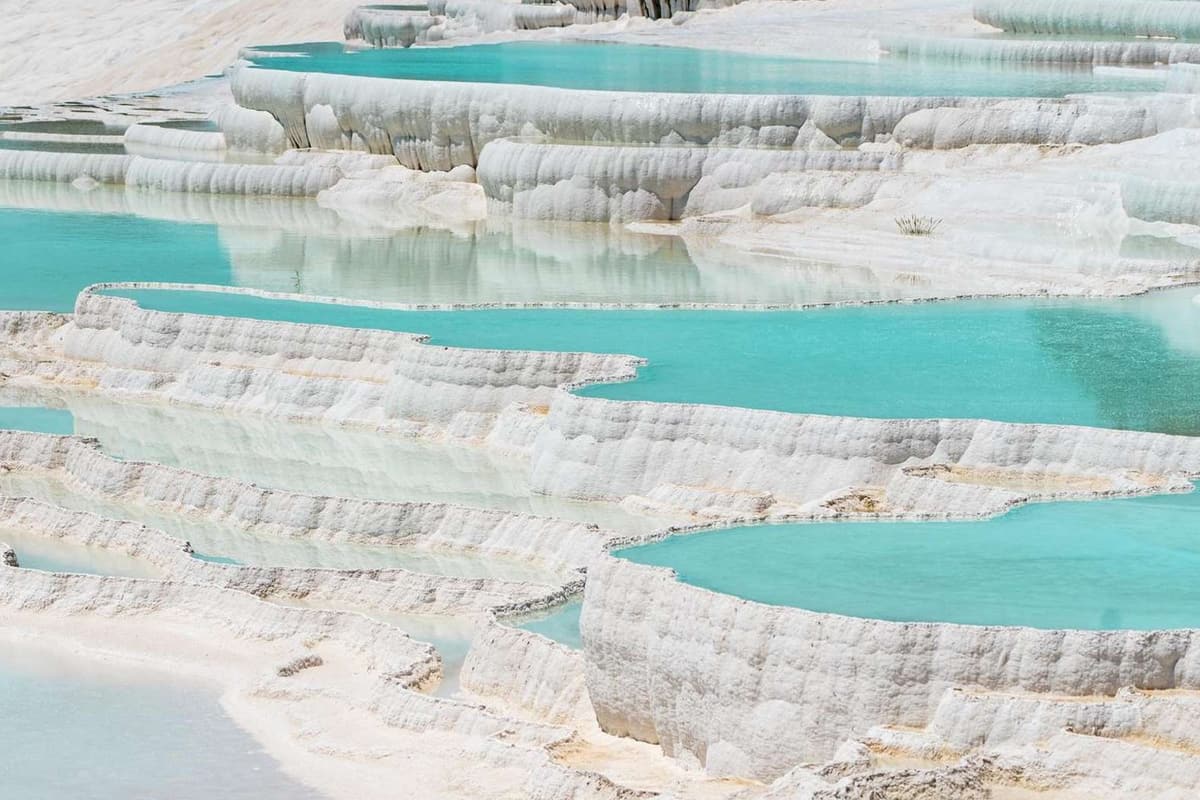
The 11 day turkey tour runs from Istanbul south-west to the Gallipoli peninsula and Troy, follows the Aegean coast to Ephesus and Pamukkale, then climbs to Cappadocia before a flight back to the Bosphorus. It pairs with the tours in Greece on this site for travellers who plan both sides of the Aegean.
The page covers the route, the seasons and the travel legs, then Istanbul, Gallipoli, Anzac Cove, Lone Pine, the Nek, Chunuk Bair, Canakkale, Troy, Kusadasi, Ephesus, Pamukkale, Cappadocia and the Bosphorus day, and it points to the 10 day turkey tour that adds Ankara and Pergamon, the turkey blue cruise tour that adds a gulet, the asia minor tour for the wider peninsula and the greece and turkey tour packages that join both countries.
What is the 11 day turkey tour, and how does the route run?
The 11 day turkey tour is an eleven-day, ten-night route through Turkey. It opens in Istanbul and drops south-west to the Gallipoli peninsula, Troy and Ephesus. It turns inland to Pamukkale and Cappadocia, then closes with a Bosphorus day in Istanbul. Day one is for arrival and day eleven for the airport.
Wikivoyage files the stops of the 11 day turkey tour under three regions. Marmara covers Istanbul, Gallipoli and Canakkale. Aegean Turkey covers Kusadasi, Ephesus and Pamukkale. Central Anatolia covers Cappadocia. The country is too wide for one trip, so the plan keeps to the west and the centre.
The order of the 11 day turkey tour never doubles back, apart from the flight that returns to Istanbul. Istanbul comes first, then Gallipoli and Canakkale, Troy, Kusadasi with Ephesus, Pamukkale and Cappadocia, and Istanbul again. The numbers below count the days.
- Arrival in Istanbul, free evening
- Istanbul city tour: mosques, bazaar, Topkapi
- Road to Canakkale, Gallipoli battlefields
- Troy, then the road to Kusadasi
- Ephesus, Meryemana, Saint John, then Pamukkale
- Hierapolis, white terraces, overnight coach
- Cappadocia: Zelve, Pasabag, Avanos, Goreme
- Second Cappadocia day in the same area
- Flight to Istanbul, day at leisure
- Bosphorus day: boat, palaces, fortress
- Transfer to the airport
Day three moves the 11 day turkey tour from Europe to Asia. Wikivoyage sets the Gallipoli peninsula on the European side of the strait. Canakkale faces it from Asia. The same wiki calls Canakkale the nearest modern town to Troy. One night there therefore serves both sites, so the north-west comes first.
The end of the 11 day turkey tour returns to Istanbul, the city that straddles the Bosphorus. Wikipedia explains that this strait ties the Black Sea to the Marmara and sets Asia Minor apart from Thrace. A boat ride on day ten shows both continents, and day eleven holds only the airport transfer.
Which season suits the 11 day turkey tour?
Spring and autumn suit the 11 day turkey tour. Wikivoyage calls Istanbul pleasant at the end of spring and again at the start of autumn. It also calls both seasons mild around Canakkale and Gallipoli. After that the plan climbs to a high plateau, where the climate turns continental.
The 11 day turkey tour crosses three climates. The Climate of Turkey page on Wikipedia describes a transitional climate around the Marmara Sea, with very cloudy winters. It lists hot, dry summers on coasts such as Izmir’s. Kusadasi has that coastal pattern, and Cappadocia has a markedly continental climate, as its own Wikipedia page states.
Spring favours the Aegean half of the 11 day turkey tour. Wikivoyage calls Canakkale mild in spring, with rain showers that do not last long. For Pamukkale it names late spring and early summer as the time to go. Cappadocia adds the Kirkikindi thunderstorms of inland Anatolia in the same season.
Summer brings heat and crowds to the 11 day turkey tour. Wikivoyage says summer doubles the headcount of Kusadasi as tourists and seasonal workers arrive. It calls Pamukkale mobbed in that season, with no shade and a dazzling light off the white terraces. Late summer can leave the pools there without water.
Autumn is the calmer match for the 11 day turkey tour. Wikivoyage calls autumn in Cappadocia mild and dry and names September. For Istanbul it lists late September to early October, with less rain than winter. Its Eceabat page adds that nights can be cooler. Rain, it says, will probably fall more than once in a week.
Winter changes the 11 day turkey tour more than any other season. Wikivoyage lists cold, snowy winters in Cappadocia, and chilly, rainy winters in Canakkale, with snow that settles almost every year. It says the Pamukkale pools run dry in winter. Istanbul sees frequent precipitation in the cold months, and part of it falls as snow.
How long are the travel legs on the 11 day turkey tour?
The 11 day turkey tour has three long road legs. They are Istanbul to Canakkale, Troy to Kusadasi and the night coach to Cappadocia. Wikivoyage measures the first at 310 km, and buses cover it in 5 hours. One flight then carries the traveller from Cappadocia back to Istanbul.
Day three opens the first long leg of the 11 day turkey tour. Wikivoyage lists buses from Istanbul to Canakkale at all hours of the day and night. The plan starts early, so that the 310 km lie behind you by midday. The Gallipoli sites then fill the afternoon, and Canakkale gives the night stop.
A suspension bridge now carries the motorway over the strait. Wikivoyage gives its length as 3.563 km. Since it opened, the wiki adds, buses from Istanbul to Canakkale no longer pass through Eceabat. The same wiki calls Canakkale very windy all year. That wind shapes the 11 day turkey tour on this coast.
Two ferry lines also cross the Dardanelles, as Wikivoyage lists them. The Eceabat line takes 25 minutes and the Kilitbahir line takes 15. Bad weather can suspend sailings. At the pinch point by Canakkale the strait is only 1.5 km across. Any crossing on the 11 day turkey tour is therefore short.
Day four drives south from Troy to Kusadasi. It is the second long road day of the plan. Wikivoyage measures Canakkale at 325 km from Izmir and puts the beach resort of Kusadasi 95 km below that city. Ephesus stands only 19 km north-east of Kusadasi, so day five starts light.
The night coach joins the Aegean to Central Anatolia. Wikivoyage lists buses from Izmir to Nevsehir at 12 hours, via Konya, and from Istanbul at 10 hours. A night on the road keeps both Cappadocia days for the valleys. The flight home then spares the plan a second long haul.
What does the Istanbul start add to the 11 day turkey tour?
The Istanbul start adds one full city day to the 11 day turkey tour. Day one is for arrival and an open evening, and day two covers the old peninsula. Wikivoyage says the Sultanahmet peninsula holds the main sights, with the Golden Horn on its northern side.
Istanbul has two international airports, according to Wikipedia. The 11 day turkey tour begins at one of them on day one. The city lies on two continents, and the old peninsula belongs to its European part. The Bosphorus, which divides the two shores, waits until day ten of the plan.
Hagia Sophia stands on a site that held earlier churches. Wikipedia records the first one as the Great Church, named for its size. The nearby church of Hagia Irene acted as the cathedral meanwhile. Across from it, the Sultan Ahmed Mosque has six minarets and a large courtyard. The 11 day turkey tour starts day two here.
The Hippodrome, now Sultanahmet Square, was a chariot course roughly 450 metres in length and 130 metres in width. The Grand Bazaar is the market stop of day two on the 11 day turkey tour. Fires and earthquakes struck it again and again. Repairs after the great quake of the late nineteenth century made it smaller.
Topkapi was the home of the sultans until the court moved to a newer palace. Even after the court left, Topkapi kept its treasury, library and mint. The Suleymaniye Mosque stands within a larger complex that held colleges, a public kitchen and a hospital. The 11 day turkey tour reaches both on day two.
Four of these sights belong to one UNESCO listing, the Historic Areas of Istanbul. The four are Hagia Sophia, the Sultan Ahmed Mosque, Topkapi and the Suleymaniye Mosque. Each Wikipedia page lists the building as part of that site. The 11 day turkey tour keeps day two on land and ends its sightseeing on the water.
How does the 11 day turkey tour reach the Gallipoli peninsula?
The 11 day turkey tour reaches the Gallipoli peninsula by road on day three. Wikivoyage describes the car route as west from Istanbul, then south on the O-6 road. It puts Canakkale 310 km from Istanbul. The plan starts early and arrives in the middle of the day.
Canakkale lies on the Asian shore, so a road from Istanbul has to cross the Dardanelles. Wikivoyage describes a suspension bridge there, 3.563 kilometres long. Drivers bound for the peninsula leave the O-6 just before the bridge and head south on the D550. The 11 day turkey tour spends the night of day three on the Asian shore.
Wikipedia places the Dardanelles between Asian Turkey and European Turkey. It links the Aegean with the Sea of Marmara. Its deepest point, 103 metres, lies at the narrowest stretch beside Canakkale. The old Greek name, Hellespont, means Sea of Helle. Wikipedia calls the northern shores along the peninsula sparsely settled.
The Gallipoli peninsula, the next stage of the 11 day turkey tour after Istanbul, lies on the European side. Wikipedia places it between the Gulf of Saros and the Dardanelles. The land runs south-west into the Aegean Sea. Wikivoyage names Eceabat as a town on its European bank, facing Canakkale across the water.
Wikipedia gives the peninsula a length of about 77.5 kilometres, from the old Long Wall to Cape Mastusia. The wall guarded a neck about 6.5 kilometres broad. The Anzac landing took place on the west coast, north of Cape Helles. So the battlefield tour of the 11 day turkey tour works along that coast.
Wikivoyage also lists a slower loop round the Sea of Marmara through Bursa. A plan with one battlefield day, such as the 11 day turkey tour, has no spare hours for it. Wikipedia adds that winds in Canakkale are strong all year, especially in winter.
What do Anzac Cove and Lone Pine add to the 11 day turkey tour?
Anzac Cove and Lone Pine give the 11 day turkey tour two memorial sites. The cove is the beach where Australian and New Zealand troops landed on 25 April. Lone Pine is a plateau inland, now a cemetery and memorial. Both sit in the former Anzac sector.
General William Birdwood, who commanded the Anzac corps, set up his command post in a gully above the cove. On 29 April he recommended the name Anzac Cove for the landing beach. The 11 day turkey tour reaches the spot where a name was chosen four days after the landing.
The beach became a supply base. Wikipedia lists four floating jetties, later replaced by a permanent pier, and a field hospital at each end. Stores overflowed onto Brighton Beach to the south and North Beach beyond the northern headland. Erosion and a coast road have since narrowed the sand.
Wikipedia gives the height of Lone Pine as 120 metres above sea level. The rise stands midway along the eastern line of the Anzac trenches. Its first name was Plateau 400. Anzac troops renamed it after the one pine tree on it and a popular song. The 11 day turkey tour stops at the cemetery and memorial on that rise.
The tree did not survive the fighting. Cones were carried home to Australia and grown into commemorative trees. The pine in the cemetery today is a stone pine, planted during landscaping. Wikipedia notes that it is not a descendant of the first tree. After the Armistice, isolated graves and small nearby cemeteries were moved into it.
Lone Pine Memorial is one of five on the peninsula for servicemen with no known grave. On the kidney-shaped plateau, Lone Pine holds the south-west arm and Johnston’s Jolly the north-west arm. Wikipedia records trenches and tunnels there. The open ground between the lines was nicknamed the Daisy Patch.
What do the Nek and Chunuk Bair add to the 11 day turkey tour?
The Nek and Chunuk Bair add the high ground of the Anzac sector to the 11 day turkey tour. The Nek is a narrow saddle between two knolls. Chunuk Bair is a peak in the Sari Bair range. Both lie on the Gallipoli peninsula, where day three of the plan is spent.
After the trenches and tunnels at Johnston’s Jolly, the 11 day turkey tour reaches the Nek. Wikipedia places it at the north-western end of Russell’s Top, a plateau whose trench lines remain clearly visible. The Turkish name of the saddle is Cesarettepe, and the knoll beyond it, Baby 700, is Kilic Bayir.
The Nek Cemetery covers the larger part of the small stretch of ground that once lay between the opposing lines. A sculpture of white marble marks the site of a former Ottoman trench. Wikipedia also shows the remains of an Australian trench there. For the 11 day turkey tour, these markers show where the two lines stood.
Chunuk Bair, Conk Bayiri in Turkish, belongs to the Sari Bair range as its secondary peak. Wikivoyage describes a ridge in the hills north of Anzac Cove. Rhododendron Spur climbed from the shore to the summit. Knolls on it were named the Apex and the Pinnacle. The 11 day turkey tour ends its ridge visits here.
A statue of Mustafa Kemal stands in the Chunuk Bair area, says Wikivoyage. He became Ataturk, the first president of Turkey. A New Zealand memorial stands on the peak itself. Wikipedia counts it among five memorials to the missing on the peninsula. It commemorates New Zealanders lost at Anzac, and its register names men with no known grave.
Wikipedia keeps the wider story short. The Allied fleet failed to force the Dardanelles in March, and a landing on the peninsula began in April. After eight months of fighting, the invasion force was withdrawn. In Turkish, Canakkale gecilmez means Canakkale is impassable, a common saying of national pride. The 11 day turkey tour places both ridges inside that story.
What does Canakkale add to the 11 day turkey tour?
Canakkale adds a seaport night stop to the 11 day turkey tour. The city faces the Gallipoli peninsula across the Dardanelles, and day three ends there. Both Troy and the First World War cemeteries of Gallipoli are visited from this base, Wikipedia states.
Wikivoyage puts Troy 30 km south of the city, and that short distance explains the night stop. The 11 day turkey tour sleeps in Canakkale after the Gallipoli day, and day four starts with the ruins. Wikivoyage adds that the sights of the city lie within walking distance.
The Greek settlement here was called Dardanellia, the root of the English name Dardanelles. Wikivoyage adds that people have lived in this area since at least three thousand BC. English accounts once called the city itself Dardanelles, and the British later wrote Chanak. The 11 day turkey tour spends its night in a city with two English names.
Wikipedia names the region round Troy the Troad. Aeolian Greeks founded trading colonies there in the eighth century BC, and Lydian and Persian rule followed. Alexander the Great defeated the Persians at the Granicus River in 334 BC. The area later joined the Kingdom of Pergamon. The 11 day turkey tour sleeps within that record.
The War History Museum stands in shore fortifications and depicts the battles of the First World War, according to Wikivoyage. A Ceramics Museum fills an old hammam. Two plots of Commonwealth war graves lie one kilometre inland. These sights are listed for the city where the 11 day turkey tour spends its night.
Wikivoyage names two local specialties. Bomba puts doner meat and an omelette into a half loaf. Peynir helvasi is a sweet of semolina and sugar, made with cheese and egg yolk. In legend, Leander swam the strait each night to see Hero at Sestos, Wikivoyage recalls.
What does Troy add to the 11 day turkey tour?
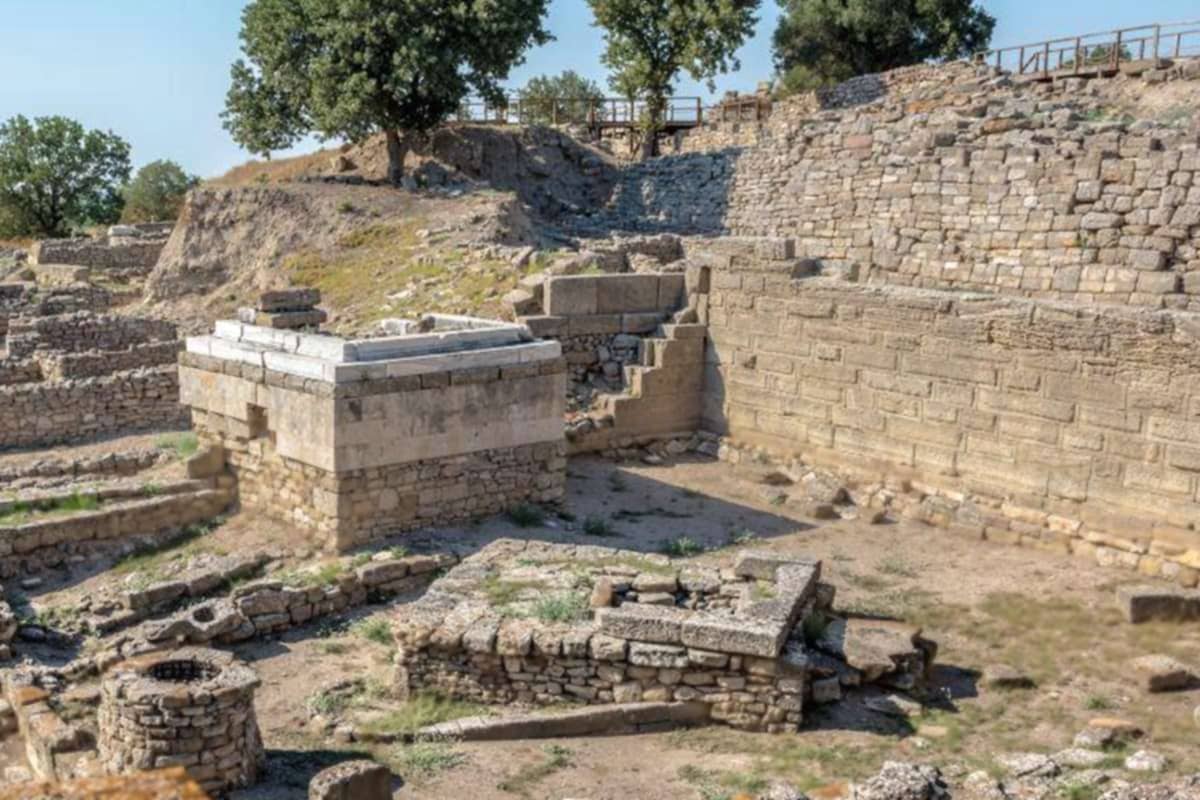
Troy adds Bronze Age walls and an ancient legend to the 11 day turkey tour. The mound of Hisarlik hides nine cities in nine layers. Wikipedia dates the first settlement to the fourth millennium BC. UNESCO lists the site, and day four is given to the ruins before the road to Kusadasi.
In Greek myth, the names Troy and Ilion come from the founders Tros and his son Ilus, Wikipedia records. Latin writers used Troia and Ilium, and in Turkish the place is Troya or Truva. The 11 day turkey tour visits a site that has carried names in four languages.
Wikipedia credits Charles Maclaren, a journalist from Scotland, with the first confident placement of the city on this mound. The engineer John Brunton dug the first trenches, and Frank Calvert surveyed the mound. Heinrich Schliemann then cut his own trench. The 11 day turkey tour follows a dig story that began in steps.
Schliemann believed the second layer, Troy II, was the city of the legend. Wikipedia notes that it is hundreds of years older than the Mycenaean age. Wilhelm Dorpfeld then turned to Troy VI and VII, the layers that Schliemann had passed over. That correction is why the 11 day turkey tour speaks of layers, not of one city.
For the 11 day turkey tour, Troy VI is the layer to know. It rose in terraces, and the elite lived in freestanding houses of more than one floor. Rectangular towers watched over the plain and the sea, and five gates led into paved streets. Wikipedia notes the first horses at the site in this layer.
Collapsed masonry in the last phase of Troy VI points to an earthquake. Wikipedia adds that the city was not burned. The Iliad ends before the wooden horse appears, and Virgil’s Aeneid tells that tale at length. Next to the entrance gate, a square holds a monument in the shape of a large wooden horse.
UNESCO sees the first digs here as a starting point of modern archaeology. It adds that very little has been rebuilt. The wider landscape holds burial mounds, bridges and monuments of the Gallipoli battle. So the 11 day turkey tour links its Troy visit back to the battlefields of day three.
What does Kusadasi add to the 11 day turkey tour?
Kusadasi gives the 11 day turkey tour an Aegean coast base for the night of day four. Wikipedia describes a resort town in Aydin Province where tourism is the main industry. The city of Aydin lies about 60 km to the east, and Izmir lies 95 km to the north.
The 11 day turkey tour sleeps in a port with older names. In the Byzantine era the place was Ephesus Neopolis, and under Frankish rule it became Scala Nova, meaning New Port. In antiquity it was a minor harbour in the shadow of Ephesus. That lasted until silt closed the harbour of Ephesus.
Byzantine, Venetian and Genoese shippers later traded along this coast, and the port was founded anew. A garrison held Pigeon Island. The heart of the town then shifted off the hillside onto the coast. So the fourth night of the 11 day turkey tour falls in a town shaped by its waterfront.
Pigeon Island, Guvercinada in Turkish, closes the bay and explains the town name: kus means bird and ada means island. A causeway links it to the mainland, and the hill of Kese Dagi stands beside it. A castle on the island is restored as a museum. Public beaches face the open sea at the back.
Two buildings from the seventeenth century stand by the harbour. The Okuz Mehmed Pasha Caravanserai kept the goods of seamen safe. Wikivoyage adds that merchants lodged there with their wares. The same Okuz Mehmed Pasha, a Grand Vizier, also built the Kaleici Mosque. So the 11 day turkey tour finds a trading past in this resort.
Day four ends here after the road leg from Troy. The park of the Dilek Peninsula is about 30 km south of the centre. Wikipedia lists coves, canyons and a sink cave there. The plan leaves it aside. On day five the 11 day turkey tour visits Ephesus, then drives to Pamukkale in the evening.
What do the Ephesus ruins add to the 11 day turkey tour?
The Ephesus ruins give day five of the 11 day turkey tour a Roman city to walk. Wikivoyage says the upper gate leads north and downhill, which is easier than the gentle climb from the lower gate. The route below follows that downhill line.
A traveller on the 11 day turkey tour stands at the Odeon near the upper gate. The small hall was roofed at first, and Wikivoyage says the city council met there. Wikipedia adds that it held plays and concerts for about 1,500 people. Publius Vedius Antoninus and his wife built it, with red granite pillars in its upper part.
After the Odeon the path passes the Prytaneion, the meeting place of the city chiefs. Next comes the Temple of Domitian, also called the Temple of the Sebastoi, which honoured the Flavian dynasty. The Gate of Hercules then opens onto Curetes Street. Down that street, the portico of the Temple of Hadrian shows a Medusa among its carvings.
The Library of Celsus doubles as a tomb on the 11 day turkey tour. A decorated marble sarcophagus holds Celsus in a crypt below the apse. Burial inside a library was unusual in Roman culture, so it was a special honour. His son commissioned the building in the early second century, and the library faced east for the morning light.
Past the library lies the Commercial Market, the Tetragonos Agora, where Curetes Street turns north. The southwest corner holds the columns of a Temple of Serapis. Wikivoyage takes a temple for an Egyptian god as a sign of trade with the Nile. In nearby Selcuk, one reconstructed column stands where the Temple of Artemis, a Seven Wonders temple, rose.
The Great Theatre closes the walk on the 11 day turkey tour. Harbour Street starts at the theatre and runs west for 500 metres towards the old harbour, now silted up. The Acts of the Apostles place a crowd in this theatre in the time of Paul. A town clerk restored order there, as Wikipedia retells the story.
What do the House of the Virgin Mary and the Basilica of Saint John add to the 11 day turkey tour?
Day five of the 11 day turkey tour adds two Christian stops, Mary’s house and Saint John’s basilica. UNESCO calls the house a domed cruciform chapel seven kilometres from Ephesus, a major pilgrimage place since the fifth century.
The Turkish name of the house is Meryemana Evi, Mother Mary’s House. It stands on Mount Koressos, called Bulbul Dagi or Mount Nightingale. It is a Catholic shrine in the form of a modest chapel. Muslims and Christians both honour it. So the 11 day turkey tour reaches a place that two faiths visit.
A French priest found a small stone building on the mountain in the nineteenth century. His directions came from a book by Clemens Brentano, who wrote down the reported visions of the nun Emmerich. On whether this is truly Mary’s home, the Church has taken no position, yet it views the site with favour.
Visitors on the 11 day turkey tour pass a keyhole-shaped baptismal pool on the path to the shrine. The chapel holds one large room with an altar and a statue of Mary. A smaller room to the right is linked by tradition with her sleeping place. Outside, pilgrims tie wishes on paper or fabric to a wishing wall.
The Basilica of Saint John stands in Selcuk, on Ayasuluk Hill beside the Isa Bey Mosque. Ephesus lies about 3.5 km away. Justinian had it built in the sixth century, where John the Apostle is said to be buried. Procopius, a writer of that time, called the slope bare and rough, so Justinian also had an aqueduct built nearby.
The basilica had the plan of a Greek cross under five domes, and mosaics covered the cupolas. A crypt below the altar held the tomb of Saint John. The main gate was the Gate of Persecution. Today the 11 day turkey tour walks among the ruins of that design.
What do Pamukkale and Hierapolis add to the 11 day turkey tour?
Springs on a cliff nearly 200 metres tall built the white terraces of Pamukkale, UNESCO says. The spa city of Hierapolis stands above them. The 11 day turkey tour gives both places day six, after the evening drive from Ephesus. UNESCO lists the pair as one World Heritage Site.
UNESCO describes the slope as mineral forests, petrified waterfalls and a stair of basins. The steps range from less than a metre to six metres in height. Wikipedia adds that calcium carbonate lands as a soft gel, which later crystallises into travertine. On the 11 day turkey tour, it is the natural sight of day six.
The springs did more than fill pools. UNESCO says canals carried thermal water to villages and fields. The system stretches 70 km north-west to Alasehir. The same hot water was used for scouring and drying wool. So the spring served farms, wool and bathers alike.
UNESCO credits the Attalid rulers of Pergamon with starting the Hierapolis spa as the second century BC closed. Hierapolis came under Rome in 133 BC and rose again after an earthquake in AD 60. Its peak fell in the second and third centuries AD. The 11 day turkey tour walks through that rebuilt Roman town.
Wikipedia says people treated the site as a doorway to the underworld long before the Greeks arrived. Toxic gas rose from a hot spring in a cave. The Greeks tied the shrine to Hades and named it the Plutonium. In the fourth century Christians filled Pluto’s Gate with stones. The 11 day turkey tour passes this site.
UNESCO describes a frieze on the theatre with a ritual procession, then a sacrifice to Artemis of Ephesus. The necropolis extends over two kilometres and shows how Greeks and Romans buried their dead. Ephesus, the stop before this one, was known for the Temple of Artemis. The 11 day turkey tour ties the two cities together.
How does the overnight leg to Cappadocia work on the 11 day turkey tour?
The overnight leg follows a full day at Pamukkale on day six and ends in Cappadocia on day seven. Wikivoyage gives the coach ride from Pamukkale to Goreme as ten hours. The 11 day turkey tour therefore crosses central Turkey while the traveller sleeps.
The coach night is night six of the ten nights of the 11 day turkey tour. Day six belongs to the terraces and Hierapolis, and day seven belongs to the valleys of Cappadocia. The road fills the hours between them. That keeps both days free for sights and moves the long distance into the dark.
Wikivoyage lists the terraces and Hierapolis as one ticketed area. The page gives 08:00 until 20:30 as the hours, and the South Gate opens earlier in summer. Day six fits inside that window. Opening times change, so check the official Pamukkale page. The coach leg of the 11 day turkey tour follows that day.
Wikivoyage names Nevsehir as the regional hub for transport, and public coaches from Pamukkale stop at its bus station. Passengers there change onto a dolmus, a shared minibus, for Goreme and the other villages. The 11 day turkey tour covers the same distance in one night. Wikivoyage adds that a through ticket to Goreme still means a change at Nevsehir.
Wikivoyage lists buses from Istanbul to Nevsehir at ten hours and flights from Istanbul at ninety minutes. The 11 day turkey tour uses both modes, a coach on night six and a flight on day nine. That mix keeps one long road leg at night and one short air leg by day.
Day seven holds seven stops. Devrent Valley comes first, then Zelve, Pasabag and Avanos, and Goreme, Esentepe and Uchisar close the day. A rest after the coach gives the traveller energy for the first valley. Keep a warm layer and water in the day bag for the night on a seat. The 11 day turkey tour plans that pause.
What do Zelve, Pasabag and Avanos add to the 11 day turkey tour?
Wikipedia calls Zelve the largest of the cliff settlements cut into the rock of Cappadocia. Pasabag is the Valley of the Monks, and Avanos is a pottery town. The 11 day turkey tour links all three on day seven.
Cliff homes needed a head for heights. Wikipedia says entering them meant climbing vertical faces by simple hand and foot holds. Inside, steep passages and vertical chimneys link the rooms. After earthquake damage made the rooms unsafe, the last residents moved out of Zelve in the nineteen fifties. The 11 day turkey tour walks the site that remains.
Wikipedia dates Uzumlu Church to the seventh century. Red and green painted grapevines decorate its walls. The church itself is a fairy chimney. Dovecotes stand in the Zelve valley, and Wikipedia says painted entrance holes drew the birds. The droppings fed the fields as fertiliser. The 11 day turkey tour meets these details.
Wikivoyage says tuff builds well, but hollowing it into homes, stores and ritual rooms is far easier. Wikipedia says people probably cut dugouts in this rock in the early Bronze Age. A Byzantine writer of the thirteenth century called the caverns comfortable in both cold winters and hot summers. On the 11 day turkey tour, the rock is the building.
Pasabag is the Valley of the Monks, Rahipler Vadisi in Turkish, and Wikipedia calls it full of distinctive fairy chimneys. A hoodoo, the general term, is a spire of soft rock capped by harder stone. Minerals in the layers give the pillars their colours. Wikivoyage names Pasabag the closest area of these pillars to Avanos.
Avanos stands on the Kizilirmak, the Red River, which Wikivoyage calls the longest river wholly inside Turkey, at 1,355 km. Its red silt feeds the pottery. Wikipedia says the visible past of the town is mainly stone houses of the nineteenth and early twentieth centuries. On the 11 day turkey tour, Avanos sits between the valleys and Goreme.
What do Goreme and Uchisar add to the 11 day turkey tour?
Goreme and Uchisar give the 11 day turkey tour its painted rock churches and its rock castle. Goreme lies inside a national park of nearly 100 square kilometres, which UNESCO lists for both cultural and natural value. Uchisar stands on the edge of that park.
The Open Air Museum lies one kilometre east of Goreme town. Wikivoyage puts it within a thirty-minute walk of the town. A loop trail links cave churches with frescoes and fairy chimneys. On day seven the 11 day turkey tour stops here, after Avanos and before the Esentepe viewpoint.
On the loop that the 11 day turkey tour follows, Wikivoyage picks out the Dark Church. It first lacked windows, and the dark kept the frescoes safe. Wikipedia dates the plainer cave churches around the town to the sixth and seventh centuries. It places others in the tenth and eleventh, when a large part of the frescoes was painted.
Hermits began to live in cells cut into this rock in the fourth century. They followed Basil the Great, Bishop of Caesarea, which is now Kayseri. Wikipedia adds that the soft tuff comes from volcanic ash and lies under a cap of hardened lava. Erosion then carved coloured cliffs, rock towers, pillars and fairy chimneys.
Uchisar lies seven kilometres east of Nevsehir, twelve west of Urgup and ten south of Avanos. The old village huddles round a huge rock cone, and the newer town sits nearer the road to Goreme. The castle closes day seven for the 11 day turkey tour. Wikipedia says the castle admits visitors and gives a view from its top.
Passages and rooms run through the castle, now blocked. They served as homes in Byzantine times, and Wikipedia gives a figure of around 1,000 people who once lived there. Under the town centre, a tunnel about 100 metres in length passes beneath houses. Day eight of the 11 day turkey tour stays in the same area.
How does the 11 day turkey tour return from Cappadocia to Istanbul?
On day nine the 11 day turkey tour flies from Cappadocia to Istanbul in the morning. Cappadocia has two airports, Nevsehir Kapadokya and Kayseri Erkilet, and Wikivoyage lists flights from Istanbul at both. The booking names the one in use, and the flight ends the long road legs.
Wikipedia’s page on Goreme names the same two airports as the nearest to the town. It adds that intercity buses from across the country reach the town as well. Either airport fits the 11 day turkey tour, because the plan needs only the flight to Istanbul.
Kayseri, in Central Anatolia, is the capital of its province, according to Wikipedia, and was once called Caesarea. The city lies below Mount Erciyes. This dormant volcano stands over 1,500 metres higher than the average height of the city. If the flight leaves from Kayseri, the 11 day turkey tour adds no stop in the city.
Wikivoyage names the Kayseri airport as the place where Cappadocia tours land, with direct transfers. It also lists hourly buses from Kayseri to Nevsehir, taking 90 minutes by way of Avanos. Avanos is one of the day-seven stops on the 11 day turkey tour, so that road already crosses the route.
The rest of day nine is at leisure in Istanbul. Wikivoyage divides the city in three. The Bosphorus runs north to south, the Golden Horn cuts the west, and the Sea of Marmara closes the south. The sights cluster on the Sultanahmet peninsula. Across the Horn lie Galata, Beyoglu and Taksim, which Wikivoyage calls the heart of modern Istanbul.
Istanbul has two airports. Wikivoyage names Istanbul Airport, the successor to Ataturk Airport, as the principal airport and the leading entry point into Turkey. Sabiha Gokcen, on the Asian shore, has a single terminal and a security check at its entrance. On day eleven the 11 day turkey tour transfers to the airport named on the return ticket.
What does the Bosphorus day add to the 11 day turkey tour?
The Bosphorus day gives the 11 day turkey tour its last full view of Istanbul, taken from the water. The strait joins the Black Sea in the north to the Sea of Marmara in the south. It also marks part of the border between Europe and Asia.
Day ten of the 11 day turkey tour opens in Eminonu, at the Spice Bazaar. The court architect Koca Kasim Aga designed it. Work began under Mustafa Aga after a great fire that burned for just over two days. Spice sellers still trade there, while shops of other kinds are replacing them.
Dolmabahce Palace comes next on the European shore. Sultan Abdulmecid I ordered it, since the older Topkapi Palace lacked the style and comfort of European courts. Its Ceremonial Hall holds the largest crystal chandelier in the world, with 750 lamps. A receipt found later showed that the sultan paid for it in full, not Queen Victoria.
The strait runs 31 kilometres between its two lighthouse limits, and Wikipedia gives its narrowest width as 700 metres. The Bosphorus Bridge crosses it on steel towers 165 metres high, with a main span of 1,074 metres. The boat of the 11 day turkey tour passes beneath it.
Rumeli Fortress stands on the European bank. Sultan Mehmed II ordered it before the siege of Constantinople. Its north tower, the Fatih Tower, is a cylinder of nine storeys with walls seven metres thick. A battalion of 400 Janissaries served here, and its cannons greeted the sultan as he passed by sea.
Beylerbeyi Palace on the Asian shore served as a summer home and a venue for visiting heads of state. Empress Eugenie of France visited on her way to the Suez Canal opening. She had a copy of a guest-room window made for her bedroom. Inside, Egyptian straw mats cover the floors, and the porcelain vases come from five countries.
Camlica Hill gives the day its panorama of the lower strait and the point where the Golden Horn joins it. Wikipedia calls it Big Camlica Hill, to tell it from Little Camlica Hill nearby. The mosque on the hill holds 63,000 people and includes a museum and a library. The 11 day turkey tour then returns to Dolmabahce Palace.
What else do travellers ask about the 11 day turkey tour?
Five questions follow about the 11 day turkey tour. They cover the call to prayer, a Friday mosque visit, the Gallipoli distances, Ramadan and bags. Each answer rests on pages of Wikipedia and Wikivoyage.
What is the call to prayer, and where does the 11 day turkey tour meet it?
The call to prayer is the adhan. A muezzin recites the call, by tradition from a minaret, a little ahead of each of the five daily prayers. Muslims are encouraged to pause their activities and answer it with the prescribed prayers. A traveller can hear it near any mosque on the route.
Five prayers fill a day, so the call sounds five times daily on the 11 day turkey tour. Wikipedia lists the Turkish names as sabah, ogle, ikindi, aksam and yatsi. Each call has its own melodic style, called a makam, matched to the time of day.
Technology has changed the voice. A microphone carries it to speakers on the upper part of the minarets, the article states. A recording can replace the live voice when no muezzin is present. The call lasts about a minute, and a shorter second call, the iqama, gathers those already inside.
How does a mosque visit change on a Friday during the 11 day turkey tour?
The adhan article calls the Friday midday prayer the chief prayer of Islam. Turkey names it cuma namazi. Wikivoyage adds that this prayer draws the biggest crowd of the week, so the mosques fill up. Worshippers line the front rows, so a visitor stays behind and keeps silent.
On that day a request to leave can reach a visitor, because space is short, Wikivoyage states. Entry opens again once the worshippers have left through the gate. Day two of the 11 day turkey tour holds the mosque visits, so the weekday is worth knowing.
Manners inside stay short. Shoes come off at the door. A desk or a safebox inside holds the pair until the visit ends. Eating, smoking, loud talk and lying down are frowned upon. Posted opening hours run shorter than the real opening time. The page treats them as recommendations, not fixed rules.
How much walking does the Gallipoli day hold on the 11 day turkey tour?
Distance shapes the Gallipoli day more than walking does, on the 11 day turkey tour as elsewhere. The article on the park puts the peninsula at around 60 kilometres long and one to two kilometres wide. Wikivoyage’s page on Eceabat calls the sights well scattered and adds that a driver can cover more distance than expected.
The park article names one walk, the Anzac Walk. It runs two kilometres and passes 11 of the areas where the Anzac troops were based. That sets the scale of a walk at these sites: a short path, not a long hike. The 11 day turkey tour reaches them by road on day three.
The article also reports a problem at the trench sites. Visitors who cut their own tracks through the lines disturb the history there. So a traveller keeps to the paths, carries water and wears shoes with grip.
What does Ramadan change on the 11 day turkey tour?
The Wikivoyage page on Turkey describes Ramadan as a month for fasting, prayer and celebration. Pious Muslims neither eat nor drink from sunup to sundown. Businesses, banks and official places stay open. In large urban centres and coastal resorts, the page calls it barely noticeable. That fits the Istanbul and Aegean stops of the 11 day turkey tour.
In the interior and the east, the page notes more conservative local habits. There, eating snacks or drinking in public places and on transport is seen as bad taste. Visitors watch the locals and act like them. Restaurants are open in general, and eating in them is no problem.
At sunset the call to prayer and a cannon boom announce iftar, the first meal for those fasting. Another sign is mahya, an illuminated text placed between the two minarets of a mosque. Oil lamps made it in the Ottoman period; bulbs and LEDs make it now.
Which bags suit the 11 day turkey tour?
One medium case and one small day bag suit this plan, and the nights explain why. Eleven days hold ten nights, since nights are the days minus one. One of them passes on the overnight coach to Cappadocia on day six, so nine nights fall at the stops.
The base changes five times: Istanbul to Canakkale, to Kusadasi, to Pamukkale, to Cappadocia and back to Istanbul. Each change means packing, carrying and loading. A case that one person lifts with ease keeps the 11 day turkey tour simple. Slip-on shoes help, since footwear comes off before any mosque.
Day nine adds an airport, since the plan flies from Cappadocia to Istanbul. A flight sets its own rule for the weight of a case. Read that rule before packing, not at the desk. On the 11 day turkey tour, the flight sets the limit for the whole packing list.