
A Limassol day trip starts on the south coast of Cyprus, in a bay town with an old port and a medieval castle, and runs out along the coast road to the ruins of Kourion and the keep of Kolossi or up into the wine hills around Omodos. Pick your stops below, then open the tours in Greece for the next island on your route.
This page covers what a Limassol day trip is and how it runs, how long it takes and when it leaves, what the town shows, what Kourion and Kolossi Castle add, the wine villages and the coast road to Paphos, the kinds of trip and the roads between the stops, and the questions travellers ask about the rules, the dress and the season.
What is a Limassol day trip, and how does it run?
Each Limassol day trip starts at the town on the south coast of Cyprus. It visits ancient sites, wine villages or the coast, then returns the same evening. The words also name a day spent inside the town.
The phrase Limassol day trip has three readings. The first is a day on foot inside the town. The second is a day out of the town, by coach or car, to the sites and villages around it. The operator pages sell the second reading.
The third reading is a Limassol day trip made into the town from elsewhere. One page calls the town an easy day trip from Paphos, Larnaca or the hills. Another gives 82 km and about 1.5 hours from Oroklini by the A1 motorway. A tour page picks up at hotels in Ayia Napa and Protaras.
In the town reading, one itinerary cuts the day into blocks. It sets a morning in the old town from 9:00 to 1:00 and lunch from 1:00 to 2:00. After lunch, that Limassol day trip drives out to Kourion, returns in late afternoon and ends on the seafront.
A guided Limassol day trip works differently. Three operator pages describe hotel pickup, and one adds a round-trip transfer from selected hotels. That page also says to contact the provider if no pickup details arrive 48 hours before the day.
The order of stops on a Limassol day trip differs between pages. One page runs Kourion, then Kolossi Castle, then a village lunch, then the hills. Another runs Kourion, a lunch in a family-run taverna, Omodos and a wine tasting.
A third page describes a longer day out. It starts in Limassol itself, passes Kourion and Kolossi Castle, then climbs to Omodos and a winery. The pages agree on the sites but not on the order.
On a Limassol day trip, lunch is a sit-down meal on the way. Two pages describe a traditional lunch in a village. A town itinerary names a meze instead, an assortment of 10 to 15 local dishes.
A self-made Limassol day trip can copy the shape. One page suggests Kourion in the morning, Limassol for lunch and the wine villages in the afternoon. Another says that within an hour’s drive a traveller reaches mountains, ruins, wine villages and coast.
A guided day closes with the drive back. One page states an evening return with drop-off at the hotel, and the round-trip transfer on another page agrees.
How long is a Limassol day trip, and when does it leave?
The full Limassol day trip runs about eight hours from morning pickup to evening return, as two operator pages state. A shorter listing leaves at 9:05 and lasts about five hours, as a third page states.
Departure hours come from the operator. One listing gives 9:05, and another names only a morning pickup. The first page says pickup details arrive before the day. So the operator confirms the hour of a Limassol day trip.
The length of a Limassol day trip depends on its kind. One page says the day has about eight hours in total, including the travel between stops. Another page lists more than eight hours.
One page calls Kourion an easy half-day excursion, since the site lies so close to the town. That makes a half-day Limassol day trip possible, next to the full day of about eight hours.
The distances stay short near the town. Wikipedia gives 13 km from Limassol to Kourion and 14 km to Kolossi Castle, both to the west. Another page says Kourion lies less than 20 km away. A third puts it 20 minutes west by car. These are the shortest drives on a Limassol day trip.
The hills take longer. Two pages give 42 km from Limassol to Omodos, a village about 800 metres up. One page warns that the mountain road is slower than the distance suggests. A wine-village Limassol day trip drives north for 30 to 60 minutes, as another page states.
Paphos lies on the A6 motorway. Wikipedia gives 66 km, and another page gives 67 km and about 40 to 45 minutes. A third page says 70 minutes. That page calls Paphos a full-day trip and says to leave Limassol by 9 AM. A Limassol day trip to Paphos drives that road twice, there and back.
Time at each stop is set by the stop. One page says to allow 1 to 2 hours at Kourion, and another lists 2 hours there. The Paphos archaeological park needs at least 2 hours, as one page states. One page warns against treating Omodos as a hurried add-on to a Limassol day trip.
The season changes the start of a Limassol day trip. Kourion has minimal shade, so one page says to arrive early in summer. A page on the town names spring and autumn as the months of warm weather without the intense summer heat. That page says those months suit walking in the old town and a drive to the hills.
What does Limassol itself show on a Limassol day trip?
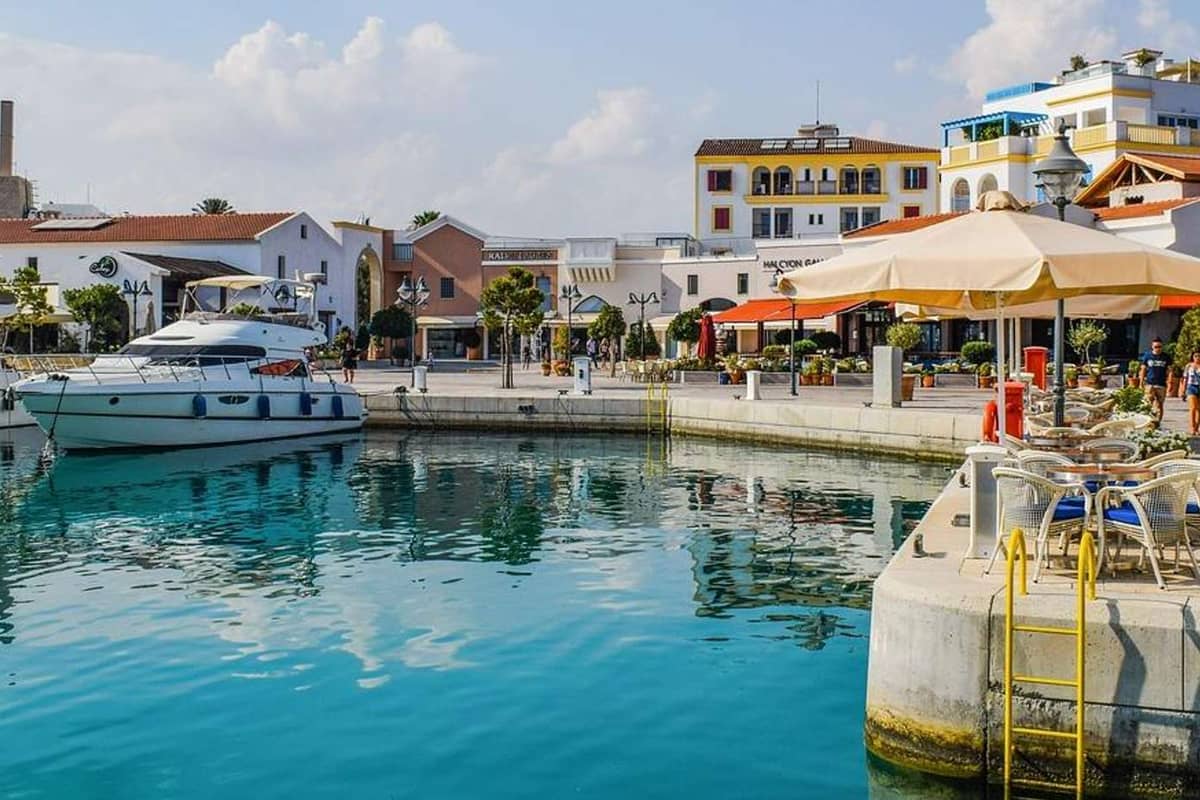
Limassol itself gives a Limassol day trip a medieval castle, an old harbour, a seafront walk and a marina. The town faces the Mediterranean from the island south. Wikipedia places its historic centre around the castle and the Old Port.
A Limassol day trip starts in a town of real size. The municipality has 108,105 residents, says Wikipedia, the largest total in Cyprus. It also ranks the urban area second on the island, after Nicosia. Wikivoyage gives the same second place.
One itinerary page starts its Limassol day trip at the castle, which holds the Cyprus Medieval Museum. Visit Cyprus lists medieval pottery, tombstones, Byzantine silver plates, weapons, crosses and coins. Another page says the displays run from the fourth to the eighteenth century, with suits of armour and carved stonework.
Inside the castle, a Limassol day trip moves from cells to a hall to a roof. Wikipedia says prison cells were made from the lowest chamber and the floor above. Another page adds a vaulted central hall and a roof with harbour views. Tradition places the wedding of Richard of England and Berengaria of Navarre in its chapel.
The old town around the castle is the next part of a Limassol day trip. One page says its maze of narrow lanes took shape under Ottoman rule. The same page sees carpenters and metalworkers at work in its workshops. Another page calls the quarter compact enough to cover on foot.
Ayia Napa Cathedral stands on Agiou Andreou Street, a short stroll from the Old Port. Pages date it to the early twentieth century and say it was built over a smaller Byzantine church. Frescoes dominate its dome. A Limassol day trip that steps inside also meets a wooden iconostasis.
The seafront closes the town part of a Limassol day trip. One page describes a wide, palm-lined walkway between the Old Port and the marina. Another page adds piers that reach out to sea. Yachts moor beside restaurants and shops in the marina, which Wikipedia places beside the Old Port.
What do Kourion and Kolossi Castle show on a Limassol day trip?
Kourion and Kolossi Castle give a Limassol day trip an ancient hill city and a medieval tower. Kolossi lies 14 kilometres west of Limassol. Kourion lies further along the same road towards Paphos, as Visit Cyprus places the two sites.
Visit Cyprus calls Kourion a leading city-kingdom of the island in antiquity. The city stood on hills above the fertile valley of the Kouris River. A Limassol day trip to the site looks across that valley and out to the sea.
Visit Cyprus calls the Greco-Roman theatre the heart of the site. After restoration it stages open-air music and plays, mainly in summer. Only the foundations of the stage building remain, says Wikipedia. That building once blocked the view of the sea to the south. Today a Limassol day trip sees the sea from the seats.
East of the theatre stands the House of Eustolios. Its central room holds four panels of fifth-century mosaic floor, as Visit Cyprus lists them. Wikipedia names fish and birds on the mosaics: grey goose, guinea hen, falcon, partridge and pheasant. A roof now covers the remains, so a Limassol day trip sees them in every season.
The baths beside the house show how Roman heating worked. Visit Cyprus describes firing chambers that sent hot air through the hypocausts under the floor tiles. Flues then carried the air up through the walls. Basins for hot baths survive in the hot room, so a Limassol day trip can read the system in stone.
Visit Cyprus says the House of Achilles and the House of the Gladiators are named for their mosaic scenes. The Roman agora has porticoes with marble columns on both sides. A small temple, the Nymphaeum, honours the water nymphs. A Limassol day trip also finds a fifth-century basilica with a separate baptistery on its north side.
Wikipedia says two aqueducts brought water to Kourion from springs 11 and 20 kilometres away. Visit Cyprus places the stadium about one kilometre to the west, on the right of the road towards Paphos. Another page calls the stadium a short drive from the main site.
Kolossi Castle gives a Limassol day trip a medieval keep at the edge of Kolossi village. Visit Cyprus dates the first castle to the thirteenth century and the rebuild to the fifteenth. Next to the keep lie the ruins of a sugar mill, dated to the fourteenth century. Wikipedia adds that the site made sugar from local cane.
A travel page says the keep is entered by an external staircase. Rooms lead up to the roof, where the plain and the vineyards come into view. A half-day tour page also climbs the stairs for the view from the top. Wikipedia’s gallery shows a Lusignan shield on the east wall and a fireplace carved with a lily.
Two pages put both sites in one morning. One half-day tour page lists Kolossi first, then Kourion for the mosaics, the theatre and the baths. A travel page also takes the small keep before the large site. A Limassol day trip built this way gives Kourion the rest of the morning.
What do Omodos and the wine villages show on a Limassol day trip?
Omodos is a stone village in the Troodos Mountains, about 50 minutes by road from the coast. A Limassol day trip there means cobbled lanes, a monastery square and tastings in cooler hill air.
The hills north of Limassol form one of the main wine-growing regions of Cyprus, as one travel page puts it. The villages lie 30 to 60 minutes from the coast, depending on the village. That page calls a wine-villages Limassol day trip a mix of scenic driving, tastings and a look at rural life.
Wikivoyage places Omodos about 40 kilometres from the centre of Limassol. The square is dominated by the Timios Stavros Monastery, and stone buildings line it. A second travel page says those buildings hold wine shops, restaurants and craft stores. On a Limassol day trip this square is the heart of the stop.
Wikivoyage calls the roads inside Omodos steep and tight. It also describes the village as a place you can cross on foot. On a Limassol day trip by tour or coach, the time in the village is spent walking.
One operator page shows how a wine-villages Limassol day trip runs. It starts with time of your own in Limassol, then a guided walk through the narrow cobbled streets of Omodos. Next come an old winery, a lunch at a family-owned taverna and a tasting at a winery.
At the old winery the visit explains how wine was made in the past. Wikivoyage adds that wineries are scattered through Omodos, with tours and restaurants on offer. Its tavernas serve meze. Another page adds vine-covered courtyards and family-run wineries to the picture of Omodos and its neighbour Lofou.
Other villages fill a Limassol day trip too. One page names Lofou, a quieter and restored stone village, and Koilani, which holds the small Pastelli Museum. That museum is dedicated to a traditional Cypriot sweet of carob and grape.
The wine to know is Commandaria. Wikipedia describes Commandaria as an amber, sweet wine for dessert. Its vineyards lie at the foot of the Troodos range, and the grapes are sun-dried.
The name dates from the twelfth century. Wikipedia ranks it as the oldest named wine that is still produced. A Limassol day trip into the hills is where you meet it.
Wikipedia also tells of a wine tasting contest of the thirteenth century, set up by Philip Augustus of France. A sweet wine from Cyprus won, and it is widely believed to have been Commandaria. A tasting stop on a Limassol day trip is the place to hear that story.
What do Petra tou Romiou and Paphos add to a Limassol day trip?
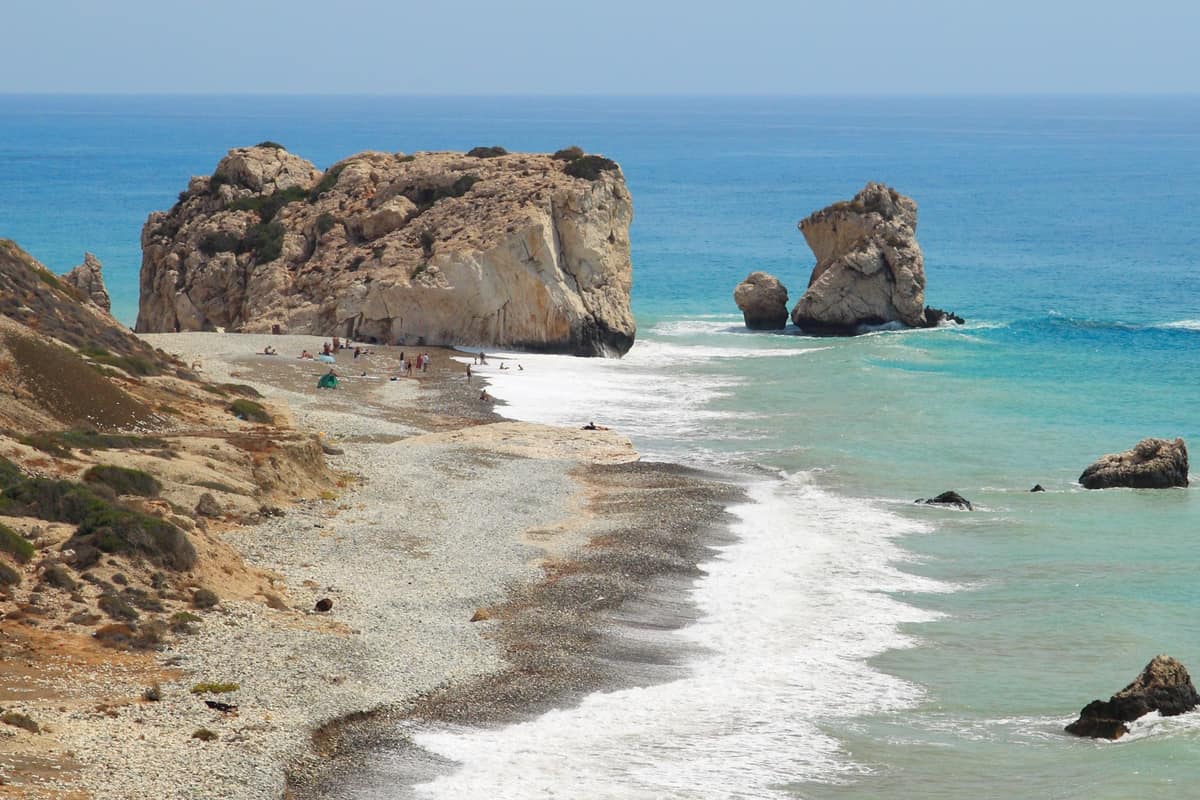
Petra tou Romiou, a sea stack also called Aphrodite’s Rock, stands beside the main road between Limassol and Paphos. Paphos then adds Roman mosaics, a harbour castle and rock-cut tombs to a Limassol day trip.
Wikipedia puts the rock off the shore of Kouklia. There lay the Sanctuary of Aphrodite Paphia and ancient Palaepaphos. The sanctuary goes back to the twelfth century BC. In Greek tradition the goddess of love was born from the sea foam here, as Hesiod tells it. A Limassol day trip meets that myth at the roadside.
One travel page puts the rock about 25 kilometres east of Paphos and calls its beach pebbly. The same page treats the rock as a pause between Limassol and Paphos, not a goal of its own. Another page names Pissouri and Kouklia as the villages passed on the road west.
Wikipedia gives the name Petra tou Romiou as Rock of the Greek. It ties the name to a hero named Basil. In legend he hurled a giant stone out of the Troodos range. This tale is one more story that a Limassol day trip can tell along the coast.
Wikipedia puts Paphos about 50 kilometres from Limassol, to the west. The two cities share the A6 highway. One page for visitors from Limassol gives 70 minutes by that motorway. It calls Paphos a full-day trip and says to leave Limassol by nine in the morning. For that reason Paphos gets a day of its own.
Wikivoyage says lower Kato Paphos holds the main archaeological sites. Wikipedia names four large Roman villas there, with mosaic floors still preserved: Theseus, Aion, Orpheus and Dionysos. It rates the floors, dating between the third and fifth centuries, among the finest in the eastern Mediterranean. The travel page asks for at least two hours at the park.
Wikipedia dates Paphos Castle, at the west end of the old port, to the mid-thirteenth century. The port holds about 300 boats. One coast page calls the town well worth the journey, with waterfront dining. A Limassol day trip to Paphos fits all of this into one day.
North of the harbour, about 2 kilometres away, you reach the Tombs of the Kings. Their underground rooms are cut from solid rock, and the oldest date to the fourth century BC. No kings were buried there. UNESCO lists these tombs with Nea Paphos and Palaepaphos. That is why a Limassol day trip to Paphos fills the day.
Which kinds of Limassol day trip exist?
Operator pages describe seven kinds of Limassol day trip. Four are the sites, the wine villages, the Troodos hills and Paphos. Three more are a Choirokoitia and Lefkara trip, a boat cruise and a self-drive day.
The half-day kind keeps a Limassol day trip close to town. One half-day tour page lists the theatre and mosaics of Kourion, Kolossi Castle and the wine village of Omodos. A second page calls Kourion an easy half-day excursion, 20 minutes west of Limassol by car. It asks for one to two hours at the site.
A wine-villages Limassol day trip heads north into the hills. One page names Omodos, Lofou and Koilani for this kind of day. It puts them 30 to 60 minutes from Limassol, depending on the village. Another page lists a half-day tour built around Commandaria wine and stone-built villages.
The Troodos hills kind of Limassol day trip runs as a full day. One private tour page lists Omodos, a painted Byzantine church listed by UNESCO and the old village of Kakopetria. The route changes on request. A reviewer on that page puts the day at nine to ten hours.
A Limassol day trip to Paphos fills a full day. One page on day trips from Limassol says to leave by nine in the morning. Wikipedia places the sea stack of Petra tou Romiou just offshore from the main road linking the two towns. The rock sits on the way.
A Choirokoitia and Lefkara Limassol day trip runs as a half day in a small group on one page. It links the Neolithic settlement, the lace village of Lefkara and Kato Drys. Another page stretches the two main stops into an eight-hour day that also reaches Larnaca and Kiti.
A boat trip is the sea kind of Limassol day trip. One page describes a full-day cruise from the Old Port with two swim stops. The first lasts about ninety minutes. Another page lists a four-hour private cruise from the same port.
Two formats shape any Limassol day trip. A private tour sets the pickup at a hotel or meeting point and shapes the route with the tour guide. A small-group tour mixes hosted stops with time to explore the villages at your own pace.
A self-drive Limassol day trip needs a plan. One page suggests Kourion in the morning, lunch in Limassol and the wine villages in the afternoon. A newspaper page adds that a car lets you visit more than one place in a day.
How does a Limassol day trip reach its stops by road?
A Limassol day trip reaches its stops by road. The A6 motorway links Limassol with Paphos. The A1 links it with Larnaca and Nicosia, and winding hill roads climb to the Troodos villages. Traffic keeps to the left.
The A6 motorway runs between Limassol and Paphos and is 66 kilometres long, as Wikipedia states. A page on day trips gives 70 minutes for the drive west. A Limassol day trip to Paphos spends about that time on this one road.
For a Limassol day trip, the Cyprus Police tourist page notes four-lane motorways to Limassol, Larnaca and Paphos from Nicosia. It adds that road signs show distances in kilometres. Another page puts the A1 run from Oroklini, near Larnaca, to Limassol at 82 kilometres and about 1.5 hours.
A Limassol day trip to the west covers short distances. Kourion lies 13 kilometres west of Limassol, as Wikipedia and Wikivoyage both state. Pages give the distance to Kolossi Castle as between 9 and 14 kilometres. Amathus sits about 10 kilometres east of the town.
A Limassol day trip into the hills takes longer. One page gives 40 to 75 minutes by car to the Troodos range, depending on the stop. It calls the road winding but well maintained. It names Platres at about 45 minutes and Kakopetria at about an hour.
Public buses suit the town, not every stop of a Limassol day trip. Wikivoyage says bus number 30 runs along the beach road about every 15 minutes. Intercity buses serve Larnaca, Paphos, Nicosia and Troodos. A newspaper page says a winery or a mountain village is harder to reach by bus.
A taxi ride covers the town, not a whole Limassol day trip. Wikivoyage calls the taxi the leading way for tourists to get around Limassol. It warns that you cannot expect one outside the city. Shared minibuses run between the major towns, pick up at the door and need a booking ahead.
A self-drive Limassol day trip needs a rental car, available at both airports and in Limassol, as Wikivoyage states. Cyprus drives on the left, a rule that Wikivoyage, the Cyprus Police page and a newspaper page all give. Road signs follow the same rule and stand on the left.
A coach takes the driving away from a Limassol day trip. A cruise-ship page says shuttle buses took about 20 minutes into Limassol. They set passengers down near a roundabout by the Old Port and the marina. For Paphos, one page says parking at the archaeological park and harbour can fill up in summer.
What are the visiting rules and the dress for a Limassol day trip?
A Limassol day trip follows the daily opening hours of Kourion and Kolossi Castle, as the official tourism pages state. Both sites open at 8:30 in the morning. Covered shoulders and knees are the dress for the monastery, and sturdy shoes suit the ruins.
The official tourism page for Kourion splits the year in two. The site opens at 8:30 each day. From September 16 until April 15 it shuts at 5:00 in the afternoon. From April 16 until September 15 the gates stay open until 7:30 in the evening. A Limassol day trip in summer gets the longer window.
The official page for Kolossi Castle gives the same two seasons and the same hours. Both pages list three closing days: Christmas Day, then New Year’s Day, then Easter Sunday by the Greek Orthodox calendar. Both add that times can change without notice. Check the page before a Limassol day trip.
A travel page on Kourion gives a matching picture. It lists the site as open from 8:30 in the morning. It closes at 5 in winter and at 7 in summer. The page also notes that shade is scarce. In the warm months, a Limassol day trip needs a hat, water and suncream.
The ground at Kourion is uneven, and two pages ask for sturdy shoes. One page calls the site extensive and uneven, with steps. The other says to wear stout shoes and to allow between 90 minutes and two hours. Walking shoes suit a Limassol day trip with that stop.
On photography, one travel page says personal photos are generally allowed at Kourion. It adds that filming for work can need a permit. Tripods are restricted in certain areas, and drones are restricted at archaeological sites. That is the photo rule for a Limassol day trip at the ruins, as that page puts it.
Inside the Omodos monastery of the Holy Cross, one travel page asks for modest dress. It wants the shoulders and knees covered. It adds that cover-ups are provided if needed, but it advises coming prepared. A layer in the bag suits a Limassol day trip that stops at the village.
A second page, on Cyprus customs, calls the dress codes in churches and monasteries strictly enforced. It names long trousers for men, with no bare chest, and legs and shoulders covered for women. The two pages agree, so a Limassol day trip to the hills follows one rule.
The same monastery page lists opening from 9:00 to 6:00 and says hours vary with the season. For photos, it says the main sanctuary can be restricted or discouraged out of respect. The museum areas and the outside are generally fine. It asks visitors to watch for posted signs on a Limassol day trip.
How do the seasons and the time of day change a Limassol day trip?
Wikipedia pairs Limassol with a hot, dry summer and a wet, mild winter. The season therefore sets the shape of a Limassol day trip. Mornings and late afternoons suit the ruins, and the hills stay cooler than the coast.
Wikipedia ranks summer as the longest season in Limassol, with an end in October. In June and September, Wikipedia gives a spread of 19 to 30 degrees Celsius. July and August stretch from 22 to 40. Rain is rare in those months, so a Limassol day trip then is dry and hot.
The Meteorological Service table on Wikipedia counts about 11 rainy days in December. July has nearly none. It puts the ultraviolet index at 11 in June and July, and at 3 in December and January. With little shade at Kourion, a Limassol day trip in summer meets the full sun.
In winter, Wikipedia gives daytime highs of 16 to 20 degrees Celsius and night lows of 7 to 12 degrees. Rain and wind can arrive between December and March. Pack a rain jacket for a Limassol day trip in those months.
Spring, as Wikipedia describes it, is mild to warm, with sunny days near 19 to 20 degrees Celsius. Late March and April bring the spring showers and thunder. One travel page picks spring and autumn for a visit, since they are warm without the intense heat of summer. These are the gentle seasons for a Limassol day trip.
Two travel pages place the busy hours in summer and around midday. One says July and August bring more visitors to Kourion, and autumn has fewer crowds. The other advises early morning or late afternoon, and a weekday over a weekend. Late afternoon light suits photos of the theatre. A Limassol day trip planned that way meets a quieter site.
A travel page says inland Nicosia is hotter than Limassol in summer, with no sea breeze. Wikipedia lists Prodromos, a Troodos village. Its January daily mean is near 4 degrees Celsius, and its July mean is near 23. The Limassol table gives 14.6 and 28.9. One page advises layers on a Limassol day trip to the hills.
Snow belongs to the hills. Wikipedia says the Troodos Mountains see heavy snowfall in winter. A travel page names January to March for the small ski resort on Mount Olympus. A winter Limassol day trip to the hills therefore differs from one along the coast.
What else do travellers ask about a Limassol day trip?
Which kind of Limassol day trip suits which traveller?
A short Limassol day trip to the ancient sites suits travellers who want a half day. One shore-trip page lists 4.25 hours for Kourion, Kolossi Castle, the Temple of Apollo Hylates and a stop in town. Another page calls Kourion an easy half-day outing, 20 minutes west of Limassol by car.
A Limassol day trip built around a hill village suits a slower pace. One private tour page lists 8 hours. Omodos takes about three of them, Kourion two, and town and Kolossi an hour and a half each. A private tour lets the group skip stops, as another page says.
A Paphos day is longer. One page lists 7 hours with a coffee stop, Kourion, the rock tombs at Paphos and time in the town. Another page lists 7 to 8 hours with the harbour and the archaeological park. A third site calls Paphos a full-day trip and says to leave Limassol by 9 AM.
Does a Limassol day trip suit young children, older visitors and slow walkers?
A Limassol day trip to the ancient sites means steps and uneven ground. One shore-trip page states that the ground at Kourion is uneven. It lists about 15 steps at the theatre and the baths viewing area. The page rates the outing as moderate.
Kolossi Castle adds more steps. The same page lists about 25 steps to enter the main hall, plus winding steps to the roof. It does not recommend the outing for wheelchair or walker users. The keep has three storeys and stands 21 metres tall, as Wikipedia states.
Shade is thin at the sites. Three pages say Kourion has little shade, and one asks for one to two hours there. For a slower Limassol day trip, one private page lists Omodos with cobblestone streets. It says the day suits all fitness levels. A hat and water help.
Can Lefkara or Choirokoitia fill a Limassol day trip on their own?
Lefkara can fill a Limassol day trip on its own. Wikivoyage puts the lace town less than 50 kilometres from Limassol, about 10 kilometres off the Nicosia to Limassol highway. It says access is only by private car or taxi. Parking is simple, and the museums are reached on foot.
Wikipedia adds cobbled limestone streets and a house museum of embroidery and silverwork. Kato Lefkara, a second village, lies 1.2 kilometres away. Choirokoitia is the other option, a Neolithic settlement on a hillside in the Maroni valley. One page puts it just off the Larnaca to Limassol highway and notes the sloping hill.
One day or two? One blog finds one day enough for Limassol town itself. A stay of one day fits one Limassol day trip, such as the 8-hour private day above. A stay of two days adds a day for Paphos, which the pages above give a day of its own.
Does a Limassol day trip stop at the beach or the sea?
A Limassol day trip meets the sea mostly in short stops. Two Paphos tour pages list Petra tou Romiou as a quick stop or a photo stop. Wikipedia describes it as a sea stack off the shore, beside the road linking Paphos and Limassol.
A longer swim needs a beach plan of its own. One page calls Kourion Beach a long, undeveloped stretch of coast. It pairs morning ruins with an afternoon beach. Another page names Governor’s Beach on the way to Larnaca. It lists palm trees and a salt lake with greater flamingoes every winter.
In town, a cruise-day writer found a small patch of beach along the promenade, with limited shade. The writer’s children went for a dip and found the water cool and clear. A swim there slots between town sights on a Limassol day trip.