
A Nicosia tour starts in the old walled city, the capital of Cyprus on the Mesaoria plain, and follows its streets, walls, museums and churches in order. Walking tours of the old quarter, half-day outings and full-day trips from the coast all cover the old city. Weigh the kinds of Nicosia tour below against the time you have, then look at tours in Greece for the next stop of your trip.
This page covers how the tour runs, its length and start, what Nicosia is and how its old city grew, the Venetian walls and the Famagusta Gate, the lanes of Laiki Geitonia, the museums, the churches and the cathedral, the food, and the questions travellers ask. Each section answers one question a visitor asks before the walk, from the first meeting point to the last lane. The page keeps to facts that hold for the old city, its walls and its museums.
What is a Nicosia tour, and how does it run?
A Nicosia tour means a guided walk through the walled old city of the Cypriot capital. The group meets at a fixed square and walks the lanes with a tour guide. It stops at a museum or a church and ends where it began.
The Cyprus Tourism Organisation says the city was called Ledra in antiquity. Wikipedia lists 111,797 residents in the municipality and gives its area as 20.08 square kilometres. The tourism pages call the main Nicosia tour a walk within the walled city.
The Visit Cyprus page for the walled-city walk lists three organisers. They are the Municipality of Lefkosia, the Deputy Ministry of Tourism, plus the city’s tourism board. The tour language is English. This Nicosia tour begins and ends at the same square.
Visit Nicosia describes one landmarks route in order. It begins at Eleftheria Square, passes Phaneromeni Square and follows the old streets to the Hambis Municipal Museum of Printmaking. The walk then reaches the Famagusta Gate and returns to the square. That Nicosia tour loop joins squares, lanes, a museum and a gate.
Walks come in themes. Visit Nicosia and a Cyprus association of tour guides both list archaeology, city museums, religion and architecture walks. They sit beside the landmarks walk. Each theme changes the stops, so a Nicosia tour about museums reads differently from one about churches.
From the coast, the same city becomes a day trip. Operator pages describe a coach or minibus with hotel pickups in Ayia Napa, Protaras, Larnaca, Limassol and Paphos. On the road, the tour guide talks about Cyprus and the city. A Nicosia tour of this kind then drives past the main monuments before the walk begins.
Two pages put a short stop at a crafts centre before the drive through the city. Two other pages leave time for lunch in the old quarter, at restaurants nearby. The group then meets again for the road home.
How long is a Nicosia tour, and where does it start?
A guided walking Nicosia tour lasts about two hours and forty-five minutes, as the Visit Cyprus page lists it. It starts at the Old Town Hall on Eleftheria Square. A full-day trip from the coast runs from six to eleven hours.
On foot, the start is a fixed square. The Visit Cyprus page names the Old Town Hall on Eleftheria Square for the start and the end. The association of tour guides gives the Davilla Bastion at Eleftheria Square as its starting point. Visit Nicosia starts its architecture walk at the former GSP Square instead.
Length differs by listing. Other walking listings give three hours, with starts at 9:00 in the morning, 2:30 or 4:00 in the afternoon. According to Wikipedia, the tourist information centre in Laiki Geitonia starts walks on Mondays, Thursdays and Fridays. Confirm the start of any Nicosia tour on foot with its own page.
A day trip is longer because the road comes first. One page for Ayia Napa, Protaras and Larnaca gives six to seven hours, counting the pickup and the drop-off. Pickups run from about 8:00 in Protaras, 8:30 in Ayia Napa and 9:10 in Larnaca. Another page puts the drive from Ayia Napa at about an hour and a half.
Time in the old quarter differs from trip to trip. One page gives about three and a half hours there, after the drive past the monuments. Another gives two hours and a return to Ayia Napa at four in the afternoon. Ask each operator how long its Nicosia tour spends on foot.
From Paphos, two pages list eight hours and one lists eleven. One eight-hour Nicosia tour drives almost two hours straight to the city, while another adds stops in Larnaca first. The eleven-hour trip reaches Nicosia in the late morning. Wikivoyage lists one hour and forty minutes by road from Paphos Airport, and 83 kilometres from Limassol.
Check the weekday before you book a Nicosia tour. Visit Cyprus and Wikivoyage show the Leventis Municipal Museum closed on Mondays, and the Cyprus Museum also closes on Mondays. An early-evening walk on selected Wednesdays ends at the Cyprus Museum, which then stays open late.
One coach trip from the east coast runs on Thursdays in a set season. Its operator page lists a separate winter programme. Wikivoyage names early spring and late autumn as pleasantly warm times to visit.
What is Nicosia, and what shaped the old city on a Nicosia tour?
Cyprus has its capital in Nicosia, and a Nicosia tour walks its old centre inside round Venetian walls. Wikipedia says people have lived here since the Bronze Age, and Byzantine, Lusignan and Venetian builders each left a layer.
The Cyprus Tourism Organisation writes the name as Lefkosia and puts the city almost in the middle of Cyprus. It calls the walled old centre the Chora, a nickname Wikipedia also lists. Wikipedia sets the city on the fertile Mesaoria plain. Wikivoyage calls Nicosia the capital and the largest city by far.
A Nicosia tour makes more sense once you know why a town grew here. Wikipedia says Nicosia sold farm goods from the Mesaoria plain and had an ample water supply. Wikivoyage adds that it grew as a farming centre. Both pages say the Byzantine governor moved the island’s administration here around the year 965.
The Lusignan kings later made the city their seat. Wikipedia calls it the capital of the medieval Kingdom of Cyprus. The Cyprus Tourism Organisation says the Lusignans gave it royal palaces and churches. Wikipedia dates the English name Nicosia to this period, so each Nicosia tour carries a Lusignan-age name.
The Nicosia Municipality says the Franks built the first walls in the fourteenth century. Cyprus came under Venetian rule in the late fifteenth century, and Wikipedia says Nicosia became the island’s administrative centre. The Venetians rebuilt the walls in the mid-sixteenth century. That layer still frames a Nicosia tour, because the old city sits inside those round walls.
A river once crossed the old city. Wikipedia says the Pedieos flows northeast across the Mesaoria plain. It ran through the walled city until the Venetians moved it outside. The walls page says the move guarded residents from floods and filled the moat. Wikipedia places the historic centre within the walls and says the new city spreads outside them.
Weather shapes every Nicosia tour here. Wikipedia names a hot semi-arid climate and says the Troodos Mountains cast a rain shadow over Nicosia. Wikivoyage also calls the climate semi-arid and adds that winter is the wettest season.
What do the Venetian walls and the Famagusta Gate show on a Nicosia tour?
The Venetian walls form a circle round the old city with eleven bastions. The Famagusta Gate is a domed passage through them. A Nicosia tour passes both, as the tourism board’s routes and Wikipedia describe the sights.
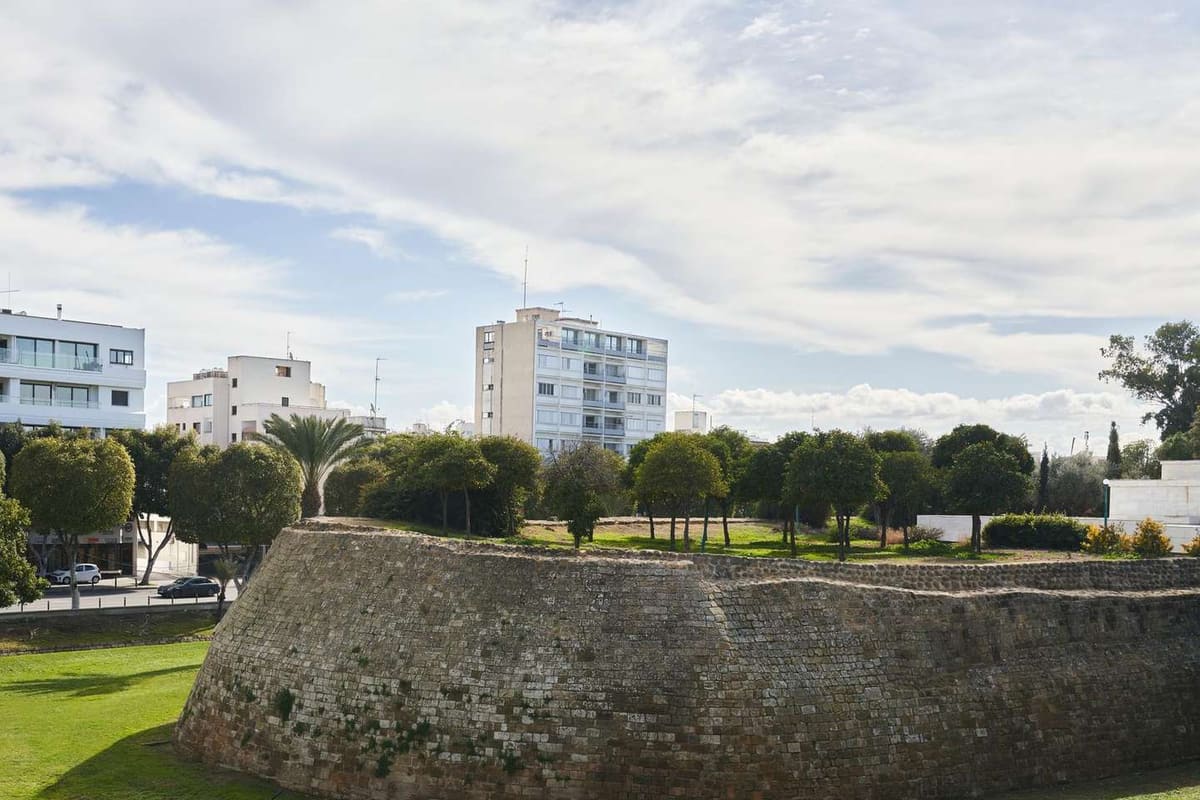
Start with the walls on a Nicosia tour. The Nicosia Municipality describes a circle with eleven heart-shaped bastions. Wikipedia calls the bastions pentagonal with rounded shoulders. It says the bastions carry the names of eleven noble Italian families of the town. The families supported the building of the walls.
The municipality says the walls are mud-brick, with only the lower part buttressed by stone. Wikipedia calls them largely intact and well preserved. It calls Nicosia, like Palmanova in Italy and Valletta in Malta, an ideal city of the Renaissance.
The moat is wide, and a Nicosia tour shows how it is used now. The municipality gives it as 80 metres across and lists sports fields, public gardens and an open-air sculpture exhibition. The history route of the tourism board ends at the Tripoli Bastion Moat. A second tourism page puts the Davilla Moat on an architecture route.
A Nicosia tour meets the gates too, and the walls have three in all. Wikipedia names Famagusta Gate on the east side and Paphos Gate on the west side. The history route ends at Paphos Gate, as the tourism board states. The landmarks route visits Famagusta Gate.
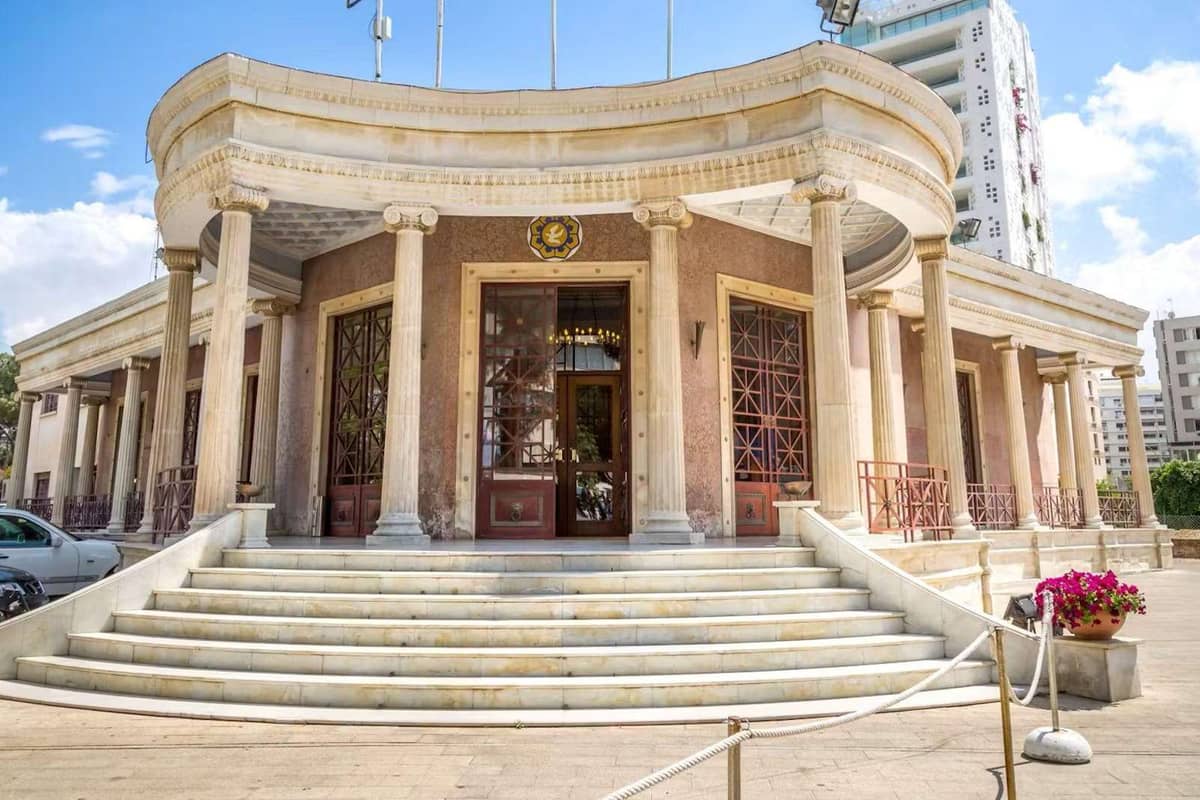
Wikipedia calls Famagusta Gate the chief gate of the city. It is a vaulted passage through the earthwork rampart, with a spherical dome eleven metres across at its centre. The dome has a round opening in its centre that lights the passage, as at the Pantheon in Rome. The side facing the town has an imposing facade.
Today the gate is a cultural space. Wikipedia says the Nicosia Municipality decided to restore it and reuse it as a cultural centre. Its page on the city says the gate hosts art exhibitions and concerts.
The Wikipedia page on the gate also says the venue closed for restoration after a flood. Check the official page before a Nicosia tour that plans to go inside.
What is Laiki Geitonia, and which lanes does a Nicosia tour walk?
Laiki Geitonia is a restored traditional quarter of narrow pedestrian lanes inside the old walls. A Nicosia tour shows Cypriot houses up close here. Wikipedia dates the houses to the late eighteenth century.
Wikipedia says the houses are built mainly of wood, sandstone and mudbrick. Visit Cyprus, the national tourism site, calls them typical structures of the traditional urban heritage. It says the quarter was planned to keep the character of old Nicosia. A Nicosia tour here shows how the old city looked.
The quarter lies around Aristokyprou and Praxandrou streets, as Visit Cyprus states. It describes tiled pathways joined by arcades, so a Nicosia tour on foot follows paved lanes and passes through arches. A second tourism page says the quarter was later extended to the surrounding roads inside the walls.
The quarter is also a living street for a Nicosia tour. Wikipedia says the lanes mix residential houses with craft shops, souvenir shops and tavernas. Visit Cyprus lists places to sit (a taverna, a coffee shop and a restaurant), shops and workshops. Its tiled square is partly used by a coffee shop and is ringed by shops.
Wikipedia places the main tourist information centre of the city in Laiki Geitonia. Wikivoyage also puts the tourist office there. Wikipedia says walking tours of the city set out from that office. So a Nicosia tour can begin among the old houses, with a paper map from the office.
Eleftheria Square marks the edge of the old city, below the Venetian walls. Wikipedia says the town hall on the D’Avila bastion overlooks it. Tourism pages place Laiki Geitonia 200 to 300 metres from the square. Visit Nicosia calls the square the modern entrance to the walled city. This stretch of a Nicosia tour is a short walk.
The square has a bridge-like past. Wikipedia says it began as a bridge in the late nineteenth century. A concrete bridge that replaced the wooden one survives. An international competition chose the new design, with 35 offices taking part. Visit Nicosia calls the result a link between the Venetian walls and today’s city.
Which museums does a Nicosia tour visit?
A Nicosia tour picks its museums by theme. The Cyprus Museum covers archaeology. The Leventis Municipal Museum tells the story of the city. The Byzantine Museum shows icons. Each museum takes one slice of the island’s past.
Wikipedia says the Cyprus Museum is both the largest and the oldest archaeological museum on the island. Its address is Museum Street. It has fourteen halls around a square central area. A second tourism page agrees that the displays follow time and theme. So a visit on a Nicosia tour moves through the island’s story in order.
On a Nicosia tour the Cyprus Museum shows Chalcolithic cruciform figurines made of picrolite. Wikipedia places them in the first gallery. Visit Cyprus names the cross-shaped idol of that period among the notable exhibits. One travel page adds rock-cut tombs, Egyptian amulets and Mycenaean objects from ancient Kourion.
Visitors see only a small share of the finds at any time, say Wikipedia and the same travel page. The collection has outgrown the building. Wikivoyage starts its story in the ninth millennium BC and closes it where antiquity ends. Visit Cyprus ends the story in the early Byzantine period.
The Leventis Municipal Museum sits inside Laiki Geitonia, on Hippocratous Street. A Nicosia tour of the lanes reaches it without a long walk. Wikipedia says it tells the story of Nicosia across more than 5,000 years, from the Chalcolithic period to today. Its rooms run from the present day back to the ancient period.
The same page says the museum holds costumes, photographs, medieval pottery, maps, jewellery and furniture. Its own site lists rooms for ancient times and for the Byzantine, Frankish and Venetian periods. Wikivoyage adds that the museum fills a converted two-storey house.
The Byzantine Museum stands inside the Archbishopric buildings in the walled city, as Visit Cyprus states. That page counts over 200 icons from the ninth to the nineteenth century. It lists sacred vessels, vestments and books too. Visit Nicosia calls it a leading collection of Byzantine icons, so the Byzantine route of a Nicosia tour ends there.
Each themed route sponsored by the Deputy Ministry of Tourism picks its own museums. The history route enters the Leventis museum with a guided visit. The archaeological route goes to the Ledroi Museum and then the Cyprus Museum. The Byzantine route ends at the Byzantine Museum.
The city museum route lists four museums, among them the Hambis Municipal Printmaking Museum. A coach excursion page for a Nicosia tour names no museum. It lists a drive around the centre, then a stop with time on foot in the old town.
Which churches and cathedrals does a Nicosia tour show?
A Nicosia tour shows the churches of the old city as buildings of stone, wood and paint. Two stops stand out. Phaneromeni is the largest church inside the walls. Saint John’s Cathedral is a small church next to the Archbishopric.
A guided Nicosia tour on the religious heritage of the old city starts at Eleftheria Square. The walking-tour pages list five churches. They are the Chapel of Saint Eleftherios, the Old Cathedral of Saint John, Saint Kassianos, Chrysaliniotissa and Phaneromeni. A second route, on Byzantine heritage, ends at the Byzantine Museum.
Tourism pages call Phaneromeni the largest church inside the walls, and it stands on Onasagorou Street. A Nicosia tour walks through Phaneromeni Square beside it. The present church is a building of the nineteenth century. The pages tie it to an older monastery for women. Its iconostasis, the wooden screen that carries the icons, is carved and gilded.
Saint John’s Cathedral stands in the walled city, next to the Archbishopric. The Cyprus Tourism Organisation calls it small, single-aisled and barrel vaulted. The present building goes back to the seventeenth century. It stands where a chapel of a Benedictine abbey once stood. A Nicosia tour can go inside on the days when the doors are open.
Inside, the pages describe gilded woodwork and crystal chandeliers. Four large icons on the screen were painted by a Cretan master in the late eighteenth century. The wall paintings date from the eighteenth century and show scenes from the Bible. The official page says it is the only church in the city with its inner frescoes whole.
As the official page states it, Saint John’s opens Tuesday to Friday and on Saturday morning. It is closed on Sunday, Monday and public holidays. The church lets in its last visitors 15 minutes before it closes. The page warns that the hours are open to alteration without notice, so check them before a Nicosia tour.
The name Chrysaliniotissa means Our Lady of the Golden Flax, as two pages write it. A legend tells of an icon of the Virgin that turned up in a flax field nearby. Inside, arcades with pointed arches rest on columns set with fragments from ancient times. A Nicosia tour on the religious heritage of the old city includes this church.
What do you eat on a Nicosia tour?
What you eat on a Nicosia tour is the food of Cyprus. It means a slow meze lunch, halloumi, souvlaki in pita bread and a small cup of Cypriot coffee. A day trip on one operator page leaves time in the walled old town for lunch.
A meze lunch on a Nicosia tour takes time. One food page calls meze a ritual, not something to rush. Wikipedia says it offers a wide choice of dishes in small helpings. A bowl of mixed salad and chunks of fresh bread arrive with it. Bunches of greens, raw or dressed with lemon juice and salt, sit on the table.
On a Nicosia tour, halloumi is the cheese to ask for. Cooks heat the curds in hot whey, then salt them and add mint. The cheese is folded in two and left to cool. Mature halloumi rests in salt whey for at least 40 days. The Cyprus Tourism Organisation lists it barbecued in a meze meal, or cold with watermelon.
Souvlaki comes wrapped in pita bread, as two food pages describe it. The summer salad, as Wikipedia lists it, mixes tomatoes and cucumbers with parsley, coriander leaves and celery. Bread has an important place in a meze. The type of loaf changes from region to region, as one food page notes.
Cypriot coffee is served in a tiny cup, with the grounds left at the bottom. Locals sip the top and do not stir it. The order names the sweetness: sketo is plain, metrio has a little sugar, and glyko is the sweetest.
Wikivoyage says coffee culture is a way of life in Nicosia. It advises a Cypriot coffee in a traditional cafe instead of a latte or a cappuccino. A cafe stop on a Nicosia tour is the place to try it.
Sweet things come last. Spoon sweets are fruit or vegetable preserves in syrup, served on a spoon. Quince, walnut and orange are among the preserves. The food pages add fresh, dried and preserved fruit, olives and nuts. A Nicosia tour meal can close with any of them.
What else do travellers ask about a Nicosia tour?
Which kind of Nicosia tour suits you, and how long does each stay in town?
A guided walk suits visitors who are already in the capital. The city’s tourism page and a guiding association’s page both list themed walks: landmarks, archaeology, museums, Byzantine heritage and architecture. Both name Eleftheria Square as a starting point of a Nicosia tour on foot.
A full-day trip suits travellers who stay in a coastal resort. Operator pages give eight hours in all, with pickup at the hotel. One page splits the day into a four-hour guided walk and about an hour of time of your own. A private Nicosia tour keeps its own pace, with a tour guide and pickup at the hotel door.
A trip that adds Larnaca spends about 30 minutes at the Church of Saint Lazarus. For a Nicosia tour at your own pace, two phone-app pages give two hours or 100 minutes. One of them counts three kilometres and twelve sights.
What clothes and kit suit a Nicosia tour in the heat?
Dress for the heat and for the churches on any Nicosia tour. The official Cyprus tourism page expects visitors to a place of worship to wear proper dress, not overly casual. It also asks them to request permission before taking photographs. An operator page for a day trip adds that shoulders and knees stay covered in churches and monasteries.
Take sunscreen, a hat and water on a Nicosia tour, as one operator page advises for warm months. That page also wants comfortable shoes, because the walk covers cobbled streets and the city walls. A Larnaca walking page lists light clothes, a hat and walking shoes for the summer months.
Wikipedia records a criticism that the cypress trees on Eleftheria Square give too little shade. So a hat matters on a Nicosia tour. Wikivoyage adds that sights in the old city close early, and an early start also beats the summer heat.
How does a Nicosia tour compare with a day in Larnaca or Limassol?
Nicosia lies at the centre of Cyprus, and a Nicosia tour is about stone streets, museums and churches. Wikivoyage calls the old city a pleasant place to explore and small enough to cover on foot. Larnaca and Limassol are coastal towns, so a day there centres on the sea front.
Wikivoyage ranks Larnaca third in size among the island’s cities. It says you can walk around much of the town. The seaside promenade is pleasant for an evening stroll. A walking-tour page lists the palm-lined promenade, then the Church of Saint Lazarus. Wikivoyage names the same church, from the ninth century, as a major landmark.
Limassol is the second-largest town in Cyprus, Wikivoyage says. Its old town and old port have been renovated for sightseeing. A walking-tour page adds the Molos sea front and the open-air sculpture park. Wikipedia calls the Molos a one-kilometre seaside park. Choose a Nicosia tour for history and a coastal day for the water.
Is a Nicosia tour easy for children and slow walkers, and what is the weather like?
Operator pages differ on effort for a Nicosia tour. One day-trip page rates the tour easy and welcomes guests with limited mobility on request. A private tour page calls for moderate fitness. It does not recommend that trip to travellers with walking problems.
That private tour page accepts a pushchair for a baby or small child. A day-trip page does not take children under three. The old city has stone and cobbles, and Wikivoyage says the footpaths are very narrow in places. A walking-app page lets you pause and resume, so a slow walker sets the pace.
One page describes a four-hour guided walk that leaves plenty of time without feeling rushed. Wikipedia describes the city’s climate as hot and semi-arid, with long dry summers and mild winters. It adds that rain falls mainly in winter, so cooler months are the wet months for a Nicosia tour.
Wikivoyage adds that summer heat regularly passes 35 degrees Celsius and winter has seven or eight rain days a month. It calls early spring and late autumn pleasantly warm and good times to visit.