
Where to stay in Crete depends on the side of the island: the Venetian harbours of Chania and Rethymno, the city of Heraklion, the Mirabello Bay at Elounda or the small villages of the south coast. The tours in Greece on the home page leave from the same towns.
This page covers the four regions, Chania and the west, Rethymno, Heraklion, the north coast, Agios Nikolaos and Elounda, the south coast, the far east, the airports and the months; the where to stay in Greece page holds the bases across the whole country.
What decides where to stay in Crete?
Distance decides where to stay in Crete: the island runs 260 kilometres from west to east, as its article states. A base at one end leaves the far end a long drive away. So the choice of coast comes before the choice of town. Every other choice follows.
Four Mediterranean islands outsize Crete: Sicily, Sardinia, Cyprus and Corsica. Crete is also the largest island of Greece. It crosses three degrees of longitude from west to east but only half a degree from north to south. The width is 60 kilometres at the widest point and 12 kilometres close to Ierapetra.
For where to stay in Crete, the drive from west to east counts as much as any sight. A trip that touches both ends spends whole days on the road. A trip that stays in one area spends those days on a beach or in old streets. The choice of base sets the pace.
The first choice for where to stay in Crete is one base or two. One base keeps the luggage in one room and turns every outing into a day trip. Two bases, one in the west and one in the east, cut the long drive and split the stay.
The second choice is beach or town. A town base brings a harbour, old streets and shops within a short walk. A beach base puts the sand first, with the town a short drive away. For where to stay in Crete, the third choice is the north coast or the south coast.
Heraklion has over a fourth of all the people on Crete. Chania, Rethymno, Ierapetra, Agios Nikolaos and Sitia follow it in size, in the order the island article lists them. Until nineteen seventy-one the capital of the island was Chania. Size shapes a stay: a large town works as a hub, and a small town works as a retreat.
Seven bases answer where to stay in Crete on this page, from the west to the far east:
- Chania and the west
- Rethymno
- Heraklion
- The north coast east of Heraklion
- Agios Nikolaos and Elounda
- The south coast
- The far east
The airports at Heraklion and Chania take the international flights. A later section covers the airports and the roads.
How do the four regions split where to stay in Crete?
Four regional units split where to stay in Crete. Counted from west to east, the units run Chania, Rethymno, Heraklion and Lasithi. Each unit has a capital town of its own and a block of mountains. So each one works as a base area. The four units line up in a row along the island.
The Region of Crete is based at Heraklion. The four units share twenty-four municipalities: seven in Chania, five in Rethymno, eight in Heraklion and four in Lasithi. For where to stay in Crete, the unit lines are administrative. A base near a border can reach two units.
The westernmost quarter of Crete belongs to Chania, and Rethymno is its only neighbour. The city of Chania is the capital of the unit. For where to stay in Crete, the unit also holds Gavdos, the southernmost island of Europe. The article on the unit calls the headlands Gramvousa, Rodopos and Akrotiri the three heads of Crete.
Rethymno lies between Chania and Heraklion, and the city of Rethymno is the unit capital. The article on the unit names tourism as its main income, with farming and herding in the countryside. In twenty twenty-one, a census counted 34,085 people in the town of Rethymno.
Heraklion borders Rethymno on the west and Lasithi on the east. The unit capital is the city of Heraklion. Farmland fills the centre and the north, in valleys and along the coast. For where to stay in Crete, the unit also holds the palaces of Knossos and Phaistos. The island of Dia lies to the north of the unit.
Lasithi is the easternmost unit, lying past Heraklion. The capital is Agios Nikolaos, with Ierapetra and Sitia as the other major towns. The north of the unit meets the Sea of Crete, and its south meets the Libyan Sea. Only one national road, the EO90, crosses the unit.
A mountain block stands in each unit, from the west to the east. The White Mountains fill much of Chania, and the peaks keep their snow until late spring. Mount Psiloritis, the highest peak of Crete, belongs to Rethymno and Heraklion. Mount Juktas, at 811 metres, stands near Heraklion, and the Dikti range stands in western Lasithi.
For where to stay in Crete, the north and the south coast pull in two directions. The north coast carries the main road, and Heraklion, Chania and Rethymno stand on it. The south coast holds smaller places than those three cities. Its roads climb over the mountains from the north, so a stay there starts with a mountain drive.
What makes Chania old town a base for where to stay in Crete?
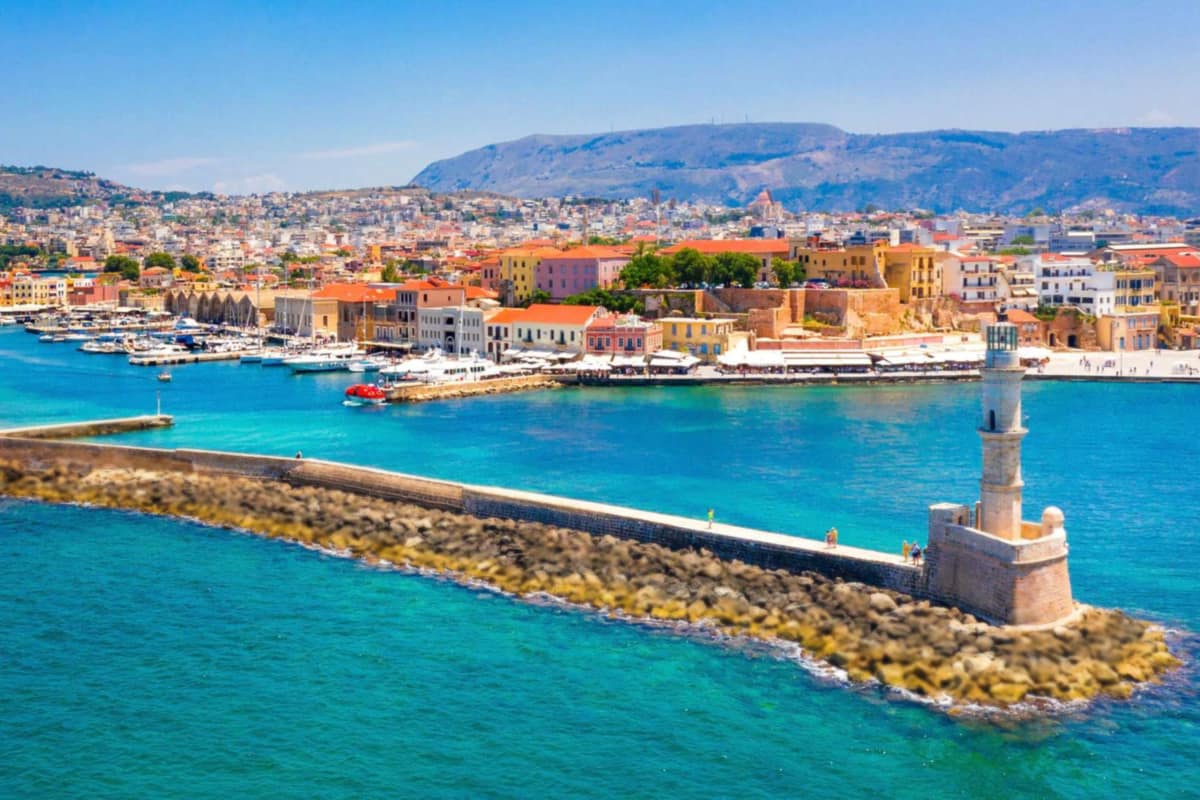
For where to stay in Crete, Chania old town has a clear shape. The sea forms its northern border. On its south side the old town merges with the new town, as Wikipedia describes the layout. The old harbour lies beside it, so the water is part of the base.
Kasteli is the middle of the old town and a small hill by the waterfront. Wikipedia states that the site has held homes since the Neolithic age. Today Kasteli is a little quieter than the districts to its west. For where to stay in Crete, that makes it the calm corner of the old town.
Topanas is the district west of the main square. Its narrow alleys hold old buildings, and a number of them house hotels, restaurants, shops and bars. Wikipedia calls the district popular in the warm period, April to October. Even in winter it remains a centre of activity, so it still answers where to stay in Crete outside summer.
Three quays line the harbour front: Akti Tompazi, Akti Kountouriotou and the marina quay Akti Enoseos. Each one holds historic buildings. Halidon Street links the two parts of the town as the main street between them. For where to stay in Crete, the quays give the seafront and the street gives the link inland.
In fifteen thirty-eight the Venetians began to build the walls of the town. Two stretches of the wall survive, at the east end and the west end. Wikipedia lists the Nautical Museum of Crete, the Folklore Museum and a Byzantine and post-Byzantine collection in the old town. Wikivoyage adds the Etz Hayyim Synagogue, the sole Jewish monument left on Crete.
Nea Hora lies past the western end of the old town. Among the districts of the modern city it is the oldest, from the early eighteenth century. Narrow lanes there lead to a small fishing harbour. Koum Kapi lies beyond the eastern walls. For where to stay in Crete, both districts give a base outside the walls.
The Venetians called Koum Kapi Sabbionara, a name that means the Gate of the Sand. Bedouins from North Africa settled there late in Ottoman rule. Halepa, east of the city, grew as the home of the local aristocracy. The old leather-processing houses of Tabakaria stand on its shore. The Public Gardens, created in eighteen seventy, lie in the modern city.
Which west Crete bases answer where to stay in Crete?
For where to stay in Crete, the west holds four bases on four different shores. Kissamos is the harbour town of the far west of the island. Platanias lies on Chania Bay, and Paleochora sits on a south-west peninsula. Georgioupoli stands at the head of Almiros Bay.
Kissamos is also called Kastelli, after the Venetian castle that was there. Wikipedia notes that the old province of Kissamos covered Crete’s north-western corner. The town museum sits in a former palace of the Venetian governor. The finds from Roman Kisamos include fine mosaics. For where to stay in Crete, Kissamos is the western harbour base.
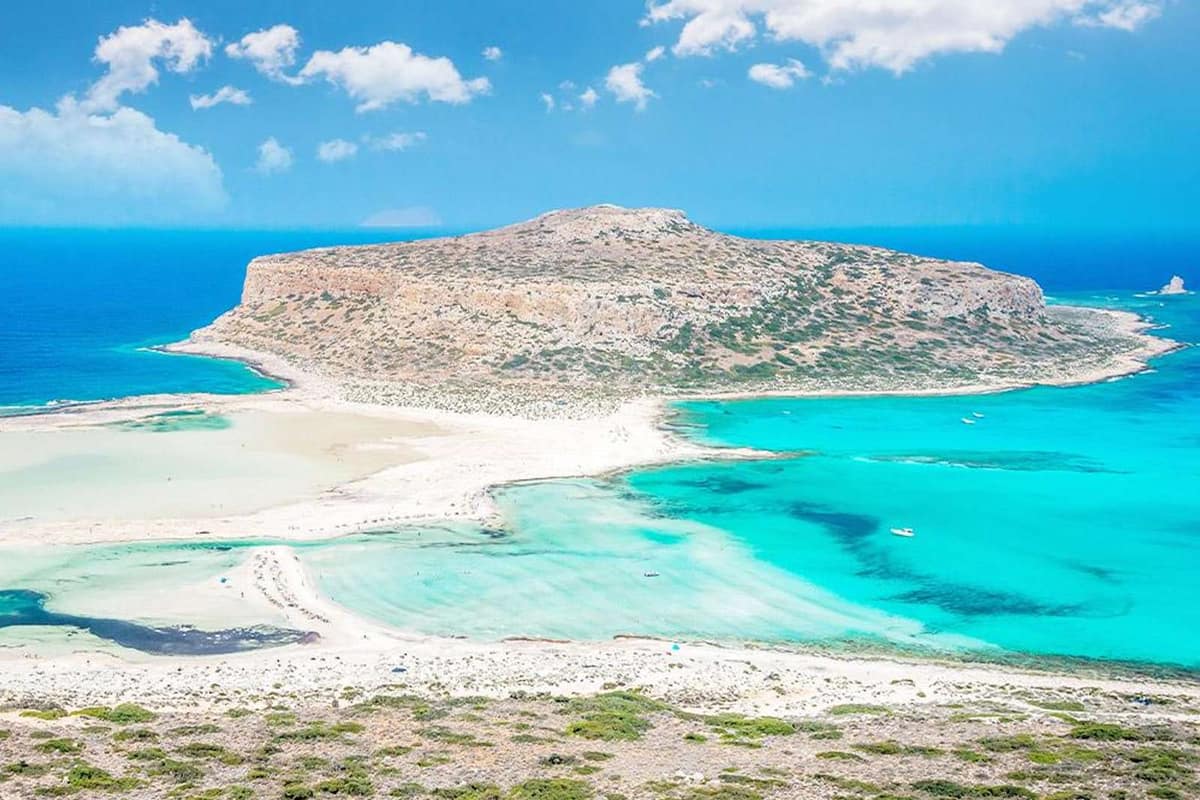
The municipal unit of Kissamos takes in the Gramvousa peninsula and its islets. It also holds the islet of Pontikonisi and villages such as Sfinari, Platanos and Kallergiania. The unit covers 149 square kilometres and forms the westernmost part of Crete. Wikivoyage names Kissamos as the ferry link to Gramvousa, a small rocky island with beaches.
Platanias sits on Chania Bay, about 10 kilometres out from Chania and east of Kissamos. Wikipedia treats Platanias and neighbouring Agia Marina as a tourism village with beaches. It puts the season from April to October. The islet of Agioi Theodoroi lies off the coast. Platanias answers where to stay in Crete with a beach next to Chania.
Paleochora is a south-west coast town, 70 kilometres from Chania. The town fills a small peninsula 400 metres wide and 700 metres long. Wikivoyage describes two beaches on the peninsula. The sandy one lies to the west, and a smaller rocky one sits at the eastern edge. For where to stay in Crete, Paleochora is the south-west choice.
The fort called Selino Kasteli went up in twelve seventy-eight under the Venetian general Marino Gradenigo. The whole province took its name from that fort. Islanders from Gavdos founded a community called Gavdiotika in the old town section. The twenty twenty-one census counted 2,181 residents, and the ruins of ancient Kalamydi lie beneath the town.
The name Georgioupoli honours Prince George of Greece, the high commissioner of the island. At the village, three rivers join the sea. The largest makes a small harbour. Its beach is nine kilometres long. Walkers, cyclists and a tourist train all go to nearby Lake Kournas. For where to stay in Crete, Georgioupoli is the river base.
How does Rethymno answer where to stay in Crete?
Rethymno answers where to stay in Crete with a pedestrian old town under a Venetian fortress. Wikivoyage calls its lanes and alleys a maze, primarily reserved for pedestrians. The Crete page of that site also lists a cruise and ferry port in the town itself.
Wikivoyage lists a small park in the centre, with a playground and a cafe. The sand beach runs east from the town for miles, backed by hotel developments. For where to stay in Crete, both the park and the beach begin inside the town itself.
Work on the Fortezza began in fifteen seventy-three and ended in fifteen eighty. Its main gate faces east, flanked by the bastions of Saint Nicolas and Saint Paul. The west and north walls each have a smaller gate. Houses crowded the citadel by the early twentieth century, and they came down after the Second World War.
The Venetian Loggia is home to an information desk run by the culture and sports ministry. A wine festival is held there at the start of July. A second festival, in memory of the Arkadi Monastery, takes place on the seventh and eighth of November. Anyone choosing where to stay in Crete in July or November finds a festival here.
Wikipedia lists a museum of sea life and a historical and folklore museum in town. At its Galos campus in Rethymno, the University of Crete has about 8,000 students. Mount Ida carries the Arkadi Monastery on its north-western flank, at a height of 500 metres above the sea. Eleftherna, an ancient city, lies 5 km north-east of it.
Wikivoyage puts the bus station just west of the centre, a fifteen-minute walk from the ferry. The bus ride from Heraklion takes about one hour and twenty minutes. In high season a ferry also links Rethymno with Santorini, and the crossing takes around 2.5 hours. For where to stay in Crete before Santorini, that sailing counts.
The village of Plakias stands about 21 km from Rethymno, to the south, with a developed beach 1.5 km long. Its name means flat, after the alluvial fan of the Kotsifou gorge. Damnoni and Preveli Beach lie within reach of small boats. For where to stay in Crete on the Libyan Sea, Plakias offers a village base.
Agia Galini sits at the far south-east end of the regional unit, on the Libyan Sea. Wikipedia gives about 55 km to Rethymno and 68 km to Heraklion. The village rises in tiers up a rocky slope that faces east. In Minoan times the site was Soulia, the port of ancient Syvritos.
How does Heraklion answer where to stay in Crete?
Heraklion answers where to stay in Crete as the largest city of the island and its administrative seat. Wikivoyage counts about 211,000 people in the urban area, and it says the central sights suit walking. The ferry terminal stands just east of the centre, near the intercity bus station.
The Archaeological Museum began in eighteen eighty-three as a simple collection of antiquities. A dedicated building followed early in the twentieth century, over the ruins of a Roman Catholic monastery of Saint Francis. The present building has two storeys and 27 rooms. For where to stay in Crete, the museum counts as a city sight.
The Historical Museum of Crete, on Sofokli Venizelou Avenue, covers Crete from the Byzantine era to today. The Natural History Museum of Crete stands on the same avenue. For where to stay in Crete, two museums on one avenue keep a day in the city. In Myrtia, 20 km south of Heraklion, a museum focuses on the writer Nikos Kazantzakis.
The Koules fortress has two floors and 26 rooms. The rooms began their working life as barracks, a prison, stores, a mill, a bakery and a church. The thickest walls reach 8.7 metres, and three entrances lead in. The fort carries a lighthouse tower at its northern end. Art exhibitions are occasionally held there.
Heraklion hosts the University of Crete schools of sciences and engineering and of health sciences. A summer arts festival runs from June to September, says Wikivoyage. Besides the boats to Piraeus, direct ferries reach Karpathos, Kasos, Anafi and Chalki. For where to stay in Crete before an island hop, the port side of town counts.
For where to stay in Crete among vineyards, Archanes lies 20 minutes by car south of Heraklion. Grapes and olives drive the local economy, and the farm cooperative dates from nineteen thirty-one. A quarter of the wine travels abroad, to buyers in Germany, France and the Netherlands. Arthur Evans called Archanes a probable summer palace for the Knossos kings.
Wikipedia names Saint Mark’s Basilica among the Venetian monuments, and Wikivoyage places it on Kallergon Square. The Dominican Church of Saint Peter was built between twelve forty-eight and twelve fifty-three. Saint Titus Church began life in eighteen sixty-nine as the Yeni Cami, a mosque. For where to stay in Crete, the old centre holds Venetian and Ottoman layers.
Which north-coast towns east of Heraklion fit where to stay in Crete?
For where to stay in Crete beyond Heraklion on the north shore, start with three towns. Hersonissos comes first, at 25 kilometres from Heraklion toward the east. Stalida is three kilometres beyond it, and Malia is three kilometres further on. Each town brings its own harbour, beach or ruins.
For where to stay in Crete beside a small harbour, Hersonissos begins with its name, which means peninsula in Greek. Two places share the name: the seaside Port of Hersonissos and Upper Hersonissos, which lies further inland. Tourism built the port town out of the harbour that served the original village, now called Old Hersonissos.
In ancient times this shore was Chersonesos, the harbour of the city of Lyttos. It was active from Classical Greece into Byzantine times. On the seaside street, a pyramid-shaped Roman fountain carries mosaics of fishing scenes. A ruined early Christian basilica, with its floor mosaics, sits on the rocky hill behind the port.
For where to stay in Crete with a choice of beaches, the Hersonissos area lists Karteros, Gouves, Analipsi and Anissara. Potamos and Anissara carry blue flag status, the article states. The village of Gournes is the seat of the local government unit. The article lists a public aquarium among the tourist sites.
Stalida lies between Malia and Hersonissos. The name goes back to the Greek verb stalizo, which means to stop for a rest. Shepherds rested there between villages. The village began to grow as a resort in the nineteen sixties and has no village centre in its layout. Wikipedia calls it quieter than its neighbours, with a long sandy beach.
For where to stay in Crete by a long sand beach, Malia has a coast of six kilometres. The sand runs east toward the Minoan palace. Its nightlife and its beaches both draw visitors, the article states. Malia Beach Road is another name for Dimokratias Street, the main street of the newer town.
For where to stay in Crete near ruins, Malia has a Minoan palace three kilometres east of the centre. Joseph Hadzidakis first uncovered the palace in nineteen fifteen. Its central court measures 48 by 23 metres, and a carved kernos stone stands in the ruins. The article calls it smaller and less elaborate than Knossos and Phaistos.
How do Agios Nikolaos and Elounda answer where to stay in Crete?
Agios Nikolaos and Elounda answer where to stay in Crete with two bases on the north coast of Lasithi. One is a harbour town built around a small lake. The other is a bay village with a fishing port, sandy beaches and a sunken ancient city in the bay.
For where to stay in Crete beside a port, Agios Nikolaos is named after Saint Nicholas. He is patron saint of sailors and of Greece. The town became widely known in the nineteen sixties, when film directors and television producers took notice of it. The rapid growth of tourism in the area began then, the article on the town states.
Lake Voulismeni spans 137 metres and drops to 48.8 metres. Locals call it simply the Lake. According to legend, the goddess Athena bathed in it. A channel cut by the French Army in the early twentieth century links the lake with the harbour. The road bridge over the channel opened in nineteen fifty-four.
For where to stay in Crete with buses close at hand, Agios Nikolaos has a regular service, Wikivoyage says. Buses run to Kritsa, Elounda, Sitia, Heraklion, Hersonissos and Malia. Almyros is a long sandy beach with a cold stream at its southern end. The same page puts it about twenty minutes on foot from the centre.
In size, Mirabello Bay ranks first among the bays of the Greek islands, and fifth across the Mediterranean. Agios Nikolaos overlooks the bay, and the island of Pseira lies in it. In the Late Minoan period, people founded refuge cities on high ground above the shore, including Karphi. Dorian settlers later built hilltop cities there, among them Lato.
For where to stay in Crete beside a fishing port, Elounda has sandy beaches within walking distance of the square. The main beach holds a blue flag. Plaka, in the community of Vrouchas, neighbours Elounda and overlooks Spinalonga, an island uninhabited since nineteen sixty-two. Wikivoyage puts Heraklion airport about 80 kilometres away, a drive of one hour.
For where to stay in Crete near old remains, Elounda has salt pans begun by the Venetians. Work began in the mid fifteenth century, and the pans stayed in use until the early nineteen seventies. Swimmers in the bay can still see wall bases of sunken Olous. Old texts from the ruins tie Olous to Knossos and Rhodes.
Which south-coast villages suit where to stay in Crete?
North of Cape Lithinon, 75 kilometres south-west of Heraklion, lies the village of Matala. For where to stay in Crete on the south coast, it offers a beach below a cliff of artificial caves. In the Minoan period the village served as the port of Phaistos.
Wikipedia states that the caves were cut into the cliff of Matala bay in the Neolithic age. Tombs have been suggested, but the article calls living space the better fit, given the volume of the caves. One cave is named Brutospeliana, since the Roman general Brutus is said to have frequented it. Matala forms part of the Pitsidia community.
In the nineteen sixties, hippies lived in the caves. The village still marks that past with the three-day Matala Beach Festival, held every June since twenty eleven. Myth adds Zeus, who as a white bull brought Europa across the sea to this beach. For where to stay in Crete in summer, Matala has gift shops and bars for visitors.
Agia Roumeli and Hora Sfakion frame Loutro, which lies on the coast in the Sfakia area of Chania. Walkers and boats are the only ways to arrive, and ferries run each day. For where to stay in Crete without a car, Loutro fits. The ancient city of Phoenix lay here, and the name Loutro means bath.
Hora Sfakion, a small town, sits on the south coast 74 kilometres south of Chania. It is the capital of the Sfakia region and has two small harbours. Ferries from Agia Roumeli dock there, and boats also sail to Loutro and Gavdos. A quiet local beach lies on the west side, and the harbourfront has tavernas.
About 12 kilometres east of Hora Sfakion lies Frangokastello. The Venetians raised the castle from thirteen seventy-one to thirteen seventy-four, and each corner holds a tower. The sandy beach is sheltered and gently shelving, and places to sleep are scattered over the flat plain. For where to stay in Crete at a low-key spot, remoteness has discouraged major development.
Ierapetra, the southernmost city of Europe, ranks fourth in size on Crete. No other town in Lasithi has more people. For where to stay in Crete on the Libyan Sea, it adds the Fortress of Kales by the harbour. In seventeen ninety-eight Napoleon lodged with a local family, and that house still stands in Kato Mera, the old quarter.
Which far-east bases suit where to stay in Crete?
Sitia, with 11,166 inhabitants, is a harbour town of Lasithi, east of Agios Nikolaos and north-east of Ierapetra. For where to stay in Crete in the far east, Sitia sits near Vai and the Toplou Monastery. The municipality holds Minoan sites, among them Itanos and Mochlos.
Wikivoyage places Sitia 60 kilometres from Ierapetra. For two centuries Sitia ceased to exist as a town, and the present town dates from eighteen seventy. The same page adds that Sitia is not deserted in winter, unlike other tourist resorts of Crete. For where to stay in Crete outside the summer months, that point counts.
The Archaeological Museum of Sitia is a small museum of local finds, with a focus on the Minoan era. At Petras, east of the town, part of an ancient settlement has been excavated. Richtis Gorge and its waterfall lie west of Sitia. The four-kilometre walk ends at a pebble beach. The municipality is home to the Sitia UNESCO Global Geopark.
East of Sitia, the road to Vai runs through the grounds of Toplou Monastery. The monastery is open to the public with entry tickets and holds a museum. Vai is backed by a palm forest that spans 250 stremmata, with 1,000 square metres in each. For where to stay in Crete near palms, Sitia is the base.
Makrygialos lies on the south-east coast, facing the Libyan Sea. Its bay holds the longest shallow sandy beach of east Crete, the article on the area states. For where to stay in Crete with a shallow beach, that bay fits. West of the village lies the site of a Minoan country house, first excavated in nineteen seventy-three.
Inland, the Lasithi Plateau has Tzermiado as the seat of its municipality and Agios Georgios as the second village. Permanent residents earn their income mainly from farming and herding, and a smaller number from tourism. Karfi lies in the mountains just north of the plateau. It is believed to be the final outpost of Minoan civilization.
Psychro Cave, also called the Diktaian Cave, lies in the Dikti mountains by Psychro village. The cave is reputedly the birthplace of Zeus in Greek myth, though scholars dispute the link. In Minoan times, Malia was the closest large centre. For where to stay in Crete in the quiet east, the plateau offers farmland, not a beach.
How do airports and roads change where to stay in Crete?
Where to stay in Crete starts with three airports. Heraklion and Chania serve international routes, as the Crete article lists them. The smaller Sitia airport lies in the far east. Sleeping near the airport you land at keeps the first day short on an island this long.
For where to stay in Crete around the middle of the island, Heraklion airport is the anchor. It opened in March of nineteen thirty-nine on flat farmland. The airport article names a new airport at Kasteli, 39 kilometres south-east of the city, as its replacement. Check which of the two a flight uses before choosing a base.
Chania airport has a different past. Civil flights used Maleme until nineteen fifty-nine, then moved to the airfield at Souda. International flights began there in nineteen seventy-four. For where to stay in Crete in the west, Wikivoyage lists a city bus. It leaves the stop in front of departures at intervals of 30 to 60 minutes.
For where to stay in Crete in the far east, Sitia has its own airport. Wikivoyage calls it the newest on the island. Its domestic flights are a small number, mainly from Athens, with summer charters from Europe. The first landing came on the seventh of June in nineteen eighty-four.
Ports shape where to stay in Crete as much as airports do. The island article names six main ports. Kissamos and Souda come first in the west, then Rethymno and Heraklion, then Agios Nikolaos and Sitia in the east. Three of them take the routes from Piraeus and the Peloponnese.
- Heraklion: east of the town centre, the ferry terminal lies close to the KTEL bus station, and the Piraeus boats are mainly night ferries.
- Souda: the port of Chania, where the Piraeus ferries dock, as Wikivoyage Chania states.
- Kissamos: 41 kilometres west of Chania, with ferries to Kythira and the Peloponnese.
One road ties the north coast together. Wikivoyage Chania names it E75, also A90, from Heraklion to Kissamos, passing the southern outskirts of Chania. The old road, still numbered 90, runs beside it through the small resorts west of the town. Anyone weighing where to stay in Crete among those resorts meets the old road first.
The Crete article says the sections that bypass the main cities meet motorway standard. They run from Heraklion to Malia, around Rethymno, and from Chania to Kolymvari. The stretches between them are still being upgraded. No railway line runs on the island, so buses and cars link every base. Wikivoyage describes KTEL as a set of family-run bus companies.
South of that road the picture changes. From the big northern cities, branch roads lead south. Except at Ierapetra, rugged terrain keeps the south coast undeveloped. A south coast village is a longer day from the airports. Wikivoyage Heraklion calls car hire easy with the usual papers, and an ordinary EU driving licence is enough.
Which months change where to stay in Crete?
Where to stay in Crete changes with the months. The Crete article calls the climate mainly hot-summer Mediterranean. The Sitia article adds dry, hot summers and rainy, mild winters. Beach bases fit the warm months, while the large towns fit the cooler ones.
The Heraklion article gives monthly numbers from its airport station. The daily high averages 15.2 degrees Celsius in January and 30.3 in July. Average rain is 81.3 millimetres in January and 0.8 in July. For where to stay in Crete, July is the dry month and January the wet one.
The same article lists the sea. It reads 17.1 degrees Celsius in April, 23.3 in October and 20.6 in November. An October swim is warmer than an April swim. For where to stay in Crete in the shoulder months, the autumn sea is the warmer choice.
Wikivoyage Crete states that charter airlines fly to Chania, Heraklion and Sitia from April till early November. Wikivoyage Heraklion adds that winter ferries run less frequently. A resort strip that lives on the beach season closes for the winter. Where to stay in Crete then points to Chania, Rethymno and Heraklion, working towns that stay open all year.
The south coast keeps its own calendar. Sunshine in south Crete adds up to over 3,257 hours each year. The Crete article takes that figure from the Hellenic National Meteorological Service. On that coast, swallows stay all year. The farms around Ierapetra grow vegetables and fruit in greenhouses through every month.
The Paleochora article lists the abundant wild flowers of spring among the sights of that south-west town. The Crete article names camomile, daisy, iris, poppy, hyacinth and tulip among the flowers of the island. It counts more than 200 wild orchid species. For where to stay in Crete in spring, Paleochora is one base a source ties to the flowers.
Autumn belongs to the harvest. Wikivoyage Crete says olives are picked from October through January. For where to stay in Crete in those months, an inland village base sits close to the olive groves.
What do readers still ask about where to stay in Crete?
Four questions return from readers about where to stay in Crete. They cover one base for the island, a family base, an inland village and the nights for a first trip. Every answer brings in new facts for the reader who plans a stay.
Does one base settle where to stay in Crete for the whole island?
One base settles where to stay in Crete for one part of the coast, not for the whole island. The north coast bends around a chain of gulfs. A base on one gulf looks out on one part of that chain. Pick the gulf first, then the town.
Wikipedia names these gulfs and bays, from west to east: Kissamos, Chania, Souda Bay, Almiros, Heraklion, Mirabello and Sitia. Each one opens a different stretch of shore. A stay in the west and a stay in the east therefore differ.
A city base reaches inland places by a short drive. Wikivoyage places the Nikos Kazantzakis Museum in the village of Myrtia, 20 km south of Heraklion. A run across the whole island is another matter, since Crete is long.
For where to stay in Crete over a longer trip, move the base once. Spend the first part on one gulf and the second part on another.
Which bases work for a family that plans where to stay in Crete?
A family looks for a calm bay, tavernas within walking distance and an airport that is not far. So a family that asks where to stay in Crete begins with the shore and the road. Pick the bay before the room.
The Agia Pelagia article places the village 23 km north-west of Heraklion. Rock outcrops almost encircle its bay, and the article says they shelter the beaches. It lists tavernas, cafes and souvenir shops in the village.
Heraklion gives families a city option. Wikivoyage names Amoudara as the beach area of the city. It describes a 6 km strip of sandy beach with cafes, bars and hotels.
A hire car brings one more rule. Wikivoyage says Crete has seat belt and child seat laws. Child seats are available, but the supply is limited, so reserve one in advance or bring your own. Book the seat before the base is fixed. That keeps where to stay in Crete a simple choice.
Does an inland village suit where to stay in Crete?
For where to stay in Crete, a village inland offers slow mornings, local food and mountains at the door. The beach is then a drive away. So the village fits a second base better than a first. Zaros and Anogeia sit at two different heights.
The Zaros article gives an altitude of 340 metres. The village stands on the southern foothills of Mount Psiloritis, 44 km from Heraklion. Rouvas Gorge lies close to the village and belongs to the Psiloritis range. The gorge is on the hiking route called E4. Water mills nearby have worked since the sixteenth century.
The same article says the villagers make olive oil, sultanas and vegetables. A couple of tavernas serve trout. The bottled water of Zaros comes from Lake Votomos.
Anogeia sits higher. Its article gives 700 to 790 metres, on the northern side of Psiloritis. The Yakinthia festival, which focuses on Cretan folk tradition, is held every July on the Nida plateau. The plateau lies south of the village, at 1,200 metres.
Which number of nights fits where to stay in Crete on a first trip?
A first trip needs enough nights to learn one coast well. Add a second base only when the nights allow it. A move between regions fills part of a day on the road. That is the plain rule for where to stay in Crete.
The length of the stay also sets the kind of room. Wikivoyage describes aparthotels as lodgings with cooking facilities in the rooms and laundry facilities. They also hold a small restaurant or bar and a pool. A longer stay fits that kind of base. A short stay fits a plain room.
The same page notes that Rent Room signs hang almost everywhere on the island. Villas and holiday homes are meant to be registered. They are to hold a licence, abbreviated MHTE, from the Greek National Tourism Organisation.
No page sets a fixed number of nights. The count is your choice, set by the bases you pick and the pace you like.