
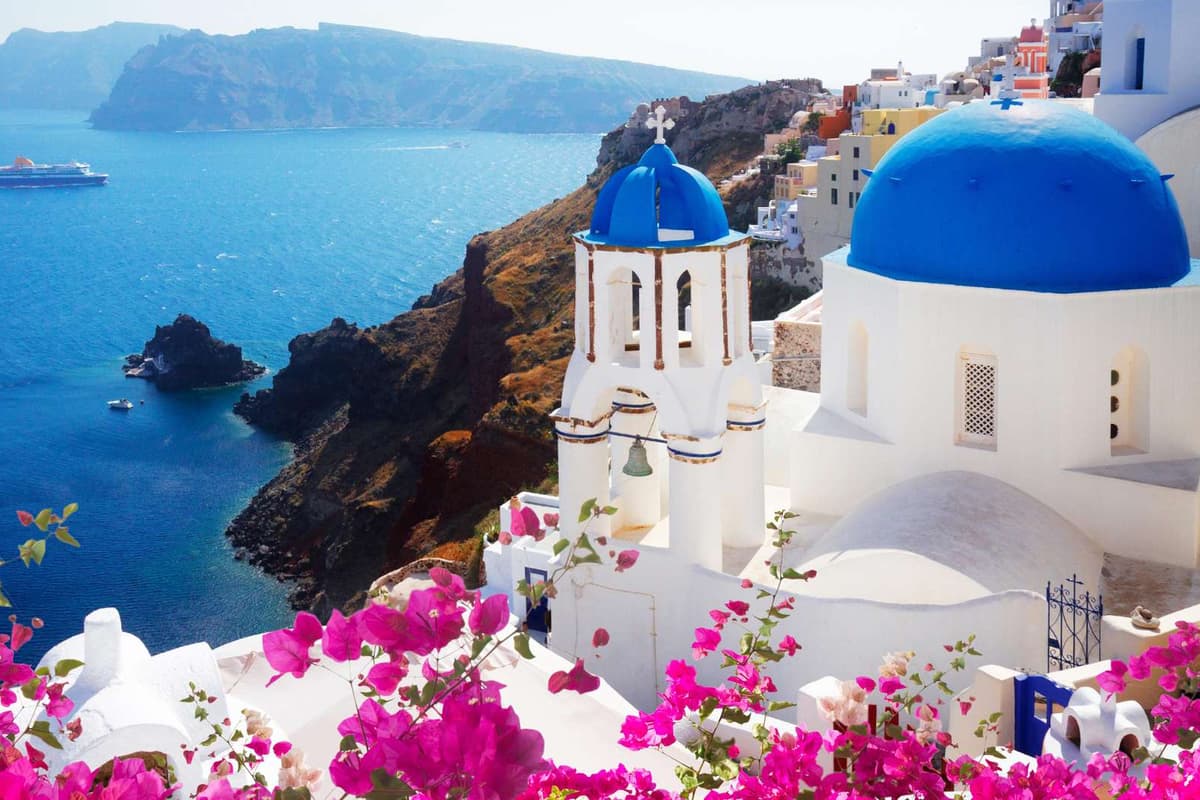
Where to stay in Greece turns on the island group, the ferry or flight that reaches it and the old town or beach within walking distance of the room. The tours in Greece on the home page start from these bases.
This page covers Athens and its ports, the Cyclades, Crete, the Dodecanese, the Ionian and Saronic islands, the Peloponnese, Delphi, Meteora, Thessaloniki, Halkidiki and Pelion, then the months, transport and kinds of lodging; the where to stay in athens page holds the districts of the capital.
What decides where to stay in Greece?
Where to stay in Greece starts from a short list. The Greek tourism organisation reports 6,000 islands, and only 227 of them have people living on them. Three things pick the base: the islands, the ferry or airport link, and the walk to town or beach.
The fact box of the Geography of Greece page gives the coastline as 13,676 kilometres. The page describes a long shore broken up by peninsulas and islands. A traveller sorting where to stay in Greece therefore picks a stretch of shore as well as a town. The sea links set how far apart two bases feel.
On Wikivoyage, an island’s main town can carry the island’s own name. Locals also name it Hora, a word meaning the place. On a small island, the Hora is the first base worth weighing for where to stay in Greece.
The look of a base also changes with the region. Wikivoyage ties blue-domed churches and whitewashed houses to the Cyclades alone. Its text also lists neoclassical buildings in Ermoupoli and Nafplio, and pastel baroque houses on Corfu. Where to stay in Greece is partly a choice of street style.
Links come second. Wikivoyage says a boat reaches every island, yet routes and sailing frequencies shift with the time of year. It lists island airports in two groups: international flights, and domestic flights only. A base with an airport keeps the first and last day simple. A base reached by boat alone ties those days to a sailing.
The walk comes third. A base inside an old town keeps the lanes, the harbour and the shops at the door. A beach base has the sea at the door. The old town is a bus ride or a drive away.
One base or a move every two or three nights is the last choice. One base means one bag unpacked and no ferry day. Moving adds places but spends travel time. For a short trip, where to stay in Greece comes down to fewer moves.
Below, this page sorts the country into nine base groups. Each group gives its own place facts for where to stay in Greece:
- Athens and its coast
- Cyclades islands
- Crete
- Dodecanese islands
- Ionian islands
- The Saronic islands
- The Peloponnese
- Central Greece: Delphi and Meteora
- The north: Thessaloniki, Halkidiki and Pelion
How do the regions of Greece split up for where to stay in Greece?
Wikivoyage splits Greece into six regions: the Greek Islands and Crete, plus the Peloponnese, Central Greece, Thessaly and Northern Greece. Where to stay in Greece also turns on the seas. The Aegean lies east of the mainland, and the Ionian Sea lies west of it.
The Peloponnese is the southern peninsula of the mainland, and seven areas make it up. A narrow strip, the Isthmus of Corinth, ties it to the rest. Central Greece is the home of Athens. Thessaly holds the Meteora monasteries, Mount Olympus and the Pelion peninsula. Northern Greece covers Epirus, Macedonia and Western Thrace.
Euboea is the second largest island. Wikivoyage treats it with the mainland, under Central Greece and Northern Greece, as the two are so closely tied. The Euripus Strait, only 60 metres across, is all that parts it from the mainland, as Wikipedia states.
Wikipedia places each island group. Close to Athens, in the waters of the Saronic Gulf, lie the Saronic Islands. The Cyclades fill the central Aegean as a dense cluster. By the coast of Euboea, the Sporades sit as a small, tight cluster. For where to stay in Greece, each name points to a different corner of the sea.
The Dodecanese is a loose collection in the south-east, between Crete and Turkey. The North Aegean islands lie by the western shore of Turkey. The Ionian Islands are the western group, set chiefly in the Ionian Sea. Wikivoyage lists Corfu, Paxos, Lefkada, Ithaki, Kefalonia and Zakynthos among them.
Crete stands apart. Wikivoyage describes Crete as Greece’s largest island, and fifth by size among Mediterranean islands. It gives the island a region of its own for its size. Wikipedia puts Crete about 160 kilometres from the mainland. For where to stay in Greece, Crete counts as a region, not as one base.
The island group also decides the ferry port. As Wikivoyage describes the network, boats sail more frequently inside a group than between two groups. Two islands that look close on a map can sit in different groups. That is why where to stay in Greece starts with a group, not a single island.
The two seas split the choice once more. Aegean bases sit east of the mainland, and Ionian bases sit west of it. A trip with a base in each sea adds a road journey over the mainland. Keeping to one sea saves that journey.
How does Athens fit where to stay in Greece?
For where to stay in Greece, Athens is the gateway base of the whole country. Wikivoyage calls it the largest city in Greece, sprawling across the majority of the Attica region. So the airport, the ports and the old sites all lie inside one metropolitan area.
Anyone weighing where to stay in Greece for an island trip meets Athens first. For the Balkans, the Aegean islands and the east of the Mediterranean, the airport is a major hub, says Wikivoyage. It stands near the suburb of Spata, and metro trains and suburban trains use one shared platform there.
A night in the capital at each end of a trip keeps the plan flexible. The first night lets a late landing end in a bed, with no ferry to catch at dawn. The last night puts the flight home a short ride away, after a calm morning in the old streets.
Plaka answers where to stay in Greece for anyone who wants the old town at the door. The quarter spreads out north-east of the Acropolis rock. Wikipedia records the name first in the seventeenth century, in its later decades. A preservation plan came in the nineteen-eighties, and all utilities there now run underground in tunnels.
Koukaki borders Plaka on its northern side and the Filopappou and Thisio areas on its western side. Cafes and restaurants fill the G. Olympiou pedestrian street, which leaves from Koukaki Square. Syntagma Square lies north of Plaka. Wikivoyage says sights can be reached on foot from it.
A fixed base in Athens answers where to stay in Greece for day trips. Wikivoyage lists Sounio as an hour away by car, and calls Delphi and Mycenae easy with a rental car. It names Nafplion too, and says the Saronic islands, Hydra among them, suit a day trip from Piraeus.
Athens suits a first-time visitor who wants the ancient sites before the islands. It suits a traveller with a flight at an odd hour, or one who wants a base for day trips. It suits a beach stay less, since the beaches lie in South Athens, a ride from the centre.
Which port towns near Athens suit where to stay in Greece?
For where to stay in Greece, the port towns near Athens suit the night before a ferry. Wikivoyage gives Piraeus the role of chief sea port for Athens. Rafina lies 25 km to the east and Lavrio 60 km to the south, and both act as alternative ports.
Anyone weighing where to stay in Greece by the sea can start at Piraeus. Wikivoyage calls it the largest port of Greece. The Athens Riviera article says Piraeus has been inhabited since the twenty-sixth century BC. Wikivoyage says a walker without luggage can cover both the town centre and the port easily.
Rafina sits east of Mount Pentelicus on the Attica coast. Wikivoyage calls it the second largest port of Athens, serving southern Evvia and the northern Cyclades: Andros, Tinos and Mykonos. For where to stay in Greece before an early boat, it is a fairly sleepy seaside town.
Lavrio brings a mining past. For the Athenian state, the silver of Laurium was among the chief sources of revenue, mainly struck into coins. The ancient workings, including shafts, galleries and washing tables, can still be seen in places. Ancient Thoricus, a village, lay where the modern town now stands.
For where to stay in Greece south of the capital, Lavrio adds a rebuilt port. Wikivoyage reports that the harbour now works as an important ferry hub for the Cyclades. Kea lies an hour to ninety minutes away by boat, depending on the vessel. A clock tower of the eighteen-seventies, the first built in Greece, stands in the town.
The Athens Riviera widens where to stay in Greece with beach towns along the Saronic shore. Glyfada, Vouliagmeni and Varkiza are three of the Riviera areas that the national tourism organisation names. In Glyfada, Dimitris Pikionis planned an artists’ colony, and only a small chapel of the Akathist Hymn was ever built.
Lake Vouliagmeni lies south of Vouliagmeni. Warm seawater reaches it through flooded caves, so its water never drops below eighteen degrees Celsius. A natural monument by Greek declaration, the lake holds the only population of one sea anemone species. Varkiza, formerly named Alianthos, lies twenty-two kilometres south of central Athens.
For where to stay in Greece with a ferry at dawn, these towns work well. Piraeus and Rafina fit the early boat, Lavrio fits the Cyclades, and the Riviera fits a beach stay. They suit a first look at the old sites less, since the Acropolis lies a ride away.
How does Santorini answer where to stay in Greece?
For where to stay in Greece with a caldera view, Santorini lines four villages along its rim. Fira, Firostefani, Imerovigli and Oia share that edge. Wikivoyage measures the marked trail between Fira and Oia at eleven kilometres. The choice is how far along the ridge to sleep.
Fira is the capital, built on the caldera rim, and its old port sits below the cliff. Wikivoyage says no road reaches that port. Visitors climb by cable car, a ride of three minutes. Each gondola carries up to six people. A stairway of 588 steps offers the other route.
Santorini buses shape where to stay in Greece on the island, and Fira sits at their centre. Wikivoyage names Fira bus station as the island’s transit hub. Buses arrive there from the airport and from Oia, Kamari, Perissa and Akrotiri. Plateia Theotokopoulou is the central square, and Wikipedia notes a bus and taxi station there.
Firostefani follows Fira to the north, and Wikivoyage calls it quieter than the commercial centre. Imerovigli lies north of the capital, and Wikivoyage states that no point on the caldera cliffs is higher. Narrow paved paths cross the village. A castle of the Venetians, raised by Marco Sanudo, left its remains on Skaros Rock beside Imerovigli.
For where to stay in Greece in an old seafaring town, Oia ends the line in the north. Wikipedia ties its prosperity in the late nineteenth century to a merchant fleet. The upper part of Oia keeps the two-storey houses of its sea captains. Cobbles pave its main street, Nikolaou Nomikou, and Finikia lies to the east.
Where to stay in Greece can mean a cave house on this rim, the old yposkafa spitia of Oia. Wikipedia calls them simple seamen’s homes on the crater edge. A number now offer beds and meals. Wikivoyage names stairs as the drawback of a caldera view. The cliffs leave the beaches to the outer side.
The rim suits couples, and Wikivoyage says the hotels on this side lean towards them. At dusk the crowds gather in Oia for the sunset, and Wikipedia notes congested paths in the tourist season. For where to stay in Greece on this edge, a base in Fira keeps the buses close. Oia keeps the sunset close.
Which Santorini beach villages suit where to stay in Greece?
For where to stay in Greece by the water, Kamari is the base with the longest beach on Santorini. Wikipedia describes a beach of black pebbles that begins at Monolithos and ends at the foot of Mesa Vouno. The village lies about eight kilometres from Fira.
Kamari began as an agricultural and fishing village and now offers a wide choice of rooms, cafes and water sports. The earthquake of July nineteen fifty-six almost flattened Episkopi Gonias, and its residents then built Kamari. A small arch at the beach’s southern end gave the village its name, and an old customs house left it.
Kamari also answers where to stay in Greece for a swim and a hill walk together. Wikipedia puts Mesa Vouno at about 400 metres and calls it the second highest peak of Santorini. Gavrilos Hill rises between Kamari and Perissa and holds the ruins of Ancient Thera, Wikivoyage states. It suggests going in the morning.
For where to stay in Greece with a shore walk at the door, look at Perissa. Wikivoyage says Kamari Beach continues south in Perissa. The beach runs from Perissa past Perivolos on to Agios Georgios in one strip, three kilometres long. The walk begins at the Perissa basilica ruins. Timiou Stafrou, a church with blue domes, stands beside the sand.
Inland villages answer a different question. Wikivoyage lists Megalochori for its old white Cycladic churches and Pyrgos for its Venetian castle and narrow streets. Of the five castles built on the island, Pyrgos Castle is the newest, and Wikivoyage notes it is well preserved. The highest hill of Thira carries the Profeta Elias monastery, which lies near Pyrgos.
Akrotiri adds ancient ground to where to stay in Greece, because the eruption buried a Bronze Age town. A giant canopy shades the dig, Wikivoyage says, so a summer visit stays comfortable. Peak season buses reach Perissa, Kamari and Oia with gaps as short as fifteen minutes, Wikivoyage says. In low season, services end by seven in the evening.
Wikivoyage says the beach hotels of the east have bigger rooms and pools than the caldera side does. Swimmers fit that side, and Kamari draws youngsters and families. Pyrgos and Megalochori suit slower days among castle walls, churches and wineries. For where to stay in Greece with the sea close, the outer side of Santorini answers.
How does Mykonos fit where to stay in Greece?
Mykonos gives you one main base for where to stay in Greece: Chora, the largest town, on the west coast. The two ports, the windmills and Little Venice all sit in or near it. Coast villages and one inland village fill the rest of the map.
Chora suits the traveller who wants lanes, shops and the harbour at the door. To harness the northern winds, Venetians lined a hill over the sea with the Kato Mili windmills. The mills worked into the early twentieth century. Restored ones now house locals, Wikipedia notes.
Anyone choosing where to stay in Greece beside the water looks at Little Venice. Its fishing houses stand along the water’s edge, balconies out over the sea. Basement doors open to the water and to the storerooms below. Cafes, bars, galleries and little shops have moved into part of the row. Artists paint the shoreline, and the sunset draws watchers.
Anyone weighing a ferry link when choosing where to stay in Greece reads the two ports first. The old port lies in town, a short walk along the coast from the lanes. The catamarans still use it. Tourlos, about two kilometres north of town, holds the new port, where almost all cruise ships dock, as Wikivoyage states.
Chora has three bus depots, and each one points to a different stretch of coast. Buses to Psarou, Paraga, Ornos, Agios Yannis and Platys Gialos start from the depot at the town entrance. The old port depot covers Tourlos and Agios Stefanos. A northern depot, set above that port, runs the line to Ano Mera, Elia and Kalafatis.
On the south coast, Ornos answers where to stay in Greece with a food market of its own. Wikivoyage names a butcher’s shop, a bakery, a pharmacy and a supermarket there. From Platys Gialos, the southern beaches are reached by small fishing boats. In the north, Agios Stefanos offers taverns, cafes, restaurants and hotels.
Ano Mera answers where to stay in Greece for a night away from the shore. It is the only inland settlement, about seven kilometres east of Chora. Its large central square has tavernas on three sides. Delos lies two kilometres off, and tour boats cross to it. Mykonos suits evenings in town, bay rides and a day boat to Delos.
How do Naxos and Paros fit where to stay in Greece?
Eight kilometres of channel divide Paros from Naxos, yet each island answers where to stay in Greece its own way. Naxos offers one large Chora with inland villages behind it. Paros offers two harbour towns, Parikia in the north-west and Naoussa in the north-east.
Naxos centres on Chora, its largest town, which gives the harbour answer to where to stay in Greece. Wikivoyage calls the port too small to take cruise ships. Parts of the town are pedestrianised, so walkers move easily between beach, cafe and shop. The bus office lies by the ferry building at the seafront’s north end.
Above the harbour, the walled Kastro stands on higher ground. Venetians raised this walled quarter early in the thirteenth century, and Wikivoyage points to its quiet alleys. The Portara, a marble gate on the islet of Palatia, stands in the harbour. Naxos became the seat of the Duchy of Naxos under Marco Sanudo.
Beach days make the west coast the answer to where to stay in Greece for sand. Wikivoyage describes beach communities running south from Chora. Wikipedia lists Agios Georgios, Agios Prokopios and Plaka among the beaches near the town. The west side is sheltered and flat, and on the coast the sea breezes stop the air feeling stuffy.
Inland, ten kilometres from Chora, the flat brown land turns to green mountain valleys. Halki shows neoclassical architecture and a cluster of red roofs. Apiranthos has marble-paved alleys, arched passages and four museums. Every village has at least a small supermarket, as Wikivoyage states. Naxos suits a long stay that pairs sand with village days.
Parikia, the capital of Paros, answers where to stay in Greece for travellers who want a ferry hub. It sits on a north-west bay, on the ancient capital’s site. Remains of a medieval castle stand over the seafront road, built almost entirely of marble from an Apollo temple. Back from the port stands the principal church, Panagia Ekatontapiliani.
Naoussa answers where to stay in Greece with a fishing-village harbour on Paros. In ancient times a chain closed its spacious bay. Founded by Venetians around the late fourteenth century, the village gained an early fortress to protect its port. Antiparos lies across a channel under two kilometres wide. Paros suits two harbour bases and onward boats.
Which quieter Cyclades islands suit where to stay in Greece?
Milos and Sifnos give two clear bases when where to stay in Greece points to a quieter island. Milos has a harbour town, a hill village and shore rock carved into wave-like shapes. Sifnos has a ferry port, hill villages that run together and a medieval town on a sea cliff.
The harbour town of Milos is Adamantas, which Cretan refugees founded in the eighteen-forties, Wikipedia records. Planning where to stay in Greece on Milos begins at this port. Plaka lies a short way north, on a rocky outcrop above the port.
Wikipedia names Plaka the chief town, with the Kastro rising on a hill above it. A footpath climbs to the Venetian castle at the top, as Wikivoyage describes. Pollonia, in the north-east, is the second harbour, and a small boat runs from there to Kimolos. The name Pollonia comes from an Apollo temple that Wikivoyage places east of the village.
Klima has the syrmata, old fishermen’s houses. Each has a hollow cut into soft rock below, a winter mooring for the boat, and living rooms above. By the water on Milos, where to stay in Greece means Klima or Pollonia. Pollonia has a sandy main beach with two more close by.
Sarakiniko has smooth white volcanic rock shaped like waves. Kleftiko has sea caves, and Wikivoyage says boats are the main way in. Normal vehicles cannot reach the west of the island or Thiorichia beach. Bus timetables shift with the season, so Milos suits a traveller who likes a harbour base and short bus rides.
Sifnos splits into two halves, as Wikivoyage describes it. The western half, where the ferries land, is bare and rugged. The eastern half is greener and gentler. Kamares, on the west coast, is the port. Close to the boat, where to stay in Greece on Sifnos can mean Kamares, which Wikivoyage lists as a base.
Apollonia is the capital, a set of villages on one hillside that merge into each other. Wikipedia counts 918 people there and places the folklore museum in town. Artemonas lies higher up, and Wikivoyage puts the steep walk between the two at about twenty minutes.
On the east shore, Kastro crowns a tall cliff. Wikipedia gives it as the island capital until the eighteen-thirties, with medieval remains and an archaeological museum. Wikivoyage lists rooms in Kastro as a place to stay, next to Apollonia, Artemonas and the southern beach settlements.
Wikivoyage describes a trail network on Sifnos with red and white markers. Jars and pots are the trademark of Sifnos, and Wikipedia names the island a pottery capital of the Aegean. Sifnos has no airport, so Wikivoyage routes air travellers through Milos. Sifnos meets where to stay in Greece for walkers and for a traditional island feel.
How do Ios, Folegandros and Syros fit where to stay in Greece?
Ios, Folegandros and Syros answer where to stay in Greece with three different bases. Ios offers a port, a hilltop village and a beach village close by. Folegandros offers a village on a cliff edge and a small port. Syros offers a port capital built in the nineteenth century and a medieval hill town.
Ios lies between Naxos and Santorini, and Wikivoyage calls the ferry ride from Santorini short. Wikivoyage names three major villages there: Ormos, the port, then Chora and Mylopotas. That short list keeps where to stay in Greece on Ios simple.
Chora is the hilltop village. Wikipedia describes whitewashed lanes and steep stairways that keep cars largely out. Restaurants, shops, bars and discotheques line its central path. By day, Wikivoyage says, the village turns quiet, with locals sitting in the cafes.
Mylopotas lies close to Chora, and walkers start there or in Chora toward the peaks named Pyrgos and Profiti Ilias. Wikivoyage names Plakotos as the spot of Homer’s Tomb. Ios fits where to stay in Greece for beach days and a busy village after dark.
Folegandros is a small island with almost sheer cliffs, as Wikivoyage describes it. Chora, the capital, looks over the northern coast from the cliff edge. Wikipedia calls Karavostasis the small port, while Wikivoyage calls Ano Meria windswept. Chora is the village base when where to stay in Greece means a cliff above the sea.
Wikipedia shows a photo captioned Inside the Kastro of Chora. Wikivoyage lists the Cave of Farangi north of Karavostasis. The Gold Cave, with stalactites, lies one and a half kilometres further north, reached by boat. Folegandros suits a traveller who wants stillness and short walks.
Syros gives a different answer. Wikivoyage calls it the grand dame of the Cyclades and says it sits off the normal tourist track. Ermoupoli, the main town, is fairly walkable. Syros settles where to stay in Greece for anyone who wants a real town around them. Wikivoyage puts the ferry from Piraeus at four hours.
Refugees from other islands founded Ermoupoli in the eighteen-twenties, Wikipedia records. Wikivoyage lists the Apollo Theatre, the Industrial Museum and the Vaporia quarter of mansions. Ano Syros crowns the hill, with the Catholic cathedral of Saint George and views of six islands. Ermoupoli and Ano Syros together answer where to stay in Greece with everyday town life.
How does Crete answer where to stay in Greece?
Crete outsizes every other Greek island, as Wikivoyage states. Its length is about 260 kilometres, and its width is 60 kilometres. For where to stay in Greece, one base covers one stretch of coast. The far end needs a second base or a long day on the road.
The choice starts with four prefectures. Wikivoyage places Chania in the west and Lasithi in the east. Rethymnon and Heraklion fill the middle. Heraklion holds both the title of capital and the rank of biggest city. The capital town of Lasithi is Agios Nikolaos.
Wikivoyage names three significant airports on the island. Heraklion airport sits at the edge of its city. Chania airport lies in the north-west, and Sitia airport serves the east. A traveller who lands at one end still needs a road to reach the other.
The towns and sights lie along the north coast. One main highway runs from the west end to the east end there, as Wikivoyage states. Branches run south from the large cities. Whoever is weighing where to stay in Greece on Crete starts with that road. Wikipedia says it connects the four major cities.
The south is different. The south coast, Wikivoyage says, is very undeveloped, because the terrain is rough, and Ierapetra is the exception. It adds that no road follows the south-west coast. A ferry line serves Hora Sfakion, Loutro, Agia Roumeli, Sougia and Paleochora instead.
Wikipedia gives the White Mountains a height of 2,453 metres and the Idi Range, called Psiloritis, 2,456 metres. Wikivoyage says the high mountains stretch across the interior from east to west. Wikivoyage adds that, in legend, Mount Ida holds a cave where Zeus was born.
According to Wikivoyage, the great majority of travellers pick one northern city as a starting point. They make their trips from it. For where to stay in Greece, a longer trip can split Crete in two. One base lies around Chania in the west, the other around Agios Nikolaos in the east.
The west is greener and receives more rain than the east, as Wikivoyage states. Crete answers where to stay in Greece for a traveller who wants a long coast, old Venetian towns and mountains. That traveller also needs time to explore the island fully.
Why does Chania come up in where to stay in Greece?
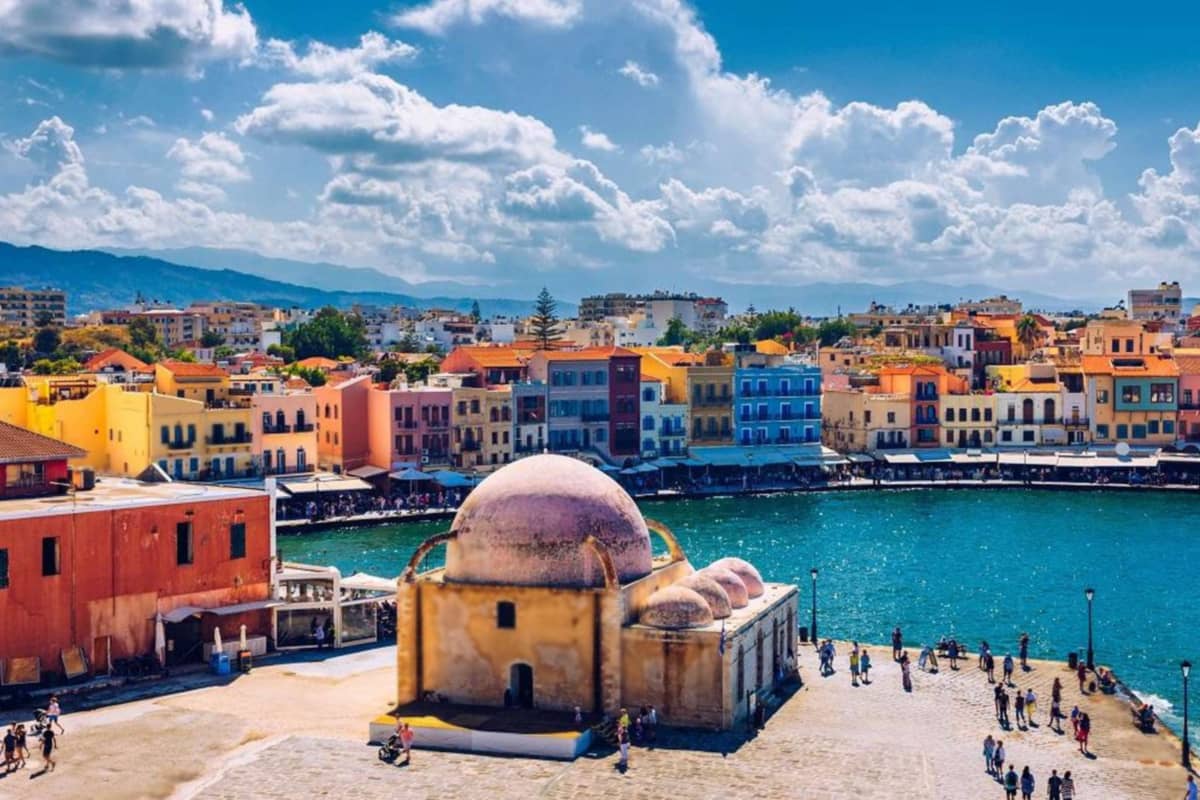
Chania is the second-largest city of Crete, with a largely intact Old Town, as Wikivoyage states. The prefecture of the same name has the city as its capital. Chania earns its place among bases for where to stay in Greece. It is a harbour town with its own airport and ferry port.
The Old Town is centred around the harbour, as Wikivoyage describes it. The old Venetian harbour carries the Chania Lighthouse, which Wikipedia dates to eighteen sixty-four. For where to stay in Greece, a room near that water means the seafront walk starts at the door.
Wikipedia names Splantzia, next to the east part of Kasteli, as a quarter that is largely untouched. Topanas served as the quarter of the Christians while the Ottomans ruled, it states. Evraiki, the Jewish quarter, took up the corner of the Old Town toward the north-west. The lane you choose changes the feel of the base.
Wikipedia dates the Agora, an indoor market, to nineteen thirteen. The Agora stands on the fringe of the old town. Olives, olive oil and honey are listed by Wikivoyage among local products. A reader deciding where to stay in Greece around Chania can use that market as a landmark.
West of the town, a row of beach resorts stretches 20 kilometres along Chania Bay, as Wikivoyage states. The old road, still numbered 90, serves all the small resorts there. The new highway passes the southern outskirts of the town. A public bus reaches the nearer beaches.
Wikivoyage names three day trips from the town. The Samaria Gorge is the first, Balos beach the second and Elafonissi beach the third. Balos is reached from Kissamos, which a bus serves, and a bus also reaches Elafonissi. These days take the traveller west and south-west.
The airport stands on the Akrotiri Peninsula, and Wikipedia puts the distance at 14 kilometres. Wikivoyage gives the drive from the airport to the city as about twenty minutes. Souda, 7 kilometres east, is the city port. For where to stay in Greece, both links lie outside the Old Town.
Chania answers where to stay in Greece for a traveller who wants an old town and a harbour on foot. A long coast lies within reach. Wikivoyage says renovated Venetian houses in the historical backstreets by the old harbour now serve as hotels. The central bus station offers luggage lockers.
How do Rethymno and Heraklion fit where to stay in Greece?
Rethymno and Heraklion answer where to stay in Greece on Crete in two ways. A Venetian old town, a small harbour and a sand beach belong to Rethymno. Heraklion is the largest city of the island, with a ferry port, an airport and a museum of Minoan finds.
Anyone weighing where to stay in Greece on the north coast of Crete finds Rethymno between Heraklion and Chania. Wikipedia states that the Venetians set up a trading station there, and the old town is almost entirely their work. A small Venetian harbour, narrow streets, stone staircases and arched doorways make up that old town.
The Fortezza stands on Paleokastro hill near the coast, and its walls run for 1,307 metres, as Wikipedia gives it. Four demi-bastions guard those walls, and the Erofyli open-air theatre stands in the St Elias bastion. Under the Ottomans, the Cathedral of St Nicolas inside the fortress became a mosque, named for Sultan Ibrahim.
Wikivoyage says bars near the Rimondi Fountain, which stands on Moschovitou Street, are noisy and very busy. Calmer places lie in the narrow streets nearby, it adds. For where to stay in Greece with early nights in mind, a lane away from the fountain makes sense. A boardwalk follows the sea, and the lighthouse is among the Venetian remains.
A sand beach begins in the town and runs far east, with places to stay behind it. West of town, past a small industrial area, the coast turns rocky and unspoilt. Another good beach lies 8 km west, toward Georgiopoli. The Arkadi Monastery lies 23 km from the city, on a plateau.
Only three cities in Greece are bigger than Heraklion, and no Greek island holds a larger one. For where to stay in Greece around a flight or a ferry, it is the practical base. The airport lies 5 km east of the city. The overnight ferry from Piraeus docks around six in the morning.
Wikivoyage warns of heavy traffic and scarce parking, so the central sights suit walking. Lions Square holds the Venetian Morosini fountain, with the Renaissance loggia beside it. The Venetian walls circle the old city, and visitors can follow much of that ring on foot.
The Archaeological Museum holds Minoan finds, and Knossos lies 5 km south, a bus ride away. Rethymno answers where to stay in Greece for a couple or family wanting an old town and a beach. Heraklion suits a traveller who has a morning flight or wants a day among Minoan finds.
What does east Crete add to where to stay in Greece?
East Crete adds a lagoon town, a bay town and two more coasts to where to stay in Greece. Agios Nikolaos serves as capital of Lasithi, the regional unit in the east. Elounda is the major town nearest to Spinalonga, while Sitia and Ierapetra lie further east and south.
Anyone weighing where to stay in Greece on the east side of Crete starts with Agios Nikolaos. Heraklion lies to its west, Sitia to its east and Ierapetra to its south. About twenty small villages and farms look to it as their hub, Wikipedia notes. The airport and ferry port of Heraklion lie 64 km away, it adds.
Lake Voulismeni, a small lagoon, has ducks, pigeons, fishing boats, an amphitheatre and a park with a trail. The town adds an archaeological museum, small beaches and the tiny island of Agioi Pantes. Remains of the old city of Lato pros Kamara lie beneath part of the town. Dorians from Lato settled the harbour site in the late Bronze Age.
For where to stay in Greece beside a bay, Elounda is a small town of seven villages. The enclosed water between the town and the Spinalonga peninsula, Mirabella Harbour, served flying boats in the nineteen thirties. Plaka, a fishing village facing Spinalonga, lies 5 km from the main square, heading north. Elounda suits a stay beside the water.
The Lasithi Plateau lies inland and measures 11 km by 6 km. Heraklion stands about 70 km to its west. Until mid-spring, snow can cover the plain and the peaks that surround it. A local design shaped the white-sailed wind-pumps there, and diesel and electric pumps took over. It suits a day out from a coastal base.
For where to stay in Greece at the far east, Sitia is a port town with its own airport. The road to Vai runs beside a long beach, and the Venetian Kazarma fortress overlooks the harbour. The European route E75, which ends in Vardo in Norway, starts in Sitia. Sitia suits a stay at the far end.
Crete has only three cities bigger than Ierapetra, which sits on its south-east shore. It answers where to stay in Greece for the south. It is the largest town in Lasithi, and it carries a second name, the bride of the Libyan Sea. Kato Mera, the old quarter, has narrow alleys and small houses. Ierapetra suits a south-coast stay.
How does Rhodes fit where to stay in Greece?
Wikivoyage splits the city of Rhodes into four areas for a visitor. The four are the Old Town inside its medieval wall, the new town, the east-side waterfront and the ancient ruins. That split is the first step in choosing where to stay in Greece on Rhodes.
Where to stay in Greece on Rhodes begins with the capital, which sits on the north-east tip, as Wikipedia states. The city forms a triangle and meets the sea on three sides. Ialysos and Kallithea border it in the south. Buses from the centre serve Faliraki on the east side and Tholos, Ialysos and Ixia on the west side.
The Old Town suits anyone who wants sights on the doorstep. Wikipedia’s sight list for the city starts with the Grand Master’s Palace, then adds the Street of the Knights. It also lists the Mosque of Suleiman the Magnificent and La Juderia, with the Kahal Shalom Synagogue. Wikivoyage names feet as the main way to travel there.
The Old Town has the new town on its north and west sides, Wikivoyage states. The eastern waterfront holds the Commercial Harbor, the extensive Elli Beach and Mandraki, the harbour for yachts and ferries. On the waterfront, where to stay in Greece means a short walk to a beach, a harbour and the wall.
From the Old Town, the ancient acropolis is about two kilometres away to the south-west, Wikivoyage states. Rodini Park, a historical park along a creek gorge, features the Roman water system that served the ancient city. Wikivoyage adds that birds live there, peacocks among them.
Faliraki, east of the capital, is the action resort of the island, as Wikivoyage puts it. Hotels north of it are much quieter. The page also reports far less wind at Faliraki than on the west coast. Kallithea, north of Faliraki, is known for the spa that the Italians built and for snorkelling.
On the west coast, wind shapes where to stay in Greece. Wikivoyage ties Ialysos to international windsurfing competitions, with an organised beach beside large hotel complexes and smaller ones. Ixia stands near Paradisi, Tholos and the airport. The airport is 14 kilometres south-west of the city, Wikipedia states.
Lindos stands in a large bay under its acropolis. Wikipedia places it about 40 kilometres from the city, to the south. Wikivoyage describes the south of Rhodes as tranquil beaches with a slower pace. For where to stay in Greece, walkers pick the Old Town, swimmers the east and windsurfers the west.
Which other Dodecanese islands suit where to stay in Greece?
Kos, Symi and Patmos each rest on one harbour town: Kos town, Gialos and Skala. Wikipedia names Kos town the main port of its island and Skala the only commercial port of Patmos. Where to stay in Greece on these islands starts at the quay.
The main port of Kos lies in Kos town, which also forms the population centre. The Knights Hospitaller erected a fortress in the fourteenth century at the harbour mouth, Wikipedia states. The plane tree of Hippocrates stands at the heart of Kos town. On Kos, where to stay in Greece turns on a centre with the castle, tree and quay.
Beyond the town, Kardamena is a seaside resort that Wikipedia ties to young holidaymakers. Kefalos lies near Astypalaea, the old capital at the island’s western end. By car, Kefalos is about 40 minutes from the main town, Wikivoyage states. Kos town suits walkers, Kardamena young holidaymakers and Kefalos a stay in the far west.
Kos is not large. Wikipedia gives its dimensions as 42.1 kilometres by 11.5. Wikivoyage adds that a public bus runs to every part of the island.
Wikipedia puts Symi about 24 kilometres north of Rhodes, and Wikivoyage lists a ferry from Symi to Rhodes. Where to stay in Greece on Symi is a choice between two levels of one town. Gialos is the lower town round the harbour, and Ano Symi sits on the hill above.
Wikipedia dates a number of the coloured neoclassical mansions to the mid-nineteenth century, when the island prospered. Greek law binds restored houses to guidelines from the Archaeological Service. Gialos, the harbour, draws sailors to its marina, Wikipedia notes. Symi suits a visitor who wants a harbour town, steps and boats.
Every ferry and hydrofoil calls at Skala, the one commercial port of Patmos, Wikivoyage states. Chora, the capital, climbs a hill and wraps round the fortified monastery. A bus between Skala harbour and Chora runs about hourly. On Patmos, where to stay in Greece means the quay at Skala or the hill at Chora.
In nineteen ninety-nine UNESCO listed three places on Patmos. The Cave of the Apocalypse is one. The historic centre of Chora is another. The third is the Monastery of Saint John. A Wikipedia caption puts Meloi beach within walking distance of Skala. For church history and a small harbour, Patmos settles where to stay in Greece.
How does Corfu fit where to stay in Greece?
On Corfu, the town answers where to stay in Greece: airport, ferry port and old town all meet there. UNESCO lists the old town among its World Heritage sites. South of the city, about three kilometres away, lies the airport. At the tip of the peninsula carrying the town stands the Venetian citadel.
The Liston lies on the open esplanade that separates the town from the citadel. A seaside promenade runs on towards Garitsa Bay. A room in the old quarter keeps both close on foot. Without a car, this walkable core settles where to stay in Greece on the island.
The north-east coast of the island faces Albania across a strait three to twenty-three kilometres wide. North Corfu, as Wikivoyage groups it, holds the villages of Kassiopi and Kalami. In Kassiopi a Byzantine castle stands mid-village. A narrow walkway past houses and backyards leads to it. Wikivoyage describes calm water and a mainly stony beach.
The EO24 and the EO25 are the island’s two national roads, one west to Paleokastritsa and one south towards Achilleion. Buses to Paleokastritsa, Sidari, Roda, Acharavi and Lefkimmi leave the city about six times a day. A reader who counts road time when choosing where to stay in Greece can pick one coast and stay put.
The Canal d’Amour at Sidari is a natural tunnel, an opening in the rock at the bay entrance. This sea channel gave the beach its name, which is French for channel of love.
The south has a base of its own. The island article gives the largest sandy beach of Corfu to Agios Georgios South. Wikivoyage describes Lefkimmi as a quiet village on a long sandy beach. The water stays calm and very shallow far out. When sand matters, the south is worth a look in deciding where to stay in Greece.
The old town suits a traveller who wants lanes, squares and a short airport transfer. The north-east suits a quiet stay beside a clear bay. The south and the west suit those who plan days around sand and have a car. Each coast gives its own answer to where to stay in Greece on one island.
How do Kefalonia and Zakynthos fit where to stay in Greece?
Among the Ionian islands, Kefalonia answers where to stay in Greece with Argostoli, and Zakynthos with its capital town. The capital has a second name, Chora, which stands for the Town. Fifteen kilometres of sea separate the two islands, and a ferry joins Agios Nikolaos on Zakynthos to Argostoli.
Argostoli is the home of a third of all residents of Kefalonia. Around a sheltered bay, its port runs for one kilometre. The De Bosset Bridge crosses the Koutavos Lagoon, with a British stone column halfway along. For a visitor who wants a town and a port in one place, Argostoli settles where to stay in Greece.
Four kilometres of bay separate Argostoli from Lixouri, yet the road round it is a 30-kilometre detour. Anyone planning where to stay in Greece on this island sees why the short ferry crossing matters. The EO50 national road joins Argostoli with Sami, and another road runs north to Fiskardo.
Fiskardo, in the far north, escaped the great quake that destroyed almost every other settlement on the island. It has kept its original architecture. The village and its forest are areas of natural beauty under Greek protection. Its port sends ferries to Lefkada and to Frikes, a harbour of Ithaca. It fits a traveller who prefers a small harbour.
Assos sits on the west coast beneath a Venetian castle on a peninsula. Myrtos Beach, in the north-west, lies at the base of Kalon Oros and Agia Dynati. A steep road with hairpin bends leads down to it from Divarata. Both places suit a traveller with a car.
On the central east coast, Sami works as a major port, and its sea routes reach Patras and Ithaca. The Melissani cave stands to the west of Sami. Sami fits a visitor who wants a port town: it answers where to stay in Greece on the east coast.
Zakynthos town lies near the eastern end of the north coast. A ferry from the port crosses to Kyllini on the mainland. A statue of the poet Dionysios Solomos adorns the main square. A small Venetian castle crowns Bochali hill above it. Visitors come from across the island to the town for boat trips, nightlife and food.
Long sandy beaches line the fertile plain that forms the eastern half of Zakynthos. The west is a mountain plateau, with steep cliffs on the south-west coast. The wide, shallow bay of Laganas lies between the Vasilikos and Marathia peninsulas. For where to stay in Greece by the sand, Laganas is the largest resort, and the airport stands near Kalamaki.
Turtles come to nest in the bay of Laganas in June, July and August. Navagio, a cove reached only by boat, lies on the north-west shore. The town suits those who base their days on boat trips. The south suits those who want sand beside the airport. Either answers where to stay in Greece for a week on Zakynthos.
How do Lefkada, Paxos and Ithaca fit where to stay in Greece?
Lefkada needs no boat, because a floating bridge and a causeway tie it to the mainland. That is the first fact to know about Lefkada in a search for where to stay in Greece. Paxos lies south of Corfu, and Ithaca lies off Kefalonia. Both need a sea crossing.
In ancient times a bridge joined Lefkada to the mainland. Wikipedia names it as the longest of the stone bridges in ancient Greece. A trench was dug by the Corinthians on the narrow neck of land, in the seventh century BC. Today the causeway does that job, so a driver reaches the island without a ferry.
In the north lies the capital, Lefkada town, a first stop when you decide where to stay in Greece. It has 9,253 inhabitants, and its street plan grew from the medieval plan of Venetian rule. Panagia ton Xenon, Agios Spyridon and Agioi Anargyroi are old churches in the local style. The town suits a traveller who wants an island base.
No resort on the island is larger than Nydri, which lies in a sheltered spot on the east coast. Across the water lie the mainland, Skorpios, Meganisi and further small islands. Lygia, Nikiana and Perigiali are smaller resorts to the north. Nydri suits a traveller who wants a resort base with boats at hand.
The west coast of Lefkada turns where to stay in Greece into a day-trip question. Porto Katsiki lies near Athani, and Lefkada town is 35 kilometres away. Lodging is absent there, and camping is not allowed. The parking lies on the cliff top, with a stairway down, and boats arrive from Nydri. Egremni lies on the south-western coast.
For where to stay in Greece, Paxos has three main settlements along its eastern shore: Gaios, Lakka and Loggos. Agios Nikolaos and Panagia are the two islets that protect the harbour of Gaios. Ferries from Igoumenitsa run all year, and Antipaxos lies to the south-east. The island suits a traveller who wants small harbours and olive hills.
Two halves of about equal size form Ithaca around the bay of Molos. The harbour of the capital, Vathy, lies in the south of that bay. Modern scholars generally accept Ithaca as the home of Odysseus, who has a statue in Vathy. For where to stay in Greece, Ithaca suits a traveller who wants one small capital and a myth.
Which Saronic islands near Athens suit where to stay in Greece?
Forty minutes is the hydrofoil time from Piraeus to Aegina. The regular ferry is slower, at about an hour. Poros, Hydra and Spetses lie farther out. The Saronic islands add four small harbour towns near Athens to where to stay in Greece.
On Hydra, where to stay in Greece comes with a rule: no wheeled vehicle is permitted. Public transport means horses, mules and donkeys, or a water taxi. Hydrofoils and catamarans from Piraeus serve the island, which a narrow strip of water parts from the Peloponnese. A crescent-shaped harbour is the centre of its one main town.
Uphill from the harbour run steep streets of stone, and local homes and places to sleep are found along them. The National Museum of History uses the Kountouriotis mansion as an extension. Profitis Ilias and Ayia Efpraxia, two of the six monasteries, overlook the harbour from a hill. Hydra suits a traveller who likes to walk.
Aegina answers where to stay in Greece within forty minutes of Piraeus by hydrofoil. Aegina town lies toward the island’s north-west, and its buildings are neoclassical, from the nineteenth century. Agia Marina is one of the places reached by bus from the town. The east coast holds the fishing village of Portes.
A peak about 160 metres high in the east carries the Temple of Aphaia. The sanctuary lies 29.5 kilometres south-west of the Acropolis. Pistachio is the crop that marks the island today. A volcano that has died out makes up two-thirds of Aegina. Aegina serves a traveller who looks for a harbour town close to Athens.
Poros adds a third option for where to stay in Greece within reach of Athens. Its neoclassical town climbs a hill and has a clock tower. Galatas, on the mainland, lies opposite across a channel 200 metres wide. Sandy beaches are limited to the south coast, apart from the bay of Vayionia. Poros suits a short break.
In Spetses town, private cars are not allowed, and that shapes where to stay in Greece here. People get around on foot, in horse-drawn carriages or on bicycles, mopeds and motorcycles. Downtown admits only taxis and delivery vehicles. Three beaches lie near town: Ayios Mamas in the centre, Kaiki to the north-west and Ayia Marina to the south.
Kaiki lies one kilometre from town, and Ayia Marina two. All the trails around Spetses together measure about 25 to 30 kilometres. No Greek island raised the flag of the Revolution before Spetses. A statue of Laskarina Bouboulina stands on the main dock. Spetses suits a traveller who wants trails and a harbour with a past.
How does the Peloponnese answer where to stay in Greece?
The Peloponnese answers where to stay in Greece with Nafplio, briefly the capital before Athens took over. Wikivoyage places every major sight inside its old town. It also calls Nafplio a good place to stay for radial trips around the peninsula.
Wikivoyage splits the Peloponnese into seven parts: Argolis, Arcadia, Achaea, Corinthia, Laconia, Messenia and Elis. A visitor picking where to stay in Greece here chooses one part and settles in it. Nafplio belongs to Argolis, and Monemvasia to Laconia. The old town of Nafplio covers the whole peninsula, while the new town spreads north and east.
Governor Kapodistrias had his mansion, the Palataki, on the square fronting the present town hall. Drivers choosing where to stay in Greece are pointed by Wikivoyage to the large parking area at the harbour. Accommodation inside the old town lies ten to fifteen minutes away on foot.
Venetian-style buildings stand all around Syntagma Square, the main point of reference in the old town. Cars are allowed on very little of it, and no bus line runs inside. For a walker, where to stay in Greece can be Psaromachalas, the quarter below the rocky hill of Acronafplia. It has small white houses, flowered yards and narrow stairways.
Palamidi crowns the hill, and Wikivoyage counts 857 stairsteps up, though legend says 999. The Bourtzi castle rises from a rock-island at the harbour entrance. A coast path links Karathona, a quiet sandy beach, with Arvanitia and the town in about an hour. Epidaurus, Mycenae and Tiryns, all UNESCO sites, are among the trips Wikivoyage lists.
Monemvasia is a town on an island off the east coast. A 400-metre sandy isthmus joins it to the mainland. Its plateau stands roughly 100 metres over the water and is one kilometre in length. It was founded in the sixth century. Wikipedia places it with the oldest fortified towns of Europe that stayed inhabited.
Walls enclose the lower town on three sides, and the west gate is the entry. Its lanes are narrow cobbles, partly covered by vaults with parts of houses built above. The upper town stands empty, up a winding path to a fortified gate. Among stone lanes, this is where to stay in Greece for those who walk.
Which other Peloponnese bases suit where to stay in Greece?
Four bases in the west and south of the Peloponnese answer where to stay in Greece. They are Kardamyli, Pylos, Olympia and Kalamata. Each ties to a gulf, a bay, an ancient sanctuary or an airport. All four lie in Messenia or Elis.
In Elis, Olympia is a small town whose village sits beside the ancient sanctuary it serves. The railway station stands about 300 metres east of the centre of town, as Wikipedia puts it. Near the ancient Olympic Games site, where to stay in Greece can be the village itself, which suits a walker. The full site takes extensive walking.
Kardamyli lies on the Mani Peninsula, a village below the Taygetus mountains on the Messenian Gulf. The Iliad names it among the seven cities that Agamemnon offers Achilles. Between sea and mountain, Kardamyli is where to stay in Greece for seven beaches, among them Ritsa and Belogianni. The older town has a medieval castle.
Old Kardamyli, called Pano Kardamyli, has buildings from Venetian times, and tower houses dominate its skyline. Mountain paths start in the village, with routes to the peak of Taygetus, called Profitis Ilias locally. The mountains largely block the meltemi wind, so the morning sea lies calm. The village suits a walker who wants a trail from the door.
Pylos holds the main harbour of Navarino Bay, on the Ionian side of the Peloponnese. The island of Sphacteria is a natural breakwater for the bay. Pylos offers a bay town built by French engineers to anyone deciding where to stay in Greece. Its Square of the Three Admirals has arcades on two sides and faces the sea.
The Frankish Paleokastro lies northwest of the bay, and the Ottoman Neokastro stands on the heights of the town. The Franks built the Church of the Transfiguration inside the Neokastro. It later became a mosque and then a church again. The Gialova lagoon, one of ten major lagoons in Greece, lies north of the bay.
Kalamata serves Messenia as both capital and chief port. Kalamata International has scheduled flights to major Greek cities. By air, the city opens up where to stay in Greece across the south. From Pylos, Greek National Road 82 reaches the city in under an hour. It suits a traveller who flies in and drives on.
How do Delphi and Arachova fit where to stay in Greece?
Near the oracle, where to stay in Greece has two answers. Delphi lies in Phocis, immediately west of the ancient site. Arachova is a mountain town eight kilometres to the east. Delphi suits those who want the ruins at their door, Arachova those who want a mountain setting.
The modern town of Delphi exists because of the excavation. It was built for the people of Kastri, who moved to free the ancient site for digging. The town holds 2,373 people, and the municipal unit around it, with Chrisso, holds 3,511. The seat of the whole municipality is its largest town, Amfissa.
On the mainland, deciding where to stay in Greece begins with a town built in steps. Amfissa and Livadeia are joined by National Road 48, and Delphi stands on it. It terraces its streets and buildings, much as the ancient precinct does. The streets are narrow, and the town carries extensive facilities for the people who visit the ancient site.
Walking is the only transport that a stay in Delphi needs. Wikivoyage calls the town small, with the museum and the site both within walking distance. Where to stay in Greece at Easter matters here: hotels in Delphi are booked well at weekends and holidays. Spring and autumn suit walks nearby, since summer is very hot.
The municipality of Delphi reaches down the Pleistos valley as far as the Gulf of Corinth. A Wikipedia photo of the village shows the valley and the gulf behind it. Itea, on the Gulf of Iteas, is the sea choice for where to stay in Greece near Delphi. It lies eleven kilometres south of Amfissa, and its name means willow.
Galaxidi is a seaside town of 3,000 people, a summer stop for travellers between Patras and Delphi. Wikivoyage notes that in peak summer, Delphi visitors stay at Galaxidi for the sea breeze, away from the heat. The streets are narrow, so walking is the way around. Wikivoyage adds that tourists form the clear majority only in the fishing harbour.
Arachova sits high on Mount Parnassus, on its southern side, at about 970 metres. National Road 48 also passes through it. A photo caption lists a town hall, a clock tower, a square and the Church of Agios Georgios. Travellers who want a town with the ski centre to its north find where to stay in Greece in Arachova.
How do Kalambaka and Kastraki fit where to stay in Greece?
Kalambaka and Kastraki settle where to stay in Greece for Meteora. Kalambaka stands beneath the Meteora massif. Kastraki lies in a small valley cut into the massif’s south-western edge. Kalambaka suits those who want a town, Kastraki those who want to sleep closer to the rocks.
Kalambaka keeps a medieval past. The town’s cathedral, the Church of the Dormition, rose late in the eleventh century or early in the twelfth. Its builders raised it over an earlier church of late antiquity. The oldest church in town honours the Virgin Mary. Relics of a temple from ancient Greece, probably Apollo’s, are built into the wall.
A base in Kalambaka means a town, not a village. Wikivoyage calls it touristy, with restaurants, bakeries and shopping. The census gives Kalambaka 11,492 people. Kalambaka also holds a weekly street market, a plus in working out where to stay in Greece for Meteora. It sells fresh produce on Friday mornings in Vlachava Street.
The railway station ends the old Thessaly line, and Wikivoyage notes that the line has been closed after storm damage. Anyone mapping where to stay in Greece around Meteora checks the current rail service first, because timetables change. Kalambaka suits a traveller who wants amenities and transit options close at hand.
Kastraki sits closer to the rocks. A small valley cuts into the massif from the south-west, and the village uses it. Only the west side, at the valley mouth, is free of precipices. Surloti and Agion Pneuma, a pair of rock columns, frame that opening. Anyone asking where to stay in Greece right below the pillars lands here.
Spindle Rock, tall and thin, closes the valley at its head. Past that rock, the massif offers no ground for a settlement. Kastraki stands at an elevation of 275 metres, and 1,023 people live in it. A central plaza and a church mark its middle, and trails link it to the rocks and the monasteries.
The village name derives from kastro, meaning a Byzantine castle. That castle is in ruins today. The village formed in the early eighteenth century from hamlets that migrants from northern Epirus had founded. Kastraki suits walkers working out where to stay in Greece, since paths leave the village for the monasteries. Early sun lights the rock faces.
How does Thessaloniki fit where to stay in Greece?
Thessaloniki, by Wikivoyage’s count, has about one million inhabitants and ranks as the second largest Greek city. In the north, it works as a city base for where to stay in Greece. It has a waterfront, a grid of streets and an old hill quarter above the centre.
For a city break in the north, anyone choosing where to stay in Greece can start at the waterfront. Nikis Street, the boulevard along the shore, carries the White Tower. Its drum is about 23 metres across, with six floors inside. Within the tower, a museum covers the past of the city, under the Ministry of Culture.
Aristotelous Square, on Nikis Street at the shore, is the central square. The French architect Ernest Hebrard drew it in nineteen eighteen, though the greater part went up in the nineteen fifties. It was first named Alexander the Great Square. Hebrard’s plan let the eye climb the slope to the Byzantine walls, then on to the Upper Town.
The centre was rebuilt on a grid, which makes a first night easy to plan. Nikis, Tsimiski and Egnatia run parallel to the sea. Dragoumi, Venizelou and Agias Sofias run between the hill and the shore. A grid like this keeps the walking simple. It makes the city a clear case in the question of where to stay in Greece.
Ladadika lies beside the port. Wikipedia says olive oil shops gave the district its name, and it was a marketplace for centuries. Heritage status came in nineteen eighty-five, granted by the Ministry of Culture. Eating places fill its nineteenth-century warehouses, and Morichovou Square is one of the small squares joined by pedestrian lanes.
For an older setting, climb to Ano Poli, the Upper Town, above the centre. Small stones pave its lanes, and its houses follow Greek and Ottoman styles. Wikivoyage places the rest of the Byzantine walls here, with a bay view in the late afternoon. Walkers asking where to stay in Greece in the north can pick this quarter.
Wikivoyage counts thirteen Byzantine churches, the city walls and a Byzantine bath on the UNESCO list. From the centre, the airport is 15 kilometres to the south. Buses to Halkidiki leave from a station in the Pylaia district. A seafront cycle lane, churches and museums add to the city’s case when asking where to stay in Greece.
How do Halkidiki and Pelion fit where to stay in Greece?
Three prongs, Kassandra, Sithonia and Athos, reach south from the Halkidiki peninsula in northern Greece. Pelion is a forested peninsula near Volos. Halkidiki gives beach bases for where to stay in Greece on the northern mainland. Pelion gives stone villages built on terraces on its slopes.
Kassandra is the western prong. Wikivoyage calls it cosmopolitan and places the popular spots of Halkidiki here. A canal at Potidea separates it from the mainland, and a report names the channel in the first century. Planning where to stay in Greece by bus favours Kassandra, which Wikivoyage says is better served than the other prongs.
Sithonia is the middle prong, and Wikivoyage calls it less developed than Kassandra. Mount Itamos rises to 817 metres at its centre. The Singitic Gulf washes the east side, and the Toronean Gulf the west side. Forests, vineyards and grassland cover the land. Beaches line both coasts, from Kalogria in the west to Karidi in the east.
Wikipedia gives Porto Koufo, in the south, as Greece’s largest natural harbour. Thucydides called it the hollow harbour. Sykia has windmills, and Toroni holds an ancient city and a castle. Sithonia suits travellers who rent a car and weigh where to stay in Greece for open space.
Athos, the eastern prong, is a self-governing monastic community. Wikivoyage on Mount Athos states that only male visitors can enter, and each pilgrim needs a written permit. The village of Ouranoupoli lies at Athos. The island of Ammouliani lies close to Athos, and Wikivoyage lists it as a tourist centre.
Pelion is the other choice in the north, and Wikivoyage names Volos as its gateway. Makrinitsa, nicknamed the balcony of Mount Pelion, stands 6 kilometres north-east of Volos. Cobbled paths there pass traditional water fountains. Its Topali Mansion holds a folk museum, a bonus for anyone settling on where to stay in Greece here.
Tsagarada stands at 408 metres on the eastern slope. A plane tree stands in its main square, beside the church of Agia Paraskevi. Tradition puts its age at a thousand years or more. The north-east beaches are sandy with clear water, while the north-west bays on the Pagasetic Gulf are calmer and warmer.
Wikivoyage advises a car for Pelion, because coach services are scarce. Wikipedia notes hiking trails and old stone paths that reach springs, coves and beaches. Pelion suits walkers at any time of year, and it settles where to stay in Greece for a walking trip.
Where to stay in Greece for a first trip?
For a first trip, where to stay in Greece means Athens plus one or two islands on a direct ferry. Santorini and Naxos, Mykonos and Paros, or Crete alone are the classic shapes. Athens takes the opening night, and each base gets a run of nights, not one.
Anyone settling where to stay in Greece for the first time meets a long list of islands. Wikivoyage says the number and variety can bewilder a first visitor. A direct ferry joins two bases with no change of port on the way. One night shows a harbour and a dinner. A run of nights shows the lanes.
Santorini and Naxos make the first pair, and Wikivoyage gives the regular ferry between them as about two hours. Oia has paths of its own. A flight of 300 steps drops to the harbour of Ammoudi, where a ferry sails to Therasia. The bay of Armeni lies below, and the way down goes on foot or by mule.
Naxos adds an older layer to a first stay. In Chora, a small museum stands over Grotta, the excavated site of an ancient town of the eleventh century BC. Wikivoyage calls the footpaths up Mount Zas easy and clearly marked. That mix of town and hill path answers where to stay in Greece for one island.
Mykonos and Paros make the second pair, with a boat ride of one hour between them, as Wikivoyage states. Paros adds an inland path. Lefkes, a village in the island interior, sits near its middle. On the Byzantine Route, a walker follows old stones from Lefkes down to Prodromos.
Crete alone is the third shape. A first-time reader choosing where to stay in Greece on Crete meets two village words. Wikivoyage names two kinds of coastal village. Epano means the old settlement up the hill, and kato the newer one by the water. A direction needs the right word.
A first trip suits the reader who wants one clear picture and short transfers. For where to stay in Greece on a first visit, Athens plus one pair holds. Santorini with Naxos gives the rim and the sand. Mykonos with Paros gives the harbours. Crete gives one long stay.
Where to stay in Greece for walking and the mountains?
Where to stay in Greece for walking depends on the trail. Litochoro serves Mount Olympus, and Monodendri and Papingo serve the Vikos Gorge in Zagori. The two ends of the Samaria Gorge serve Crete. Each base sits where a path starts or ends.
Litochoro is the town below Mount Olympus, set on the west side of the Thermaic Gulf. Wikipedia places the start of almost every climbing route to its south-west. For where to stay in Greece with a mountain at the door, this is the base. The nearest beach is 5 kilometres east.
At Prionia, 1,100 metres up, the hike on Olympus begins. The summit reaches 2,917 metres, which makes it the highest mountain in Greece. Christos Kakkalos, a Litochoro man, joined the first modern ascent on the second of August, nineteen thirteen. Beside the Enipeas gorge, at 850 metres, Saint Dionysios built the old monastery.
Zagori fills a triangle of the Pindus mountains in Epirus, and Ioannina touches its southern corner. Wikivoyage calls the west the more developed side and eastern Zagori far less developed. For where to stay in Greece among stone villages, Tsepelovo, at 1,080 metres, starts hikes to Dragonlake.
Wikivoyage names Monodendri, at 1,060 metres, as the preferred start for crossing the Vikos Gorge. A cobbled street 800 metres long leads from its square to the convent of Agia Paraskevi on the gorge edge.
From Monodendri, a trail drops into the gorge and heads for the Voidomatis springs in the north. From the springs, two paths climb out of the gorge. One goes to Papingo on the northern side, the other to Vikos village on the southern side. Viewpoints stand at Oxia, 8 kilometres by road from Monodendri, and at Beloi, reached from Vradeto.
Papingo is two stone villages, Megalo Papingo at 960 metres and Mikro Papingo. A demanding hike from the village leads to Drakolimni, an alpine lake at 2,100 metres.
Crete’s Samaria Gorge starts at 1,250 metres near Omalos. It falls to the Libyan Sea, where Agia Roumeli stands on the shore. The gorge measures 16 kilometres. Five to seven hours is the walking time Wikipedia gives. In the Gates, the walls narrow to four metres.
Ferries leave Agia Roumeli at half past five, as Wikipedia states. Boats call at Hora Sfakion in the east, and at Sougia and Paleochora in the west. For where to stay in Greece after the walk, Sougia or Hora Sfakion takes the night. A coach goes back to Chania.
In the Peloponnese, the Lousios Gorge runs about 15 kilometres. Dimitsana lies at its northern end and ancient Gortys at its southern end. Monasteries dot its walls. Dimitsana is a stone-built village at 950 metres. Where to stay in Greece for a quiet walking base can end there.
Where to stay in Greece with children or as a couple?
Where to stay in Greece with children starts with the water and a short transfer. Along the west side of Naxos, Wikivoyage finds mainly one long sandy beach with clear water. A couple weighs the setting instead: a rim village with a view, a car-free island or an old town.
For small swimmers, where to stay in Greece opens at the harbour in Chora. Locals swim on both sides of the causeway to the Portara. Wikivoyage calls the west side a sheltered shallow bay with steps and seating built into the causeway. The east side is much deeper.
A short transfer matters after a flight with young children. Wikivoyage calls the airport of Naxos small and basic, and places it 3 km from Chora. It gives the ride as six to seven minutes. A bus to the town leaves every half hour. For a toddler, where to stay in Greece can therefore begin in Chora.
Skiathos fits the same plan on a smaller map. Wikipedia counts over sixty beaches along its 44 kilometre coast, largely sandy. At the summer peak the core bus route leaves the main town for the south-west beaches. Departures reach five an hour. On Skiathos, a family can settle where to stay in Greece by choosing the main town.
Among the beaches of Paros, Wikivoyage names Logaras as a good one for families. Halkidiki began as a summer coast for Thessaloniki, as Wikipedia tells it. In the late nineteen fifties, holidaymakers from the city began to spend their summers in its seaside villages. On Crete, Wikivoyage locates the main tourist settlements along the northern coast.
A couple weighs three traits: the view, the evening walk and the quiet after dark. A rim village on the caldera ridge of Santorini gives the view. Hydra, closed to wheeled vehicles, gives quiet streets. An old town such as Chania gives lanes beside the harbour. Pick the trait first when deciding where to stay in Greece as a couple.
Hydra shows why a couple checks the evening. Wikivoyage names it a popular day trip out of Athens. Day trippers make up a large part of the crowd, the page says. So the port town is relatively peaceful after dark. Wikipedia adds that the settled area is small enough for walking. For a couple, the quiet night is the draw.
Which months change where to stay in Greece?
The months change where to stay in Greece because tourism towns shut when the season ends. Wikivoyage states that towns on Crete that live on tourism alone virtually close down in winter. So a winter base is a city such as Athens or a mountain village rather than a tourism town.
For the shoulder months, the first check for where to stay in Greece is the opening season of a town. Wikivoyage adds that the international restaurants of such towns on Crete are generally open only during the tourist season. The page also says the beaches and the mild climate of the Chania area attract tourists all year.
Wikivoyage Greece says summer afternoons in Athens can be uncomfortably warm because concrete dominates the city. Inland Naxos stays cooler because of its mountains and valleys, Wikivoyage says. Athenians who own houses in Halki and Filoti go to Naxos to leave the heat of Athens behind. Where to stay in Greece in July can mean an inland village.
In July and August a steady meltemi blows over the Cyclades, and Wikivoyage Mykonos says it softens the heat. The page adds that beaches on the south coast are shielded from the northern wind that prevails. In the central Aegean, Wikipedia gives the meltemi a northerly direction. The winter boat sailings to Mykonos are irregular, as Wikivoyage Mykonos states.
Cities carry the winter. Athens, Thessaloniki, Chania, Rhodes town and Nafplio keep their harbours, markets and lanes at work when the islands go quiet. In January, one of them settles where to stay in Greece. A city room does not depend on the beach season.
Mountain villages are the other winter answer. On Halkidiki, Wikipedia names Arnaia as a winter favourite, valued for its architecture and the mountain setting. Wikivoyage says the villages on Mount Cholomontas attract visitors during the winter. Wikipedia describes Pelion as a popular attraction throughout the year, with hiking trails and stone paths.
Wikivoyage lists a parade from each of Nafplio’s three main churches on Holy Friday, two days before Greek Easter. The fifteenth of August, the day of the Madonna, brings a large feast and a religious parade around the town. On those dates, where to stay in Greece favours the old town, close to both.
How do ferries, flights and roads decide where to stay in Greece?
For where to stay in Greece, check the way in before the town. Wikivoyage Greek Islands lists Paros, Santorini, Mykonos, Corfu, Kefalonia and Rhodes among islands with international airports. It lists Milos and Syros among islands with domestic flights only. Those two lists settle how the arrival and departure days of a stay go.
Piraeus sorts its boats by gate. Wikivoyage Piraeus gives the Saronic Gulf islands gate E8. Conventional ferries and fast catamarans bound for the Aegean islands sail from gates E6, E7, E9 and E10. A base on Hydra or Aegina uses a different gate from a base on Naxos.
The metro joins the gates to town. Piraeus station, where metro lines one and three meet, stands near gate E6, as Wikivoyage Piraeus states. The central Cyclades boats sail from just opposite the station. A free shuttle bus links the station with the Crete and Dodecanese sailings. Check the gate number early, the page advises.
Piraeus, Rafina and Lavrio serve the islands from three points of the Attica coast. Wikivoyage Greece says new fast ferries are cutting sailing times in half. It adds that flying is sometimes more practical, especially for Crete or Rhodes. By sea, the hours of the crossing count first in where to stay in Greece.
Where to stay in Greece by air starts with the gap between airport and base. Heraklion airport serves the resorts of Agios Nikolaos, Malia, Hersonissos, Stalida, Sisi and Elounda, the article on the airport states. The airport of Mykonos lies 4 kilometres from the town. In winter, flights to the islands run through Athens, as Wikivoyage Greece states.
On the mainland, KTEL joins independent bus businesses into one national route system, as Wikivoyage Greece describes it. Each business runs on its own, so online information varies from one to the next. For where to stay in Greece beyond the capital, the bus matters more than the train. The same page calls the railway underdeveloped.
A car opens the rural bases. Wikivoyage says Crete has car hire at its airports and ferry ports. Small villages that cater to visitors have it too. In the Peloponnese, the A7 motorway joins Corinth and Kalamata through Tripoli. Where to stay in Greece for a drive starts on those lines.
Which kinds of lodging answer where to stay in Greece?
Where to stay in Greece depends on the kind of lodging as much as the town. Wikivoyage Greece names small family-run pensions, simple hotels, villas near the beach and self-catering studios. In the table of Wikipedia, hotels fall into five classes, running from a single star to five stars.
For where to stay in Greece, hotels are simple, as Wikivoyage Greece describes them, even in the big cities. Rooms are small and bathrooms smaller, yet a balcony or veranda is common. Air conditioning is in the rooms nowadays, so confirm it when booking. A room in an old stone building with thick walls can do without it.
Where to stay in Greece for a village rhythm can mean a pension. Wikivoyage Greece calls the owners and staff there friendly and open-minded, unlike the service in a large hotel. Villas stand near or on the beach and give more space and a view.
Wikivoyage Greece calls the terms studio and apartment interchangeable. A hotel can include self-catering units, or its managers can run a separate building of apartments. Studios tend to stand in quieter and more scenic places than hotels. Within where to stay in Greece, a studio is an attractive alternative to full hotel services, the page says.
Old buildings now take guests. The article on Oia names the yposkafa, simple sailors’ homes along the caldera rim. Guest houses, hotels and restaurants now fill a number of them. A scheme of the Greek National Tourism Organisation began in the nineteen-seventies. It sought to restore such homes and give them new uses.
Stone settlements keep their look by rule. From the late nineteen-seventies the Greek state listed a number of Mani settlements with tower houses as traditional. It also limited new building, the article on Mani states. On Pelion, a number of the larger arhontika mansions have become hotels and hostels. Wikivoyage counts 46 villages in the traditional style in Zagori.
Rooms fill at the peak. Wikivoyage Greece says a walk-in room is easy to find except on the crowded islands. There, high season makes rooms hard to find. So do shoulder-season weekends and major holidays. For Easter and August, book ahead once where to stay in Greece is settled.
A last resort exists when rooms run out. Wikivoyage Greece suggests asking at a cafe whether the owner knows of rooms to let. The same page names one charge on hotel nights. A climate crisis resilience charge replaced the old hotel tax. It is set per night by hotel category and season.
What else comes up when choosing where to stay in Greece?
Four choices settle where to stay in Greece: bases, airport, town or beach, and season. The answers below test each choice on two Cyclades, one island of the far north and one of the east. Each answer opens with a short rule. Wikipedia and Wikivoyage state the plain facts for each place.
What number of bases fits a ten-day trip?
Ten days hold nine nights, so two or three bases fit. Three bases of three nights use all nine nights. Each move takes half a day for packing, the boat or the road, and the check-in.
The count of moves is the first rule of where to stay in Greece. Every extra base removes half a day from the shore. A large island takes two bases, one at each end, split as four nights and five.
For where to stay in Greece, a small island holds one base. Wikivoyage states that Serifos covers 65 square kilometres and has about 1,200 people. It says a brief stay in the main town, Livadi, needs no car or motorbike. A beach lies within walking distance, and buses run up to Chora at short intervals.
Hora, the old capital, stands on the hillside about a mile from Livadi. Wikivoyage calls it a good idea to ride the bus up and walk the old donkey path down. Two towns and a frequent bus make one base enough.
Does an island without an airport work for a short trip?
Yes, when the island is small and the boat link is clear. Koufonisi shows the case for where to stay in Greece without a plane. Wikivoyage notes that no airport serves the island, and it lists ferries from Naxos, Schinousa, Amorgos, Donousa and Athens. Cruise ships and private vessels also dock at the port.
On Koufonisi, where to stay in Greece needs no bus, since everything lies within walking distance. The same page states that you can walk round the whole island in three to four hours. No bus or taxi runs there. A narrow road leads from the port to Finikas beach, and a daily boat excursion reaches Kato Koufonisi.
Ammos beach lies in the main village. Wikivoyage names Athena, Finikas, Italida and Alejandra beaches on the walk round. The wind comes mostly from the north, so the sea tends to be rougher on that side. For where to stay in Greece without an airport, that means a room near the port and the boat.
Is the town or the beach the better base?
For where to stay in Greece, Thasos answers with a pair of places. Wikipedia states that the capital is officially Limenas Thasou, Port of Thasos, and that the ancient agora lies nearby. Near the town too lie the acropolis and the ancient theatre.
Wikipedia lists the town at 3,331 inhabitants. Its Archaeological Museum holds a Kouros that is 3.5 metres high. The town is the base for ruins and the harbour.
For the sea, Thasos has other villages. Wikipedia states that stairways called skalas link inland villages to harbours on the shore. As tourism grew, the local people moved to the shoreline settlements. That left paired villages such as Maries inland and Skala Maries on the coast.
So a stay can have two parts. The town takes the ruins and the harbour, and a Skala takes the sea. The rule for where to stay in Greece here is simple: sleep where your day begins.
Which island stays lived-in all year?
Lesbos is a clear case for where to stay in Greece in winter. Wikipedia gives Lesbos 83,755 inhabitants and ranks it third among Greek islands by size. A third of them live in the capital, Mytilene. The rest live in small towns and villages.
Wikipedia names the largest villages as Plomari, Agia Paraskevi, Polichnitos, Agiassos, Eresos, Gera and Molyvos. Wikivoyage names Kalloni as the second-largest town, in the centre of the island.
For where to stay in Greece in the quiet months, Mytilene shows what a year-round town holds. Wikivoyage lists the hospital, the university, the port, the airport and the court in Mytilene. Wikipedia adds that the University of the Aegean has its headquarters there. Each of these keeps residents in every month.
A summer village is the opposite case. Wikivoyage calls Skala Eressou mostly a summer resort. Molyvos, the ancient Mithymna, keeps the Gattilusi castle and its traditional architecture. For where to stay in Greece outside July and August, the capital is the steadier base.