
Where to stay in Cyprus comes down to the coast or the hills: the harbour of Paphos, the seafront of Limassol, the palm promenade of Larnaca, the sandy bays of Ayia Napa or the pine villages of the Troodos. The tours in Greece on the home page start from the Greek side of the sea.
This page covers the districts, Paphos and the west, Limassol, Larnaca, Ayia Napa and Protaras, the Troodos villages, Nicosia, the north, the airports and the months; the Cyprus island page holds the history and the sights of the whole island.
Which factors settle where to stay in Cyprus?
Where to stay in Cyprus depends on the days you want: sea, old town or mountain. By size the island ranks third in the Mediterranean, and by population it ranks third again. That gives it room for all three. Choose the kind of day first, then the base that serves it.
On where to stay in Cyprus, start with the country itself. Cyprus is an island country of its own, not a Greek island. Wikipedia places the island in the eastern Mediterranean, beside the Levant. The trip is a Cyprus trip from the first hour.
One plain fact shapes the map. Since nineteen seventy-four, a buffer zone of the United Nations, the Green Line, has split the island. South of the line, the Republic of Cyprus is the government. North of it sits the Turkish Republic of Northern Cyprus, which only Turkey recognises. This page names bases on both sides as places.
Where to stay in Cyprus starts with one place or two. A stay in one place means one unpacking, and every sight becomes a drive out and back. A split stay means two unpackings and shorter drives. It gives the trip two moods, say a sea town first and a hill village next.
Next comes sea or streets, and where to stay in Cyprus follows the answer. A beach strip puts sand at the door and the evening walk along the shore. An old town puts squares, harbours and castles at the door. Certain bases give both, and the sections below name them.
This page covers eight bases for where to stay in Cyprus, in this order:
- Paphos
- the west coast villages
- Limassol
- Larnaca
- Ayia Napa and Protaras
- the Troodos villages
- Nicosia
- the north
The last choice is coast or hills. A coast base keeps the sea within a short walk. A hill village sits inland and sets a slower pace for the days. Pick the coast for swimming and the hills for walks, and keep both in mind for a longer stay.
Two airports serve the south of the island. Larnaca is the main airport there, and Paphos Airport lies west of Paphos, as Wikivoyage states. The airport you land at can shape the first base, and the later sections give the roads.
How do the districts split where to stay in Cyprus?
Cyprus has six districts, and each one is named after its capital town. For where to stay in Cyprus, the districts give the first split of the map. Paphos, Limassol and Larnaca line the south coast, Nicosia lies inland, and Famagusta and Kyrenia take the east and north.
- Paphos district: main town Paphos, on the south-west coast, 1,389.8 square kilometres.
- Limassol district: main town Limassol, on the southern coast, 1,393.3 square kilometres.
- Larnaca district: main town Larnaca, on the south-east coast, 1,120.1 square kilometres.
- Famagusta district: main town Famagusta, with Ayia Napa in the Republic’s share, 1,985.3 square kilometres.
- Nicosia district: main town Nicosia, inland in the Mesaoria plain, 2,710.0 square kilometres.
- Kyrenia district: main town Kyrenia, on the northern coast, 643.9 square kilometres.
Not every district lies on one side of the line. As Wikivoyage states it, the Turkish Republic of Northern Cyprus administers the whole of Kyrenia district. It also administers the greater part of Famagusta district and the northern part of Nicosia district. For where to stay in Cyprus, that sorts the bases into the south and the north.
Read the areas with one note from the table. The figures include the land under northern control, and the buffer zone counts in them too. The census did not count people in the north, so Kyrenia district shows no population figure at all.
The census table counts people only where the Republic of Cyprus runs the land. Nicosia district holds 350,824 people, Limassol district 262,238 and Larnaca district 155,753. Paphos district holds 100,175 and Famagusta district 54,282. A district is a wide setting, so the base is always a town or a village inside it.
Where to stay in Cyprus has a fourth setting, the hills. Near the middle of the island rises the Troodos, the largest mountain range of Cyprus. Its villages get their own section below, because a hill village is a different stay from a district capital.
Roads join the district capitals of the south, so the districts read as one map, not as six separate trips. A coast road runs along the sea and a motorway links the large towns. On where to stay in Cyprus, the section on roads below gives the numbers.
Why does Paphos work for where to stay in Cyprus?
For where to stay in Cyprus, Paphos gives a harbour, a castle and a World Heritage site. They sit within one walkable stretch of the south-west coast. Kato Paphos holds the shore and the ruins, and the upper town of Ktima rises on the hill behind it.
Paphos is a town of two levels, and for where to stay in Cyprus the level decides the stay. Wikivoyage calls the upper town the commercial centre. Lower Kato Paphos holds the main ancient sites and the strip along the water. Wikivoyage adds a seafront that curves round to the marina, with a long coastal path beyond.
Paphos Castle stands by the harbour. It began as a Byzantine fort that guarded the port. The Lusignans rebuilt it in the thirteenth century. The Venetians dismantled it in fifteen seventy, and the Ottomans restored it after they captured the island. A room near it keeps the waterfront walk short.
The harbour is small and still works. The port, as the Paphos article puts it, holds 300 boats. It works as a small marina and as shelter for fishermen. Cargo ships and cruise ships go to Limassol instead, 60 km away. For where to stay in Cyprus, a small port keeps the waterfront simple.
The castle square has its own calendar. The Aphrodite Festival has run there every September since nineteen ninety-eight, as the article states. In two thousand twelve Paphos was named European Capital of Culture for two thousand seventeen. Wikivoyage also records it.
In nineteen eighty UNESCO added Paphos to its World Heritage list. The Roman villas of Dionysos, Orpheus, Aion and Theseus hold mosaic floors from the third to the fifth century. The bus station at Kato Paphos harbour sits near the archaeological park. That suits where to stay in Cyprus for a trip on foot.
Villages near the town add easy day stops. Lemba lies 4 km north of Paphos, and its artists run open studio shops. Geroskipou, inside the metropolitan area, is known for its sweet called loukoumi. The same article counts four resort areas in the Paphos district, among them Kato Paphos, Coral Bay and Latchi.
Which villages of the west fit where to stay in Cyprus?
For where to stay in Cyprus, the west north of Paphos offers three village bases. They are Peyia on the hills above Coral Bay, Polis on Chrysochous Bay, and Latchi on its fishing harbour. All three lie in the Paphos district and sit beside the Akamas peninsula.
- Peyia: steep coastal hills, with Paphos 14 km to the south-east
- Coral Bay: part of the Peyia municipality, 11 km up the coast from Paphos
- Polis: the town on Chrysochous Bay, in the far north-west
- Latchi: a fishing village belonging to the Polis municipality
For where to stay in Cyprus, Peyia, also spelled Pegeia, closes the Akamas peninsula at its southern tip. Its lanes climb steep coastal hills, so parts of the town look over Coral Bay and Paphos. The town covers a wide stretch, from Pegeia Forest above it down to the sea.
Peyia takes its name, by tradition, from Baia, a Latin word for bay. Ships carrying cargo from ancient Egypt once tied up in the bay below. Venetian settlers first came in the era that began in fourteen eighty-nine. The old village spring is still visible, and newlyweds visit it.
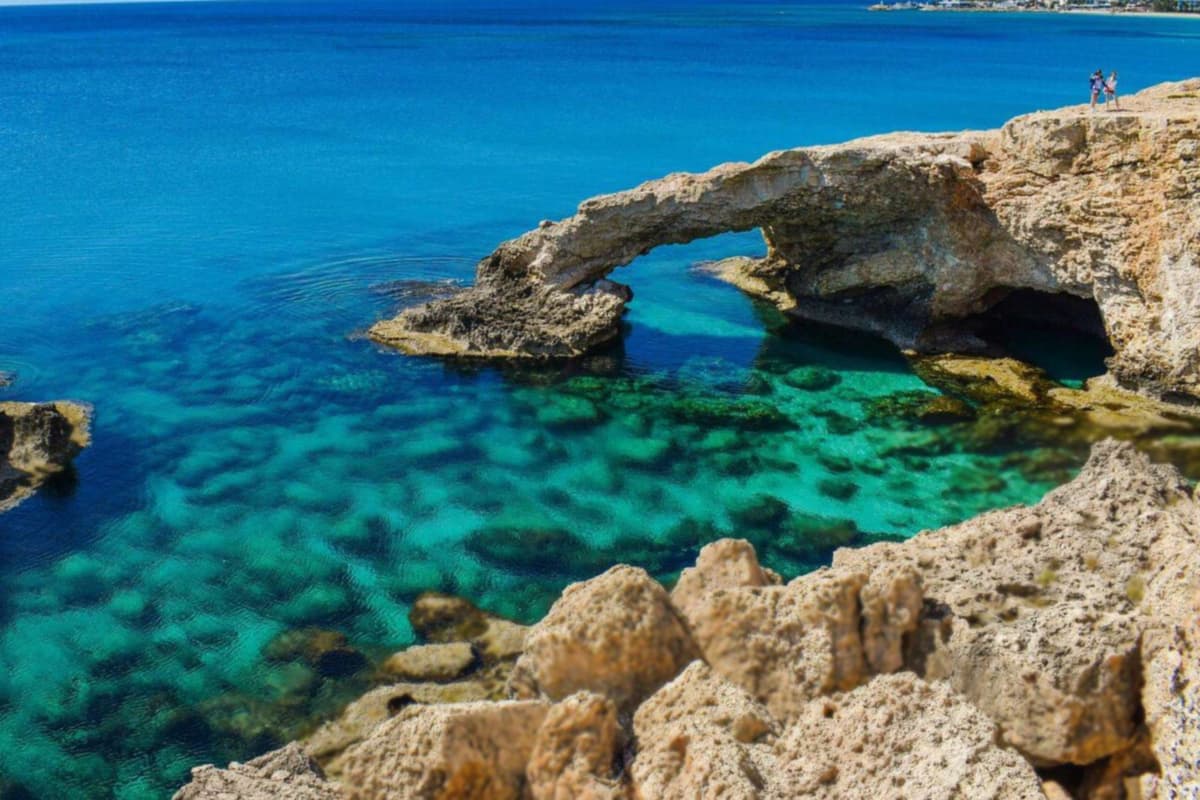
Sea caves and rocky headlands line the shore on both sides of Coral Bay. Yeronisos, an uninhabited island, lies off Pegeia. For where to stay in Cyprus, that gives the west a rocky shoreline.
Polis sits mid-bay on Chrysochous Bay, next to the border of the Akamas reserve. A small bus station links the outer villages. A near-hourly route, number 645, runs to Paphos, as the Polis article describes it. Pedestrian streets run south of the town square. That keeps Polis a small town base for where to stay in Cyprus.
Latchi stands 7 metres above sea level. The Latchi article lists its small marina and seafood tavernas. It also ties the village to the Akamas National Park and the Blue Lagoon. East of Polis, Argaka is where the Polis article places surfing and windboarding. Gialia, near Polis, has newly found ruins of a Georgian Orthodox monastery from the Middle Ages.
The Akamas article says its visitors look past beach and sunshine to culture, biodiversity and hiking. Close to Polis you reach the Baths of Aphrodite, and walks start from that spot. For where to stay in Cyprus, the quieter west suits a walker.
The south-western flank of Akamas holds the Avakas Gorge. A river runs for 3 km through the canyon. At the narrowest point the gap is only 2 to 3 metres. For where to stay in Cyprus, Wikivoyage names Pegeia and Paphos as the nearest places to stay.
How does Limassol answer where to stay in Cyprus?
For where to stay in Cyprus, Limassol is the city base on the south coast. In urban size it comes next after Nicosia, as Wikipedia ranks the cities. Its centre sits at the castle and the Old Port, with the sites of Amathus and Kourion on either side.
The city is wider than its municipality. The urban area also takes in Kato Polemidia, Mesa Geitonia, Agios Athanasios, Germasogeia and Ypsonas, as Wikipedia lists them. For where to stay in Cyprus, a Limassol stay starts with choosing a quarter along the coast.
The first castle here was raised by Guy of Lusignan in eleven ninety-three, according to Etienne Lusignan. The first official mention dates to twelve twenty-eight. Inside, a medieval museum shows cannons, suits of armour and wood carvings from the seventeenth and eighteenth centuries. For where to stay in Cyprus, the castle gives the old town its fixed point.
The traditional shopping streets, Ayios Andreas and Anexartisias, keep their cobbled lanes, as Wikivoyage lists them. The tourist coast of the city lies between the Old Port and the Amathus area. For where to stay in Cyprus, that gives two clear choices: the old lanes or the seaside strip.
The Limassol Sculpture Park, commissioned by the municipality, stands in the Molos seafront park. A bathing beach in the Dasoudi area is run with full facilities by the Cyprus Tourism Organisation. For where to stay in Cyprus, the Molos and Dasoudi side suits a stay built around the sea.
Amathus lies near Agios Tychonas, 9.7 kilometres east of Limassol and 39 kilometres west of Larnaca. Only the sanctuary at Paphos held a higher rank than the Aphrodite sanctuary of Amathus. The Greco-Roman theatre at Kourion dates from the second century BC. Restored, it still stages open-air performances.
Pissouri sits between Limassol and Paphos, with the centre of Limassol about thirty kilometres to the east. Cape Aspro is the bay about three kilometres from the main settlement, which is built on a hill slope. Limassol’s wine companies work with the growing areas on the south side of the Troodos, Commandaria among them.
How does Larnaca answer where to stay in Cyprus?
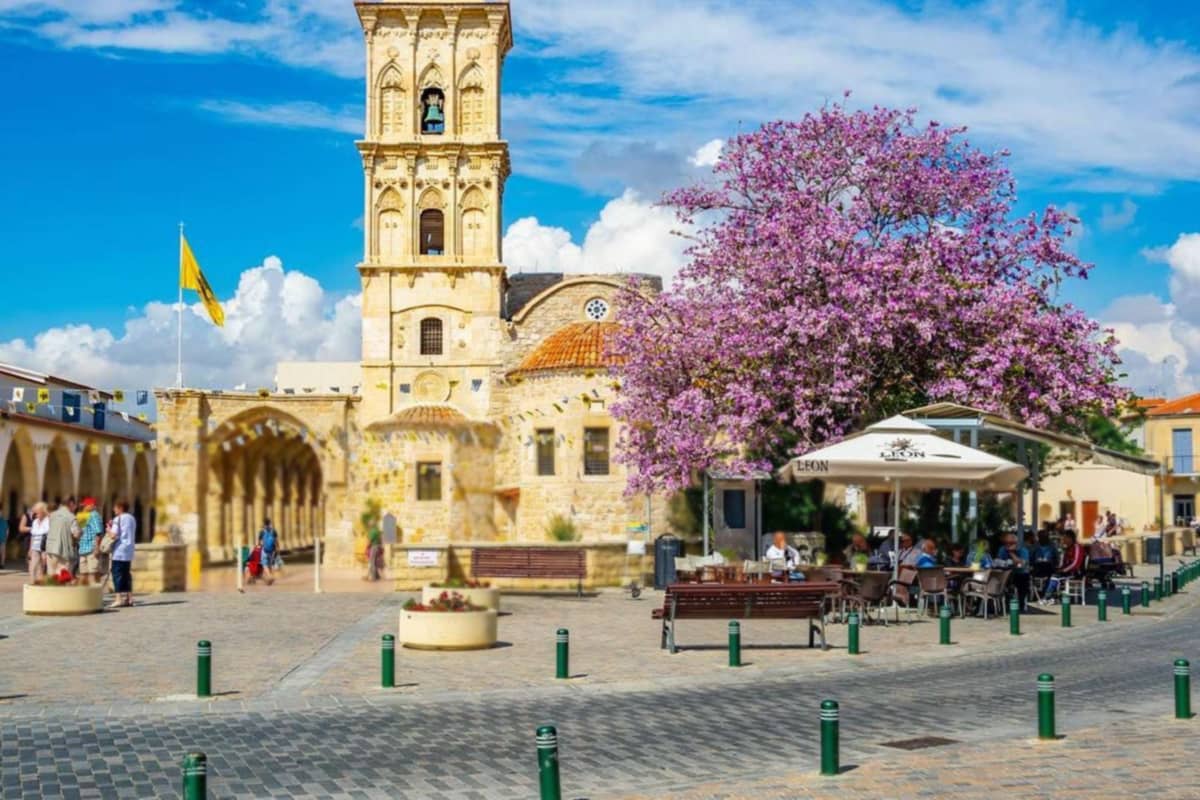
For where to stay in Cyprus, Larnaca works as a compact seaside base. A palm promenade, a church from the late ninth century, a castle and a salt lake lie close together. Wikivoyage calls it a thin ribbon of a town, with much of it open to walkers.
- Finikoudes, the seafront promenade lined with palm trees
- The Church of Saint Lazarus, on its own square
- Larnaca Salt Lake, west of the town
- Hala Sultan Tekke, beside the lake
- Mackenzie Beach, with a windsurfing centre
- Pano Lefkara, the lace village in the hills
Wikivoyage splits modern Larnaca into an older centre and a long band of hotels and restaurants by the beach. East of the centre, the Larnaca-Dhekelia Road carries the main hotel strip, fifteen to twenty minutes by car. For where to stay in Cyprus, the choice is the old centre or the strip.
Three aisles divide the Church of Saint Lazarus, a building with sides of 31.5 and 14.5 metres. Steps lead down from its open porch into the church. Woodcarvers worked on the baroque iconostasis from seventeen seventy-three until seventeen eighty-two. The bell tower was rebuilt in eighteen fifty-seven, in a Latin style.
Larnaca Salt Lake covers 2.2 square kilometres and fills with water in winter. By summer the lake has dried down to a crust of salt. Donkeys once carried the salt to pyramid-shaped heaps, until the harvest stopped in nineteen eighty-six. For where to stay in Cyprus, the lake adds flamingos from November to March.
On the western edge of the lake stands Hala Sultan Tekke. Living quarters, a cemetery, a mausoleum and a mosque make up the complex. A large Late Bronze Age town lay hundreds of metres to the west. Excavation by a Swedish mission began in the nineteen seventies. Its status is that of a listed Ancient Monument.
Windsurfers travel to Larnaca from abroad, and autumn draws them in particular. Mackenzie Beach holds a windsurfing centre. For where to stay in Cyprus, that gives the town a sea sport as well as a promenade.
Pano Lefkara stands in Larnaca District, 500 metres up on slopes of the Troodos that face south. Lace, called lefkaritika, and silver filigree are its crafts. The village founded a lace school in eighteen eighty-nine. For where to stay in Cyprus, it adds a hill day to a coastal base.
How do Ayia Napa and Protaras answer where to stay in Cyprus?
For where to stay in Cyprus, Ayia Napa and Protaras form the sandy south-east. The two resort towns lie about 12 kilometres apart in Famagusta District. Wikipedia counts beds for 27,000 guests at Ayia Napa, in more than 175 hotels and apartments of all sizes.
The name Ayia Napa joins ayia, meaning holy, to napa, an old word for a wooded dell, as Wikipedia explains. The Venetian-era monastery gave the town its name and sits at its heart, beside the square. The monastery keeps wall sections from before eleven ninety-one and now houses a museum.
Where to stay in Cyprus for sand can start with Nissi Beach. It runs for 500 metres along its own cove, as Wikipedia states. Its name comes from Nissi, a small uninhabited islet near the coast that shallow water lets you reach on foot. Excavations in two thousand and five on the bay’s western border revealed evidence 12,000 years old.
For where to stay in Cyprus, Wikivoyage lists Katsarka Beach, 800 metres long, close to the centre. Walkers can reach the sea caves of Cape Greco on the coastal E4 path. The cliff above gives a view down. BirdLife International names the cape an Important Bird Area for migrating raptors.
Protaras answers to the Municipality of Paralimni, as Wikipedia states. Wikipedia adds a reputation for catering to families and to holidaymakers from Cyprus itself. That reputation shapes where to stay in Cyprus with children. Long ago the area belonged to Leukolla, an old city-state. A car reaches Cape Greco from the heart of Protaras in 10 minutes.
Diving gives Protaras its own list of bays. Wikipedia names Green Bay, where underwater statues wait for first-time divers. Four more sites appear in the list: Decosta Bay, Malama Bay, Blue Hole and The Chapel. The technical diving site is Cyclops Bay, at the boundary with Ayia Napa. Boat days to the Blue Lagoon are a separate plan.
At night, Ayia Napa keeps its own clock, and Wikivoyage ties the town to clubbing on the island. The square stays practically deserted until half past nine. The scene picks up around eleven, and the clubs open after one in the morning. Early sleepers weigh where to stay in Cyprus by the distance from that square.
Which Troodos villages suit where to stay in Cyprus?
For where to stay in Cyprus, the Troodos villages trade the coast for cool hills. Mount Olympus, the island’s highest point, stands 1,952 metres high. The range covers a third of Cyprus and lies roughly in the centre, as Wikipedia states. Each village below sits on a different slope.
- Pano Platres stands about 5 kilometres from Troodos Square, on the mountains’ southern side.
- Kakopetria has about 1,200 permanent inhabitants and stands on the banks of two rivers.
- Omodos is a 50-minute drive from Limassol, as Wikivoyage lists it.
- Kalopanagiotis lies in the Marathasa valley, 3 kilometres north of Moutoullas.
Pano Platres means Upper Platres. The name arose after the village of Tornarides, 3 kilometres to the south-west, was renamed Kato Platres, or Lower Platres. For where to stay in Cyprus in the hills, Platres adds the Krios river. It starts at the Mount Olympus peak and flows all year round.
Platres has under 300 residents, a number that can swell to 10,000 in the tourist seasons. For summer, where to stay in Cyprus can mean Platres, which offers cooler air than the coastal resorts. In winter it serves as a base for the ski slopes of Mount Olympus. Milia Bridge stands just below the village, inside the forest.
For where to stay in Cyprus beside a river, Kakopetria sits on the Kargotis and Garillis, on the north-facing foothills. Old Kakopetria fills the western side, between the two rivers, with tiled sloping roofs and wooden balconies. New Kakopetria, to the east, has larger modern houses.
Wikipedia gives the name Kakopetria two origins: the Greek for bad rock, or the legend of a couples’ rock. Excavations in nineteen thirty-eight around the old village unearthed clay figures of Athena. They are now in the Archaeological Museum of Nicosia. Agios Nikolaos tis Stegis, a church near the village, belongs to the UNESCO list.
For where to stay in Cyprus among vines, Wikivoyage describes Omodos as a small village. Its vineyards share the land with apple, plum, pear and peach trees. A large car park near the centre lets you walk in, because the roads are steep and tight. Wikipedia records 339 residents in two thousand and twenty-one.
Kalopanagiotis has cobbled streets, chapels, courtyards and shady vine trees, as Wikipedia describes it. The monastery of Saint John Lampadistis is among the Byzantine monuments of the area. Nine churches and one monastery of the Troodos form a World Heritage Site, which UNESCO inscribed in nineteen eighty-five.
How does Nicosia answer where to stay in Cyprus?
For where to stay in Cyprus, Nicosia is the inland capital. The city article notes that Europe has no other divided capital. Its old centre sits inside Venetian walls. It is a base for museums and old streets, not for a week on the sand.
Nicosia grew as the outlet for the farms of the Mesaoria plain. The city article adds that its water supply was ample. The Byzantine Empire chose it as the capital around nine hundred sixty-five, and it has held that role since.
For where to stay in Cyprus in a city, the choice is simple. The historic centre lies inside the walls, and the modern city has grown beyond them. Eleftheria Square connects the old city with the new city. There the article lists main shopping streets: Stasikratous Street, Themistokli Dervi Avenue and Makariou Avenue.
The walls give the old town its shape. The Venetians began the new walls in fifteen sixty-seven, and the city article describes a star with eleven bastions. An opening was made near the Paphos Gate in eighteen seventy-nine for access to the area beyond.
Before nineteen seventy-four, Faneromeni Square, just east of Ledra Street, was the heart of the city. Its church, built in eighteen seventy-two, used stone from La Cava Castle. For where to stay in Cyprus on foot, Ledra Street joins both halves of the old town. South of the old barricade, the street was pedestrianised in nineteen ninety-eight.
The Cyprus Museum on Museum Street was founded in eighteen eighty-two. The present building was finished in nineteen twenty-four. Fourteen display halls surround a square central area. Only finds from the island itself are on show, so the rooms tell the story of Cyprus alone.
For where to stay in Cyprus with a city base, the distance to the airports matters. The Nicosia article puts Larnaca International Airport about fifty kilometres south-east of the city. It puts Paphos International Airport about one hundred kilometres south-west, twice as far.
What does the north add to where to stay in Cyprus?
For where to stay in Cyprus, the north adds a second coast. Kyrenia is a harbour town under a castle, and Famagusta is a walled city on the east coast. Between that coast and the southern resorts runs the Green Line, a buffer zone under United Nations control.
- Kyrenia: a harbour town with a castle on the north coast
- Bellapais: an abbey ruin above Kyrenia
- Famagusta: a walled city with a tower by the old port
- North Nicosia: the northern half of the divided capital
The island has been split in two since nineteen seventy-four, and the south answers to the Republic of Cyprus. In nineteen eighty-three the north declared itself the Turkish Republic of Northern Cyprus, and only Turkey recognises it. For where to stay in Cyprus, this page treats the north as places with plain travel facts.
For where to stay in Cyprus, Wikivoyage names Kyrenia as the main base for visitors in the north. Hotels line the coast for twenty kilometres on either side, it adds. The city article notes three universities in Kyrenia, with a student population around fourteen thousand.
For where to stay in Cyprus on the north coast, Kyrenia Castle is the sight that dominates the town. Richard I of England took the castle in eleven ninety-one. The Venetians enlarged it in fifteen forty and gave it its present look. Before the fourteenth century, the moat held water and served as a harbour.
One room off the castle courtyard holds the Shipwreck Museum and a trading ship of the fourth century BC. The hull is fourteen metres long, with Aleppo pine timber and a lead sheathing. A diver found the wreck in nineteen sixty-five. It carried millstones and amphorae of wine from Kos and Rhodes.
Bellapais Abbey stands at 220 metres above sea level. From the ruin, the eye runs down to Kyrenia and the Mediterranean. Canons regular built the monastery in the thirteenth century. For where to stay in Cyprus beside a ruin, the small village of Bellapais lies next to the abbey.
Famagusta lies on the east coast, east of Nicosia. Wikivoyage calls it a walled city, with a beach strip to the north. Varosha, its southern quarter, takes its name from the Turkish word for suburb.
Othello Castle dates from the Lusignan years of the fourteenth century and watched over the port. It also served as the main entrance to Famagusta. Under Venice, the square towers gave way to circular ones that suited newer artillery.
For where to stay in Cyprus, a day in the north starts at a crossing. Ledra Street reopened as a crossing on the third of April two thousand eight. Wikivoyage lists it and Ledra Palace as pedestrian only, and Agios Dometios as the chief crossing by road.
The Ledra Street article states that the northern side keeps an immigration checkpoint. It puts entry slips on separate paper, not in the passport. At the crossings, the Republic of Cyprus runs no immigration post but does check identity on entry to the south. Ercan International Airport lies 13 kilometres east of Nicosia, as Wikivoyage states.
Which airports and motorways frame where to stay in Cyprus?
For where to stay in Cyprus, the two airports come first. Larnaca International Airport sits four kilometres from the town, to the south-west. To the south-east of Paphos, at a distance of 6.5 kilometres, sits Paphos International Airport. Each of these towns has a gate to the island close by.
Larnaca airport lies in the area of the villages of Dromolaxia and Meneou, near the Larnaca Salt Lake. The ground served as an airfield in the nineteen thirties and later as a base for British forces. The airport opened in February nineteen seventy-five. The B4 road was upgraded and a new junction was built near the terminal.
For where to stay in Cyprus, Paphos airport is the gate of the west. It lies in the area of Timi and Acheleia and opened in nineteen eighty-two. The E603 road links it to the B6. Wikipedia names Coral Bay among the resorts it serves, and Limassol lies about 50 kilometres away to the south-east.
In the part of the island under the Republic of Cyprus, two commercial airports stand: Larnaca and Paphos. A third, Nicosia International Airport, lies south-west of the capital inside the Green Line buffer zone. Wikivoyage lists it as out of use since nineteen seventy-four. That leaves the two coastal airports as the arrival points for the south.
For where to stay in Cyprus, the motorways tie the towns together. The A1 joins Nicosia and Limassol and was completed in October nineteen eighty-five, as the first motorway of the island. The A2 joins Nicosia and Larnaca and was completed in nineteen ninety-one, with the first motorway interchange.
The A3 links Larnaca airport with Ayia Napa and was completed in two thousand and two. The A5 joins Larnaca and Limassol and was completed in nineteen ninety-six. The A6 joins Limassol and Paphos, was completed in two thousand and six, and holds a tunnel of 950 metres. The roads article states that Cyprus has no toll roads.
Vehicles drive on the left in Cyprus, a legacy of British rule. Only three EU nations keep vehicles on the left, and Cyprus is among them, as the transport article says. For where to stay in Cyprus, a hired vehicle opens the small villages in the hills behind Paphos, says Wikivoyage.
Intercity buses link the towns daily, and on the highway they make no stops between the cities. In Larnaca, buses to other destinations leave from Finikoudes beach. Wikivoyage puts Limassol about 40 minutes by road from both airports. For where to stay in Cyprus, these links suit a base in one of the towns.
Which months suit where to stay in Cyprus?
For where to stay in Cyprus, the sun sets the calendar. The Climate of Cyprus article counts five or six sunlit hours a day in winter. High summer brings twelve or thirteen, so the months shape the base as much as the map does.
- Late winter: the Limassol Carnival, listed for February or March.
- Spring: the Cyprus tulip in flower, in March and April.
- Summer: the hot, humid weeks of Paphos, late June to early September.
- Autumn: the Limassol Wine Festival, listed for every September.
For where to stay in Cyprus, a winter trip starts with the coast. In March and December, Limassol averages 22 to 23 degrees Celsius by day and 12 to 14 at night. Other coastal places reach 17 to 21 degrees by day. Coastal sites record around 180 hours of sunshine in December, the article adds.
The west keeps its own record. In Peyia, a January day reaches 16 degrees Celsius and an August day reaches 32. The sea there falls to 16 degrees in February and rises to 28 by August. July brings no rainy days, and January brings eleven.
For where to stay in Cyprus, Paphos has the plainest calendar in Wikivoyage. The page places the hot, humid weeks between late June and early September. After that, it says, the year is relatively mild, with colder spells in January and February.
For where to stay in Cyprus, a Troodos village follows the mountain calendar instead. Wikivoyage describes continental weather there, with warm, dry summers and cold, snowy winters. It lists winter as the chance to ski. In the climate article, only the Troodos Mountains can see snow.
The tulip and Easter mark the spring. The Cyprus tulip flowers in March and April and grows on Akamas, as its species article states. Wikivoyage adds that Easter in Greek Cyprus can fall on a different date from Western Europe’s. A number of museums close on Easter Sunday.
Nicosia, Limassol, Larnaca and Paphos live all year, so a winter stay there keeps its shops and offices working. The resort strips of the coast quieten in the cool months. For where to stay in Cyprus, a winter trip therefore leans on a town. A summer trip can lean on the beach strip.
Which questions do readers raise on where to stay in Cyprus?
Can a single base answer where to stay in Cyprus for the whole island?
For where to stay in Cyprus, one base covers a short trip well but not the whole island. Wikivoyage states that Cyprus has no railways. Every move between two bases is therefore a road trip by car, bus or taxi.
A narrow-gauge line once crossed the island. The Cyprus Government Railway ran from October nineteen oh five to December nineteen fifty-one. Its total length was 122 kilometres. Financial reasons closed it, and Wikipedia adds competition from the improved road network.
Buses now fill that role. Wikivoyage describes a network of routes that covers the whole island. On the vast majority of routes, service stops early in the evening. A base with dinner within walking distance fits that timetable. A village far from the main roads asks for a car.
A short trip fits one base, and a longer trip leaves room for a second. Choosing where to stay in Cyprus then means picking the first base near the airport you land at. The second base follows on the next leg.
Which bases suit families deciding where to stay in Cyprus?
Families deciding where to stay in Cyprus look first at the water’s edge. Wikivoyage describes the sea off Ayia Napa as quite shallow, with powder white sand on the beaches. That gives young swimmers room to paddle close to the shore.
Because the town is small, the same page rates Ayia Napa as just about walkable. Bicycles are widely available, and the town has bicycle lanes. So a family base near the centre can do without a daily drive.
Two public places add family stops away from the sand:
- The Thalassa Municipal Museum shows marine life, geology and archaeology, with a replica of a Hellenistic trade ship among its main pieces.
- The Ayia Napa Sculpture Park joins the Park of Mediterranean Plants, Cactus and Succulents at its eastern end.
Wikivoyage adds that the town manages its beaches. Umbrellas and sunbeds are lent at municipal stands. For families, where to stay in Cyprus means a small walkable town with managed beaches and shallow water.
Does a stay in an inland village work for where to stay in Cyprus?
For where to stay in Cyprus, an inland village suits walks, old sites and quiet nights, not a beach. Kalavasos and Tochni, both in Larnaca District, show the type: small villages with trails and ruins close by.
Kalavasos stands on the river Vasilikos, 6 kilometres north of Zygi. Between Limassol and Larnaca, on the south coast, lies Zygi. Wikipedia puts it about half an hour’s drive from each city.
People have lived in Kalavasos since the New Stone Age, and copper mines lie in its surroundings. The Tenta archaeological site is 4 kilometres south of the village. From nineteen thirty-eight to nineteen seventy-eight a mining railway linked the mines with a port at Vasiliko.
Tochni lies about halfway between Larnaca and Limassol. A ruined Latin church at the centre of Tochni overlooks the Orthodox church of Constantine and Helena. The majority of houses use Tochni stone, quarried nearby.
Tochni has a circular trail of 2.8 kilometres called Exploring Nature. Wikipedia calls Tochni a base for cycling and hiking across the countryside. For where to stay in Cyprus, such a village trades the sea for trails. Larnaca and Limassol lie on either side.
Does a split between coast and mountains settle where to stay in Cyprus?
A split stay answers where to stay in Cyprus when you want a sea week and a cool-air week. Prodromos is the highest village in Cyprus, at 1,380 metres above sea level. A mountain base sits that far above a coastal one.
Prodromos belongs to Limassol District. It is the main centre for winter sport on the island, with three ski slopes on nearby Mount Olympus. The village counted 123 permanent residents at the census of two thousand eleven.
A Troodos article gives the climate in plain numbers. The July daily mean at Prodromos is around 23 degrees Celsius, and the January mean is around 4. The Prodromos page adds that snow falls there in winter.
It also says walkers use the nature trails of the mountains in spring and stop at the village for lunch. For where to stay in Cyprus, the order of the two bases is a matter of taste. Put the sea first and the cool air last, or the reverse.