
Choosing greek islands to visit comes down to the purpose of the trip: old stones, a swim, a family week or a quiet corner. Each island below also has day outings that sit beside the other tours in Greece on this site.
The page covers how to choose and how long to stay, then rhodes greece with its Old Town, kos greece with its Asklepieion, patmos greece with its monastery, nisyros island with its volcano and cephalonia island with its caves, followed by beaches, families, quiet days, walks, Cyprus, getting there and the seasons.
How do travellers choose the greek islands to visit?
Travellers choose the greek islands to visit with four questions. What is the trip for, which season is it, how do the ferries run, and how big is the island? Estimates of the number of Greek islands run from around 1,200 to 6,000, so the questions narrow the list.
The count depends on the smallest size that a list includes. Sources cite between 166 and 227 inhabited islands, and Crete is the largest of them by area and by population. No traveller sees them all. The plan starts with a purpose and a short list of greek islands to visit.
Purpose is the first question. Wikivoyage ranks Delos, Rhodes and Aegina first for ruins and museums, and Samos, Sifnos and Cephalonia first for walking. It puts Patmos and Tinos first for ties to early and Orthodox Christianity. For harbour towns it names Chios, Hydra and Symi first. Each purpose gives a different list of greek islands to visit.
Season and ferry links come next. Wikivoyage states that a ferry serves every island, while routes and timetables change with the time of year. The same page names the Saronic Gulf group as closest to Athens, then Serifos, Sifnos and Milos. A short crossing narrows the choice to these.
Size is the last question. Wikipedia names Crete, Euboea, Lesbos and Rhodes as the four largest islands. No other island is larger than two-thirds of Rhodes by area. Wikivoyage gives Crete a page of its own for its size. A large island is planned like a region among the greek islands to visit.
Groups help less than purposes. Wikipedia lists six traditional clusters of islands and leaves Crete and Euboea outside them. A cluster says where an island lies, not what a day there holds. This page sorts the greek islands to visit by purpose. Each part below names the islands that fit one purpose.
Six worked examples show the greek islands to visit by purpose: Rhodes, Kos, Patmos, Nisyros, Cephalonia and Cyprus. Cyprus has a part to itself, because it is a country in its own right. After the islands come the sea and air links, the seasons and the packing checks.
Which greek islands to visit suit a first trip?
Santorini, Mykonos, Crete, Rhodes and Corfu are the greek islands to visit on a first trip. The Wikipedia page on tourism in Greece puts all five on its list of main destinations, beside Athens and Chalkidice. For a very first visit to the Cyclades, Wikivoyage names Santorini, Mykonos and Paros.
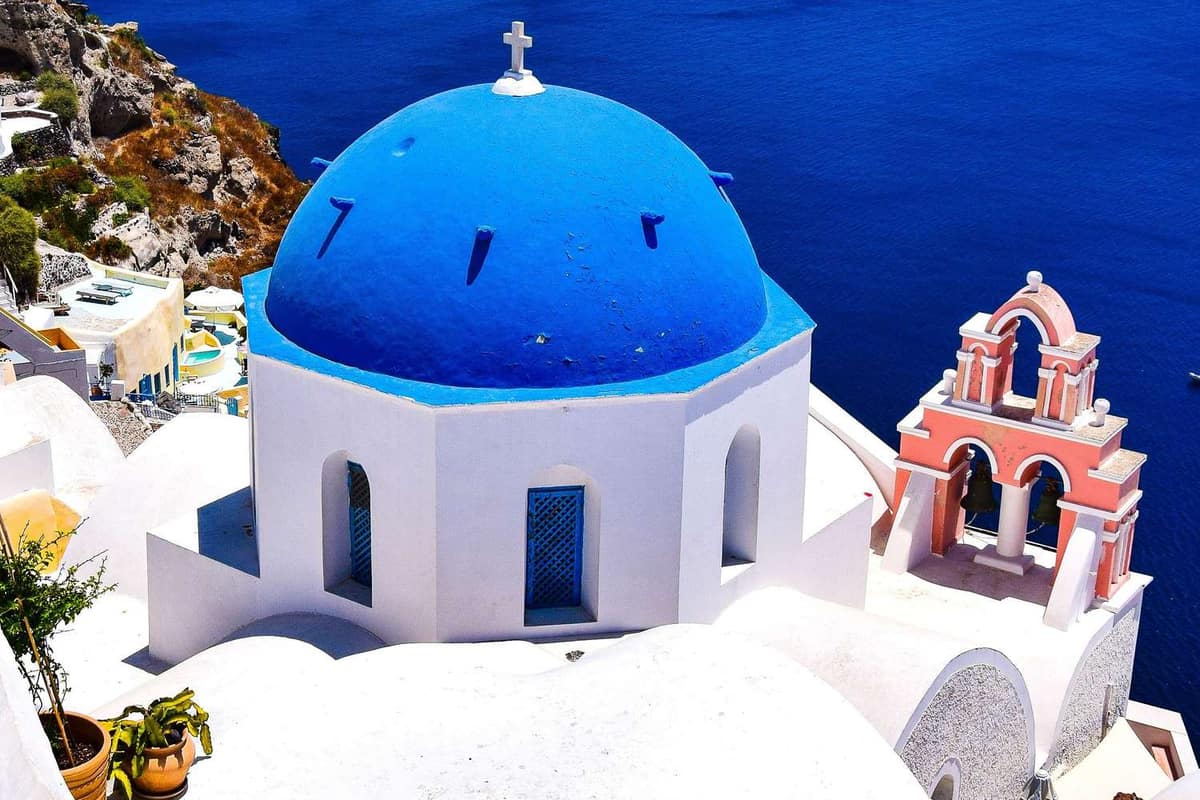
Santorini suits a traveller who wants a volcano. The island is officially named Thira. Wikivoyage describes its town of Fira as the archipelago’s capital. Within the South Aegean Volcanic Arc, no volcanic centre is more active. That makes Santorini the volcano choice among the greek islands to visit.
Mykonos suits a traveller who wants a compact island. Delos lies only 2 km away, so in ancient times Mykonos served as a stop for supplies and transit. Naxos, Paros, Syros and Tinos are its neighbours. It measures 85.5 square kilometres, so the places to see sit close together.
Crete suits a traveller who wants a whole region. Wikivoyage places the major sites and settlements of Crete on its northern coast. It adds that the vast majority of visitors keep to one northern city and travel out from that base. That makes Crete a base-and-explore choice among the greek islands to visit.
Rhodes is one of the greek islands to visit for sea history. Among the Dodecanese it is the biggest island and was their historical capital. A proverb quoted on Wikipedia says that ten Rhodians mean ten ships. It comes from the third century BC, when Rhodes used its navy as leverage among the great states.
Corfu suits a traveller who wants the Ionian side of Greece. Only its small satellite islands lie further north. The Wikipedia plant section opens with Homer and six garden plants. The apple and the pear grow poorly on Corfu, it says. The wild olive, the pomegranate, the fig and the vine thrive.
The five lie in four different places. Santorini and Mykonos belong to the Cyclades, Rhodes to the Dodecanese, and Corfu to the Ionian Islands. Crete stands outside the traditional groups. A first trip picks one or two of them, which keeps the greek islands to visit within a short plan.
How much time do the greek islands to visit need?
The greek islands to visit need days that match the crossing and the size of each island. Aegina, Salamis and Hydra are the short trips, a ferry ride from Piraeus that Wikivoyage calls popular for day-trips. Crete asks for more days, and so do the longer Cyclades crossings.
Wikivoyage calls Aegina the easiest island for day trips and names the temple of Aphaia as its main sight. Wikipedia calls the buildings of Aegina Neoclassical with a folk element and dates them to the nineteenth century. So a day trip among the greek islands to visit near Athens holds a temple and Neoclassical buildings.
Salamis lies only 2 km offshore and is the largest island of the Saronic group. Greek ships beat the Persians at sea there in 480 BC. The foot-passenger ferry from Piraeus takes about 45 to 50 minutes, Wikivoyage notes. That fits the shortest trips among the greek islands to visit.
Hydra owes its name to the springs on the island, since the Greek word for water gives the name. Six Orthodox monasteries stand there, and two of them overlook the main harbour. The inhabited area is compact, so a day there is a walking day. Hydra completes the short list of greek islands to visit from the capital.
Longer crossings change the plan. Wikivoyage puts the ferry trip from the mainland at four to five hours for the closest Cyclades, such as Mykonos. The same page mentions island hopping in the Cyclades for a stay of more than one week. A short break therefore stays on one island.
Crete is the opposite case. It is long and thin: 260 km in length, 60 km at the widest and only 12 km near Ierapetra. Wikivoyage adds that the roads are challenging and that the island requires time to explore fully. Crete asks for its own days among the greek islands to visit.
Count nights, not days. A trip of seven days holds six nights, and each change of island uses part of a day. The area of Corfu is 592.9 square kilometres, while Hydra has 49.6. The greek islands to visit differ widely in the time they ask for.
What do Rhodes and Kos add to the greek islands to visit?
Rhodes and Kos give the greek islands to visit two kinds of old stone. Rhodes offers a medieval city on the World Heritage list. Kos offers the Asklepieion, an ancient healing centre. Both islands lie in the Dodecanese, and a daily ferry joins them.
Four kilometres of wall surround the medieval town of Rhodes. The northern high town was raised entirely by the Knights of Saint John. Since the late nineteen-eighties, UNESCO has counted the whole walled city as a World Heritage Site. That old town is the main reason Rhodes sits among the greek islands to visit.
Above the medieval town rises the palace once used by the Grand Master of the Knights. After the Dodecanese joined Greece in the late nineteen-forties, it was turned into a museum. Greece held the presidency of the European Economic Community in the late nineteen-eighties. The leaders of that community met inside the palace. The Greek state owns it.
Lindos, a fishing village and archaeological site, lies about 40 kilometres from Rhodes city. Danish archaeologists cleared its acropolis to the rock in the first fifteen years of the twentieth century. The Knights later built their own fortress on top, over older Byzantine defences. Lindos is the second reason to pick Rhodes among the greek islands to visit.
On Kos, the Asklepieion was a healing centre around a temple of Asclepius, the god of medicine. Patients came there for treatment and pupils came to study medicine, a travel wiki explains. It followed the ideas of Hippocrates, and his sons Thessalus and Polybus later ran it. For medical history, pick Kos from the greek islands to visit.
The Archaeological Museum in Kos town is built in the Italian style. Asclepius had a daughter, Hygieia, and the museum holds her statue. Her name gave English the word hygiene, and the name of her sister Panacea means a cure-all remedy. A museum and garden for Hippocrates lie between the Asklepieion and the town.
A daily ferry service reaches Kos from Rhodes, as a travel wiki lists it. That link lets a traveller pair the knights of Rhodes with the doctors of Kos. Together they make a compact plan of greek islands to visit. Sailing times change from season to season, so look up the crossing before you fix the next stop.
What do Patmos and Nisyros add to the greek islands to visit?
Patmos and Nisyros add a place of pilgrimage and a volcano to the greek islands to visit. Patmos has a cave and a monastery that keep alive the story of the Book of Revelation. Nisyros sits between Kos and Tilos, around a collapsed crater three to four kilometres across.
The Book of Revelation names Patmos in its opening lines. Its author, John, says he was on the island when he received his vision. Early Christian tradition links this John with John the Apostle. For that reason Patmos draws Christian pilgrims. It stands out among the greek islands to visit as a place of faith.
Chora, the hill town of Patmos, was built around a fortified monastery dedicated to Saint John. Chora, the monastery and the cave form one UNESCO listing from the late nineteen-nineties. The listing names their value to Christianity and the preservation of ancient religious ceremonies. The notable Patmian School, a Greek seminary, is also on Patmos.
Ships dock only at Skala on Patmos, the one commercial port, and Chora sits on the hill above it. A travel wiki lists a bus between the two about every hour. It adds that Skala has hire cars, bikes, mopeds and taxis. Meloi beach can be reached on foot from Skala.
The Nisyros volcano reaches under the sea toward Kos. It takes in the small island of Gyali and part of Kos itself. Its four historical eruptions on record ended with a steam explosion late in the nineteenth century. A close look at a volcano is the reason to add Nisyros to your greek islands to visit.
On Gyali, deposits of perlite and pumice supply much of the wealth of Nisyros. Tourism is not so heavily developed on Nisyros as on other Greek islands. That fits a traveller who wants a calmer island than the bigger greek islands to visit.
Kos works as the hinge between the two. A travel wiki lists daily ferries from Patmos to Kos. In high season it also lists daily ferries from Kardamena on Kos to Nisyros. A traveller can read Rhodes, Kos, Nisyros and Patmos as one chain of greek islands to visit.
Which greek islands to visit hold the oldest ruins?
Knossos on Crete holds the oldest ruins on this list of greek islands to visit. A village stood on its hill about 7,000 BC. Akrotiri, Delos, Ancient Thera, Lindos and the Asklepieion follow in order of age. The list runs from the Neolithic period to the Hellenistic age.
From the centre of Heraklion, Knossos is about 5 kilometres away to the south. Its first farmers settled the hill of Kephala about 7,000 BC. The first palace rose near the start of the second millennium BC. The Linear B tablets found there carry an early form of Greek. So Crete leads the greek islands to visit for ruins.
Akrotiri on Santorini was first a fishing and farming hamlet in the fifth millennium BC. Ash from a massive eruption on the island in the sixteenth century BC later covered the town. Wall paintings, pots and houses of three floors came out of the ash in good shape. Santorini is the second stop among these greek islands to visit.
Ancient stone huts mark the first settlers on Delos, who lived there in the third millennium BC. In Greek myth, Delos is where Leto bore the divine twins. A decree kept burials and births off the holy island. UNESCO listed Delos in the early nineteen-nineties. Delos, near Mykonos, is the third stop among these greek islands to visit.
Ancient Thera, on Mesa Vouno in Santorini, had a main street almost 800 metres long. Colonists from Sparta founded the city. Inscriptions at its sanctuary date from the change between the ninth and the eighth century BC. Letters from that time rank with the oldest known Greek writing. Santorini therefore appears twice among these greek islands to visit.
By the eighth century BC, trade had made Lindos a major centre. Its acropolis carries a Doric temple of Athena Lindia, built about 300 BC on the site of an earlier one. A Hellenistic staircase from the second century BC climbs to the main site. Rhodes is the fifth stop among these greek islands to visit.
The Asklepieion on Kos is the youngest site on this list. The Hellenistic age saw its building and growth, from the third century BC into the second. From the village at Knossos to this healing centre, the list spans more than six thousand years. Kos closes the list of greek islands to visit for old ruins.
What does Cephalonia add to the greek islands to visit?
Cephalonia adds two caves, a fir forest and a white pebble beach to the greek islands to visit. Wikipedia credits Melissani lake, Drogarati cave and Myrtos beach with making the island popular. Fiskardo and Assos, both fishing villages, share that credit.
No Ionian island is larger than Cephalonia, which lies in western Greece, as Wikipedia states. A geopark named Kefalonia Ithaka marks 50 attractions as geosites. Wikivoyage adds that earthquakes left relatively little from antiquity, so nature comes first when you pick greek islands to visit.
Mount Ainos brings forest to the plan. The national park holds the greater part of the range, where black pine grows beside the rare Greek fir. Wikipedia ranks this park last by size among Greece’s national parks. A walker who adds it gets a green mountain day, not a beach day, from the greek islands to visit.
Melissani is a cave with a lake on its floor, 2 kilometres from Sami. Wikivoyage lists a length of 160 metres and a breadth of 40 metres. The water is about 40 metres deep, and an islet rises from its middle. Finds from the fourth and third centuries BC point to the worship of Pan in the cave.
Drogarati is the second cave Wikivoyage lists towards the island’s centre. It stands at Haliotata, 3 kilometres from Sami, at 120 metres above the sea. The cave measures 65 metres by 45 metres and is 20 metres high. Melissani is 2 kilometres from Sami too, so one base serves both caves among the greek islands to visit.
Wikivoyage places Fiskardo at the northern tip and calls it popular with yachts. It is the only part of the island that survived the earthquakes intact. Assos Castle, on a small peninsula, dates from Venetian rule in the late sixteenth century. Both villages give the north its own place among the greek islands to visit.
A series of four earthquakes struck the island in August of the nineteen-fifties. Virtually every house was destroyed, and only the north escaped the heaviest shaking, as Wikipedia states. The rebuilt towns are largely functional concrete, according to Wikivoyage. So the land and the sea are the draw when you list greek islands to visit.
Which greek islands to visit suit beach days?
Five beaches show how different beach days can be: Navagio on Zakynthos, Elafonisi on Crete and Myrtos on Cephalonia. Sarakiniko on Milos and Agios Prokopios on Naxos complete the set. The sources describe gravel, pink sand, white pebbles, white rock and long sand across these greek islands to visit.
Zakynthos holds Navagio, an exposed cove also known as Shipwreck Beach, as Wikipedia states. The nickname comes from a coaster that a storm drove onto the gravel in the nineteen-eighties. Cliff falls have led to closures. Read the current port rules before you add this cove to the greek islands to visit.
Elafonisi, or Deer Island, lies at the far south-west of Crete and falls under Kissamos, in the Chania unit. Tiny pigmented organisms living with seaweed leave deposits that colour the sand pink, as Wikipedia explains. It is listed as a protected nature reserve. For pink sand, Elafonisi answers the question among the greek islands to visit.
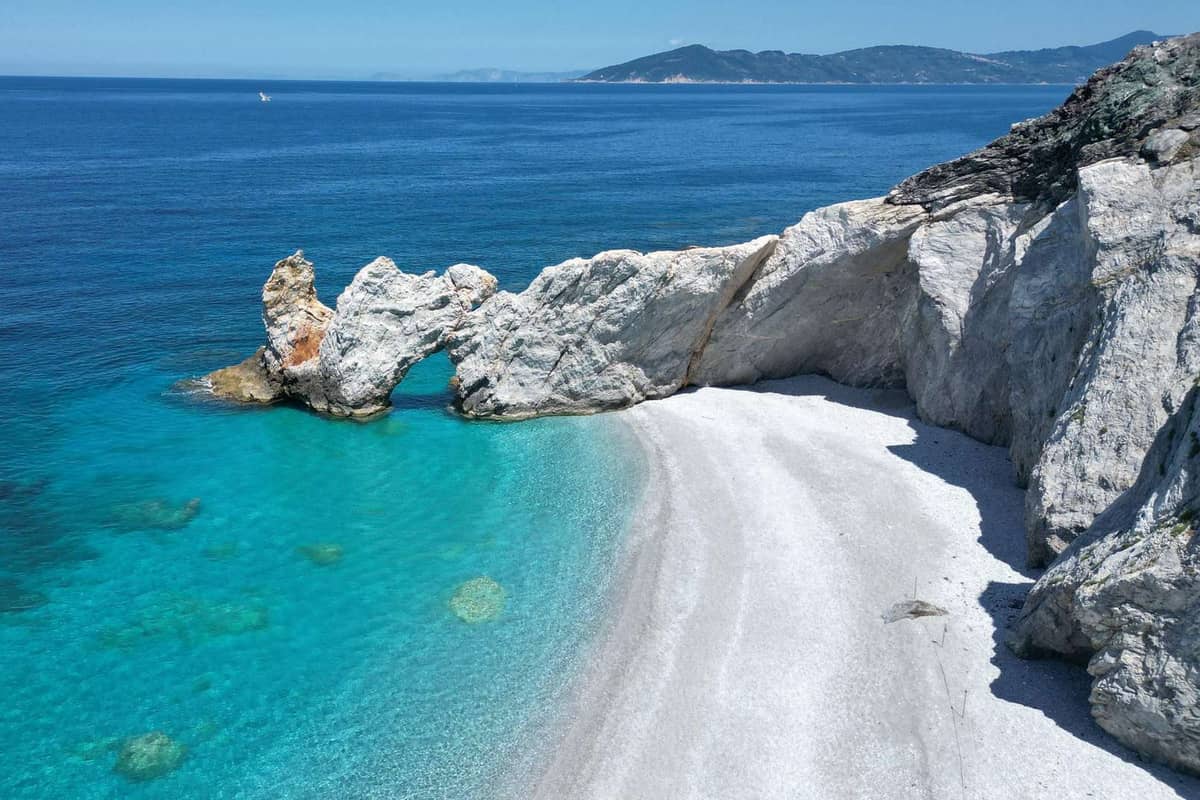
Myrtos lies in the north-west of Cephalonia, between two mountains. Wikipedia quotes a travel writer who sees dazzling white pebbles along a curved shore one and a half miles long. The pebbles are marble, and fine marble bits in the waves tint the water turquoise. Myrtos is the pebble pick on a shortlist of greek islands to visit.
Sarakiniko is a coastal area on the volcanic island of Milos. Wikipedia describes its white rock formations as shaped by wind and water erosion. Wikivoyage adds smooth rock sculpted into wave-like forms beside turquoise water, compared to a lunar scene. It is a white rock landscape, which widens the options for greek islands to visit.
Wikivoyage describes the west coast of Naxos as largely one long sandy beach. It names Agios Prokopios first among the popular sandy stretches, followed by Agia Anna and Maragas. Mikri Vigla, further south, is its pick for avoiding the crowds. For sand, Naxos is the clear case among the greek islands to visit.
Access differs by shore. Reaching Myrtos means leaving Divarata and driving about 2 kilometres of steep bends. At Elafonisi, a walk through shallow water reaches the island when the weather is fine. A viewing platform lies about 180 metres above the Navagio wreck. Match the shore to your own plan for greek islands to visit.
Which greek islands to visit suit families?
Four features help a family day: calm shallow water, short crossings, easy roads and flat cycle routes. Corfu, Naxos, Paros, Kos and Aegina each offer at least one of them, as the sources describe. These greek islands to visit make a short list to start from.
Wikivoyage states that the beaches of western Corfu are sandier, while calmer water is more typical of the east. In the south, the sandy beach at Lefkimmi has extremely calm, very shallow water, even a good distance out. That choice of coast is why Corfu earns a place among the greek islands to visit with children.
Wikivoyage names the easier, flatter cycling routes of Naxos: Chora to Alyko, Mikri Vigla, Plaka and Agia Anna. All four are sandy beaches on its list. Parts of Chora are pedestrianised, which makes it easy to walk from beach to cafe to shop. That makes Naxos a flat-ride option for greek islands to visit.
Wikivoyage calls Logaras on Paros very nice for families. It lists Kolymbithres for its huge rocks and sandy coves, and Laggeri for its sand dunes and peace and quiet. On the east coast, near Drios, lies Golden Beach, according to Wikipedia. Paros offers a beach for each mood within the greek islands to visit.
Kos is fairly small, and Wikivoyage says its public buses serve each part of the island. It reports good road surfaces, largely asphalt. The main beach at Mastihari is sandy, with no motorised boats except fishing boats from the local harbour. These details give Kos an easy plan for a family day.
The Saronic islands are a short ferry ride from Piraeus, as Wikivoyage states. A regular bus service links Aegina town with destinations around the island, and Agia Marina is one of them. Wikipedia also notes that the beaches are a popular attraction. Aegina keeps a family plan short and simple.
A short crossing keeps a family day light. Antiparos is the nearest neighbour of Paros, and the strait between them narrows to under 2 kilometres. Pounda is 5 kilometres from Parikia, and a shuttle ferry for cars links it with Antiparos all day. Timetables differ, so read the current one before you plan the greek islands to visit.
Which greek islands to visit suit quiet days?
Folegandros, Amorgos, Symi, Ithaca, Paxos and Koufonisia are the greek islands to visit for quiet days. Each is small, and the sources give a size, a village count or a sea link that explains the calm. Pano Koufonisi, for example, covers only 5.8 square kilometres.
Folegandros stays calm among the greek islands to visit, and its rugged land explains why. Wikivoyage calls it a quiet island west of Santorini. The ancient poet Aratus named it the “iron Pholegandros” for its ruggedness. No road serves Katergo beach. Boots, or a boat from Karavostasis, the island port, take a visitor there.
Of all the Cyclades, Amorgos lies farthest east. Its geography prevents mass tourism, so tourism grows slowly, as Wikipedia states. Walkers use fairly well kept trails. Panagia Hozoviotissa, a monastery on the cliffs northeast of Chora, was built to protect an icon. This slow pace makes Amorgos a calm choice among the greek islands to visit.
From Rhodes it is about 24 km northward to Symi, where 2,603 people live all year. Wikipedia dates the season from Easter to Panormitis Day, which falls at the start of November. With day-trippers, the island holds up to 6,000 people. A traveller who plans quiet days among the greek islands to visit reads those dates first.
Ithaca is long and narrow, 23 km from end to end and 6 km across at the widest point. At Aetos the land narrows to 600 metres, and the two parts, about equal in size, meet there. The bay of Molos lies between them. This shape suits quiet days among the greek islands to visit.
Paxos measures about 10 km in length and up to 3 km in width. The hills of Paxos are largely covered in olive groves. Ferries for passengers and vehicles run year-round from Igoumenitsa in 1.5 hours. Winter visitors meet occasional periods of isolation, so Paxos suits the warm months among the greek islands to visit.
Pano Koufonisi has 391 residents, and fishing is the main work. Wikivoyage lists Koufonisi under good walking. Kato Koufonisi, next door, is almost uninhabited. Its main sight is a small Panagia church, with ancient ruins beneath the jetty that carries it. The pair makes a small, slow stop among the greek islands to visit.
Which greek islands to visit suit walkers and nature lovers?
Nisyros, Crete, Milos, Cephalonia and Lefkada are the greek islands to visit for walkers and nature lovers. Each one has a clear natural feature: a crater floor, a gorge, volcanic rock, a mountain route or white cliffs. Every place gets one fresh fact below.
Nisyros offers a walk into a volcano. Wikivoyage describes a trail into the crater. Sulphur stains the floor yellow, and walkers can approach the steaming vents. Stefanos is the largest crater. The same page names a half-day hike between Mandraki and Nikia via the crater. It is a clear walk among the greek islands to visit.
Crete adds the Samaria Gorge, a national park, to the greek islands to visit for walkers. The village of Samaria lies just inside the gorge. Its last residents moved away when the park was created. The old church of Ossia Maria named both the village and the gorge. Endemic species, flowers and birds live around the gorge.
Milos is a volcanic island. According to Wikipedia, Milos obsidian, a glassy volcanic rock, already moved through trade 15,000 years ago. The village of Plaka perches on rock over the port of Adamantas. A footpath reaches the Venetian castle on its summit. These two facts put Milos among the greek islands to visit for geology.
Two more sights come from the same volcanic land. At Trypiti, catacombs of the early Christian era were cut from volcanic rock. Wikivoyage ranks them among the largest in Greece. At the bay of Paliorema in Theiafes, a sulphur mine worked until the late nineteen-fifties. Its ruins stand beside a yellow-pebbled beach.
Cephalonia gives walkers Mount Ainos. The well maintained route from Digaleto is signposted and climbs 1,096 metres. Every major junction has a map, and shaded rest areas break the climb. The range holds a national park, and its forests are Greek fir and black pine. This mountain keeps Cephalonia among the greek islands to visit for walking.
Lefkada has cliffs at its southern end. Cape Lefkada lies south of Vasiliki, and its cliffs are 30 metres high. Wikipedia links the white cliffs of the south-western cape with the ancient worship of Apollo Leucatos. Inland, the mountain Stavrota reaches 1,158 metres. Sea and mountain sit close together among the greek islands to visit here.
Where does Cyprus fit next to the greek islands to visit?
Cyprus is no Greek island, because it forms a country by itself. The island belongs to the eastern Mediterranean Sea. It fits next to the greek islands to visit as a second trip. It is a member of the European Union, and its sights include Paphos, Aphrodite’s Rock and the Troodos Mountains.
According to Wikipedia, Cyprus is an island country off the coast of the Levant. Wikivoyage places it south of Turkey. The capital is Nicosia, and the island has its own airports. So a plan treats Cyprus as a trip of its own. It is never one more of the greek islands to visit.
The coastal city of Paphos in the southwest of Cyprus is the district capital. By size it ranks fourth in the country, behind Nicosia, Limassol and Larnaca. Its ancient ruins carry a UNESCO World Heritage listing. A traveller who likes old stones finds a second reason to add Cyprus beside the greek islands to visit.
The country’s second-largest airport stands at Paphos and serves the west and south of Cyprus. Its destination list on Wikipedia names Athens. Wikivoyage adds that Larnaca is the main airport and that charter flights serve Paphos too. A flight from Athens joins Cyprus to a plan with the greek islands to visit.
The sea stack at Kouklia bears two names, Petra tou Romiou and Aphrodite’s Rock. Drivers on the main road linking Paphos and Limassol pass it. Myth names this rock as the spot where Aphrodite was born. A second legend links the name Achni, from the nearby beach, to the Achaeans. They landed there on their way home from Troy.
Troodos is the biggest mountain range in Cyprus and stands in the middle of the island. It forms a significant rain shadow, Wikipedia notes. Wikivoyage lists hiking trails through cedar forests among the draws of Cyprus. For a walker, the mountains give a second landscape beside the greek islands to visit.
The Dodecanese lie in the south-eastern Aegean, with the coast of Turkey to their east. Cyprus lies south of Turkey, so the two sit in the same eastern corner. A plan keeps them as two blocks of days, joined by a flight. Nights equal days minus one in each block.
How do travellers reach the greek islands to visit?
Ferries reach each of the Greek islands to visit, as Wikivoyage states. Routes and frequencies vary with the time of year. Flights add a shortcut to the islands that have an airport. A traveller picks the port or the airport first, then the island.
Athens opens two groups of the Greek islands to visit. Daily ferries and fast catamarans leave Piraeus, Rafina and Lavrio, says Wikivoyage Cyclades. The Kos page adds daily ferry services from Piraeus. The Karpathos article on Wikipedia lists ferries to and from Piraeus that call at Crete and Rhodes on the way.
The north and the west use other ports for the Greek islands to visit. Kavala is the mainland port that Wikivoyage Greece names for boats to the North Aegean Islands. Boats for the Sporades sail from Agios Konstantinos, Volos and Kymi on Euboea. The Sporades page adds that not every scheduled boat carries cars.
The Ionian chain of the Greek islands to visit has its own mainland links. Patras connects with Cephalonia, as Wikivoyage Cephalonia states, and Igoumenitsa connects with Paxos, as the Wikipedia article on Paxos notes. The Ionian page of Wikivoyage lists ferries to Corfu, Ithaca, Cephalonia, Kythira, Paxi and Zakynthos.
Flights from Athens shorten the long legs of the Greek islands to visit. Wikivoyage Cyclades counts six islands with regular flights, among them Milos and Syros. In high season it adds less frequent flights to the Cyclades from Rhodes, Heraklion and Volos. In the Sporades only Skiathos has a commercial airport, and boats carry on from there.
Flights from abroad to the Greek islands to visit follow the season. Wikivoyage Cyclades says charter airlines fly to Santorini and Mykonos from late spring until October. Zakynthos has an international airport with charter flights from northern Europe, as its Wikipedia article notes. The Skiathos article lists charter flights from the United Kingdom, France and Italy.
Rhodes shows the winter side. Wikivoyage says flights arrive there from all over Europe between April and October. In the winter months the only flights are domestic ones from Athens and Thessaloniki. In winter, the Greek islands to visit therefore need a connection through those two cities, or a ferry.
Which season suits the greek islands to visit?
Two windows suit the Greek islands to visit across the Cyclades, says Wikivoyage. Late spring through June forms the early season, and September up to mid-October forms the post season. Both sit on either side of crowded July and August.
July and August are the peak. Wikivoyage Cyclades calls the islands extremely crowded in those months, and the weather very hot. It adds that certain islands can suffer water shortages. A midsummer day on the Greek islands to visit therefore starts early and rests at noon.
The edges of the beach season carry a small risk for the Greek islands to visit. Wikivoyage counts the whole stretch between late spring and mid-October as warm enough for the beaches. It also names a risk at both borders of that stretch: unseasonably chilly weather in certain years. The weather turns in October and the rain begins.
The meltemi is the wind of the high season. It blows steadily through July and August, and Wikivoyage Cyclades credits it with softening the heat. Wikivoyage Greece adds that such strong winds come with little warning. A ferry day on the Greek islands to visit therefore keeps spare time at the end.
The groups differ in winter. The Wikipedia article on Samos calls its winters rainy and mild, with December the wettest month. Its summers are hot and dry. The Karpathos article rates its winters among the mildest in Europe. Check the winter of each group before choosing among the Greek islands to visit.
Winter also changes island life. Wikivoyage Crete names towns that serve no other purpose than tourism and all but close down for the winter. Wikivoyage Cephalonia says jobs on the island run short out of season, from November to April. A winter visit therefore asks for a quick check of what is open.
Wikivoyage Cyclades reports reduced ferry schedules out of season. A winter trip among the Greek islands to visit keeps the route short and the days flexible.
What do travellers pack and check before the greek islands to visit?
Shoes for stone paths come first in the bag for the Greek islands to visit. Add cover for monasteries, layers for sun and wind, and a small bag for ferries. The check list at the end covers ferry times, luggage and a bed near the port.
Stone paths decide the shoes. Inside Ano Syros, the upper town, travel goes mostly by marble steps, says the Wikipedia article on Syros. That article sets the harbour about 1,000 metres from the town’s main entry. The Amorgos article calls its hiking paths relatively well maintained. Closed shoes with a grip suit both on the Greek islands to visit.
Cover for monasteries follows set rules. Wikivoyage Greece describes church dress codes. Women can be asked to cover the shoulders. Everyone can be asked to cover the knees. It adds that appropriate clothing is generally on hand at the entrance of churches and monasteries. A light scarf and long trousers in the day bag settle the question early.
The Amorgos article gives one case in detail. At the monastery of Panagia Hozoviotissa, men put on long trousers. For women the options are a skirt, or a wrap that ends at the knee. Trousers are out. The article dates that note, so check the rule on the day.
The season facts above set the layers. A light jacket covers the wind on deck, and a thin rain layer covers the weather of October. Sun protection stays in the day bag, because Wikivoyage’s Saronic Gulf page says to use it even on cloudy days.
A small bag helps on the boats. Wikivoyage Cyclades warns that ferry travel can be tedious in high season, because the boats are really crowded. Water, a layer and the papers stay in one bag you hold. Entry rules depend on your passport. Your own government’s official page explains them before you go to the Greek islands to visit.
Weather can delay or cancel ferry services, says Wikivoyage Cyclades. Confirm each sailing with the operator first. Run this list on the morning of each crossing of the Greek islands to visit:
- Ferry times on the day, confirmed with the operator.
- Luggage that one person can carry along a quay and up steps.
- A bed near the port, in case a late or cancelled boat ends the day early.
- The opening day of any monastery and the clothing it asks for.
What else do travellers ask about the greek islands to visit?
Travellers raise five practical points about the greek islands to visit. Two islands join the land by road, so not every trip needs a ferry. Ferries serve every island, but airports serve only part of them. Tiny islands lack basic services, and one island can appear under different names.
Can a traveller reach any of the greek islands to visit without a ferry?
Yes, two of the greek islands to visit join the mainland by a bridge. Lefkada is the first. Wikipedia explains that a long causeway joins it to the mainland, with a floating bridge as part of the link. Antiquity had a link too, a stone bridge longer than any other in ancient Greece.
Evia is the second island of Greece by area, behind Crete only. Wikipedia places the narrow Euripus Strait between Evia and the mainland. A travel article adds that a bridge attaches it. Wikivoyage treats Evia together with the mainland regions, because the island is so closely tied to them.
Poros is the near miss among the greek islands to visit. Wikivoyage calls it two islands joined by a bridge, lying within 200 metres of the Peloponnese. Frequent ferries still cross from Galatas. Wikipedia notes that the Corinth Canal made the Peloponnese an island in strict terms. It is rarely treated as one.
Which of the greek islands to visit lie off the Turkish coast?
Wikipedia places the Dodecanese off the coast of Anatolia. Within that group, Wikivoyage describes Kos as near the Turkish coast. Kalymnos has Kos on one side and Leros on the other. The same page places it close to the coast of western Turkey. Rhodes is the biggest Dodecanese island. These are plain map facts, given by name only.
Symi is one of the greek islands to visit in this line. Wikipedia names the Datca and Bozburun peninsulas of Mugla Province as its nearest land neighbours. Wikipedia measures the gap between Rhodes and Symi at about 24 kilometres, with Symi to the north. Patmos sits off the west coast of Turkey, among the northernmost of the Dodecanese.
The North Aegean region adds three names. Lesbos faces Asia Minor across the Mytilini Strait, and Chios faces the Anatolian mainland across the Chios Strait. Samos has Chios to its north and Patmos to its south, off the coast of western Turkey. It forms its own regional unit inside the North Aegean region.
Does every one of the greek islands to visit have an airport?
No. Wikivoyage states that ferries take a traveller to every island. A travel page adds that certain islands have no airport at all. So the greek islands to visit fall into two kinds. One kind is reached by sea only. The other is reached by sea or by air.
The Dodecanese page of Wikivoyage names Kos International Airport and Kalymnos Island National Airport. Karpathos has a national airport too, in the Afiartis area to the south, with a relatively large runway. Wikipedia adds that scheduled domestic flights link it to Rhodes, Kasos, Crete and Athens, and ferries serve it too.
Lefkada follows a third pattern. Aktion National Airport is a drive of about 25 minutes from the town of Lefkada, as Wikipedia puts it. A causeway joins the island to the land. So each island needs its own check of airport and port before the plan is set.
What can a small island among the greek islands to visit lack?
Wikivoyage describes dozens of smaller islets in the Saronic Gulf. A villa, a church or only sheep and scrub stand on them, and it ties this to the water supply. These islets have no ferries and no visitor amenities. Agistri, a small pine-clad island whose name means fish hook, does have a ferry port, the village of Milos.
Fleves and Patroklos, two small islands in the same gulf, have no visitor facilities, the page states. Dokos, close to Hydra, is very quiet and inhabited only by monks and sheep-herders. None of these places is built for a stay among the greek islands to visit.
Even the larger Saronic islands are too big for walking beyond the main port. Wikivoyage calls the buses sparse and not designed for sightseeing. It suggests hiring a taxi for a block of hours, so a plan needs the island’s transport checked first.
Why do the greek islands to visit carry more than one name?
A Greek word can take more than one Latin spelling, so the greek islands to visit carry different spellings. Wikipedia explains that the Greek beta is pronounced and transliterated as v, which produces Lesvos beside Lesbos. In Greece the island is also called Mytilene, after its capital.
Wikipedia lists Lefkada also as Lefkas, Leukas and Leucadia, and it gives Scio as the English name of Chios. Wikivoyage notes that Kos is also spelt Cos, and it lists Santorini with Thira in brackets. The Greek islands article names Euboea or Evia for one and the same island.
Wikivoyage adds that the Ionian Islands are also known by their Italian names. It pairs Zakinthos with Zante, Kefallonia with Cefalonia and Lefkada with Santa Maura. A road sign or a ferry timetable can use either spelling. A plan for the greek islands to visit notes both.