
Where to stay in Kefalonia depends on the coast you pick. Argostoli and Lassi sit on the bay of the south-west, Lixouri faces them across the gulf on the Paliki peninsula, Sami and Agia Efimia look east toward Ithaca, Fiskardo and Assos hold the north, and Skala and Poros line the south-east. The tours in Greece on the home page add the rest of a Greek trip.
This page covers the bases one by one, then the airport, the ports, the roads, the months and the day trips. The Kefalonia island information page holds the history of the island, the where to stay in Zakynthos page covers the Ionian island to the south, and the where to stay in Corfu page covers the island to the north.
Which factors settle where to stay in Kefalonia?
Size is the first factor that settles where to stay in Kefalonia. Wikipedia ranks the island first among the Ionian Islands. It adds that Kefalonia is sixth in all of Greece, behind Crete, Euboea, Lesbos, Rhodes and Chios. Each base on this page therefore covers its own corner.
Two towns hold the weight of the island. Wikipedia calls Lixouri the second major settlement. It says the two towns together account for almost two-thirds of the population of the regional unit. The other bases on this page are villages, small harbours and resort coasts. Argostoli, the capital, comes first in the list.
Terrain comes next. Wikipedia describes the island as largely rugged and mountainous. The plains make up the smaller share of the land. For where to stay in Kefalonia, the hills and the sea draw the lines between one base and the next. A coast base keeps the sea at the door, and a hill base keeps the view.
A first-time visitor after a town with a harbour looks at Argostoli. A beach lover turns to the south, where Lassi, Svoronata and Lourdata lie. Wikipedia calls Lassi a holiday resort town with small beaches. Both trips answer where to stay in Kefalonia, each in its own way.
A harbour village of the north suits a traveller who likes boats. Wikipedia calls Fiskardo the northernmost port of Kefalonia. A quiet bay of the east suits Agia Efimia. Wikivoyage describes it as a sleepy fishing village north of Sami. Wikipedia says the village is centred on a small harbour. Neither is a large town.
A short stay around a flight or a ferry keeps the base close to an arrival point. That means the airport in the south-west, or a port such as Argostoli, Sami or Poros. Your arrival and departure days then settle where to stay in Kefalonia for the nights between them. A base near the port keeps them simple.
A longer stay with a hire car frees the base from the port. According to Wikivoyage, a car or a bike is needed to get around, unless you arrive on your own yacht. With wheels, where to stay in Kefalonia can follow the coast you like. A village away from the harbour then comes into play.
How do the areas split where to stay in Kefalonia?
Wikivoyage says Kefalonia consists of four peninsulas. Those arms of land set the pattern for where to stay in Kefalonia. The list below names each base of this page. It starts at the capital and ends in the south-east. Each name has its own place in the sections that follow.
- Argostoli
- Lassi
- Svoronata and Lourdata
- Lixouri
- Sami and Agia Efimia
- Fiskardo
- Assos
- Skala
- Poros
Water divides the capital from Paliki, the peninsula that Wikipedia calls the westernmost part of Kefalonia. That water is the Gulf of Argostoli. Wikivoyage says Lixouri, the main town of Paliki, faces the capital across an elongated bay. Where to stay in Kefalonia starts with that pair of towns on either side of the water.
In the west and north of the peninsula, Wikipedia reports mountains that reach 500 metres. The article on the island names them the Paliki mountains and places Lixouri among them. The peninsula joins the rest of the island in the north-east. A base on Paliki sits in hill country, with the gulf on its east side.
The highest mountain of Kefalonia, Mount Ainos, reaches 1,628 metres. Fir trees cover its top. Wikipedia counts the national park there as the smallest in Greece and dates it to nineteen sixty-two. For where to stay in Kefalonia, the mountain marks the inland side of the map.
The long arm of the north ends at Fiskardo. Wikipedia puts the village 24 kilometres north of Sami and 32 kilometres north of Argostoli. The Erisos unit holds the far north, with the two small harbours of Fiskardo and Assos. Wikivoyage places Assos in the north-west. Wikipedia names Cape Atheras as the island’s north-western corner.
The east coast faces Ithaca. Wikivoyage places Sami there as the port town facing Ithaka. It puts Agia Efimia north of Sami on the same coast. The former Pylaros municipality lay in the north-central region of the island, with Agia Efimia as its seat. On this side, where to stay in Kefalonia means a harbour village.
The south adds the beach bases to where to stay in Kefalonia. Lourdata lies on the south coast, and Wikipedia places it within the municipal unit of Leivatho. Wikivoyage puts Skala at the island’s south-eastern end and calls the resort relaxed. It puts Poros on the eastern edge, between the sea and the mountains.
Why does Argostoli lead where to stay in Kefalonia?
Argostoli leads where to stay in Kefalonia because it is the capital and main town, set on a sheltered bay. The twenty twenty-one census put its municipal unit at 13,666 residents. The town holds a lagoon, a long stone bridge, a seafront and two museums in one place.
Argostoli has an old root. Wikipedia names Cranii, now Argostoli, as one of four island city-states from the sixth century BC. Wikivoyage adds that an earthquake in nineteen fifty-three levelled Argostoli, so its buildings today are functional concrete.
Wikivoyage points to the northern part of the seafront, just beyond the harbour, for the hotels of the town. It also lists hotels with a Valianou Square address. For where to stay in Kefalonia with shops and the harbour close by, these two areas set the pattern.
The Koutavos Lagoon lies at the end of the bay, east of the town, and is now a nature reserve. Wikipedia calls it a feeding ground for loggerhead turtles. For where to stay in Kefalonia near water, a room at the lagoon edge faces the lagoon. A room near the centre keeps the shops a short step away.
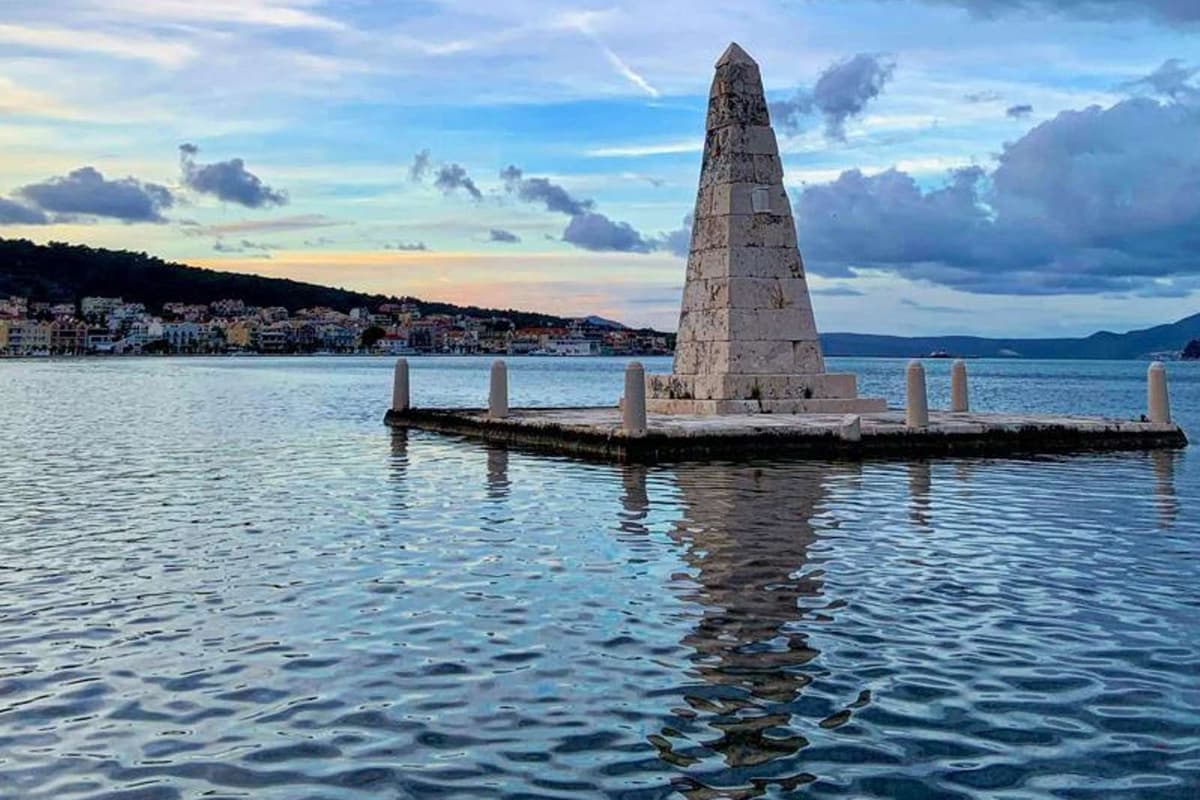
Across the bay runs the De Bosset Bridge, which Wikipedia dates to eighteen thirteen. It shortened the way to Lixouri and the north of the island. The bridge became a listed monument in nineteen seventy. A renovation that ended in twenty thirteen reopened it for walkers.
The Archaeological Museum keeps antiquities from prehistoric to Roman times, as Wikivoyage lists them. Wikipedia adds tombstones of the third century BC and a second-century BC mosaic from a temple of Poseidon. The Corgialenios Library also serves as a folk museum. For where to stay in Kefalonia on a culture trip, the capital fits.
The law courts opposite the museum were built by the British with stone from Krani, a Cyclopean site close by. The Catholic Church stands along Lithostroto, and the Bell Tower a little further along it. Rebuilt in nineteen eighty-five, the tower houses the original clock mechanism. A room near that street keeps the old centre underfoot.
How do Lassi and the south-west beaches answer where to stay in Kefalonia?
For where to stay in Kefalonia with a beach, Lassi lies southwest of the Argostoli centre. Wikipedia calls it a holiday resort town with small beaches on the Ionian Sea coast. Wikivoyage lists it as a major tourist area adjoining Argostoli. Villages of the Leivatho unit lie in the south of the island.
- Lassi: the resort town, with the beaches of Makrys Gialos and Platis Gialos.
- Svoronata: a hillside village near the coast, 7 km southeast of Argostoli and 2 km east of the airport.
- Metaxata: a village in low hills near the coast, 8 km southeast of Argostoli.
- Peratata: a village at the foot of a hill crowned by the Agios Georgios fortress.
Wikipedia lists Lassi among the settlements that the reform of nineteen ninety-seven joined to Argostoli. Spilia, Helmata, Kompothekrata and Minies joined with it. So Lassi belongs to the Argostoli area on paper as well as on the map. That fits where to stay in Kefalonia when town and sand stay close together.
The coastal road out of town to the west leads to the Agion Theodoron lighthouse. A small church beside it gives the lighthouse its name. Wikipedia dates it to the British period, in eighteen twenty-nine. The present tower has Doric-style columns and follows the original plans.
At the Katavothres in the Vlikha area, sea water vanishes underground. A Wikipedia image dated eighteen forty-nine shows the sea mills of the bay. They were a natural curiosity of the nineteenth century, with Mount Ainos behind them. For where to stay in Kefalonia, Lassi and the coastal road lie southwest and west of the centre.
The Agios Georgios fortress above Peratata dates from the twelfth century. Wikipedia says the Venetians built the present structure in the sixteenth century. Until seventeen fifty-seven the island had its capital there. Wikivoyage lists the castle for its panoramic views. For where to stay in Kefalonia with history, Peratata sits at the foot of that hill.
On the south coast, Lourdata belongs to the Leivatho unit with Svoronata, Metaxata and Peratata, as Wikipedia files them. Wikivoyage places a long sandy beach alongside the village and lists Leivathos as a tourist area south of Argostoli. For where to stay in Kefalonia with sand at the door, Lourdata fits.
On the island as a whole, Wikivoyage says apartments make up more of the lodging than hotels. For a family, a kitchenette studio close to the sand keeps meals simple. A family room by the beach suits where to stay in Kefalonia for a week of swimming close to Argostoli.
How do Lixouri and the Paliki peninsula answer where to stay in Kefalonia?
For where to stay in Kefalonia on the quiet west side, Lixouri is the base to know. Paliki, the peninsula around it, counts Lixouri as its main town, and the town faces Argostoli across the gulf. In the twenty twenty-one census, 3,549 people lived in the town itself.
The Paliki peninsula is the westernmost part of the island, and the Gulf of Argostoli lies along its east side. Mountains up to five hundred metres cover its west and north. For where to stay in Kefalonia away from the capital, the peninsula holds a separate coast.
The oldest document with the name Lixouri went to the Senate of Venice in fifteen thirty-four. Larger hotels went up south of the town, near the beaches, in the nineteen nineties. The public library and a small museum stand in the Iakovatios building, a classic Ionian building of the nineteenth century.
A small port in Lixouri serves the ferry that crosses the gulf to Argostoli. The Argostoli article lists one sailing each hour in winter and two each hour in summer. It docks a little beyond the main ferry port. This link settles where to stay in Kefalonia for a day in the capital.
Xi Beach lies south of Lixouri, near Mantzavinata. The sand strip is 3.3 kilometres long and up to fifty metres wide. The beach is geosite number three of the Kefalonia Ithaka geopark, with reddish sand and clay cliffs. Both entrances have showers and cabins for changing. A room near Xi answers where to stay in Kefalonia for red sand.
Below a steep winding road on the north-west coast of Paliki lies Petani Beach. Its curved bay of pebble and sand runs about six hundred metres, with mountains around it. The Petani article notes that no public transport reaches the beach. That fact bears on where to stay in Kefalonia for a reader without a car.
Kipoureon monastery was built in the seventeenth century on a rocky cliff above the sea. Its name comes from the gardens around it, from the Greek word kipos. The cliff looks over the Ionian Sea, above all at sunset. A quiet stay in Lixouri suits a reader who likes slow evenings, one ferry crossing away from Argostoli.
How do Sami, Agia Efimia and the caves answer where to stay in Kefalonia?
For where to stay in Kefalonia on the east coast, Sami is the port town facing Ithaca. The ferry from Patras on the mainland arrives there, and the harbour sits on the central east coast. Agia Efimia, north of Sami, is a fishing village that centres on its small harbour.
- Sami: a port of the east coast, facing Ithaca
- Agia Efimia: a fishing village with a small harbour, north of Sami
- Melissani: a lake inside a cave at Karavomylos, near Sami
- Drogarati: a cave at Haliotata, near Sami
Ancient Same is today’s Sami. The Cephalonia article ties a fortified town, planned anew, to the age of the fourth century BC. In nineteen ninety-seven the community of Sami joined Grizata, Karavomylos, Poulata, Pyrgi and Chaliotata in one municipality. Those villages share it with the town. Where to stay in Kefalonia here means a small port with villages around it.
Antisamos lies near Sami. The water at Antisamos is blue, the stones are white, and mountains ring the small bay, as Wikivoyage states. A room in Sami keeps that cove within a short drive. For where to stay in Kefalonia, a day starts at the quay and ends on that bay’s stones.
Melissani is a lake inside a cave. Wikivoyage gives the cave a length of one hundred sixty metres and a width of forty. In the middle of the lake lies a small island, and a boat takes you round it. Archaeologists found artefacts of the fourth and third century BC there that tie the site to the god Pan.
Drogarati Cave lies at Haliotata. It is ninety-five metres deep and measures sixty-five metres by forty-five, with a height of twenty metres. Wikivoyage places both caves towards the centre of the island. Sami suits a day with both caves, and so it answers where to stay in Kefalonia for that plan.
Agia Efimia counts 638 residents in twenty twenty-one, and Pylaros, a former municipality, had its seat here. Its harbour suits sailing holidays and is home to flotilla sailing groups. Boats for hire there reach coves that only a boat can reach, and one excursion goes to Ithaca. For where to stay in Kefalonia by a harbour, this village fits.
Pylaros, the municipal unit around Agia Efimia, lies in a forested valley. Kalo mountain, at 901 metres, and Agia Dynati, at 1,131 metres, frame it. A room by either harbour keeps the quay and the boats close, and the caves a short drive away. The harbours give a calm base on the east coast.
How do Fiskardo and Assos answer where to stay in Kefalonia?
A base in Fiskardo answers where to stay in Kefalonia with a small fishing village set in a sheltered bay. Ithaca is a short distance away. Assos adds a village on a small peninsula, below a Venetian castle on a hill 170 metres high. Both lie far from the sandy south.
Tselentata, Matsoukata, Katsarata, Evreti and Fiskardo itself make up the community. The harbour village lies 5 km north of Vasilikades. Wikivoyage calls it a small fishing village that is popular with yachts. For where to stay in Kefalonia, a room on the harbour front keeps the boats in view.
Fiskardo escaped the damage of the earthquake of nineteen fifty-three and kept its original architecture, Wikipedia states. A room among the older houses of the harbour front suits a reader who likes old streets. Fiskardo answers where to stay in Kefalonia for that reader.
Roman Fiskardo had its own houses, baths and burial ground, as the village article describes. A theatre on a nearby plot still has its stone seat backs in place. A ministry spokesman said the ancient door of one grave complex still swings open on stone pivots.
The Norman name Fiskardo comes from Duke Robert Guiscard of Apulia and Calabria. He died at the Atheras beach in the eleventh century. From the quay, boats cross to Frikes on Ithaca. The port also serves Lefkada, so where to stay in Kefalonia can follow the sea routes of the north.
Assos stands in the north-west, and its castle looks over Agia Kyriaki bay, north of Paliki. The castle crowns a rocky hill that covers the entire peninsula. A wall two kilometres long surrounds it, and a renovated stone path leads in. Assos answers where to stay in Kefalonia with a village below a fortress.
Within the ruins, an arched gate carries the Venetian Lion of Saint Mark. The Venetian High Commissioner had a house there, and a small church of Saint Mark stands among the walls. The church of the Prophet Elias close by is abandoned. It was built in eighteen eighty-eight on the ruins of a church from fifteen hundred.
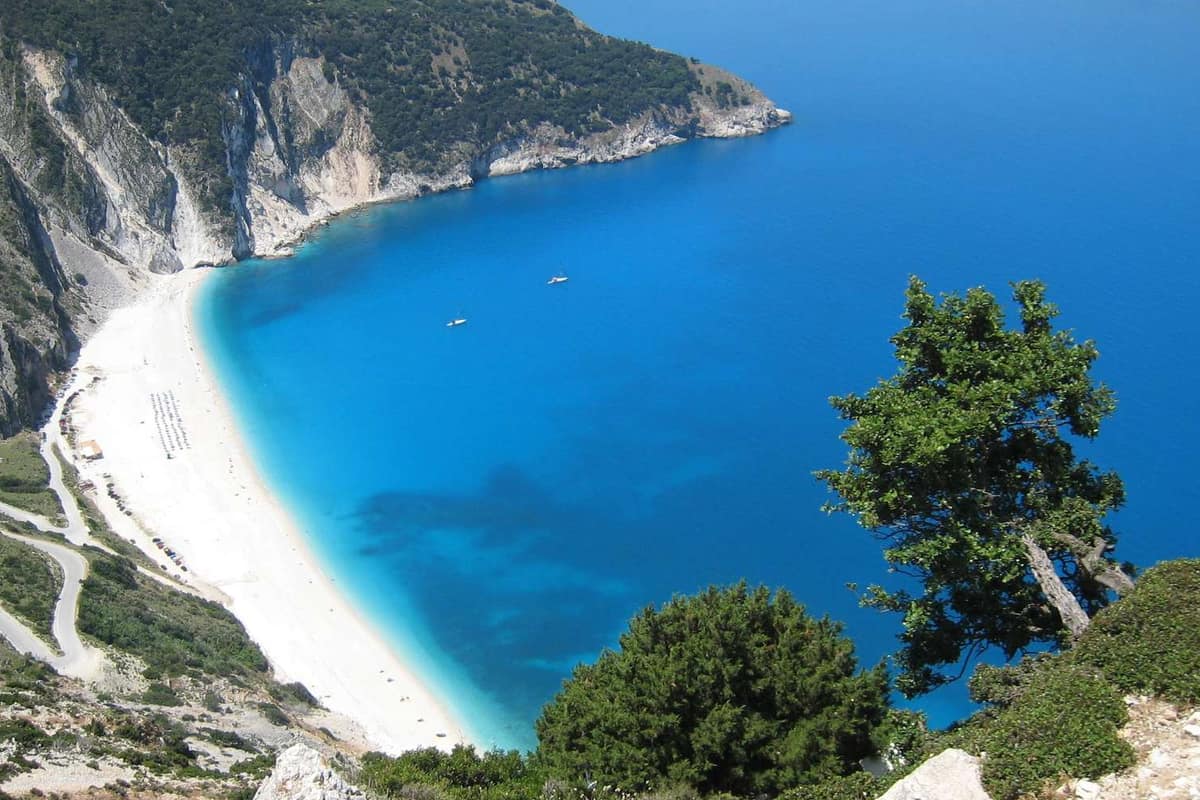
Myrtos Beach lies in the Pylaros region, on the Gulf of Myrtos. One description quoted by Wikipedia calls it a mile-and-a-half long arc of white pebbles. The road down starts at Divarata, where tavernas stand at the top. Where to stay in Kefalonia then depends on the car, because both bases lie a long drive north of Argostoli.
How do Skala, Poros and the south-east answer where to stay in Kefalonia?
Skala, Poros and Katelios answer where to stay in Kefalonia on the south-east coast. A long beach backed by pines, a ferry port and a turtle nesting beach lie close together there. Wikivoyage puts the port of Poros 12 km along the coast from Skala.
- Skala: a long beach of sand and shingle, with a pine forest between land and sea.
- Poros: a port village on the eastern edge, set between the sea and the mountains.
- Kato Katelios: a waterfront village on the south coast, beside a shallow bay.
Skala means stairs in Greek. In the old village, the houses rose up the hill like steps. That village stood on the hill behind the present one. The walk up to it takes about an hour, says Wikivoyage. That walk makes Skala answer where to stay in Kefalonia for walkers.
The beach stretches for miles along the shore towards Poros, as Wikivoyage describes it. From April to October the village is a resort, and its population quadruples in summer. The main street leads down to a small square, and the resort stays open late in the evening.
At the edge of the village lie the remains of a Roman villa. Its mosaic floors in three rooms were excavated in nineteen fifty-seven. Wikivoyage places them in a sunlit olive grove and calls Skala a resort for walkers. Where to stay in Kefalonia can therefore include a short walk to a mosaic.
A small hillock separates Poros port from the town beach. Behind that shingle beach lies a square with the shops and the main services. Wikivoyage describes the village as self-contained between the sea and the mountains. Poros answers where to stay in Kefalonia with a port slightly apart from the town.
The port runs a year-round ferry to Kyllini on the Peloponnese. The Poros gorge was the only way out by land until a road to Skala was cut around nineteen ninety-six. A track from the gorge leads on to the Mycenaean tomb of Tzannata, found in nineteen ninety-one.
Kato Katelios is a waterfront village. Until recently it was a small group of fishermen’s houses and huts. The main village lay up the valley at Ano Katelios. The bay is a designated marine site. The beach of Mounda on its east side is a nesting area for loggerhead turtles. The small river there flows all year.
The patron saint of the island, Saint Gerasimos, has a monastery at Omala near Valsamata. For a beach stay, rooms above the sea in Skala, Poros or Katelios settle where to stay in Kefalonia.
How do the airport, the ports and the roads shape where to stay in Kefalonia?
The island’s airport stands 8 kilometres out of the capital Argostoli, on the south-western side, as its Wikipedia page states. That distance comes first for where to stay in Kefalonia. A base near Argostoli keeps the arrival short, and a base in the far north adds a long drive.
The airport carries the name “Anna Pollatou” and opened in nineteen seventy-one. Wikivoyage places it near Argostoli and Lassi and calls it a small island airport. For where to stay in Kefalonia on a short break, either town keeps the terminal a brief drive away.
Flights reach the island from Athens and from cities abroad, both scheduled and charter, as the airport page lists. Wikivoyage’s Ionian Islands page says routes are seasonal and that winter travel connects through Athens. So where to stay in Kefalonia in winter starts with the flight plan.
Argostoli holds the largest port of the island, and the port stretches 1 kilometre around the bay. The bus station stands beside the ferry port. Boats leave from here for Zakynthos and for Kyllini on the mainland. By sea, the capital opens two directions, a point that shapes where to stay in Kefalonia.
Sami, one of the four main harbours, connects with Patras and Ithaca. Wikivoyage says the ferry from Patras arrives there. Poros, in the south, has ferry routes to Kyllini. Wikivoyage calls its ferry port substantial and slightly apart from the town. Where to stay in Kefalonia can start at the quay in either place.
Fiskardo is the northernmost port, with links to Lefkada and Ithaca. It lies 61 kilometres by road from the airport, a drive of around an hour and a half. Wikivoyage names Pessada as the port that connects with Zakynthos. For where to stay in Kefalonia in the north, the road is part of the stay.
Since nineteen ninety-five, almost all streets between the villages and the beaches have carried asphalt, as the island page states. Buses of the KTEL link the mainland with Lixouri, Poros and Argostoli. A rural line can run only twice a day. Wikivoyage says a visitor needs a car or a bike to get around.
A base in the capital or on a summer bus line suits a stay without a hire car. With a hire car, the mountain roads open every coast. Wikivoyage places the hire offices mainly in Argostoli and Lassi.
Which months and day trips suit where to stay in Kefalonia?
The summers of Argostoli are hot and dry. The winters are cool and rainy, as the table of its climate shows. The Hellenic National Meteorological Service supplied the figures of that table. This split sets the months that suit where to stay in Kefalonia, and the day trips that fill each one.
- January: the mean daily high in Argostoli is 14.5 degrees Celsius.
- Late spring: the mean daily high is 23 degrees Celsius.
- August: the mean daily high is 29.9 degrees Celsius.
- October: the mean daily high is 23.2 degrees Celsius.
For where to stay in Kefalonia, the island page describes mild, rainy winters and hot, sunny summers. Summers bring little to no rain. The mountain peaks can see snow in winter. The warm months suit a beach base. The cool months suit a town base with a shorter list of day trips.
Kefalonia keeps Saint Gerasimos as its patron saint. The sixteenth of August is his feast day, set the day after the Dormition holiday. A second feast, on the twentieth of October, marks the translation of his relics. Both dates fall in months with a mean daily high above 23 degrees in Argostoli.
The saint spent his first five years on the island in a cave in the area known as Lassi. For where to stay in Kefalonia around the feasts, that gives the south-west coast a place in the story. The long winemaking tradition of the island adds dry white Robola wines with a lemony note.
Of all the national parks of Greece, the one on Mount Ainos is the smallest. The park began in nineteen sixty-two and now holds more than 3,000 hectares. Black pine and Greek fir grow on the mountain. Semi-wild ponies live in its forest, as the Mount Ainos page states.
Two routes lead up Mount Ainos. One route uses the Mount Ainos road up to the transmitter station. Then come ten minutes of dirt track and ten minutes of steps. The other starts at a quarry about 1 kilometre out of Digaleto. That village lies along the road that joins Sami and Poros.
Ithaca stands next to Kefalonia on the north-eastern side, with the Strait of Ithaca between the two islands. Coins from Ithaca frequently portray Odysseus. An inscription from the third century BC speaks of a shrine to Odysseus and of the Odysseia games. Wikivoyage lists boat rentals in Agia Efimia and calls an excursion to nearby Ithaca particularly recommended.
A day on Ithaca suits a base in Agia Efimia, Sami or Fiskardo, where boats and ferries meet the island. A day built around a flight suits Argostoli or Lassi. Once the day trips are fixed, where to stay in Kefalonia follows the road or the quay they use.
Which questions do readers raise on where to stay in Kefalonia?
Where to stay in Kefalonia turns on four choices: the first base, the car, the nights and the meals. Each answer below rests on place facts from public pages. Argostoli, the capital, is the first base to weigh against a quiet village.
Which base answers where to stay in Kefalonia on a first visit, a town or a village?
Argostoli suits a first visit when you want museums, shops and a harbour in one place. Wikipedia lists the Kosmetatos Foundation among its museums, beside the library museum and the archaeological museum. That mix suits where to stay in Kefalonia for indoor hours between beach days. Wikivoyage calls the towns of Kefalonia small enough to get around.
A village base keeps the capital close and the pace slower. Metaxata lies 2 kilometres southwest of Peratata, as Wikipedia states. The same page names Markantonios Metaxas, a Byzantine settler, as the founder, in an area then called Frantzata.
Its central square holds a statue in remembrance of Lord Byron, who lived in the village in eighteen twenty-three. Right beside the statue, a house with a plaque marks the site where the poet lived. Metaxata answers where to stay in Kefalonia outside the town, with one landmark and a short drive to the capital.
Does a hire car matter when choosing where to stay in Kefalonia?
A car widens the choice of bases. Wikipedia credits the British with the earliest big roads, built in the nineteenth century. Asphalt roads followed in the twentieth century, and since nineteen ninety-five almost all streets joining villages and beaches carry asphalt.
The south-east shows the road at work. The road from Argostoli to Poros and Skala passes through Peratata. The village lies 8 kilometres southeast of Argostoli and 19 kilometres west of Poros. That drive settles where to stay in Kefalonia for a stay that reaches both coasts.
The newer roads help a base in the capital. Wikipedia names a bypass at Lixouri and a four-lane street south of Argostoli, both built since about two thousand. Both serve the towns, so a stay with a car in the capital or in Lixouri meets them first.
What length of stay answers where to stay in Kefalonia?
One base fits a short stay, and two bases fit a longer one. Three nights cover one coast, and a week covers two. That count shapes where to stay in Kefalonia more than any single sight. Wikipedia counts over two hundred bird species seen on the island.
The north coast holds a nature stop. Wikipedia names a cave on Foki beach near Fiskardo as a breeding ground of the Mediterranean monk seal. The beach lies on the north-east coast. Fiskardo is the base that keeps that stretch near, and it fits where to stay in Kefalonia for nature.
The mountains give a different day. Wikivoyage lists horse-riding stables on the island. A ride can cross the mountains and pass ruined villages and old vineyards, it adds. Goat bells and the cry of eagles are the only sounds on that ride. Such a day suits a second base inland or on the quiet coast.
What food steers where to stay in Kefalonia?
Food follows the island’s farms, so any base reaches a local table. The Greek National Tourism Organisation describes kreatopita as a mixture of veal and lamb, spiced with cinnamon and nutmeg. It is cooked in a tomato sauce with marjoram, garlic, carrots, leeks and potatoes. The page lists other pies too, filled with salted cod, artichoke hearts or wild greens.
The sweets come from the Venetian past. The same page describes mandoles as sugar-glazed almonds, named after the Italian word for almond. They are heated and stirred in copper cauldrons and dyed red with seaweed. Mandolata is a nougat of honey, sugar and whisked egg whites.
Cheese and clay-pot dishes fill the plate. The page counts more than a dozen cheese factories open to visitors. It lists feta, myzithra, manouri, kefalotiri and graviera among the cheeses. Tserepa is chicken cooked slowly in a clay vessel with oregano, garlic, tomatoes, lemon juice and potatoes.
Olive oil closes the table. The page repeats a local saying about the delicate taste of the oil. The trees get a cooling breeze off the Ionian Sea in summer. Mount Ainos shelters them in winter. A base near a bakery answers where to stay in Kefalonia for a reader led by food.