
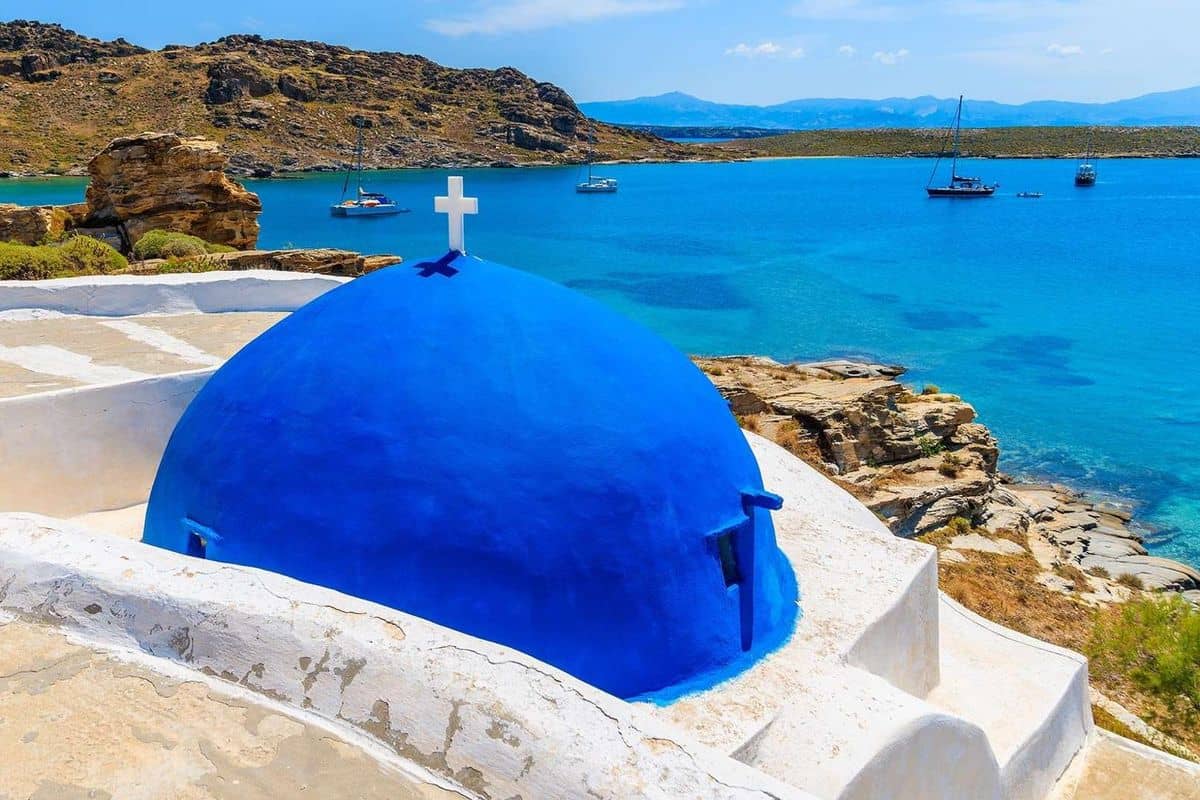
Where to stay in Paros comes down to the base. Options run from Parikia, the port town, to the harbour of Naousa. Lefkes in the hills and the east coast beaches complete the list. The tours in Greece on the home page add the rest of a Greek trip.
This page covers the areas one by one, then the port, the buses, the months and the room kinds. The where to stay in Greece page compares the islands. The 7 day Greek islands tour joins Paros with Mykonos and Santorini.
Which factors settle where to stay in Paros?
Paros is an island of the Cyclades, west of Naxos, and it covers about 196 square kilometres. The stay turns on setting more than on distance. Four things settle where to stay in Paros: the way in, the coast, the village, the length of the stay.
Start with the way in, because it frames where to stay in Paros. Parikia, the ferry port, lies on a bay at the north-west, and the airport stands in the south-west part. An arrival after dark or a ferry at dawn favours a bed near the harbour.
The coast comes second. In the channel between Paros and Naxos a strong, constant wind blows, and windsurfers favour it, as Wikipedia states. On the east coast, Dryos appears among the surfing places that Wikivoyage lists. A windsurf week therefore points to the east, while a harbour stay points to the north or the west.
Walking range is the third test of where to stay in Paros. Wikivoyage recommends walking within the resort towns and notes the bus services between the towns. A base inside a town needs no car for dinner. A base on a hill or a far bay needs a bus, a bike or a car.
Village life is the fourth test for where to stay in Paros. Wikivoyage places Lefkes on a green hillside, and Wikipedia calls it an inland mountain village ten kilometres from Parikia. A hill village trades the quay for a lane. A harbour town keeps the boats and the shops within a short walk.
The length of the visit is the last test. A single night between ferries wants a bed near the port. A week gives time for a base with a beach, a bus stop and a village close by. From there a bus or a hired car reaches the other coasts.
- A short stop between ferries: the port town of Parikia
- A fishing harbour with a quay: the north coast
- A beach week: a bay with sand and a bus stop
- A hill village: Lefkes on its hillside
- A windsurf week: the east coast, on the strait
Beaches ring the island, so a beach week leaves where to stay in Paros open. Wikipedia names beaches at Pounta, Parikia and Agia Irini, among other places. Wikivoyage adds that Tsoukalia, Glyfa and Glyfades are reached only by a narrow path or by boat. Those beaches suit a day out and not a base.
How do the areas split where to stay in Paros?
Wikivoyage sorts the towns of Paros under seven headings, from Parikia to Ampelas. This page follows that map and adds Antiparos, the island across the strait. For where to stay in Paros, think of the capital, the north, the hills, the east and the south.
- Parikia
- Livadia and Krios
- Naousa
- Kolymbithres
- Ampelas
- Lefkes
- Marpissa
- Piso Livadi and Logaras
- Golden Beach and Drios
- Aliki
- Antiparos
Parikia sits on the west side, and Naousa on the north coast. Wikipedia sets the capital on a bay in the north-west. It adds that the bay of Naousa gives boats a natural, spacious harbour. For where to stay in Paros, these are the two bases built round a harbour.
The ground follows the mountain, which shapes where to stay in Paros. Wikipedia describes one mountain whose slopes fall evenly toward a coastal plain. That plain is widest at the north-east and at the south-west. So the flattest ground lies toward the two ends of the island, and the hill villages stand inland.
The east coast is the village side of the island. Its old villages have harbours and beaches in reach. They answer where to stay in Paros for a reader who wants village streets. Wikipedia places Prodromos, Marmara and Marpissa on an open plain on the eastern side. A base there is a village base, not a town front.
The south-west is the corner for arrivals and short crossings. Antiparos lies across a strait that Wikivoyage calls narrow and shallow. A base here suits a reader who flies in, or one who plans to sail on to the smaller island. Wikipedia mentions a road from Parikia to Aliki, which links the capital with that corner.
Size comes into where to stay in Paros too. A coast of 120 kilometres runs around it, as Wikivoyage states. Wikipedia gives its greatest length as 21 kilometres and its greatest breadth as 16. A base on one coast therefore leaves the other coasts to a day by bus or car.
Wikivoyage also gathers villages under its larger headings. Marpissa takes in Piso Livadi, Marmara, Prodromos and Molos. Dryos takes in the Golden Coast, Aspro Chorio, Glyfa and Pyrgaki. Pounta takes in Sarakiniko and Kampos. For where to stay in Paros, a village name can belong to a wider area, so check the map first.
Antiparos is a municipality of its own, as Wikipedia states, so it lies outside the municipality of Paros. Wikipedia also lists the islets around Paros. Gaidouronisi lies north of Xifara, Tigani to the south-west and Drionisi to the south-east. A stay on Antiparos is a stay on a separate island, reached by sea.
Why does Parikia work for where to stay in Paros?
Parikia works for where to stay in Paros because the capital of the island is also its main port. The census of twenty twenty-one counts 4,166 permanent residents. Since nineteen seventy-eight the town has carried the label of a traditional settlement. The old lanes lie beside the harbour.
The setting is the first test of where to stay in Paros. Greek Wikipedia describes a town built where the ancient city stood. It lies in the eastern corner of the island’s western bay. Its streets climb the lower slope of a hill, and the Monastery of Agioi Anargyroi stands on the summit.
The old town sets the mood of a Parikia stay. Wikivoyage considers it the biggest in the Cyclades. Greek Wikipedia adds flowers, terraces and narrow curving lanes, with white and blue as the main colours. A room inside the lanes has the shops and the small churches on the doorstep.
Two kinds of rooms answer where to stay in Paros here. Inside the old town, a bed puts the lanes at the door. A room by the port puts the quay and the waterfront there instead. The first suits a longer stay, and the second suits a short one.
The church complex of Panagia Ekatontapiliani lies in the town. The first church stood here in the fourth century. Two more chapels join the main one, and the baptistery has a font shaped like a cross. The name means the church with a hundred doors. It has ninety-nine, and a legend tells of a hundredth that stays hidden.
The Archaeological Museum of Paros dates from nineteen sixty, and its plan is modest. Its first room shows Archaic and Classical sculpture. The second shows pottery, sculpture and small finds, from the Neolithic up to Roman times. The atrium adds urns and a Roman floor mosaic. Such a museum fits where to stay in Paros for a rainy hour.
The museum also keeps the base of the stele of the Parian Chronicle. It was found on Paros in eighteen ninety-seven. Its entries span the years around three hundred BC. The whole chronicle is a Greek chronology cut into stone, and it reaches back to the sixteenth century BC.
Greek Wikipedia lists an ancient cemetery at the place called Vintsi. Digs began in nineteen eighty-three and continue. The cemetery was in use from the eighth to the second century BC. Today it is an archaeological park with a display of burial customs. These sights suit a town base for a reader still choosing where to stay in Paros.
How do Livadia and Krios answer where to stay in Paros?
Livadia and Krios answer where to stay in Paros with sand beside the capital and its harbour. Greek Wikipedia names Livadia as the beach of Parikia, next to and north of the town. It also lists Krios among the beaches along the north-west coast of Paros.
- Livadia: the beach of Parikia, beside the town on its north side
- Krios: a beach of the north-west coast, named by Wikivoyage and Greek Wikipedia
- Martselo, Souvlia and Kaminia: three more beaches on the same north-west list
- Agios Fokas: a beach of Parikia, and the name of a cape with a lighthouse
Greek Wikipedia names three large bays on Paros. Naousa lies to the north, Parikia to the west and Marmara to the east. The western bay holds the capital, so it frames where to stay in Paros for this page. Parikia fills its eastern corner, and Livadia lies right beside the town.
Livadia is the beach of the town, so the walk to the lanes and the harbour stays short. Greek Wikipedia also lists Livadia of Parikia among the island’s wetlands. These shelter migratory birds. A room behind the beach pairs a swim with the old town. That pairing suits where to stay in Paros.
Krios is the second name on the list. Wikivoyage advises trying a different beach each day, since every beach has its own feeling. It names Krios among the beaches worth a visit. That fits where to stay in Paros: pick the base for its town, then roam the shores.
Greek Wikipedia also lists a site named Krios among the antiquities of Parikia. A building with an apse is built into the carved rock there, and it dates to late antiquity. Its platform is said to have used nine marble seats from the ancient council house of Paros. Its purpose is not yet clear.
Greek Wikipedia names the cape of Agios Fokas at the harbour of Parikia, with a lighthouse. A chapel of the same name stands on the north-west cape of the bay. The cape marks the edge of the bay that frames where to stay in Paros.
Because the capital sits in the western bay, the summer sun sets over the water. A room toward Livadia keeps the sunset a short walk from the shore.
Do not mix this Livadia with the village of the same name on the north coast. Greek Wikipedia places it about nine kilometres south-east of Parikia and three kilometres west of Naousa, with 32 permanent residents. It lists rented rooms and a camping ground around it. Check which Livadia a listing means, then decide where to stay in Paros.
How does Naousa answer where to stay in Paros?
For where to stay in Paros, Naousa is a fishermen’s village on the north shore, built around its port. It ranks second among the island’s villages by size, the Municipality of Paros states. Its fishing fleet is the largest in the Cyclades. Rooms here sit close to the harbour.
Naousa sits at the island’s north-eastern corner, on the bay that carries its name. The Wikipedia entry counts 3,134 residents at the latest census and names the place a fishing village and community. Where to stay in Paros starts here for a reader who wants a working harbour at the door.
On the municipality’s page, the Byzantine era is when builders set the village around the port. A wall once ran out from the village toward a Venetian bastion, Kastelli, parts of which still stand. The page rates those remains as sites of great historical and archaeological interest.
For where to stay in Paros, a room near the Venetian castle keeps the quay and lanes close on foot. The castle stands on the harbour’s north side, and Wikivoyage describes it as half sunken beneath the sea.
The sheltered port is always full of fishing boats, as the municipality states. Fishermen land fresh fish and seafood there. The old fishermen’s warehouses now hold taverns, cafes and ouzo restaurants. A room by the quay puts all of this outside the door.
The old village is a web of lanes that are narrow, white and bright, built in the Cycladic style. The lanes are made for walking, so a room inside the village reaches the port and the cafes on foot. On where to stay in Paros, a room on the edge stands closer to the sand.
The eastern edge of the town holds the beach of Agii Anargyri. The municipality calls it a large sandy beach with sea pines for shade. Two small piers give boats a mooring. Hotels and rooms for rent line the beach. On where to stay in Paros, the village edge means sand at the door.
Six monasteries lie around the village, the municipality notes, among them Loggovardas, Agios Athanasios and Agios Ioannis Detis. The page also lists a wine and fish festival on the first Sunday of July. A pirate night with fireworks follows on the twenty-third of August. A room inside the village keeps those evenings within walking distance.
How do Kolymbithres and the bay of Naousa answer where to stay in Paros?
For where to stay in Paros, Kolymbithres puts a rock coast on the bay of Naousa. The Municipality of Paros says granite rocks, eroded by salt, water and air, run down to the sea. They shape a row of sandy beaches. The base sits in the bay’s western part.
- Kolymbithres: granite rocks and sandy beaches in a row, four kilometres from Naousa.
- Monastiri: the bay’s north-west, at the entrance of the Environmental Park of Paros.
- Agii Anargyri: the eastern edge of Naousa, with two small piers for boats.
- Xifara: one and a half kilometres east of Naousa, a wide beach with pebbles.
A Greek-language encyclopedia article places Kolymbithres on the bay’s western shore, four kilometres from Naousa. It adds that the beach lies about eleven kilometres north-east of Parikia. On where to stay in Paros, that gives the bay a clear place on the island’s north coast.
The sandy beaches lead into each other among the rocks, a scene the municipality calls a lunar landscape. The organised beach holds rooms and taverns, and it offers water sports. A base here sits beside the sea, with the village a short ride off.
The water is calm, warm and very shallow, the municipality states. That makes the shore a place for a slow morning in the sea. Access is by boat from Naousa, or by car and motorbike. For where to stay in Paros, the boat is one way in.
Monastiri sits in the bay’s north-west, at the entrance of the Environmental Park of Paros. The municipality says the beach is sheltered from the winds. A monastery on the hill above the sand, Agios Ioannis Detis, gives the beach its name.
An open-air theatre sits behind the beach at Monastiri, where events are held each year. Birds sometimes shelter in the shallow water, where small wetlands form. On where to stay in Paros, Monastiri adds a park entrance and a theatre to the bay. Wikivoyage lists it among the standout beaches of the island.
Xifara lies one and a half kilometres east of Naousa. The municipality calls it a wide sandy beach with pebbles and no natural shade. For where to stay in Paros, the bay offers rocks in the west and open sand east of the village. The page calls it ideal for a quiet beach near the village.
Rooms set back along the bay stand further from the harbour and its lanes, so the evenings there are quieter. Each stretch of shore has its own pace. The village holds the port and the walks. The bay holds the rocks, the shallow water and the park entrance.
How do Ampelas and the north-east answer where to stay in Paros?
For where to stay in Paros, the north-east coast gives a quieter base close to Naoussa. Wikivoyage lists Ampelas as one of the island’s towns, beside Parikia, Naoussa and Lefkes. The base fits a reader who puts the sea and a slow pace first. The harbour village is kept for the evenings.
Naoussa holds the north-east corner, Wikivoyage says, and the same page names Ampelas as a separate town. On where to stay in Paros, a room on this coast keeps the harbour within reach. Dinners and boat trips start there. The rooms themselves stand by a smaller shore, and that split shapes the whole choice.
For where to stay in Paros, the shape of the land matters here. Paros rises to a single peak, and its slopes drop at an even angle. A coastal plain lies at their foot. According to Wikipedia, that plain is at its broadest toward the north-east, and also toward the south-west. Flat ground there makes for easy walks.
Beaches decide the days on this side of where to stay in Paros. Wikivoyage picks out Santa Maria as one of the standout beaches of the island. Kolymbithres and Monastiri sit on the same short list. A room on the north-east coast puts Santa Maria within a short drive. The evening can still belong to Naoussa.
Getting around needs a little thought. Inside the resorts, Wikivoyage says, walking is the easiest way to move. Bus services link the towns. On where to stay in Paros, a north-east base without a car follows the bus timetable. A look at that timetable before booking saves a long wait at the roadside.
Rooms on this coast come in three general kinds. There are studios with a kitchenette, small houses with a terrace and family rooms set back from the beach. On where to stay in Paros with children, a kitchen and a shaded terrace help on long days. A quiet bay also means less choice of shops close by.
On where to stay in Paros, the north-east fits couples and families who put the sea first. The harbour comes second for them. A reader who wants a square full of evening life outside the door fits it less well. That reader picks Naoussa itself and rides out to the beaches by day.
How do Lefkes and the hill villages answer where to stay in Paros?
For where to stay in Paros away from the coast, Lefkes is the main hill village. Wikivoyage places it on a green slope at the centre of Paros, with tavernas and narrow alleys. An inland base trades a beach at the door for hill views and old lanes.
- Lefkes: the hillside settlement at the heart of Paros, in the words of Wikivoyage.
- Prodromos: the lower village at the end of the old stone path from Lefkes.
- Marmara: a village whose windmill of the traditional Cycladic design appears on the Wikipedia page of Paros.
- Marpissa and its neighbours: old houses kept in good order, as Wikivoyage puts it.
Wikivoyage describes a walk along the Byzantine Route, an old stone path from Lefkes down to Prodromos. On where to stay in Paros, that path is a strong reason to sleep in the hills. A walker leaves Lefkes in the morning and reaches the lower village on foot. A bus or a taxi brings the walker back up.
Wikivoyage groups Marmara, Prodromos and Molos with Marpissa and Piso Livadi. It credits this group with old houses in good repair and a traditional feel. For where to stay in Paros in a village house, these names sit on the list beside Lefkes. Each gives quiet lanes and a short drive to the east coast.
On where to stay in Paros, the hills also hold a piece of church history. Wikipedia records that Joseph the Hesychast was born in Lefkes as Fragkiskos Kottis. The date was the twelfth of February, eighteen ninety-seven. He stayed in the village until his teenage years. Later he became known for teaching the Jesus Prayer on Mount Athos.
Marble shaped this interior as well. Wikipedia calls the stone of Paros fine in grain and close to pure white. Light passes partly into it. In the valley of Agios Minas, the article adds, two shaft quarries went deep into the rock. Carved reliefs by their mouths gave them names: one honours Pan, the other the Nymphs.
The island’s old name points to these slopes. Wikipedia gives it as Oliaros, a word of probable Phoenician origin meaning wooded mountain. For where to stay in Paros, the hill villages sit on the flanks of that single central mountain. Rooms there look down across terraces and fields toward the sea.
A hill base needs a plan for beach days. Wikivoyage says car hire is available in all of the towns. A car is therefore easy to arrange from the village. With a car, the coast on either side is close. Without one, a slower week built around the walk to Prodromos still works.
Rooms in the hill villages come as whole village houses, small studios and rooms with a terrace over the valley. A family finds space and a kitchen in a house. A couple finds quiet lanes after dark and a table in a taverna. Both trade the sound of the sea for the sound of the hills.
How do Marpissa, Piso Livadi and Logaras answer where to stay in Paros?
Marpissa is the hill village of the east, 19 kilometres from Parikia, as Wikipedia places it. It stands near Marmara and Prodromos. The census count in the same article is 1,319 inhabitants. On where to stay in Paros, Piso Livadi and Logaras add the east-coast sea to that hill base.
The article on Marpissa gives the village an older name, Tsipidos, which stayed in use until nineteen twenty-six. It calls Marpissa a traditional settlement and mentions houses from the seventeenth and eighteenth centuries. Four windmills stand in the central square. A reader who likes old stone and a small centre finds both here.
For where to stay in Paros, the hill beside Marpissa adds a second layer. The hill of Kephalos holds a ruined Venetian castle. It was the third on the island, after those of Parikia and Naousa. Building began in the late thirteenth century, and the castle was ready in the early fifteenth century.
Niccolo Sommaripa enlarged the castle around the year fifteen hundred and moved the island’s capital from Parikia to Kephalos. On the hilltop, among the ruins, stands the monastery of Agios Antonios. For where to stay in Paros, a Marpissa base lies next to a place that once held the capital.
On where to stay in Paros, the village also holds two museums. A Folklore Museum and the Perantinos Sculpture Museum both stand in the village, as the article lists them. In Holy Week, a reenactment of the Passion of Jesus takes place in the village. Both give a stay here a local calendar of its own.
Wikivoyage files Piso Livadi inside its Marpissa entry, together with Marmara, Prodromos and Molos. It credits that group with old houses in good repair and a traditional mood. Wikipedia names Piso Livadi and Logaras among the beaches of the island. The sources read give no walking time from the village to the sea.
On where to stay in Paros, Logaras suits a family, since Wikivoyage calls the beach very nice for families. Rooms near the sea at Piso Livadi keep the water close. Rooms in Marpissa keep the stone lanes close. The choice on this coast is the shore or the hill.
The article on Marpissa adds a site for a walker. On the west slopes of Mount Profitis Ilias, close to the village, lies Kalampaki, the Demons’ cave. Finds there date from the late Neolithic and early Cycladic period. For where to stay in Paros, the east offers a site as well as a shore.
How do Golden Beach and Drios answer where to stay in Paros?
The east coast of Paros holds Golden Beach, called Chrissi Akti in Greek, close to Drios. Wikipedia calls Drios a popular harbour on the south-east side. For where to stay in Paros, the pair joins a shore and a harbour village. The windsurf channel lies close by.
- Chrissi Akti, which means Golden Beach, in the Drios area
- Tserdakia, the new Golden Beach, a neighbouring shore
- Drios, the harbour village on the south-east side
- Aspro Chorio, Glyfa and Pyrgaki, listed with Drios by Wikivoyage
Wikivoyage ties Drios to two shores that draw surfers. The first is Chrissi Akti, and the second is Tserdakia, which it calls the new golden beach. International windsurfing championships took place at Tserdakia in three separate years. For where to stay in Paros, Drios is a base for a windsurf week.
Wikipedia explains the reason. It ties the windsurfing to the wind of the channel between Paros and Naxos, which it calls constant and strong. Naxos lies east of Paros at a distance of 8 kilometres, according to the same article. On where to stay in Paros, an east-coast room faces that channel.
Drios carries history too. The history of the Cyclades records a yearly visit by the Ottoman grand admiral and his whole fleet. He dropped anchor in the bay of Drios. For where to stay in Paros, Drios is a harbour with a long record of arrivals.
The article on Paros places the Turkish fleet’s annual call there during Ottoman rule, from fifteen thirty-seven to eighteen thirty-two. That span lasted close to three centuries. The harbour was therefore a known anchorage long before the first windsurfer arrived.
Wikivoyage lists Drios with the Golden Coast, Aspro Chorio, Glyfa and Pyrgaki. That reads as a string of small places along the coast rather than one village. Check each name on a map before choosing a room, and note how far the room lies from the shore.
On where to stay in Paros, the east suits a reader who plans around the sea. Rooms by the shore keep the water steps away. Rooms in Drios keep the harbour and the village close. Wikivoyage states that walking suits movement within a resort, and that buses run between the towns.
Wikivoyage places Marpissa and Piso Livadi in one entry and Dryos in another, so the east splits into two bases. For where to stay in Paros, Marpissa gives stone houses, a castle hill and two museums. Drios gives the windsurf channel, a harbour and a run of small places along the shore.
How do Aliki and the south-west answer where to stay in Paros?
For where to stay in Paros, Aliki offers a wide sandy beach in a bay on the south-west corner. Aliki sits in the community of Agkairia and shares the south-west with the airport. A bus or a car reaches the sand and its tamarisk trees.
The Agkairia article counts 343 people in the village of Agkairia and 1,302 in the whole community. Four main villages form it: Alyki with 708 people, Agkairia, Kamari with 88 and Voutakos with 81. For where to stay in Paros, that is a corner of small villages, not one town.
Wikipedia spells the village Alyki and places it on a small bay at the south-west corner of Paros. The article adds that active fishermen live there. For a stay, that means a village with a working life of its own beside the beach.
On where to stay in Paros, wind is a plain test of a bay. The strait between Paros and Naxos holds a constant strong wind that suits windsurfing. The beach of Aliki is well protected from the winds, according to the Agkairia article.
Wikivoyage adds a fact for divers: the ruins of an ancient town lie on the sea floor at Aliki. The bay therefore holds a reason to visit beyond the sand, for anyone who dives.
Aliki keeps its village festival on the sixth of August. The Agkairia article describes a large dance stage on the central beach, with local musicians and dancing for all ages. Locals offer grilled small fish and local wine. For where to stay in Paros, a bed here in early August meets a village event on the sand.
The airport adds a practical reason for the south-west. The old airport of Paros opened at Alyki in nineteen eighty-two, and Wikipedia gives Alyki as its place. A new airport replaced it in the same south-western part of Paros. For where to stay in Paros, rooms here suit a night before a flight.
Pounta lies on the west coast, a small harbour village with a jetty. Revmatonisi stands offshore, and Wikivoyage groups Pounta with Sarakiniko and Kampos. The strait there is noted for windsurfing and kiteboarding. Pounta is also the main point of crossing to Antiparos, which the next section covers.
Wikivoyage lists the Valley of the Butterflies on its Parikia page, as a green oasis near the port town. It names the place an important biotope of the tiger moth. For where to stay in Paros, the south-west keeps the sea close and leaves outings like this for one morning.
How does Antiparos answer where to stay in Paros?
For where to stay in Paros, Antiparos is the island across the strait, a boat ride from Pounta or Parikia. Wikivoyage gives it 45 square kilometres, a capital on the north-east coast and a relaxed, authentic atmosphere. It has beaches on all sides.
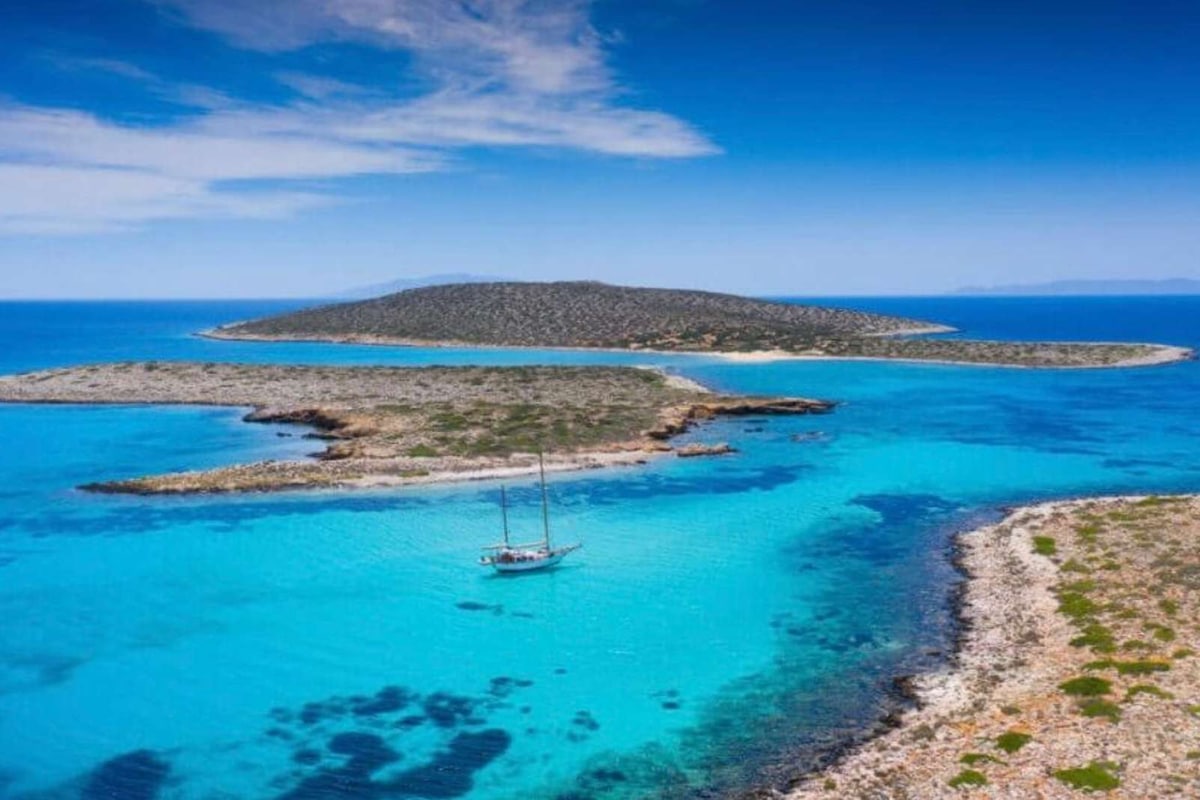
- Coast: 57 kilometres of coastline around the 45 square kilometres.
- Length: 11 kilometres running north to south, and up to 4.5 kilometres wide.
- Height: the highest peak, Saint Elias, rises 308 metres at the heart of the island.
- Villages: the capital at the north-east end, Kampos in the mid-west, Soros, and Agios Georgios on the south-western shore.
- Strait: 1.5 kilometres separate it from Paros, in a channel known as Amfigeio.
Two sailings link the islands, as Wikivoyage lists them. From Pounta the crossing takes ten minutes, with hourly departures from early morning to late at night. From Parikia it takes half an hour, with about ten departures each way a day. Timetables change, so check the current one.
The capital sits at the north-eastern end, facing Pounta across the strait. Its old centre lies inside a Venetian castle. Giovanni Loredan built the castle in fourteen forty and brought settlers at his own expense. For where to stay in Paros, the old core is a village centre where houses now serve as shops.
Wikivoyage says to explore the town of Antiparos on foot. A number of beaches lie within fifteen minutes of walking from the main street. A camping area sits on the northern coast, ten minutes from the same street. For where to stay in Paros, the town suits a walking base.
Public transport is scarce on the small island. Rental shops by the port hire out bicycles, scooters, quad bikes and cars, as Wikivoyage states. The same page notes that hotels stand in the town and along the port.
Antiparos holds a cave at its centre. People have used it as shelter since the Neolithic period. For where to stay in Paros, the cave is an outing from the town. Wikivoyage counts 340 steps down, and the same number back up.
Despotiko lies about 700 metres south-west of the shores of Antiparos, and nobody lives there. Boats leave from two places: the town of Antiparos and Agios Georgios, which faces Despotiko on the south-west shore. The water between is no deeper than about one metre, with the islet of Tsimintiri in it.
Excavations on Despotiko found a late Archaic sanctuary of the sixth century before Christ. The finds point to Apollo as the god of the place. One structure there measures 35 metres by 15. Wikivoyage adds that the digs have run since nineteen ninety-seven. The Archaeological Museum in Parikia exhibits artefacts from the digs.
How do the port, the airport and the buses shape where to stay in Paros?
Parikia is the harbour to weigh first when choosing where to stay in Paros. The Paros article gives it a major role as an Aegean hub for ferries and catamarans. Wikivoyage notes that, on the routes to Naxos and Santorini, the greater share of ferries call at Paros first.
From Piraeus, Paros lies about 150 kilometres to the south-east, as Wikipedia states. Piraeus serves Athens from the Saronic Gulf, and its own article names it the largest port in Greece. A ferry journey from the capital can start there, which ties the sea route to where to stay in Paros.
Wikivoyage Paros lists daily ferry and high-speed catamaran services from Piraeus, from the other Cyclades and from Heraklion. It also names Rafina as a port for the Cyclades. A flight into Athens can be followed by a sailing from Rafina in place of Piraeus.
Rooms by the harbour of Parikia suit an early sailing, because the quay lies a short walk away. Bases on other coasts add a road or a bus ride before the boat. On where to stay in Paros, the night before a sailing is a plain reason for a harbour room.
The island’s airport is in its south-western part. Wikipedia gives its distance from the port of Parikia as about 10 kilometres. It opened on the twenty-fifth of July, two thousand sixteen. The old runway of 710 metres became insufficient for larger aircraft, and the new one measures 1,400 metres.
The Greek National Tourism Organisation lists 45 minutes for the trip from Athens to Paros Airport. Wikivoyage adds that a daily air service links Athens with the island. When weighing where to stay in Paros, a flight of that length leaves the whole island open to choose from.
Wikipedia states that the airport and Parikia are joined by bus, from the nearby bus station. Taxis are available to any destination on the island, the article adds. Neither needs a hire car, so a harbour base is easy to reach straight from the plane.
Buses run between the towns, as Wikivoyage states. A base in a town with a stop works without a car. A car, a scooter or a bike widens the days from a village base. Where to stay in Paros decides which wheels a stay needs.
Which months suit where to stay in Paros?
Wikivoyage Cyclades calls late spring through June the early season, then names September up to mid-October the post season. When weighing where to stay in Paros, those two windows frame every base on this page. July and August sit between them as high summer.
- Late spring to June: the early season, a spell that is not that hot.
- July and August: high summer, with the constant wind called the meltemi.
- September up to mid-October: the post season, inside the span of warm beaches.
- From October: the weather changes, and rain starts to fall.
Paros belongs to the Cyclades, so the same seasons apply to its bases. Wikivoyage Cyclades calls the beaches warm enough to enjoy from late spring onward, until mid-October.
The page also notes cooler weather at either end of that span in certain years. When weighing where to stay in Paros, a base on a bay suits the weeks in between.
Wikipedia gives the etesian season as late spring until about the middle of September. The term goes back to the Greek etos, meaning year. The article links the name to the yearly change in how frequently the wind appears. Those months carry the wind, and that wind weighs on where to stay in Paros.
Fine, clear weather is the ordinary pattern with these winds, the same article states. It also says the northerly winds temper the heat of the summer. Wind and sun therefore arrive together, and the wind keeps the heat in check.
A windsurf week fits the same months, since the wind is the point of it. The Greek National Tourism Organisation lists windsurfing and sailing among the water sports of Paros. A water-sports week can begin in late spring, when the wind is already blowing.
At the coast, according to the Climate of Greece article, temperatures are moderated by cooler water and a sea breeze. A base on the shore gets that effect directly. In the hot weeks, where to stay in Paros points to a bay or a harbour town.
Wikipedia describes the winter of Naousa, in the north-east, as cold and occasionally snowy. Out of season, the Cyclades run fewer ferry sailings, according to Wikivoyage Cyclades. For where to stay in Paros in winter, a harbour town keeps a bed near the boats that still run.
The airport article marks the links to Heraklion and Thessaloniki as seasonal. Wikivoyage Paros adds that daily flights from Thessaloniki join the Athens service in season. The Greek National Tourism Organisation lists that flight at 1 hour and 15 minutes. The ways in grow and shrink with the months, which matters for a short stay.
A first-time visitor can aim at late spring or at the first weeks of autumn. A walker can aim at the early season, before the heat of July and August. In the end, the month and the base work as a pair on where to stay in Paros.
Which base suits a couple on where to stay in Paros?
For where to stay in Paros, a couple chooses between a harbour village, a hill village and a quiet bay. The Greek National Tourism Organisation names Naousa and Lefkes as the traditional villages of the island. That settles the first two bases, and the bay is the third choice.
Naousa suits a couple who want a harbour at the door. Wikipedia gives the village and its bay two older names, Agoussa and Ausa. Rooms in the old lanes sit a short stroll from the quay. Rooms on the edge of the village trade that stroll for calmer nights, and the quay stays within a walk.
On where to stay in Paros, the harbour base keeps a couple’s day simple. A walk along the water ends the evening, and breakfast is a short step from the room. A room with a sea view faces the boats. A room set back faces the lanes and sleeps quietly.
Lefkes gives the opposite setting. Wikipedia describes it as an inland mountain village. It adds that the village lost residents to Athens in the nineteen seventies. A couple trades the beach at the door for hill air. A short drive leads down to the sea, and the village is quiet once the day ends.
For where to stay in Paros, the hill village has a second chapter. The same article states that tourism later led to the reconstruction of homes and landscaping in Lefkes. A restored village house gives a couple a room of its own, and the walks start at the door. A slow stay suits it better than a one-night stop.
The quiet bay is the third base. Wikivoyage places Glyfa in its group for Drios, a town on the east coast. It also says that Tsoukalia, Glyfa and Glyfades are reached only by a narrow path or by boat. A couple that wants a cove with no road to it plans the day around the path or the boat.
Wikivoyage gives one rule for choosing a bay. It tells readers to move between beaches, not to stay on one every day. Each beach has its own feeling. For where to stay in Paros, a quiet base with a short ride to the next bay follows that rule.
Antiparos is a slower fourth choice, across the strait from Paros. Wikipedia names Psaralyki, the Sifneiko and Agios Spiridon as beaches around the centre of the town. On where to stay in Paros, Antiparos ends the search for a couple who want a small town.
Which base suits a family on where to stay in Paros?
For where to stay in Paros, a family can start with Logaras, the beach that Wikivoyage picks out for families. Around that sand, the base needs flat ground for walks, an outing by boat and a kitchen in the room. The island offers all three.
- Flat ground: a coastal plain, wide on two sides of the island.
- Walks and outings: the monasteries close to Parikia.
- Boats: wooden boats around Antiparos and a dozen smaller islets around Paros.
- Kitchen: a studio with a kitchenette for breakfast and light meals.
On where to stay in Paros, the plain is the first test for a family. Wikipedia gives Paros a single mountain whose slopes fall evenly to a maritime plain. The plain is widest in the north-east and in the south-west. Flat ground keeps the walk to the sand short for small legs and a pushchair.
Logaras answers the question of sand. Wikivoyage picks it out for families in its list of Paros beaches. Expansive sandy beaches appear in the portrait of the island that the Greek National Tourism Organisation draws. A base within reach of Logaras lets a family keep one stretch of sand as home.
A short bus ride suits a family without a car. For where to stay in Paros, look for a village with a bus link to the sand. A room off a hill track needs a car. The ride is brief, and the return at nap time is simple.
Outings near Parikia give a family a goal. Wikipedia lists the monasteries of Logovardas, Saint Anargyroi and Jesus of the Forest close to the town. A family in the port town can pick one monastery for a morning. The afternoon is left for the beach.
Boats turn a family stay into outings. Wikivoyage says wooden boats on Antiparos run trips around the island. The trips include refreshments, a barbecue and time for bathing. The same page says the island has also drawn families since the nineteen nineties. On where to stay in Paros, that makes the strait a family outing.
A dozen smaller islets surround Paros, as Wikipedia counts them, so a boat day has places to aim for. Back at the base, a studio with a kitchenette lets a family cook breakfast and keep lunch simple. For where to stay in Paros, a family room by the sand and a village studio both work.
How do island hops shape where to stay in Paros?
For where to stay in Paros, the boats you plan settle the base. Wikivoyage lists Syros, Sifnos, Ios and Naxos as the neighbours of Paros, at the centre of the Cyclades. Each hop therefore begins with one crossing, and a room by the port shortens the early start.
Wikipedia puts Paros eight kilometres west of Naxos, parted by a narrow channel. It adds that, within the group, no island is larger than Naxos. Naxos was also the seat of a Venetian realm, the Duchy of the Archipelago, which included Paros. A hop between the two joins islands with one shared past.
Island hopping is very popular within the group, as Wikivoyage Cyclades notes. It links the plan to a trip of more than one week, since the ferry schedules are excellent. For where to stay in Paros, a longer trip points to one home base. A hop or two then replaces a new room each night.
Wikivoyage Paros notes that the larger part of the ferries for Naxos and Santorini make Paros their first stop. A traveller bound for either island can break the journey here. For where to stay in Paros, that puts the first night on the island, with the route still ahead.
At Athinios, the port of Santorini, Wikivoyage says buses meet each arrival. Wikivoyage Ios calls Ios a short ferry ride from Santorini. The sailings from Parikia that Wikipedia lists include both islands. For where to stay in Paros, a room near the main port suits a morning boat to either one.
Wikivoyage Mykonos lists Paros among the islands from which more than one boat a day sails to Mykonos. Antiparos lies across a narrow and shallow strait from Paros, as Wikivoyage Antiparos states. For where to stay in Paros, both hops fit a day out from one base. Neither forces a change of room.
Ferries can be cancelled for sea and weather conditions, as Wikivoyage Cyclades notes. Its advice is to avoid the last ferry before a flight. For where to stay in Paros, that adds a spare night close to the port before the flight home.
Rooms close to the port suit the night before a boat. Rooms in a village or on a quiet bay suit the nights between boats. A week or more splits well into two bases. Spend the first nights on the coast and the last night by the harbour.
How do room kinds differ for where to stay in Paros?
On where to stay in Paros, the kind of room counts as much as the village. Wikivoyage Cyclades describes the island villages as white and cubistic. Every kind of room below sits inside that same white look. The kinds differ in setting, size, kitchen and view.
- The whitewashed house in a harbour village or a hill village
- The studio with a kitchenette, for a week or longer
- The room with a sea view over a bay, a harbour or the strait
- The village house among old lanes inland
- The villa in the hills, with a pool and a garden
- The family room, with beds for parents and children
- The room by the harbour, close to the boats
A whitewashed house stands in the lanes of a harbour village or a hill village. For where to stay in Paros, this kind brings the old island to the door. Ask about the walk from the nearest road or bus stop, and about the steps to the entrance.
A studio with a kitchenette suits a longer stay. The kitchenette lets you make breakfast and a light supper, and it frees an evening from a restaurant table. Look at the size of the table and the balcony as well as the bed.
A room with a sea view faces a bay, a harbour or the strait. For where to stay in Paros, ask which way the window looks and what stands between it and the water. A harbour view shows the boats come and go. A bay view shows open water.
A village house stands inland among old lanes. Wikivoyage names well-preserved old houses at Marpissa, with a traditional atmosphere around them. The sea lies a drive or a ride away. A car, a bike or a scooter belongs to this stay.
A villa in the hills comes with a pool, a garden and room for a group. For where to stay in Paros, it works as a home for a week. The car or the scooter links it to the harbours and the beaches. Ask how far the nearest shop lies.
A family room gives parents and children one door and enough beds under one roof. Check the stairs to the entrance, the size of the beds and the walk to the nearest shop. A room with a small kitchen corner makes the first morning easy.
A room by the harbour puts the boats, the cafes and the bus stop close at hand. For where to stay in Paros, it fits the night before a ferry. The island has more than one harbour, so ask which one the room lies by before you choose.
Which questions do readers raise on where to stay in Paros?
Four topics arise for where to stay in Paros: the first town, the car, the nights and the marble. Parikia and Naousa work for a first stay, and a town base can go without a car. Each reply below leans on plain place facts from public sources.
Does Parikia or Naousa suit a first stay in Paros?
For where to stay in Paros, a first visit can start in either harbour town. Parikia is the port where ferries arrive, so a stay there keeps the boats close. The Paros article describes its houses shaded by vines and ringed by gardens of oranges and pomegranates. Narrow cobbled paths wind between them.
Naousa suits a stay built around its fishing harbour, which lies on the north coast. Wikivoyage suggests the ouzeri of the village for a plate of octopus in vinegar or gouna fish. Evenings there can centre on the quay and the moored boats. The days belong to the bay. A room near the harbour keeps the quay within a stroll.
On where to stay in Paros, the choice comes down to what the days hold. Pick Parikia for ferry links and a town with sights of its own. Pick Naousa for the harbour and the bay. A second stay can try the other town, since the two sit on different coasts. Rooms in either town suit three nights or four.
Does a car change where to stay in Paros?
Wikivoyage recommends walking inside the resorts. It adds that buses join the towns and that car hire is readily available in every town. So a base in a harbour town works without a car. On the island, a car only widens the days. For where to stay in Paros, the question is one of reach.
One road fact shows where a car earns its place. The dirt road from Molos is the way to Kalogeros beach and its rock formations, Wikivoyage states. The same page asks renters to reserve automatic cars in advance. A stay with a car starts with that one booking. That drive is why a village base wants a car.
Scooters, bikes and quad bikes can be rented too. Wikivoyage notes that they pass through small streets with ease. On the island, the rule is plain. A village base needs a way out of the village. A harbour-town base can use its own lanes and the bus. Renting one for a day is enough to try a distant bay.
What number of nights suits where to stay in Paros?
One night is a ferry stop and nothing more. Two nights cover a harbour town and one bay. Three nights add a hill village or the east coast. Four nights or longer leave room for a boat across to Antiparos. That ladder is the first step in where to stay in Paros. Each step adds one place.
A longer stay also needs sights that belong to no bay. Asclepius had a temple on a hillside at the southern edge of Parikia. Its remains lie beside the road from Parikia to Alyki, the Paros article records. It makes a quiet morning between beach days. Three nights or four leave room for it.
The same article adds that the remains of an ancient cemetery are visible close to the modern harbour. Both sites sit within reach of a town base. A stay in Parikia can spend a morning on each, with no ferry and no long drive. Together they give the stay a thread of ancient history.
What does Parian marble add to where to stay in Paros?
The marble article calls Parian stone semi-translucent and fine in grain, with a pure white colour. Sculptors quarried it on Paros in the classical era. The list of statues cut from it includes the Venus de Milo. That gives where to stay in Paros a talking point. The museum in Parikia holds finds from sites across Paros.
The Paros article records that export of the stone began in the sixth century BC. Today the state holds the bulk of the white marble that remains. Only archaeological restorations draw on it now, as with its Pentelic counterpart. So the stone is a matter for a quiet morning of history. Quarries and museum rooms tell that story.
The stone does not change where to stay in Paros, because every base sits on the same island. It does explain why the island’s name appears in the word Parian. The Paros article notes that the term describes marble or porcelain of similar qualities. Any base can fold the marble into one slow half day of history.